
The Maratha Quota Stalemate: Political Promises, Legal Limits and Social Unrest.
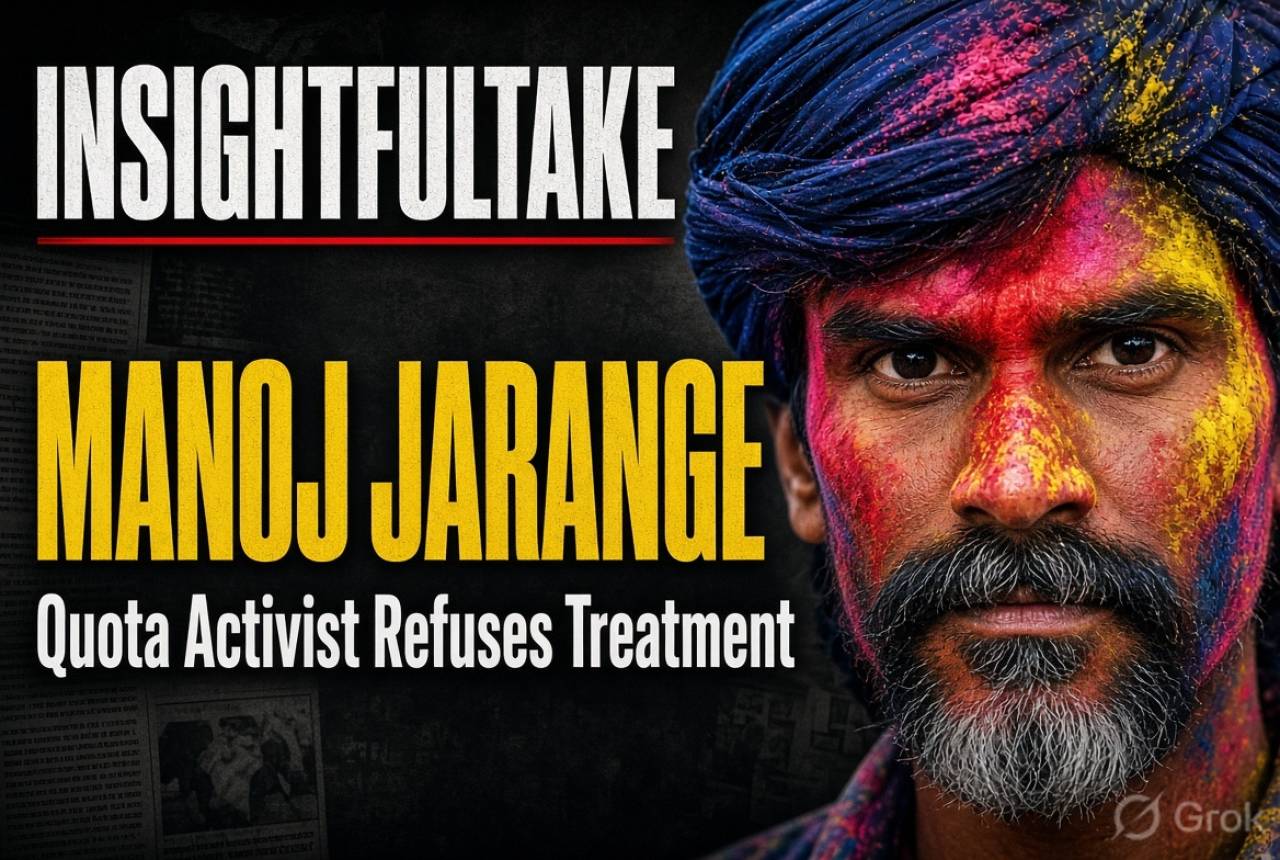
The Maratha quota agitation in Maharashtra has once again exposed a difficult intersection of agrarian distress, political promises and constitutional limits. At the heart of the latest escalation is activist Manoj Jarange-Patil, whose indefinite hunger strike at Antarwali Sarati in Jalna district has intensified pressure on the state government.
Jarange-Patil's demand for immediate implementation of assurances on reservation reflects a larger frustration among sections of the Maratha community. His refusal of medical assistance and water has added urgency to the standoff, highlighting the widening gap between political commitments and their implementation on the ground.
The Core Demand and the Administrative Roadblock
At the centre of the agitation is the demand to recognise eligible Marathas as Kunbis, an agrarian community included in the Other Backward Classes (OBC) category.
A state-appointed committee identified millions of historical records relating to Kunbi status. Protesters want eligible applicants to receive Kunbi certificates on the basis of historical documents, blood relations and clan or lineage links. Such certification would allow eligible Marathas to access the existing OBC reservation framework.
The state government has repeatedly indicated that it intends to accelerate the verification process. Yet protesters continue to point to administrative delays, caste-verification procedures and reluctance at the local level.
The agitation extends beyond reservation certificates. Protesters have also demanded the withdrawal of police cases registered during earlier demonstrations, compensation for families of deceased protesters and financial assistance through state welfare corporations.
Why the Demand Has Gained Momentum
The Maratha community has historically exercised considerable political influence in Maharashtra, particularly in rural areas. Yet political influence does not necessarily translate into economic security.
For many rural Marathas, the changing economics of agriculture has created growing uncertainty.
Agrarian Distress
Fragmented landholdings, rising input costs, unpredictable agricultural returns and recurring rural distress have placed pressure on farming families.
For a community with a large agrarian base, the declining economic viability of farming has become an important factor behind the demand for greater access to education, government employment and state support.
Education and Employment
The aspirations of Maratha youth have also changed. Government jobs remain highly sought after because of their relative stability, while private employment can be uncertain and competitive.
At the same time, the rising cost of professional and higher education has increased pressure on families. For many young people, reservation is therefore seen not merely as a political demand but as a pathway to greater educational and employment opportunities.
The Constitutional Ceiling
The state's biggest challenge is not simply political. It is constitutional.
The Supreme Court's 1992 Indra Sawhney judgment established the general 50% ceiling on reservations, while recognising that exceptional circumstances could warrant exceeding it.
The legal position became particularly important in the Maratha reservation case.
In May 2021, the Supreme Court struck down Maharashtra's 2018 law providing a separate reservation for Marathas under the Socially and Educationally Backward Classes framework. The Court held that the circumstances did not justify breaching the 50% ceiling.
Maharashtra subsequently enacted legislation in 2024 providing a separate 10% reservation for the Maratha community. This took the state's overall reservation level beyond the conventional 50% ceiling and has consequently remained subject to legal scrutiny.
The government therefore faces a complicated question: how can it fulfil its political commitments while ensuring that the mechanism used to provide reservation survives constitutional and judicial scrutiny?
The OBC Question
Any move to bring eligible Marathas into the OBC category creates another political and social challenge.
Existing OBC communities fear that large-scale inclusion of Marathas could increase competition for a reservation pool that they already depend upon for educational and employment opportunities.
Their concern is straightforward. If the number of beneficiaries increases dramatically without a corresponding expansion of opportunities, the effective share available to existing OBC groups could shrink.
This has transformed the reservation debate into a contest between competing claims of social justice.
For the Maharashtra government, the challenge is therefore not limited to satisfying the Maratha community. It must also reassure existing OBC groups that their constitutional and legal entitlements will not be undermined.
A Problem Bigger Than Reservation
The Maratha quota agitation cannot be understood entirely through the language of caste reservation.
Behind the political mobilisation lies a broader crisis involving rural incomes, employment, education and social mobility.
Reservation can provide opportunities to eligible beneficiaries, but it cannot by itself resolve the structural problems facing agriculture or create enough quality employment for a growing population of young people.
That distinction is crucial.
If agrarian distress continues, if educational costs keep rising and if formal employment remains scarce, reservation demands are likely to remain politically powerful regardless of which particular quota formula is adopted.
Final Take
Maharashtra's challenge is now to find a solution that is legally defensible, administratively credible and socially sustainable.
That requires transparent verification of historical records, faster processing of legitimate claims and clear communication with both Maratha and OBC communities.
At the same time, the state needs to look beyond reservation and address the economic conditions that have helped fuel the agitation in the first place.
The Maratha quota stalemate is ultimately a test of governance. Political promises may calm a protest temporarily, but only a solution that survives legal scrutiny and addresses the underlying economic anxieties can offer lasting stability.
Maharashtra does not merely need another quota announcement. It needs a settlement that can withstand the courts, command public confidence and reduce the economic insecurity driving the agitation.
The Maratha quota agitation in Maharashtra has once again exposed a difficult intersection of agrarian distress, political promises and constitutional limits. At the heart of the latest escalation is activist Manoj Jarange-Patil, whose indefinite hunger strike at Antarwali Sarati in Jalna district has intensified pressure on the state government.
Jarange-Patil's demand for immediate implementation of assurances on reservation reflects a larger frustration among sections of the Maratha community. His refusal of medical assistance and water has added urgency to the standoff, highlighting the widening gap between political commitments and their implementation on the ground.
The Core Demand and the Administrative Roadblock
At the centre of the agitation is the demand to recognise eligible Marathas as Kunbis, an agrarian community included in the Other Backward Classes (OBC) category.
A state-appointed committee identified millions of historical records relating to Kunbi status. Protesters want eligible applicants to receive Kunbi certificates on the basis of historical documents, blood relations and clan or lineage links. Such certification would allow eligible Marathas to access the existing OBC reservation framework.
The state government has repeatedly indicated that it intends to accelerate the verification process. Yet protesters continue to point to administrative delays, caste-verification procedures and reluctance at the local level.
The agitation extends beyond reservation certificates. Protesters have also demanded the withdrawal of police cases registered during earlier demonstrations, compensation for families of deceased protesters and financial assistance through state welfare corporations.
Why the Demand Has Gained Momentum
The Maratha community has historically exercised considerable political influence in Maharashtra, particularly in rural areas. Yet political influence does not necessarily translate into economic security.
For many rural Marathas, the changing economics of agriculture has created growing uncertainty.
Agrarian Distress
Fragmented landholdings, rising input costs, unpredictable agricultural returns and recurring rural distress have placed pressure on farming families.
For a community with a large agrarian base, the declining economic viability of farming has become an important factor behind the demand for greater access to education, government employment and state support.
Education and Employment
The aspirations of Maratha youth have also changed. Government jobs remain highly sought after because of their relative stability, while private employment can be uncertain and competitive.
At the same time, the rising cost of professional and higher education has increased pressure on families. For many young people, reservation is therefore seen not merely as a political demand but as a pathway to greater educational and employment opportunities.
The Constitutional Ceiling
The state's biggest challenge is not simply political. It is constitutional.
The Supreme Court's 1992 Indra Sawhney judgment established the general 50% ceiling on reservations, while recognising that exceptional circumstances could warrant exceeding it.
The legal position became particularly important in the Maratha reservation case.
In May 2021, the Supreme Court struck down Maharashtra's 2018 law providing a separate reservation for Marathas under the Socially and Educationally Backward Classes framework. The Court held that the circumstances did not justify breaching the 50% ceiling.
Maharashtra subsequently enacted legislation in 2024 providing a separate 10% reservation for the Maratha community. This took the state's overall reservation level beyond the conventional 50% ceiling and has consequently remained subject to legal scrutiny.
The government therefore faces a complicated question: how can it fulfil its political commitments while ensuring that the mechanism used to provide reservation survives constitutional and judicial scrutiny?
The OBC Question
Any move to bring eligible Marathas into the OBC category creates another political and social challenge.
Existing OBC communities fear that large-scale inclusion of Marathas could increase competition for a reservation pool that they already depend upon for educational and employment opportunities.
Their concern is straightforward. If the number of beneficiaries increases dramatically without a corresponding expansion of opportunities, the effective share available to existing OBC groups could shrink.
This has transformed the reservation debate into a contest between competing claims of social justice.
For the Maharashtra government, the challenge is therefore not limited to satisfying the Maratha community. It must also reassure existing OBC groups that their constitutional and legal entitlements will not be undermined.
A Problem Bigger Than Reservation
The Maratha quota agitation cannot be understood entirely through the language of caste reservation.
Behind the political mobilisation lies a broader crisis involving rural incomes, employment, education and social mobility.
Reservation can provide opportunities to eligible beneficiaries, but it cannot by itself resolve the structural problems facing agriculture or create enough quality employment for a growing population of young people.
That distinction is crucial.
If agrarian distress continues, if educational costs keep rising and if formal employment remains scarce, reservation demands are likely to remain politically powerful regardless of which particular quota formula is adopted.
Final Take
Maharashtra's challenge is now to find a solution that is legally defensible, administratively credible and socially sustainable.
That requires transparent verification of historical records, faster processing of legitimate claims and clear communication with both Maratha and OBC communities.
At the same time, the state needs to look beyond reservation and address the economic conditions that have helped fuel the agitation in the first place.
The Maratha quota stalemate is ultimately a test of governance. Political promises may calm a protest temporarily, but only a solution that survives legal scrutiny and addresses the underlying economic anxieties can offer lasting stability.
Maharashtra does not merely need another quota announcement. It needs a settlement that can withstand the courts, command public confidence and reduce the economic insecurity driving the agitation.


















Leave a Comment