
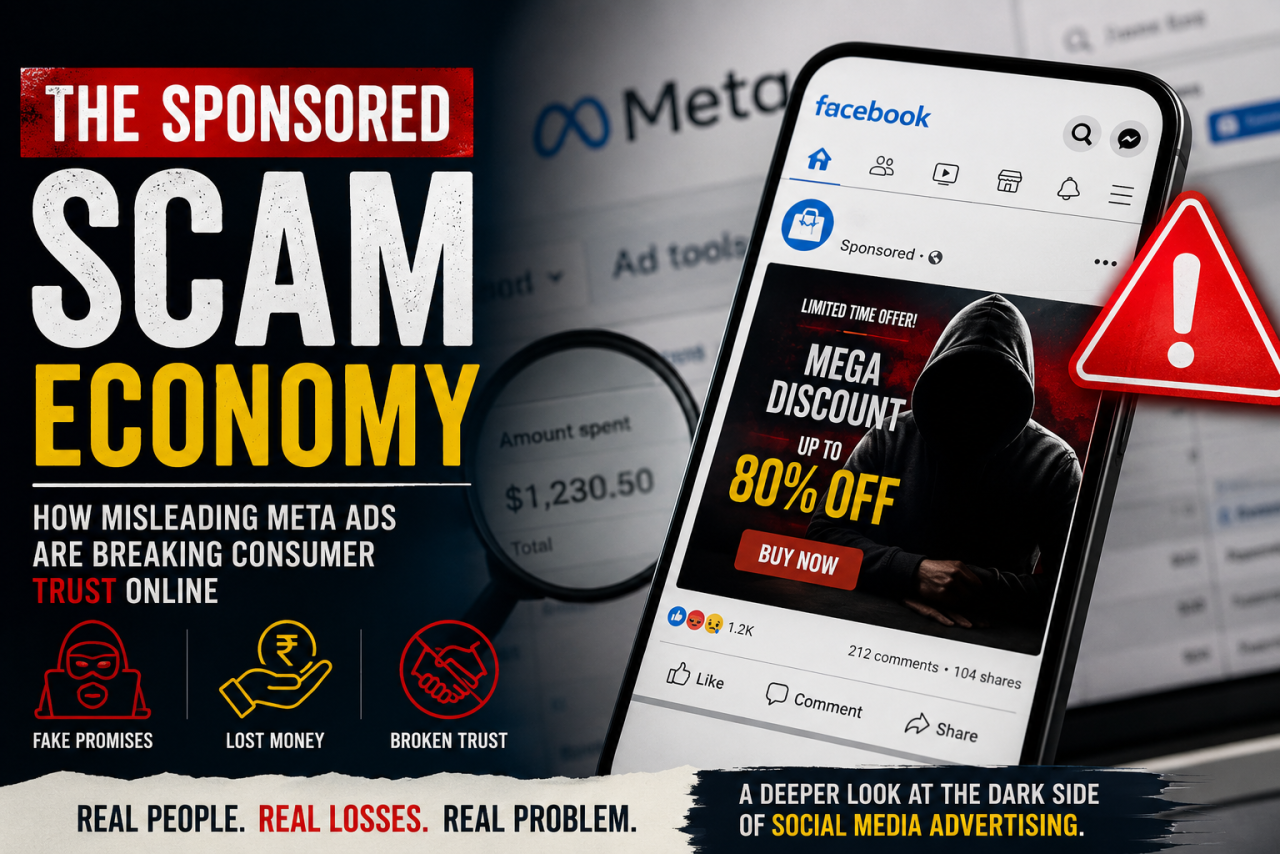
Fake “Sponsored” ads on Facebook and Instagram are costing users money and damaging trust in online shopping, services, and digital platforms.
Social media platforms are no longer just spaces for entertainment and communication. Today, people discover products, hire services, join courses, and even make investment decisions through advertisements shown on Facebook and Instagram. But alongside this digital convenience, a dangerous trend has quietly grown — misleading sponsored ads that often leave users cheated, frustrated, and financially harmed.
Across India and many other countries, online consumers are increasingly sharing the same experience. An attractive advertisement appears on their feed, promising huge discounts, guaranteed services, quick profits, or premium-quality products. The user makes the payment, but afterward, the seller either disappears completely or delivers something entirely different from what was promised.
In many cases, there is no customer support, no refund, and no response after payment.
A major reason many people fall for these ads is because they are shown as “Sponsored” posts on trusted social media platforms, making them appear genuine and verified. Fraudsters understand this psychology very well and use it to their advantage.
Over the last few years, scam advertisements have become far more sophisticated. Many now use:
- fake customer reviews,
- edited product videos,
- deepfake celebrity endorsements,
- fake websites,
- countdown timers,
- and emotional marketing tactics designed to pressure users into quick purchases.
The problem is not limited to shopping scams alone. Service-related fraud is also rising rapidly. Fake job consultancies, online coaching institutes, investment groups, loan services, and digital marketing agencies are heavily promoted through sponsored advertisements. In many situations, users pay registration fees or advance payments only to discover later that the business either never existed or refuses to respond.
This is no longer just a problem of weak technology or poor moderation. People are slowly losing trust in online ads and digital platforms altogether.
That growing distrust may become one of the biggest long-term problems for the digital economy.
When consumers repeatedly encounter fraud through advertisements, they begin to question everything online:
- Is this business genuine?
- Are the reviews real?
- Will the product actually arrive?
- Is the service provider trustworthy?
- Will customer support vanish after payment?
As a result, even genuine businesses start suffering. Honest entrepreneurs and small startups now face audiences that have become naturally suspicious of online promotions. In many ways, fraudulent advertisements are damaging the credibility of the entire online marketplace.
Reports and investigations in recent years suggest that the scale of the issue is massive. International media investigations have pointed toward billions of potentially risky advertisements circulating across large social media platforms daily. Consumer groups have also accused major platforms of reacting too slowly against fraudulent advertisers, especially when scam ads continue generating engagement and revenue before removal.
One major reason misleading ads spread so quickly is the way advertising algorithms function.
Digital advertising systems are designed to prioritize engagement — clicks, reactions, shares, and conversions. Unfortunately, scam advertisements often perform better than normal advertisements because they are built around emotional triggers such as urgency, greed, fear, insecurity, or aspiration.
A fake investment ad promising fast profits will naturally attract more clicks than a realistic financial advisory campaign. Similarly, a heavily discounted luxury product advertisement creates excitement that pushes users toward impulsive decisions.
Fraudsters understand how these systems work and carefully design advertisements that exploit human psychology.
India’s rapidly expanding digital population has made the problem even more serious. Millions of first-time internet users are entering online marketplaces every year, but digital awareness and scam detection skills are not growing at the same pace.
Many users, especially young consumers and elderly people, struggle to differentiate between legitimate businesses and professionally designed scam advertisements. Since these ads appear on trusted platforms, users often lower their guard.
The issue also extends beyond financial loss. Repeated exposure to fraud creates emotional frustration and public anger. Consumers begin associating online shopping and digital services with risk rather than convenience. Over time, this weakens confidence in the broader digital economy.
Meta Platforms says it is actively working to remove scam advertisements through AI systems, advertiser verification, and mass account removals. The company has publicly reported taking down thousands of accounts linked to investment and payment scams. However, critics argue that the action often comes only after large numbers of users have already been exposed.
The real challenge is that scam networks can quickly create new accounts, new pages, and new advertisements even after earlier ones are removed. This creates a constant cycle where fraudulent advertisers return faster than platforms can eliminate them.
At its core, the problem is about accountability.
If digital platforms continue earning advertising revenue from misleading promotions while consumers continue facing losses, public trust will keep declining. And once trust disappears, rebuilding it becomes extremely difficult.
The internet economy depends heavily on confidence. People buy products online because they trust the system. They enroll in services because they believe the platform is safe. If sponsored advertisements increasingly become associated with fraud, then the entire online marketplace risks losing credibility.
Misleading Meta advertisements are no longer just isolated scams. They are becoming part of a much larger trust crisis that could shape the future of online commerce itself.
Social media platforms are no longer just spaces for entertainment and communication. Today, people discover products, hire services, join courses, and even make investment decisions through advertisements shown on Facebook and Instagram. But alongside this digital convenience, a dangerous trend has quietly grown — misleading sponsored ads that often leave users cheated, frustrated, and financially harmed.
Across India and many other countries, online consumers are increasingly sharing the same experience. An attractive advertisement appears on their feed, promising huge discounts, guaranteed services, quick profits, or premium-quality products. The user makes the payment, but afterward, the seller either disappears completely or delivers something entirely different from what was promised.
In many cases, there is no customer support, no refund, and no response after payment.
A major reason many people fall for these ads is because they are shown as “Sponsored” posts on trusted social media platforms, making them appear genuine and verified. Fraudsters understand this psychology very well and use it to their advantage.
Over the last few years, scam advertisements have become far more sophisticated. Many now use:
- fake customer reviews,
- edited product videos,
- deepfake celebrity endorsements,
- fake websites,
- countdown timers,
- and emotional marketing tactics designed to pressure users into quick purchases.
The problem is not limited to shopping scams alone. Service-related fraud is also rising rapidly. Fake job consultancies, online coaching institutes, investment groups, loan services, and digital marketing agencies are heavily promoted through sponsored advertisements. In many situations, users pay registration fees or advance payments only to discover later that the business either never existed or refuses to respond.
This is no longer just a problem of weak technology or poor moderation. People are slowly losing trust in online ads and digital platforms altogether.
That growing distrust may become one of the biggest long-term problems for the digital economy.
When consumers repeatedly encounter fraud through advertisements, they begin to question everything online:
- Is this business genuine?
- Are the reviews real?
- Will the product actually arrive?
- Is the service provider trustworthy?
- Will customer support vanish after payment?
As a result, even genuine businesses start suffering. Honest entrepreneurs and small startups now face audiences that have become naturally suspicious of online promotions. In many ways, fraudulent advertisements are damaging the credibility of the entire online marketplace.
Reports and investigations in recent years suggest that the scale of the issue is massive. International media investigations have pointed toward billions of potentially risky advertisements circulating across large social media platforms daily. Consumer groups have also accused major platforms of reacting too slowly against fraudulent advertisers, especially when scam ads continue generating engagement and revenue before removal.
One major reason misleading ads spread so quickly is the way advertising algorithms function.
Digital advertising systems are designed to prioritize engagement — clicks, reactions, shares, and conversions. Unfortunately, scam advertisements often perform better than normal advertisements because they are built around emotional triggers such as urgency, greed, fear, insecurity, or aspiration.
A fake investment ad promising fast profits will naturally attract more clicks than a realistic financial advisory campaign. Similarly, a heavily discounted luxury product advertisement creates excitement that pushes users toward impulsive decisions.
Fraudsters understand how these systems work and carefully design advertisements that exploit human psychology.
India’s rapidly expanding digital population has made the problem even more serious. Millions of first-time internet users are entering online marketplaces every year, but digital awareness and scam detection skills are not growing at the same pace.
Many users, especially young consumers and elderly people, struggle to differentiate between legitimate businesses and professionally designed scam advertisements. Since these ads appear on trusted platforms, users often lower their guard.
The issue also extends beyond financial loss. Repeated exposure to fraud creates emotional frustration and public anger. Consumers begin associating online shopping and digital services with risk rather than convenience. Over time, this weakens confidence in the broader digital economy.
Meta Platforms says it is actively working to remove scam advertisements through AI systems, advertiser verification, and mass account removals. The company has publicly reported taking down thousands of accounts linked to investment and payment scams. However, critics argue that the action often comes only after large numbers of users have already been exposed.
The real challenge is that scam networks can quickly create new accounts, new pages, and new advertisements even after earlier ones are removed. This creates a constant cycle where fraudulent advertisers return faster than platforms can eliminate them.
At its core, the problem is about accountability.
If digital platforms continue earning advertising revenue from misleading promotions while consumers continue facing losses, public trust will keep declining. And once trust disappears, rebuilding it becomes extremely difficult.
The internet economy depends heavily on confidence. People buy products online because they trust the system. They enroll in services because they believe the platform is safe. If sponsored advertisements increasingly become associated with fraud, then the entire online marketplace risks losing credibility.
Misleading Meta advertisements are no longer just isolated scams. They are becoming part of a much larger trust crisis that could shape the future of online commerce itself.






















Leave a Comment