
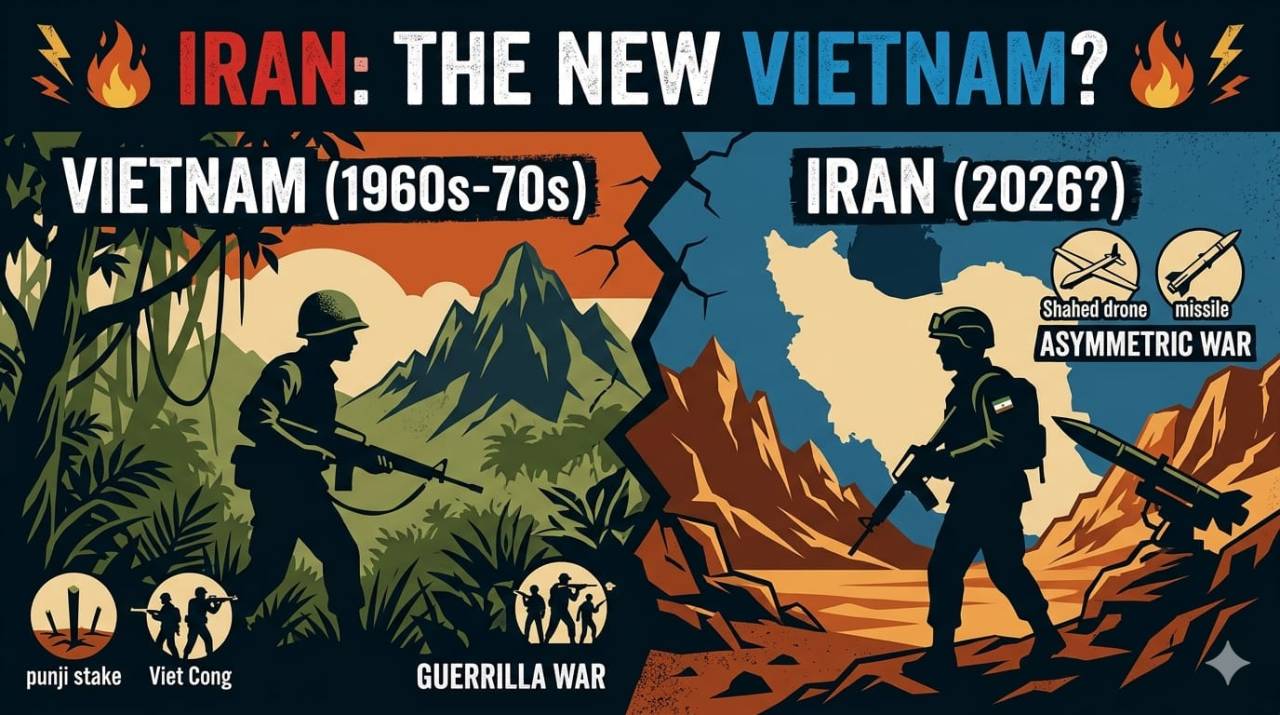
The United States has unmatched air power, but history shows that wars aren’t won from the sky alone. As the 2026 conflict with Iran deepens, the uneasy parallels with the Vietnam War are becoming harder to ignore—raising doubts about how this war will end, and at what cost.
History has a way of repeating itself—sometimes in unsettling ways. The shadow of the Vietnam War still looms large over U.S. foreign policy, remembered as a prolonged and costly entanglement with no clear exit. Now, as tensions escalate in Iran, a similar question is being asked: is Washington walking into another strategic trap?
The conflict, which began on February 28, 2026, has already revealed a familiar pattern. The United States has relied heavily on overwhelming air power, striking thousands of targets. But as history has shown, dominance in the skies does not guarantee control on the ground.
A War That Isn’t Slowing Down
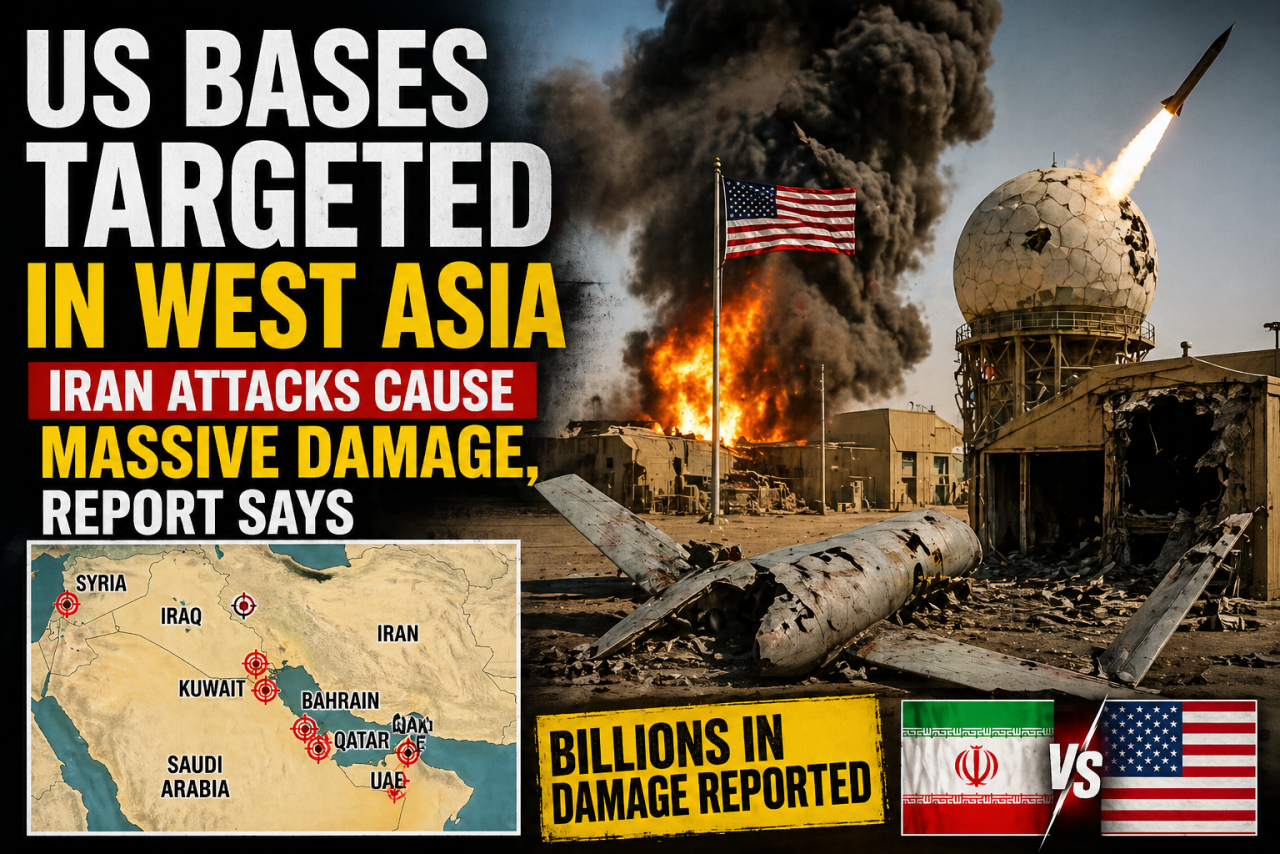
Nearly a month into the conflict, U.S. Central Command claims to have struck over 9,000 targets, including missile systems and naval assets. In a dramatic early move, strikes reportedly killed Iran’s Supreme Leader, Ali Khamenei.
Yet, the war is far from over.
Iran has swiftly reorganized under new leadership, with Mojtada Khamenei stepping in. More importantly, Tehran is not fighting alone. Its network of regional allies—often referred to as the “Axis of Resistance”—including groups like Hezbollah and the Houthis, has widened the battlefield.
The result is a multi-front conflict that stretches U.S. resources and complicates strategic focus.
Why Iran Isn’t an Easy Battlefield
If Vietnam was defined by dense jungles and guerrilla warfare, Iran presents a different but equally challenging terrain.
Geography as a Weapon
Iran’s vast size—nearly four times that of Iraq—and its rugged mountain ranges act as a natural defense system. These elevations function like a “vertical jungle,” offering ideal cover for missile systems and troop movements.
Asymmetric Warfare
Rather than confronting U.S. forces directly, Iran is leveraging low-cost, high-impact tactics. Cheap drones and naval mines have become key tools. These so-called “kamikaze” drones cost a fraction to produce, yet require expensive missile systems to intercept—tilting the cost equation in Iran’s favor.
The Strait of Hormuz Factor
Control over the Strait of Hormuz adds another layer of complexity. Roughly 20% of global oil supply passes through this narrow corridor. Iranian mining operations have already pushed oil prices beyond $110 per barrel, sending shockwaves through the global economy.
Vietnam vs Iran: A Familiar Pattern
|
Feature |
Vietnam (1960s) |
Iran (2026) |
|
Strategy |
Guerrilla warfare in jungles |
Drone and missile strikes from mountains |
|
Allies |
Soviet Union and China |
Russia and China |
|
The Goal |
Stop Communism |
Stop Nuclear Weapons and Regime Change |
|
The Problem |
No clear endgame |
No clear endgame |
The parallels are hard to ignore. In both cases, the U.S. faces an opponent that avoids direct confrontation while stretching the conflict over time.
Rising Pressure Back Home
Back in the United States, the political cost is mounting. President Donald Trump is facing growing domestic criticism, with public support for the strikes reportedly hovering around 27%.
The concerns are familiar—rising fuel prices, ballooning war expenses, and fatigue from prolonged overseas engagements.
The Pentagon’s request for an additional $200 billion underscores the scale of the commitment. During Vietnam, it was precisely this combination of economic strain and public dissatisfaction that forced a withdrawal. The echoes are unmistakable.
The Bigger Geopolitical Game
Iran’s resilience is not just internal—it is also external.
China continues to purchase large volumes of Iranian oil, providing a steady financial lifeline. Meanwhile, Russia is believed to be supporting Tehran with technology and strategic backing.
For both nations, a prolonged U.S. engagement in West Asia serves a larger purpose: it diverts American attention away from other critical regions like Europe and the Indo-Pacific.
A War of Attrition in the Making
At its core, this conflict is evolving into a classic war of attrition—where victory is not defined by decisive battles, but by endurance.
Iran understands it cannot overpower the U.S. militarily. But it may not need to. If it can prolong the conflict long enough to exhaust American political will and public patience, the outcome could tilt in its favor.
As of March 24, there are tentative discussions of a five-day pause in hostilities. President Trump has called for a “total resolution,” while Iranian officials have dismissed such claims as misinformation.
The Takeaway
The lesson from Vietnam was not just about military limits—it was about the cost of staying in a war without a clear exit strategy.
If the United States continues down this path in Iran, the risk is not just another conflict—but another quagmire.
Different terrain. Different tactics. Same uncertainty.

























Leave a Comment