
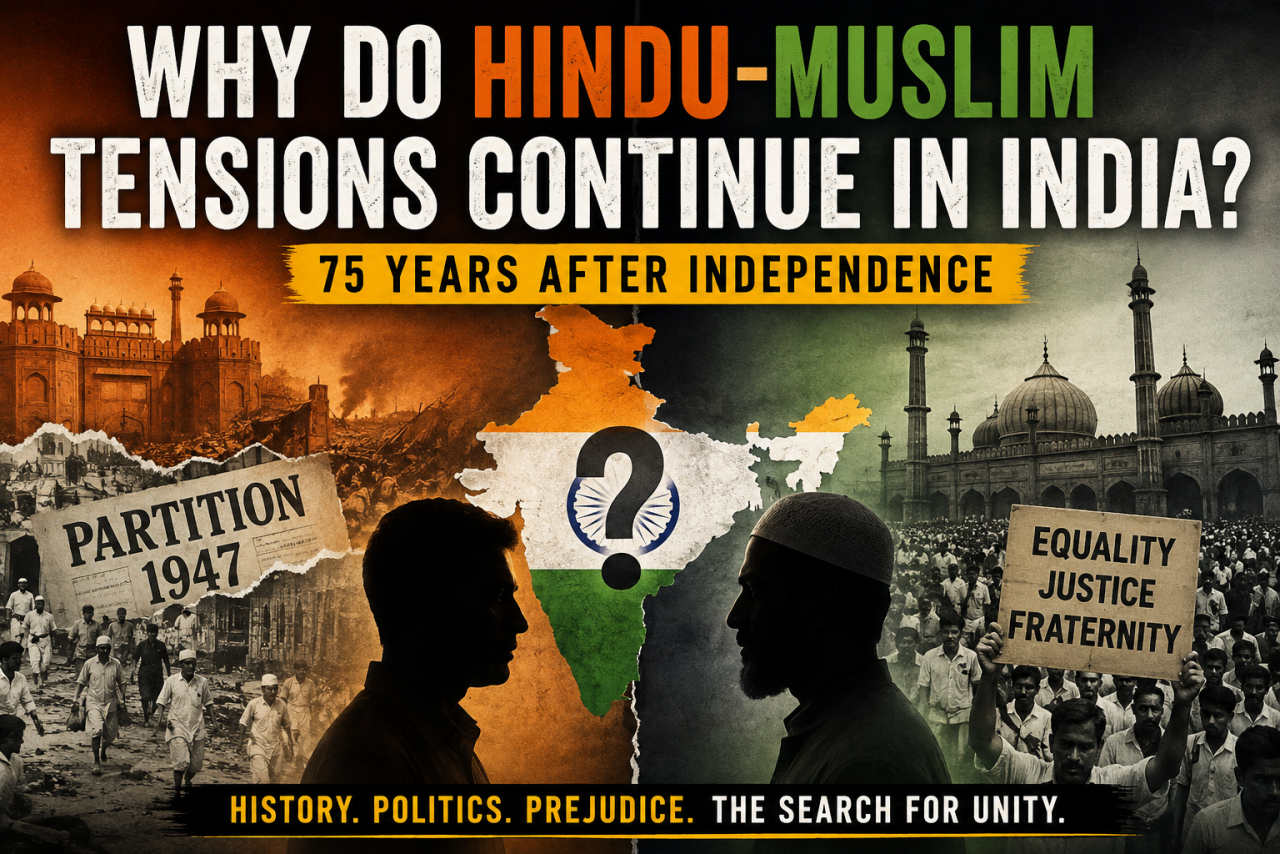
India cannot become a global superpower while carrying the unresolved weight of a Hindu-Muslim divide that has survived 75 years of Independence.
In the din of daily headlines and television debates, one important question is often left unanswered: Why do Hindu-Muslim tensions continue in India more than 75 years after Independence?
For a country that wants to become a major global economic and political power, social division is a serious concern. Economic growth depends not only on investment, technology and infrastructure but also on social stability. A divided society finds it harder to build trust, create opportunities and work towards common goals.
To understand why Hindu-Muslim tensions continue, we need to look beyond today's political debates. The roots of the problem go back several centuries, and the events of the colonial period, the freedom struggle and Partition continue to influence public attitudes.
Colonial Policies and the Politics of Division
The relationship between Britain and India did not begin with direct political control. The East India Company first came to India as a trading organisation. British merchants received trading privileges from Mughal rulers during the early 17th century. Over time, the Company expanded its influence and eventually became a political power.
The Revolt of 1857 showed that Indians from different religious communities could come together against a common political power. Hindus and Muslims fought alongside each other in several parts of the country. Bahadur Shah Zafar, the last Mughal emperor, became the symbolic leader of the revolt.
The British eventually suppressed the uprising. After 1857, the colonial government became increasingly careful about political unity among Indians. Over time, religious and social identities became more important in the administrative and political system.
The introduction of separate electorates for Muslims under the Morley-Minto Reforms in 1909 was an important development. It allowed Muslim voters to elect representatives from separate Muslim constituencies. This gave religious identity a formal place in electoral politics.
British policies were not the only reason for communal divisions, but colonial rule did help turn religious identities into political categories. Once religion became part of electoral calculations, political competition could easily take a communal form.
Historical Memory and Old Grievances
History also plays an important role in present-day relations between Hindus and Muslims.
Muslim dynasties ruled large parts of the Indian subcontinent for several centuries. Their periods of rule were not uniform. Some rulers supported art, literature, architecture and cultural exchange, while there were also periods of religious discrimination, destruction of places of worship and conflict.
These events are still discussed today. However, history is often presented selectively. A complex period involving different rulers, regions and political circumstances can be reduced to a simple story of one community ruling over another.
At the same time, it is important to remember that Indian Muslims cannot simply be described as descendants of foreign invaders. A large number of Indian Muslims are descendants of people who converted to Islam over generations. Their families have lived in India for centuries.
Therefore, the idea that Indian Muslims are outsiders does not reflect the historical reality of Indian society.
Partition and Its Long Shadow
The Partition of 1947 remains one of the deepest wounds in the history of the subcontinent.
Millions of people were forced to leave their homes. Families were separated, property was lost and large-scale violence took place on both sides of the new border. Hindus and Sikhs moved from areas that became Pakistan to India, while many Muslims moved in the opposite direction.
The creation of Pakistan as a Muslim-majority country also created a difficult situation for India. A large Muslim population remained in India after Partition. They were not migrants or temporary residents. They were citizens of a country whose Constitution promised equality before the law.
India's Constitution rejected the idea that citizenship should depend on religion. Yet the memories and fears created by Partition did not disappear in 1947. They continued to influence politics and social relations.
Politics and Communal Polarisation
After Independence, religion remained an important part of Indian politics.
Different political parties and leaders have, at various times, used religious identity to build political support. The Shah Bano controversy in the 1980s, the Ram Janmabhoomi-Babri Masjid dispute and the events surrounding the demolition of the Babri Masjid in 1992 became major political turning points.
Communal violence has also left deep scars. The riots in Ahmedabad in 1969, Nellie in 1983, Mumbai in 1992-93 and Gujarat in 2002 are among the major examples of communal violence in post-Independence India.
Such events cannot be explained by one political party, one community or one period of history. They involve a combination of political decisions, social tensions, rumours, administrative failures and local conflicts.
The larger problem is that political competition can turn these divisions into electoral issues. When votes become the main measure of political success, religious identity can become an easy tool for mobilisation.
Demography Should Not Become a Source of Fear
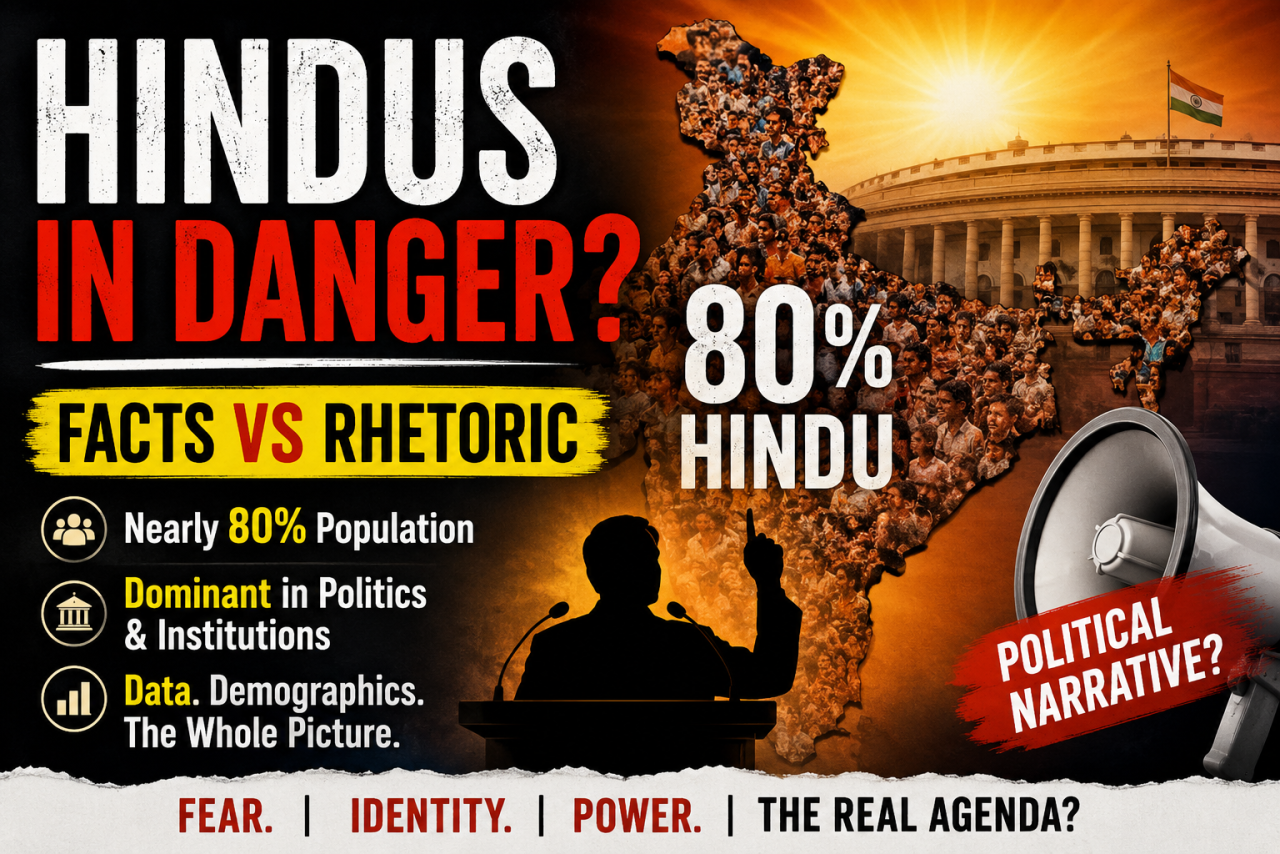
Population growth is another issue that is sometimes used to create fear between communities.
India has seen a decline in fertility rates across religious communities as education, urbanisation, income levels and access to healthcare have improved. Muslims have historically had a higher fertility rate than some other communities, but the gap has narrowed considerably.
Therefore, population data should be discussed carefully and scientifically. Claims about one community eventually replacing another are not a useful way to understand India's demographic future.
The better approach is to focus on education, employment, healthcare and economic opportunity. These issues affect Indians across religious communities.
Final Take
India cannot erase its history, but it can decide how that history is remembered and discussed.
Hindus and Muslims have lived together in India for centuries. Their histories include periods of conflict, but also long periods of cooperation, cultural exchange and shared life. Indian food, language, music, architecture and literature all carry evidence of this interaction.
The solution to communal tension does not lie in pretending that historical conflicts never happened. It also does not lie in using those conflicts to create hatred against people living today.
India needs equal treatment under the law, fair policing, better education and political leaders who do not benefit from communal hatred. Citizens also have a responsibility to question rumours, propaganda and historical claims that are presented without evidence.
India's future will not be decided only by the size of its economy or the strength of its military. It will also depend on whether its citizens can see each other first as fellow citizens rather than members of opposing religious communities.
History can explain today's divisions, but it does not have to determine tomorrow's future.
In the din of daily headlines and television debates, one important question is often left unanswered: Why do Hindu-Muslim tensions continue in India more than 75 years after Independence?
For a country that wants to become a major global economic and political power, social division is a serious concern. Economic growth depends not only on investment, technology and infrastructure but also on social stability. A divided society finds it harder to build trust, create opportunities and work towards common goals.
To understand why Hindu-Muslim tensions continue, we need to look beyond today's political debates. The roots of the problem go back several centuries, and the events of the colonial period, the freedom struggle and Partition continue to influence public attitudes.
Colonial Policies and the Politics of Division
The relationship between Britain and India did not begin with direct political control. The East India Company first came to India as a trading organisation. British merchants received trading privileges from Mughal rulers during the early 17th century. Over time, the Company expanded its influence and eventually became a political power.
The Revolt of 1857 showed that Indians from different religious communities could come together against a common political power. Hindus and Muslims fought alongside each other in several parts of the country. Bahadur Shah Zafar, the last Mughal emperor, became the symbolic leader of the revolt.
The British eventually suppressed the uprising. After 1857, the colonial government became increasingly careful about political unity among Indians. Over time, religious and social identities became more important in the administrative and political system.
The introduction of separate electorates for Muslims under the Morley-Minto Reforms in 1909 was an important development. It allowed Muslim voters to elect representatives from separate Muslim constituencies. This gave religious identity a formal place in electoral politics.
British policies were not the only reason for communal divisions, but colonial rule did help turn religious identities into political categories. Once religion became part of electoral calculations, political competition could easily take a communal form.
Historical Memory and Old Grievances
History also plays an important role in present-day relations between Hindus and Muslims.
Muslim dynasties ruled large parts of the Indian subcontinent for several centuries. Their periods of rule were not uniform. Some rulers supported art, literature, architecture and cultural exchange, while there were also periods of religious discrimination, destruction of places of worship and conflict.
These events are still discussed today. However, history is often presented selectively. A complex period involving different rulers, regions and political circumstances can be reduced to a simple story of one community ruling over another.
At the same time, it is important to remember that Indian Muslims cannot simply be described as descendants of foreign invaders. A large number of Indian Muslims are descendants of people who converted to Islam over generations. Their families have lived in India for centuries.
Therefore, the idea that Indian Muslims are outsiders does not reflect the historical reality of Indian society.
Partition and Its Long Shadow
The Partition of 1947 remains one of the deepest wounds in the history of the subcontinent.
Millions of people were forced to leave their homes. Families were separated, property was lost and large-scale violence took place on both sides of the new border. Hindus and Sikhs moved from areas that became Pakistan to India, while many Muslims moved in the opposite direction.
The creation of Pakistan as a Muslim-majority country also created a difficult situation for India. A large Muslim population remained in India after Partition. They were not migrants or temporary residents. They were citizens of a country whose Constitution promised equality before the law.
India's Constitution rejected the idea that citizenship should depend on religion. Yet the memories and fears created by Partition did not disappear in 1947. They continued to influence politics and social relations.
Politics and Communal Polarisation
After Independence, religion remained an important part of Indian politics.
Different political parties and leaders have, at various times, used religious identity to build political support. The Shah Bano controversy in the 1980s, the Ram Janmabhoomi-Babri Masjid dispute and the events surrounding the demolition of the Babri Masjid in 1992 became major political turning points.
Communal violence has also left deep scars. The riots in Ahmedabad in 1969, Nellie in 1983, Mumbai in 1992-93 and Gujarat in 2002 are among the major examples of communal violence in post-Independence India.
Such events cannot be explained by one political party, one community or one period of history. They involve a combination of political decisions, social tensions, rumours, administrative failures and local conflicts.
The larger problem is that political competition can turn these divisions into electoral issues. When votes become the main measure of political success, religious identity can become an easy tool for mobilisation.
Demography Should Not Become a Source of Fear
Population growth is another issue that is sometimes used to create fear between communities.
India has seen a decline in fertility rates across religious communities as education, urbanisation, income levels and access to healthcare have improved. Muslims have historically had a higher fertility rate than some other communities, but the gap has narrowed considerably.
Therefore, population data should be discussed carefully and scientifically. Claims about one community eventually replacing another are not a useful way to understand India's demographic future.
The better approach is to focus on education, employment, healthcare and economic opportunity. These issues affect Indians across religious communities.
Final Take
India cannot erase its history, but it can decide how that history is remembered and discussed.
Hindus and Muslims have lived together in India for centuries. Their histories include periods of conflict, but also long periods of cooperation, cultural exchange and shared life. Indian food, language, music, architecture and literature all carry evidence of this interaction.
The solution to communal tension does not lie in pretending that historical conflicts never happened. It also does not lie in using those conflicts to create hatred against people living today.
India needs equal treatment under the law, fair policing, better education and political leaders who do not benefit from communal hatred. Citizens also have a responsibility to question rumours, propaganda and historical claims that are presented without evidence.
India's future will not be decided only by the size of its economy or the strength of its military. It will also depend on whether its citizens can see each other first as fellow citizens rather than members of opposing religious communities.
History can explain today's divisions, but it does not have to determine tomorrow's future.



















Leave a Comment