
A student-led protest in Delhi has turned growing anger over exam leaks and education failures into one of 2026's biggest youth movements.
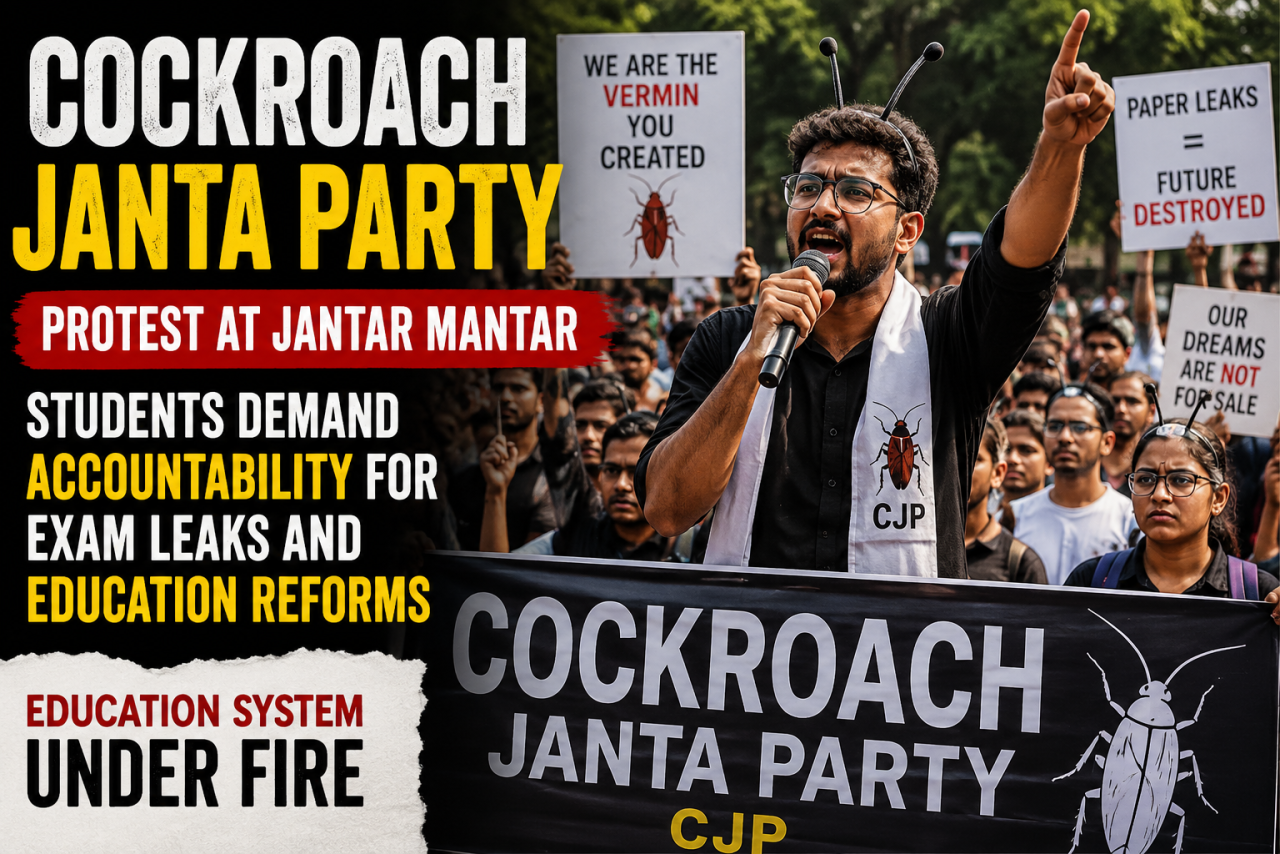
Jantar Mantar witnessed a large youth-led protest on Friday as thousands of students and young supporters gathered under the banner of the Cockroach Janta Party (CJP), a movement founded by activist and political strategist Abhijeet Dipke. The protest focused on concerns surrounding examination paper leaks, education reforms, and growing frustration among young Indians about their future prospects.
Many participants carried placards and wore symbolic cockroach-themed accessories, embracing a label that they say was used to demean unemployed and politically active youth. It began as a social media campaign and quickly evolved into an organized movement attracting significant attention among students across the country.
Education Crisis at the Center of the Protest
The primary issue raised by the protesters was the recurring controversy surrounding competitive examinations. In recent years, allegations of paper leaks and irregularities in major exams such as NEET-UG and concerns regarding other national-level entrance tests have led to widespread criticism of the examination system.
Protesters argued that repeated lapses have weakened trust in institutions and unfairly affected millions of students who spend years preparing for highly competitive exams.
The movement's key demands include:
- The resignation of Union Education Minister Dharmendra Pradhan.
- A comprehensive investigation into examination paper leaks.
- Accountability for officials responsible for lapses.
- Structural reforms to improve transparency and security in the examination process.
Addressing the gathering, Dipke said that students are no longer willing to remain silent about issues affecting their education and future. He argued that repeated failures in conducting examinations fairly have damaged confidence in the system.
Several students shared personal experiences during the protest. Many spoke about the financial burden of coaching classes and the emotional impact of preparing for years only to face uncertainty due to alleged examination irregularities.
One student from Bihar said his family had invested heavily in his preparation and that paper leak allegations left many aspirants questioning whether hard work alone was enough to succeed.
From Online Campaign to Political Movement
The Cockroach Janta Party was launched in May 2026 and gained rapid popularity on social media platforms. Its growth has been driven largely by young people frustrated with educational, employment, and governance issues.
The movement's name originates from remarks that supporters claim were used to describe unemployed or politically active youth. Rather than rejecting the label, CJP supporters have chosen to adopt it as a symbol of resilience and resistance.
Political observers note that the movement represents a broader trend in which younger generations use digital platforms to mobilize around public issues. However, translating online popularity into sustained political influence remains a significant challenge.
Challenges Ahead
Despite attracting large crowds and widespread online attention, the movement faces several obstacles.
First, critics question whether a protest movement built around satire and internet culture can maintain momentum over the long term. Some political opponents have dismissed the campaign as a publicity exercise, while supporters insist it reflects genuine student concerns.
Second, organizing large demonstrations requires navigating legal, logistical, and security challenges. Although Friday's protest remained largely peaceful, authorities continue to closely monitor public gatherings, particularly those involving politically sensitive issues.
The movement must also address broader concerns affecting Indian youth. Every year, millions of students enter a highly competitive job market where government examinations remain an important pathway to employment and social mobility. Any disruption to that process can have serious consequences for families that invest significant resources in education.
Many education experts have argued that examination reforms must go beyond addressing individual paper leak incidents. They point to the need for stronger institutional safeguards, greater transparency, and improved accountability mechanisms.
A Wider Debate on Youth Aspirations
Beyond examination controversies, the protest reflected deeper anxieties among young Indians about employment opportunities, economic mobility, and the increasing pressure associated with academic success.
Supporters argue that examination irregularities do more than affect rankings. They can delay careers, increase financial burdens, and contribute to stress and uncertainty among students.
The participation of activists and public figures has further broadened the conversation, linking education reform to larger questions about governance and nation-building.
What Comes Next?
The Cockroach Janta Party has announced that it will continue its campaign and has called for action on its demands within the coming days. Whether the movement develops into a lasting political force or remains a short-term protest campaign will depend largely on its ability to sustain public engagement and achieve concrete outcomes.
For now, the protest at Jantar Mantar has succeeded in drawing national attention to concerns that many students have been raising for years. While opinions differ on the movement's methods and symbolism, the message from participants was loud and clear: trust in the examination system must be restored, and student concerns can no longer be ignored.
As the crowds dispersed on Friday evening, the demonstration left behind a larger question for policymakers: how should India respond to a generation that increasingly feels its hard work is being undermined by systemic failures?
Jantar Mantar witnessed a large youth-led protest on Friday as thousands of students and young supporters gathered under the banner of the Cockroach Janta Party (CJP), a movement founded by activist and political strategist Abhijeet Dipke. The protest focused on concerns surrounding examination paper leaks, education reforms, and growing frustration among young Indians about their future prospects.
Many participants carried placards and wore symbolic cockroach-themed accessories, embracing a label that they say was used to demean unemployed and politically active youth. It began as a social media campaign and quickly evolved into an organized movement attracting significant attention among students across the country.
Education Crisis at the Center of the Protest
The primary issue raised by the protesters was the recurring controversy surrounding competitive examinations. In recent years, allegations of paper leaks and irregularities in major exams such as NEET-UG and concerns regarding other national-level entrance tests have led to widespread criticism of the examination system.
Protesters argued that repeated lapses have weakened trust in institutions and unfairly affected millions of students who spend years preparing for highly competitive exams.
The movement's key demands include:
- The resignation of Union Education Minister Dharmendra Pradhan.
- A comprehensive investigation into examination paper leaks.
- Accountability for officials responsible for lapses.
- Structural reforms to improve transparency and security in the examination process.
Addressing the gathering, Dipke said that students are no longer willing to remain silent about issues affecting their education and future. He argued that repeated failures in conducting examinations fairly have damaged confidence in the system.
Several students shared personal experiences during the protest. Many spoke about the financial burden of coaching classes and the emotional impact of preparing for years only to face uncertainty due to alleged examination irregularities.
One student from Bihar said his family had invested heavily in his preparation and that paper leak allegations left many aspirants questioning whether hard work alone was enough to succeed.
From Online Campaign to Political Movement
The Cockroach Janta Party was launched in May 2026 and gained rapid popularity on social media platforms. Its growth has been driven largely by young people frustrated with educational, employment, and governance issues.
The movement's name originates from remarks that supporters claim were used to describe unemployed or politically active youth. Rather than rejecting the label, CJP supporters have chosen to adopt it as a symbol of resilience and resistance.
Political observers note that the movement represents a broader trend in which younger generations use digital platforms to mobilize around public issues. However, translating online popularity into sustained political influence remains a significant challenge.
Challenges Ahead
Despite attracting large crowds and widespread online attention, the movement faces several obstacles.
First, critics question whether a protest movement built around satire and internet culture can maintain momentum over the long term. Some political opponents have dismissed the campaign as a publicity exercise, while supporters insist it reflects genuine student concerns.
Second, organizing large demonstrations requires navigating legal, logistical, and security challenges. Although Friday's protest remained largely peaceful, authorities continue to closely monitor public gatherings, particularly those involving politically sensitive issues.
The movement must also address broader concerns affecting Indian youth. Every year, millions of students enter a highly competitive job market where government examinations remain an important pathway to employment and social mobility. Any disruption to that process can have serious consequences for families that invest significant resources in education.
Many education experts have argued that examination reforms must go beyond addressing individual paper leak incidents. They point to the need for stronger institutional safeguards, greater transparency, and improved accountability mechanisms.
A Wider Debate on Youth Aspirations
Beyond examination controversies, the protest reflected deeper anxieties among young Indians about employment opportunities, economic mobility, and the increasing pressure associated with academic success.
Supporters argue that examination irregularities do more than affect rankings. They can delay careers, increase financial burdens, and contribute to stress and uncertainty among students.
The participation of activists and public figures has further broadened the conversation, linking education reform to larger questions about governance and nation-building.
What Comes Next?
The Cockroach Janta Party has announced that it will continue its campaign and has called for action on its demands within the coming days. Whether the movement develops into a lasting political force or remains a short-term protest campaign will depend largely on its ability to sustain public engagement and achieve concrete outcomes.
For now, the protest at Jantar Mantar has succeeded in drawing national attention to concerns that many students have been raising for years. While opinions differ on the movement's methods and symbolism, the message from participants was loud and clear: trust in the examination system must be restored, and student concerns can no longer be ignored.
As the crowds dispersed on Friday evening, the demonstration left behind a larger question for policymakers: how should India respond to a generation that increasingly feels its hard work is being undermined by systemic failures?


















Leave a Comment