
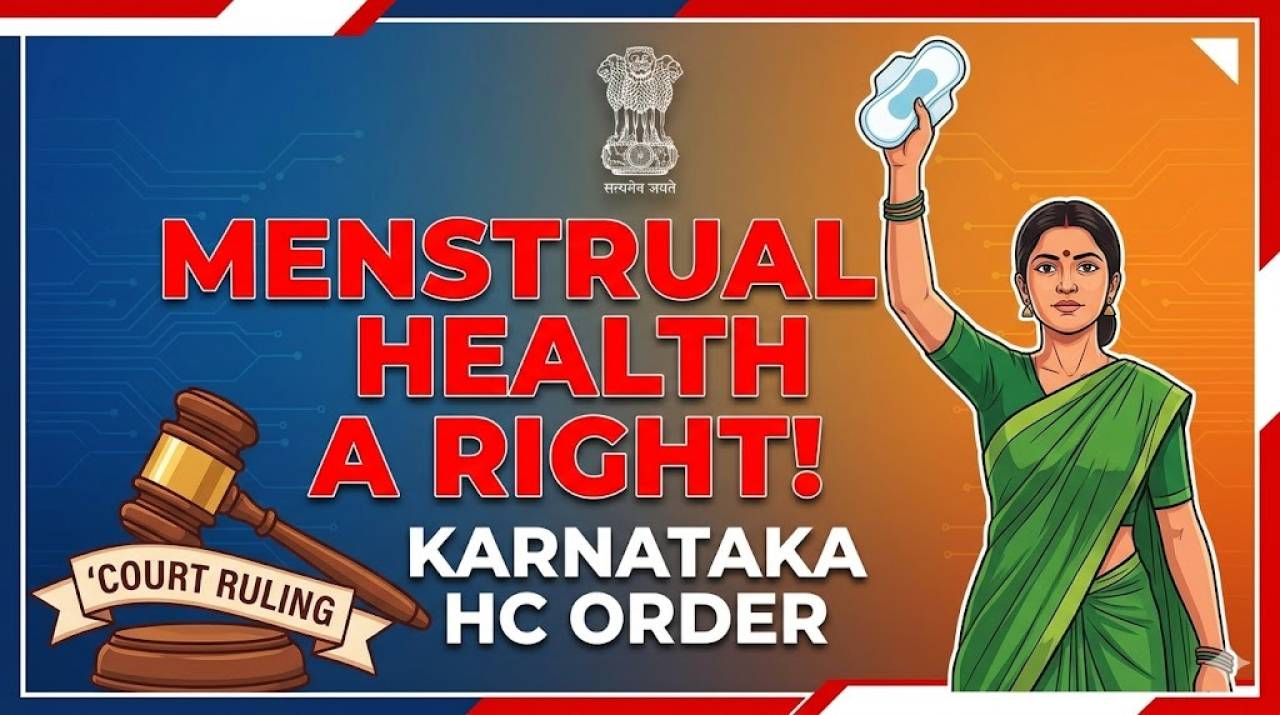
Menstrual health is a constitutional right tied to dignity, equality, and the right to life at work and beyond.
A recent decision by the Karnataka High Court has brought an important issue into focus—menstrual health. The court clearly said that a woman’s menstrual health is not just a personal matter, but a part of her fundamental right to life under Article 21 of the Constitution. This means it is connected to dignity, health, and overall well-being.
What Did the Court Say?
The Karnataka High Court directed the state government to strictly and properly implement its menstrual leave policy, which was introduced in December 2025. The court emphasized that policies should not just exist on paper—they must be followed in real life.
The policy gives one day of leave every month to women employees aged 18 to 52 during their menstrual cycle. This applies to registered workplaces and aims to support women’s health and comfort at work.
The court also said that once a proper law is passed, the government must act quickly and create rules so that the policy has a real and meaningful impact, especially for women working in difficult conditions.
Why Is This Important?
Menstruation is a natural biological process, but many women face pain, discomfort, and health issues during their periods. Despite this, society often ignores or stigmatizes the topic.
By linking menstrual health to the right to life, the court has taken a strong step. It recognizes that:
- Women’s health needs deserve attention
- Ignoring menstrual issues affects dignity and equality
- Workplaces must be sensitive to biological differences
This decision helps break the silence and encourages more open discussions.
Equality vs. Fairness
One key issue discussed in the case was whether menstrual leave goes against Article 14 (Right to Equality). Some argue that giving special leave to women may seem unequal.
However, the court explained an important idea: equality does not always mean treating everyone the same. Sometimes, fairness means giving extra support to those who need it.
Men and women are equal under the law, but they are biologically different. Recognizing these differences and providing support actually promotes true equality, not discrimination.
Ground Reality: A Big Challenge
Even though the policy exists, the court noted that it has not been properly implemented everywhere—especially in smaller companies and unorganised sectors.
A woman worker who filed the case shared that despite the policy, she still had to work under physically difficult conditions during her periods. This shows the gap between policy and practice.
Many workplaces either:
- Do not inform employees about such policies
- Do not allow leave due to workload pressure
- Ignore the issue completely
This is why the court stressed strict and uniform implementation.
Legal and Social Impact
This decision is important not just for Karnataka, but for the whole country. It sets an example for other states and raises awareness about menstrual health rights.
It also connects with a broader idea—healthcare, dignity, and workplace rights are all part of fundamental rights.
In the long term, this could lead to:
- Better workplace policies across India
- More awareness about menstrual health
- Reduced stigma around periods
- Stronger legal protections for women
What Needs to Happen Next?
For this decision to truly make a difference, several steps are needed:
- Clear Laws – The proposed menstrual leave law must be passed soon
- Awareness – Women should know their rights
- Employer Responsibility – Companies must follow the policy seriously
- Monitoring – Government should ensure proper implementation
- Social Change – Society must treat menstruation as normal, not taboo
Final Take
The Karnataka High Court’s order is a strong reminder that women’s health is a basic right, not a luxury. By linking menstrual health to the right to life, the court has taken a progressive step toward a more fair and inclusive society.
However, laws and policies alone are not enough. Real change will come only when they are properly implemented and supported by society.
For students and young citizens, this is a chance to understand how law can shape everyday life. It also teaches us that the true equality means respecting differences and ensuring dignity for all.
Deepen Your Understanding
As India navigates the intersection of biological reality and legal rights, this judgment serves as a vital blueprint for the future. To understand the broader legal landscape and the challenges involved in balancing workplace dynamics with fundamental rights, explore our detailed analysis of when the Supreme Court declined a plea for mandatory menstrual leave, citing potential economic and employment impacts.
Furthermore, this conversation is part of a larger judicial debate on tradition and gender; you can read more about how the judiciary views biological processes in our coverage of the Article 17 vs. Sabarimala case, where the court debated if menstrual bans equate to untouchability.
A recent decision by the Karnataka High Court has brought an important issue into focus—menstrual health. The court clearly said that a woman’s menstrual health is not just a personal matter, but a part of her fundamental right to life under Article 21 of the Constitution. This means it is connected to dignity, health, and overall well-being.
What Did the Court Say?
The Karnataka High Court directed the state government to strictly and properly implement its menstrual leave policy, which was introduced in December 2025. The court emphasized that policies should not just exist on paper—they must be followed in real life.
The policy gives one day of leave every month to women employees aged 18 to 52 during their menstrual cycle. This applies to registered workplaces and aims to support women’s health and comfort at work.
The court also said that once a proper law is passed, the government must act quickly and create rules so that the policy has a real and meaningful impact, especially for women working in difficult conditions.
Why Is This Important?
Menstruation is a natural biological process, but many women face pain, discomfort, and health issues during their periods. Despite this, society often ignores or stigmatizes the topic.
By linking menstrual health to the right to life, the court has taken a strong step. It recognizes that:
- Women’s health needs deserve attention
- Ignoring menstrual issues affects dignity and equality
- Workplaces must be sensitive to biological differences
This decision helps break the silence and encourages more open discussions.
Equality vs. Fairness
One key issue discussed in the case was whether menstrual leave goes against Article 14 (Right to Equality). Some argue that giving special leave to women may seem unequal.
However, the court explained an important idea: equality does not always mean treating everyone the same. Sometimes, fairness means giving extra support to those who need it.
Men and women are equal under the law, but they are biologically different. Recognizing these differences and providing support actually promotes true equality, not discrimination.
Ground Reality: A Big Challenge
Even though the policy exists, the court noted that it has not been properly implemented everywhere—especially in smaller companies and unorganised sectors.
A woman worker who filed the case shared that despite the policy, she still had to work under physically difficult conditions during her periods. This shows the gap between policy and practice.
Many workplaces either:
- Do not inform employees about such policies
- Do not allow leave due to workload pressure
- Ignore the issue completely
This is why the court stressed strict and uniform implementation.
Legal and Social Impact
This decision is important not just for Karnataka, but for the whole country. It sets an example for other states and raises awareness about menstrual health rights.
It also connects with a broader idea—healthcare, dignity, and workplace rights are all part of fundamental rights.
In the long term, this could lead to:
- Better workplace policies across India
- More awareness about menstrual health
- Reduced stigma around periods
- Stronger legal protections for women
What Needs to Happen Next?
For this decision to truly make a difference, several steps are needed:
- Clear Laws – The proposed menstrual leave law must be passed soon
- Awareness – Women should know their rights
- Employer Responsibility – Companies must follow the policy seriously
- Monitoring – Government should ensure proper implementation
- Social Change – Society must treat menstruation as normal, not taboo
Final Take
The Karnataka High Court’s order is a strong reminder that women’s health is a basic right, not a luxury. By linking menstrual health to the right to life, the court has taken a progressive step toward a more fair and inclusive society.
However, laws and policies alone are not enough. Real change will come only when they are properly implemented and supported by society.
For students and young citizens, this is a chance to understand how law can shape everyday life. It also teaches us that the true equality means respecting differences and ensuring dignity for all.
Deepen Your Understanding
As India navigates the intersection of biological reality and legal rights, this judgment serves as a vital blueprint for the future. To understand the broader legal landscape and the challenges involved in balancing workplace dynamics with fundamental rights, explore our detailed analysis of when the Supreme Court declined a plea for mandatory menstrual leave, citing potential economic and employment impacts.
Furthermore, this conversation is part of a larger judicial debate on tradition and gender; you can read more about how the judiciary views biological processes in our coverage of the Article 17 vs. Sabarimala case, where the court debated if menstrual bans equate to untouchability.












Leave a Comment