
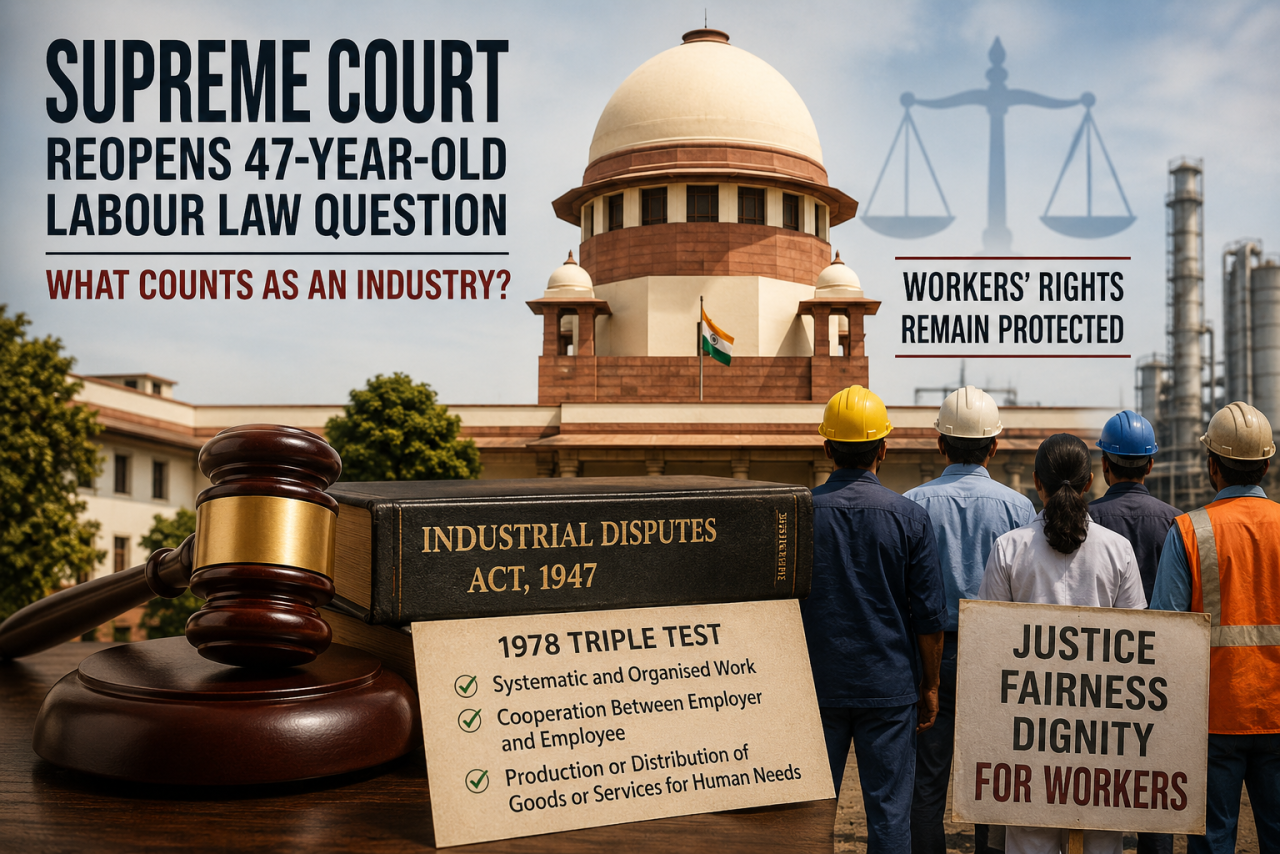
Supreme Court reopens the 47-year-old debate over what qualifies as an industry, but pending worker cases remain protected under the existing rules.
The Supreme Court has reopened one of the oldest and most contested questions in India's labour law, what exactly counts as an "industry"? On Thursday, a nine-judge Constitution bench led by Chief Justice Surya Kant ruled by a narrow 5:4 majority that the definition laid down nearly five decades ago needs to be revisited. At the same time, the bench unanimously protected every pending case from being affected by this reopening, choosing legal certainty for workers today over an immediate rewrite of the rules.
At the centre of the case is Section 2(j) of the now-repealed Industrial Disputes Act, 1947, which defines "industry." In 1978, a seven-judge bench in Bangalore Water Supply and Sewerage Board vs A Rajappa gave the term a sweeping meaning. It laid down what came to be known as the "triple test." An activity qualified as an industry if it involved systematic and organised work, cooperation between employer and employee, and the production or distribution of goods or services to meet human needs.
This interpretation brought government departments, hospitals, charitable trusts and research institutions within the scope of labour law protections, alongside factories and companies. Employers and the government had objected to the broad definition for years, arguing that it blurred the line between commercial activity and the state's welfare and sovereign functions. The dispute eventually reached a seven-judge bench in 2017, which concluded that the matter required a fresh and larger examination.
That led to Thursday's ruling. The majority, written by CJI Surya Kant for himself and Justices SC Sharma, Alok Aradhe and Vipul M Pancholi, held that the 1978 test requires "refinement and reformulation." The CJI made clear that the court was not redefining "industry" under the new Industrial Relations Code, 2020. The 1978 verdict, he said, could not be treated as a permanent and unquestionable basis for interpreting the term under the new code.
Justice PS Narasimha agreed with this reasoning, taking the majority to five judges. He also held that the reference to a larger bench had been validly made in the first place.
The bench, however, was far from united on the substance of the issue.
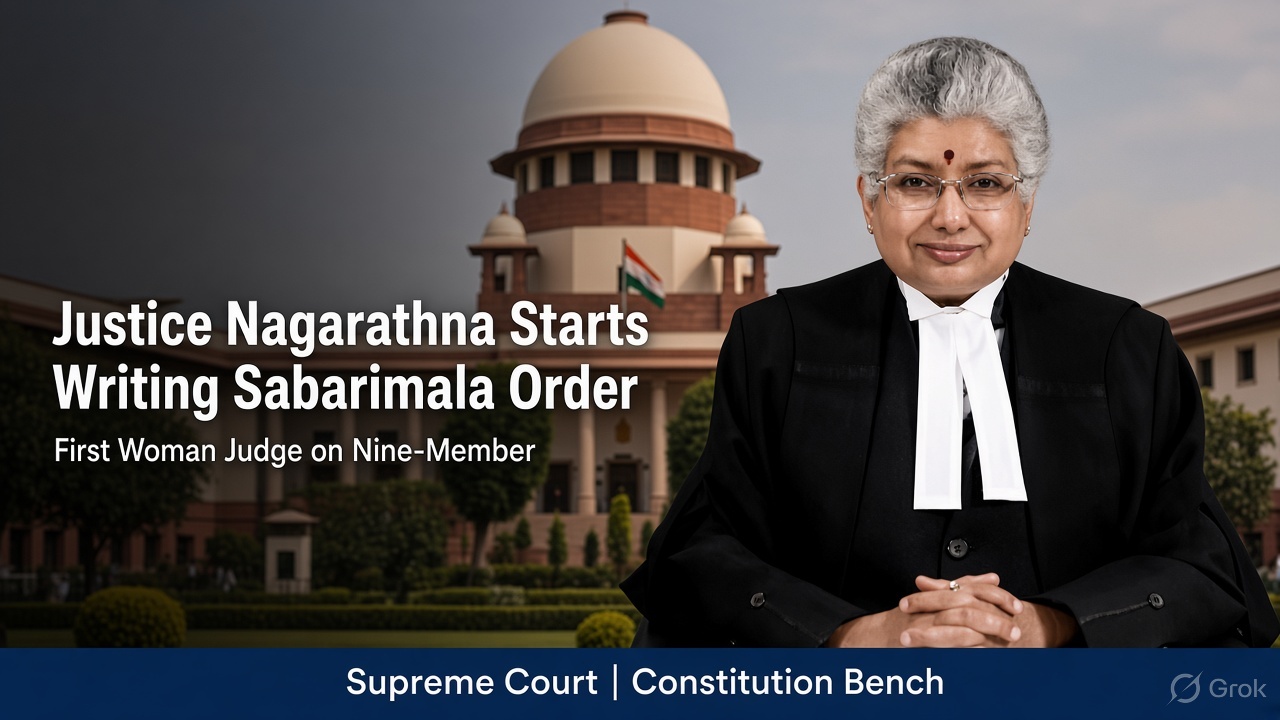
Justice BV Nagarathna held that the reference itself was unnecessary. She argued that the 1978 verdict could have been reconciled with later judgments and that its expansive definition of industry remained necessary and correct. She stressed that what matters is the nature of the activity, not who is carrying it out. A government body performing a particular task, she said, cannot claim automatic immunity simply by describing that activity as a sovereign function.
Justice Dipankar Datta, writing for himself and Justice Ujjal Bhuyan, went further. He said the reference served no real legal purpose and warned that unsettling a decades-old precedent could create confusion and disturb industrial peace.
Justice Joymalya Bagchi agreed that the reference had been validly made but disagreed with the need to refine the 1978 definition. He particularly cautioned that charitable and social institutions should not escape their obligations toward workers unless Parliament specifically exempts them through a properly notified law.
Whatever the disagreement over the legal principle, the bench spoke in one voice on a crucial point. Every dispute currently pending under the 1947 Act will continue to be decided using the same 1978 triple test. Nothing changes for ongoing litigation.
That provides an important layer of protection for lakhs of workers and employers involved in cases that have often continued for years. They will not have to deal with a legal standard changing midway through their disputes.
The stakes behind the case are significant. Attorney General R Venkataramani, representing the government, argued that questioning the broad definition did not make the state anti-worker. He warned, however, that treating departments such as forestry and irrigation as "industries" could have serious administrative consequences.
On the other side, senior advocates including Indira Jaising, CU Singh, Vijay Hansaria and Gopal Sankaranarayanan defended the 1978 judgment as a precedent that has protected workers for more than four decades.
For now, the Supreme Court has opened the door to reconsidering what qualifies as an industry in the future. But workers and employers already before the courts do not have to wait for that answer. Their cases remain governed by the legal standard that has been in place for nearly five decades.
The Supreme Court has reopened one of the oldest and most contested questions in India's labour law, what exactly counts as an "industry"? On Thursday, a nine-judge Constitution bench led by Chief Justice Surya Kant ruled by a narrow 5:4 majority that the definition laid down nearly five decades ago needs to be revisited. At the same time, the bench unanimously protected every pending case from being affected by this reopening, choosing legal certainty for workers today over an immediate rewrite of the rules.
At the centre of the case is Section 2(j) of the now-repealed Industrial Disputes Act, 1947, which defines "industry." In 1978, a seven-judge bench in Bangalore Water Supply and Sewerage Board vs A Rajappa gave the term a sweeping meaning. It laid down what came to be known as the "triple test." An activity qualified as an industry if it involved systematic and organised work, cooperation between employer and employee, and the production or distribution of goods or services to meet human needs.
This interpretation brought government departments, hospitals, charitable trusts and research institutions within the scope of labour law protections, alongside factories and companies. Employers and the government had objected to the broad definition for years, arguing that it blurred the line between commercial activity and the state's welfare and sovereign functions. The dispute eventually reached a seven-judge bench in 2017, which concluded that the matter required a fresh and larger examination.
That led to Thursday's ruling. The majority, written by CJI Surya Kant for himself and Justices SC Sharma, Alok Aradhe and Vipul M Pancholi, held that the 1978 test requires "refinement and reformulation." The CJI made clear that the court was not redefining "industry" under the new Industrial Relations Code, 2020. The 1978 verdict, he said, could not be treated as a permanent and unquestionable basis for interpreting the term under the new code.
Justice PS Narasimha agreed with this reasoning, taking the majority to five judges. He also held that the reference to a larger bench had been validly made in the first place.
The bench, however, was far from united on the substance of the issue.
Justice BV Nagarathna held that the reference itself was unnecessary. She argued that the 1978 verdict could have been reconciled with later judgments and that its expansive definition of industry remained necessary and correct. She stressed that what matters is the nature of the activity, not who is carrying it out. A government body performing a particular task, she said, cannot claim automatic immunity simply by describing that activity as a sovereign function.
Justice Dipankar Datta, writing for himself and Justice Ujjal Bhuyan, went further. He said the reference served no real legal purpose and warned that unsettling a decades-old precedent could create confusion and disturb industrial peace.
Justice Joymalya Bagchi agreed that the reference had been validly made but disagreed with the need to refine the 1978 definition. He particularly cautioned that charitable and social institutions should not escape their obligations toward workers unless Parliament specifically exempts them through a properly notified law.
Whatever the disagreement over the legal principle, the bench spoke in one voice on a crucial point. Every dispute currently pending under the 1947 Act will continue to be decided using the same 1978 triple test. Nothing changes for ongoing litigation.
That provides an important layer of protection for lakhs of workers and employers involved in cases that have often continued for years. They will not have to deal with a legal standard changing midway through their disputes.
The stakes behind the case are significant. Attorney General R Venkataramani, representing the government, argued that questioning the broad definition did not make the state anti-worker. He warned, however, that treating departments such as forestry and irrigation as "industries" could have serious administrative consequences.
On the other side, senior advocates including Indira Jaising, CU Singh, Vijay Hansaria and Gopal Sankaranarayanan defended the 1978 judgment as a precedent that has protected workers for more than four decades.
For now, the Supreme Court has opened the door to reconsidering what qualifies as an industry in the future. But workers and employers already before the courts do not have to wait for that answer. Their cases remain governed by the legal standard that has been in place for nearly five decades.





















Leave a Comment