
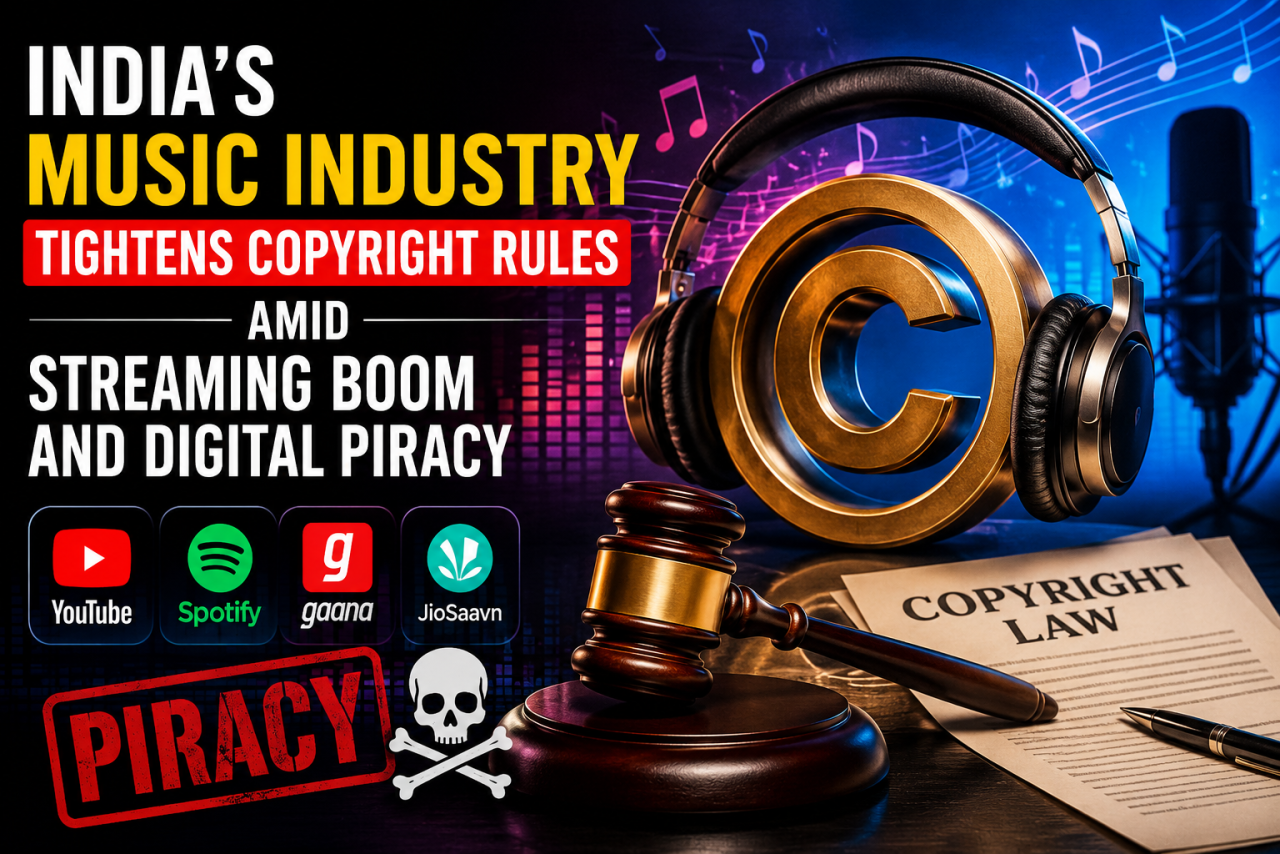
Millions press play every day, but behind every stream lies an invisible battle. As India's music industry reaches new digital heights, the fight over copyright, royalties, and creative ownership has never been louder.
India’s music industry, celebrated for its rich musical heritage and the global appeal of Bollywood songs, is undergoing a major transformation. As listeners increasingly turn to digital platforms such as YouTube, Spotify, Gaana, and JioSaavn, copyright compliance has become one of the industry's biggest challenges. What was once viewed as a routine legal formality has now become essential for protecting the rights and earnings of lyricists, composers, singers, and music producers.
The Royalty Debate: A Long Fight for Creative Rights
On the eve of World Music Day 2024, veteran lyricist and screenwriter Javed Akhtar reflected on his decades-long struggle to secure royalty rights for music creators. In an interview with Hindustan Times, he recalled facing resistance from music companies when he first raised the issue.
"I was humiliated by a music company for demanding royalties. I studied international copyright laws and used my position as a Member of Parliament to push for reforms," Akhtar said.
His efforts contributed significantly to the Copyright (Amendment) Act, 2012, which guarantees royalty payments to authors, composers, and performers whenever their work is commercially exploited. The amendment marked a turning point in India's copyright framework by recognizing that creators deserve a continuing share of the revenue generated by their work.
Akhtar also acknowledged the contribution of legendary singer Lata Mangeshkar to this movement. He recalled an incident from 1991 when a government minister dismissed singers as mere performers without creative ownership. Deeply disappointed by the remark, Mangeshkar joined the campaign for stronger legal protection and fair compensation for singers and lyricists.
Digital Expansion Brings New Copyright Challenges
The rapid growth of music streaming has made songs accessible to millions with just a few clicks. However, this convenience has also created serious copyright concerns. Music is frequently copied, downloaded, remixed, and shared without proper authorization, credit, or payment to the original creators.
Although India's copyright laws have become stronger, enforcement continues to face significant challenges. Every day, millions of audio and video files are uploaded across digital platforms, making it difficult to detect and remove unauthorized content quickly.
Pirated music websites, illegal downloads, unauthorized uploads, and unlicensed commercial use continue to cause substantial financial losses for artists and music companies. Even well-known musicians regularly encounter unauthorized use of their work on social media and digital platforms.
Signs of Positive Change
Despite these challenges, many artists believe the industry is moving in the right direction. Veteran playback singer Sonu Nigam has expressed optimism about the changing environment for musicians.
Speaking during a recent interaction with the media, he said that the industry's difficult phase appears to be fading. According to Nigam, artists are now able to focus more on creating music instead of constantly worrying about unfair treatment or exploitation.
His remarks reflect a broader sense of confidence that stronger legal protection and growing awareness are gradually improving conditions for music creators.
Rights Organizations Are Strengthening Copyright Protection
Several organizations have emerged as key defenders of artists' rights. The Indian Performing Right Society (IPRS) and the Indian Singers and Musicians Rights Association (ISAMRA) play an important role in protecting the interests of creators.
These organizations educate artists about their legal rights, negotiate licensing agreements, and ensure that composers, lyricists, singers, and musicians receive royalties whenever their work is used commercially in films, television, advertisements, radio broadcasts, concerts, or digital platforms.
Their role has become increasingly important in the era of short-form videos, remixes, reels, podcasts, and ringtones, where copyrighted music is frequently reused across multiple platforms.
Technology Is Becoming a Powerful Ally
The music industry is also adopting advanced technologies to strengthen copyright enforcement. Blockchain technology is being explored to create secure and transparent records of music ownership, licensing agreements, and royalty payments. Because blockchain records cannot be easily altered, they offer greater transparency for both artists and music companies.
At the same time, artificial intelligence and machine learning are helping identify unauthorized use of copyrighted music across the internet. These technologies can automatically detect illegal uploads, duplicate recordings, unauthorized streams, and pirated content in real time.
Such innovations enable faster content removal, more accurate royalty calculations, and quicker payments to creators. They also reduce the dependence on lengthy legal disputes and manual record-keeping.
Building a Fairer Future for India's Music Industry
India has made significant progress in strengthening its copyright laws, but effective implementation remains an ongoing challenge. Protecting creative work requires cooperation among policymakers, digital platforms, record labels, copyright organizations, and artists.
Greater public awareness, transparent licensing systems, stronger enforcement, and responsible use of technology will be essential for building a fair and sustainable music ecosystem. When creators receive proper recognition and compensation for their work, innovation and artistic excellence naturally flourish.
As India's digital music market continues to expand, protecting intellectual property will not only safeguard the livelihoods of artists but also strengthen the country's creative economy. By combining effective laws with modern technology and industry-wide cooperation, India has the opportunity to become a global example of copyright governance in the digital age.
India’s music industry, celebrated for its rich musical heritage and the global appeal of Bollywood songs, is undergoing a major transformation. As listeners increasingly turn to digital platforms such as YouTube, Spotify, Gaana, and JioSaavn, copyright compliance has become one of the industry's biggest challenges. What was once viewed as a routine legal formality has now become essential for protecting the rights and earnings of lyricists, composers, singers, and music producers.
The Royalty Debate: A Long Fight for Creative Rights
On the eve of World Music Day 2024, veteran lyricist and screenwriter Javed Akhtar reflected on his decades-long struggle to secure royalty rights for music creators. In an interview with Hindustan Times, he recalled facing resistance from music companies when he first raised the issue.
"I was humiliated by a music company for demanding royalties. I studied international copyright laws and used my position as a Member of Parliament to push for reforms," Akhtar said.
His efforts contributed significantly to the Copyright (Amendment) Act, 2012, which guarantees royalty payments to authors, composers, and performers whenever their work is commercially exploited. The amendment marked a turning point in India's copyright framework by recognizing that creators deserve a continuing share of the revenue generated by their work.
Akhtar also acknowledged the contribution of legendary singer Lata Mangeshkar to this movement. He recalled an incident from 1991 when a government minister dismissed singers as mere performers without creative ownership. Deeply disappointed by the remark, Mangeshkar joined the campaign for stronger legal protection and fair compensation for singers and lyricists.
Digital Expansion Brings New Copyright Challenges
The rapid growth of music streaming has made songs accessible to millions with just a few clicks. However, this convenience has also created serious copyright concerns. Music is frequently copied, downloaded, remixed, and shared without proper authorization, credit, or payment to the original creators.
Although India's copyright laws have become stronger, enforcement continues to face significant challenges. Every day, millions of audio and video files are uploaded across digital platforms, making it difficult to detect and remove unauthorized content quickly.
Pirated music websites, illegal downloads, unauthorized uploads, and unlicensed commercial use continue to cause substantial financial losses for artists and music companies. Even well-known musicians regularly encounter unauthorized use of their work on social media and digital platforms.
Signs of Positive Change
Despite these challenges, many artists believe the industry is moving in the right direction. Veteran playback singer Sonu Nigam has expressed optimism about the changing environment for musicians.
Speaking during a recent interaction with the media, he said that the industry's difficult phase appears to be fading. According to Nigam, artists are now able to focus more on creating music instead of constantly worrying about unfair treatment or exploitation.
His remarks reflect a broader sense of confidence that stronger legal protection and growing awareness are gradually improving conditions for music creators.
Rights Organizations Are Strengthening Copyright Protection
Several organizations have emerged as key defenders of artists' rights. The Indian Performing Right Society (IPRS) and the Indian Singers and Musicians Rights Association (ISAMRA) play an important role in protecting the interests of creators.
These organizations educate artists about their legal rights, negotiate licensing agreements, and ensure that composers, lyricists, singers, and musicians receive royalties whenever their work is used commercially in films, television, advertisements, radio broadcasts, concerts, or digital platforms.
Their role has become increasingly important in the era of short-form videos, remixes, reels, podcasts, and ringtones, where copyrighted music is frequently reused across multiple platforms.
Technology Is Becoming a Powerful Ally
The music industry is also adopting advanced technologies to strengthen copyright enforcement. Blockchain technology is being explored to create secure and transparent records of music ownership, licensing agreements, and royalty payments. Because blockchain records cannot be easily altered, they offer greater transparency for both artists and music companies.
At the same time, artificial intelligence and machine learning are helping identify unauthorized use of copyrighted music across the internet. These technologies can automatically detect illegal uploads, duplicate recordings, unauthorized streams, and pirated content in real time.
Such innovations enable faster content removal, more accurate royalty calculations, and quicker payments to creators. They also reduce the dependence on lengthy legal disputes and manual record-keeping.
Building a Fairer Future for India's Music Industry
India has made significant progress in strengthening its copyright laws, but effective implementation remains an ongoing challenge. Protecting creative work requires cooperation among policymakers, digital platforms, record labels, copyright organizations, and artists.
Greater public awareness, transparent licensing systems, stronger enforcement, and responsible use of technology will be essential for building a fair and sustainable music ecosystem. When creators receive proper recognition and compensation for their work, innovation and artistic excellence naturally flourish.
As India's digital music market continues to expand, protecting intellectual property will not only safeguard the livelihoods of artists but also strengthen the country's creative economy. By combining effective laws with modern technology and industry-wide cooperation, India has the opportunity to become a global example of copyright governance in the digital age.















Leave a Comment