
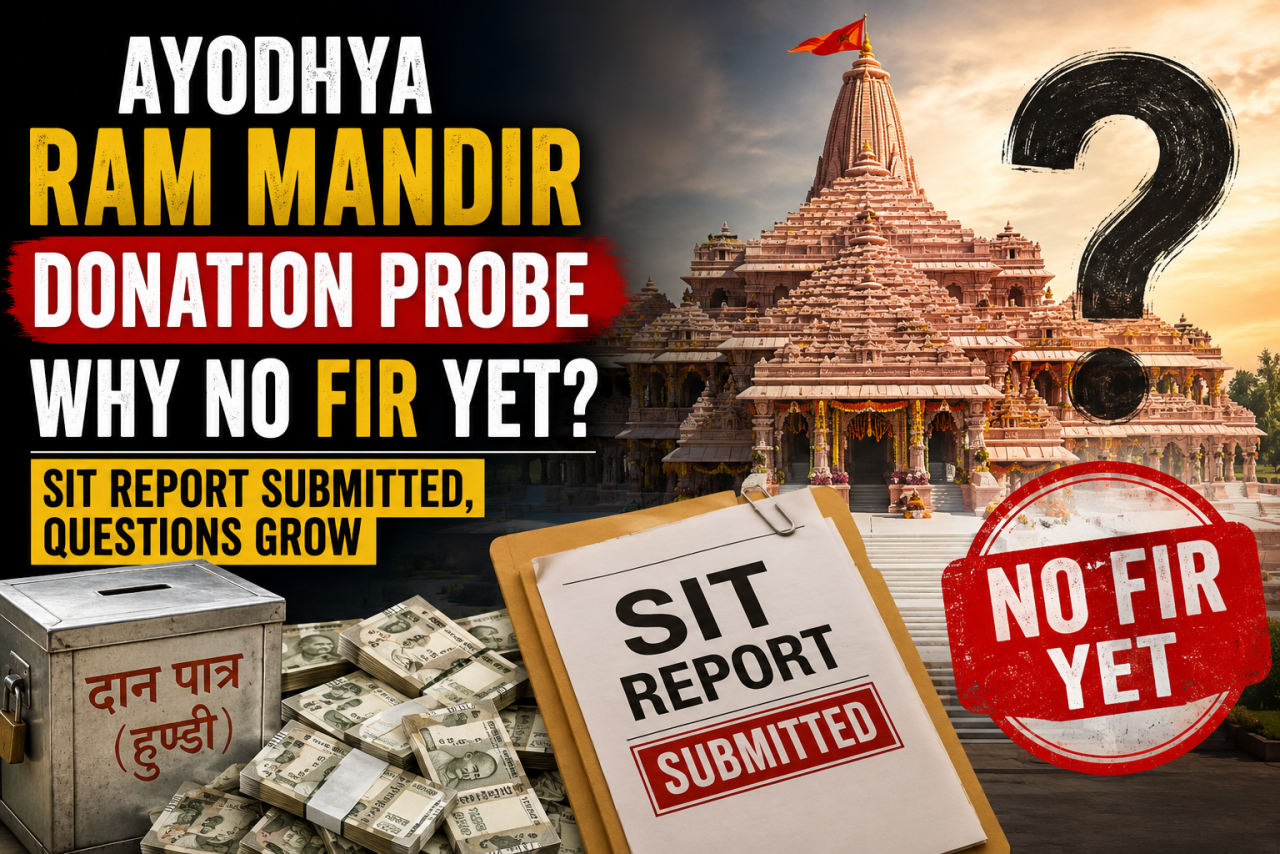
The SIT has submitted its findings, recoveries have been made, yet no FIR has been filed. Why is the Ayodhya Ram Mandir donation case still awaiting legal action?
The Ram Mandir in Ayodhya is one of India's most significant religious institutions, attracting millions of devotees from across the country. However, recent allegations regarding irregularities in the handling of temple donations have raised serious questions about transparency and accountability. Although a Special Investigation Team (SIT) has completed a preliminary inquiry and submitted its report, no First Information Report (FIR) has been registered so far, leading to growing public debate.
The controversy emerged in June 2026 when reports surfaced about possible discrepancies in the counting and recording of cash donations collected through the temple's hundis (donation boxes). Some media reports suggested that a substantial amount of money might have gone missing. These claims drew widespread attention and prompted demands for an official investigation.
In response, the Uttar Pradesh government constituted a three-member SIT to examine the matter. The team was tasked with reviewing the systems used for collecting, counting, storing, and auditing donations received by the temple. The investigation reportedly identified several administrative weaknesses, including inadequate supervision of staff involved in cash handling, limited retention of CCTV footage, and lapses in audit compliance. The probe also highlighted concerns regarding the documentation of certain valuables donated to the temple.
As part of the investigation, several employees were suspended or questioned. Authorities also recovered cash and other assets from individuals under scrutiny. According to reports, the SIT estimated the suspected financial irregularities to be significantly lower than some of the figures initially circulated in public discussions. The report is also said to have recommended action against a number of individuals associated with the temple's administrative system.
Despite these developments, no FIR had been filed as of June 24, 2026. Government officials have explained that the SIT was initially established to determine the facts and identify systemic shortcomings before the registration of any criminal case. According to the state administration, a detailed inquiry is necessary to ensure that any future legal action is based on verified evidence rather than speculation.
Chief Minister Yogi Adityanath has stated that the government will take strict action if wrongdoing is established. He has urged the public to wait for the completion of the full investigation process, emphasizing the need for accuracy in a matter involving a religious institution of national importance.
Legal experts note that, in certain sensitive cases, fact-finding inquiries are sometimes conducted before an FIR is registered. Such inquiries help authorities determine the nature and extent of alleged wrongdoing before initiating formal criminal proceedings. The Shri Ram Janmabhoomi Teerth Kshetra Trust, which manages the temple, has also maintained that internal audits are continuing and that many of the more serious allegations remain unproven.
However, the delay in filing an FIR has drawn criticism from opposition leaders and sections of civil society. Several political figures have demanded a formal criminal investigation and called for greater transparency. Critics argue that without an FIR, investigative agencies have limited legal powers to pursue a comprehensive criminal probe.
The issue has also reached the judiciary, with petitions reportedly seeking judicial oversight of the investigation. Some religious leaders and local residents have expressed concern that delays in legal action could weaken public confidence in the process. They argue that donations made by devotees should be managed with the highest standards of accountability.
Beyond the immediate controversy, the episode has highlighted broader challenges faced by large religious trusts that handle substantial public contributions. Experts suggest that stronger financial controls, independent audits, improved surveillance systems, and clearer administrative accountability could help prevent similar controversies in the future.
The Ram Mandir holds immense religious and cultural significance for millions of Hindus. As the government reviews the SIT's findings, public attention remains focused on whether further legal action will follow. The decisions taken in the coming weeks are likely to influence not only the outcome of this case but also public trust in the management of major religious institutions across the country.
The Ram Mandir in Ayodhya is one of India's most significant religious institutions, attracting millions of devotees from across the country. However, recent allegations regarding irregularities in the handling of temple donations have raised serious questions about transparency and accountability. Although a Special Investigation Team (SIT) has completed a preliminary inquiry and submitted its report, no First Information Report (FIR) has been registered so far, leading to growing public debate.
The controversy emerged in June 2026 when reports surfaced about possible discrepancies in the counting and recording of cash donations collected through the temple's hundis (donation boxes). Some media reports suggested that a substantial amount of money might have gone missing. These claims drew widespread attention and prompted demands for an official investigation.
In response, the Uttar Pradesh government constituted a three-member SIT to examine the matter. The team was tasked with reviewing the systems used for collecting, counting, storing, and auditing donations received by the temple. The investigation reportedly identified several administrative weaknesses, including inadequate supervision of staff involved in cash handling, limited retention of CCTV footage, and lapses in audit compliance. The probe also highlighted concerns regarding the documentation of certain valuables donated to the temple.
As part of the investigation, several employees were suspended or questioned. Authorities also recovered cash and other assets from individuals under scrutiny. According to reports, the SIT estimated the suspected financial irregularities to be significantly lower than some of the figures initially circulated in public discussions. The report is also said to have recommended action against a number of individuals associated with the temple's administrative system.
Despite these developments, no FIR had been filed as of June 24, 2026. Government officials have explained that the SIT was initially established to determine the facts and identify systemic shortcomings before the registration of any criminal case. According to the state administration, a detailed inquiry is necessary to ensure that any future legal action is based on verified evidence rather than speculation.
Chief Minister Yogi Adityanath has stated that the government will take strict action if wrongdoing is established. He has urged the public to wait for the completion of the full investigation process, emphasizing the need for accuracy in a matter involving a religious institution of national importance.
Legal experts note that, in certain sensitive cases, fact-finding inquiries are sometimes conducted before an FIR is registered. Such inquiries help authorities determine the nature and extent of alleged wrongdoing before initiating formal criminal proceedings. The Shri Ram Janmabhoomi Teerth Kshetra Trust, which manages the temple, has also maintained that internal audits are continuing and that many of the more serious allegations remain unproven.
However, the delay in filing an FIR has drawn criticism from opposition leaders and sections of civil society. Several political figures have demanded a formal criminal investigation and called for greater transparency. Critics argue that without an FIR, investigative agencies have limited legal powers to pursue a comprehensive criminal probe.
The issue has also reached the judiciary, with petitions reportedly seeking judicial oversight of the investigation. Some religious leaders and local residents have expressed concern that delays in legal action could weaken public confidence in the process. They argue that donations made by devotees should be managed with the highest standards of accountability.
Beyond the immediate controversy, the episode has highlighted broader challenges faced by large religious trusts that handle substantial public contributions. Experts suggest that stronger financial controls, independent audits, improved surveillance systems, and clearer administrative accountability could help prevent similar controversies in the future.
The Ram Mandir holds immense religious and cultural significance for millions of Hindus. As the government reviews the SIT's findings, public attention remains focused on whether further legal action will follow. The decisions taken in the coming weeks are likely to influence not only the outcome of this case but also public trust in the management of major religious institutions across the country.



























Leave a Comment