

Can India's most sacred temple restore public trust after a donation scandal that has exposed deep cracks in its administrative system?
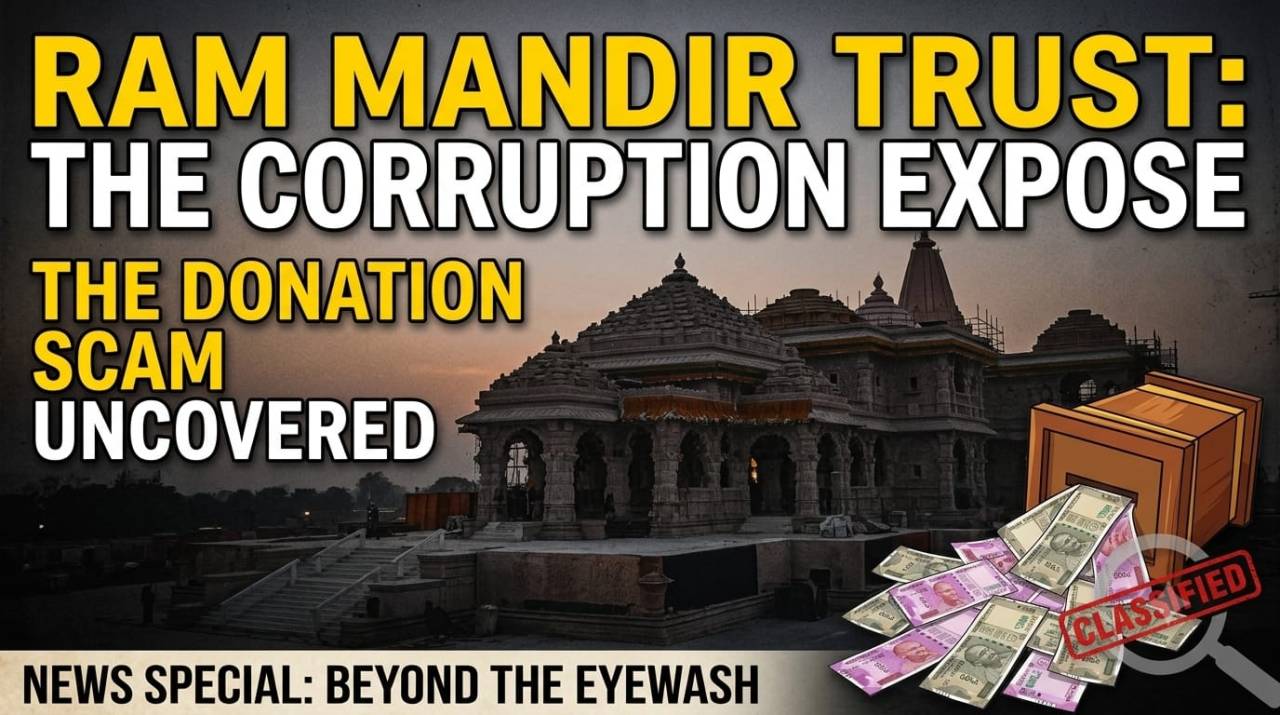
The Shri Ram Janmabhoomi Teerth Kshetra Trust is in the eye of a storm it did not see coming—or perhaps one it was too complacent to prevent. Allegations of systematic irregularities in the collection and counting of donations at the Ram Temple in Ayodhya have snowballed into one of the most politically charged controversies of 2026, implicating the trust's senior leadership and triggering an SIT investigation.
The probe has already led to eight arrests, the recovery of nearly ₹80 lakh in cash from the homes of accused individuals, and now the resignation offers of two of the trust's most senior figures: General Secretary Champat Rai and trustee Anil Mishra.
The Ram Temple trust confirmed on Saturday that both men have tendered their resignations amid mounting allegations of irregularities in donations. A final decision on whether to accept those resignations will be taken at an upcoming meeting, the Vishwa Hindu Parishad (VHP) announced. The meeting is scheduled for July 7.
Champat Rai, it should be noted, is also the Vice President of the VHP, making the institutional stakes considerably higher than a single trust's internal housekeeping.
The Shape of the Scandal
What began as murmurs about cash handling inside the temple's donation-counting chambers has since taken the form of an organised breakdown—one that the SIT is now methodically documenting.
The panel was constituted by the Uttar Pradesh government after Lucknow Range Inspector General Vijay Vishwas Pant received complaints from devotees. A preliminary inquiry conducted in Ayodhya between June 15 and June 20 revealed a pattern of irregularities, including the siphoning of temple donations, mishandling of cash and valuables, and a breach of trust on a scale that has shaken public faith in the institution.
A First Information Report was subsequently registered, naming Ram Shankar Yadav alias Anukul, Anukul Shukla, Subhash Mishra, Manish Ramashankar Mishra, Mahesh Pandey alias Anukul Mishra, Karunesh Pandey, and Lavkush Mishra—the last of whom is closely associated with Champat Rai.
Police raided Lavkush Mishra's residence and recovered ₹10–12 lakh in cash. Notably, the raid took place in Champat Rai's presence.
The FIR invokes Sections 406 and 409 of the Bharatiya Nyaya Sanhita relating to criminal breach of trust, along with Sections 3(6), 3(7)(4), 37(4), and 3(2)(5), besides provisions of the Prevention of Corruption Act.
Seeking to contain reputational damage, the trust issued a statement through its treasurer, Govind Dev Giri, assuring devotees that silver blocks and jewellery donated to the temple remained secure and fully accounted for.
The VHP went a step further by calling for structural reforms, specifically proposing a "CEO-style" administrative system to oversee the temple's functioning. The suggestion itself amounts to an acknowledgement that the existing administrative architecture was not built for the scale of operations the Ram Temple now handles.
Champat Rai: Culpable but Not Criminal?
The central question raised by the scandal is one that India's political discourse rarely handles with nuance: where does administrative failure end and criminal complicity begin?
Champat Rai's defenders point to one significant fact—he was present during the police raid on Lavkush Mishra's home. If he were protecting the accused, they argue, he would hardly have stood there while the cash was being recovered.
Beyond that, it was the trust itself that installed hidden cameras after discovering tampering with the donation-counting equipment. The CCTV footage and covert recordings collected under the trust's own authorisation now form the SIT's primary evidentiary foundation. A conspirator does not ordinarily build the case against himself.
His critics, however—including several voices within BJP-aligned media and public discourse—are not accusing him of personally stealing donations. They are advancing a different and arguably more serious institutional argument.
No theft of this scale and duration, they argue, could have continued without the knowledge of the institution's top administrator. Keys to the donation room reached the wrong hands, surveillance cameras were tampered with, and standard operating procedures were repeatedly bypassed. The general secretary, responsible for the overall administration, either did not know or chose not to act. Both possibilities raise serious questions.
His greatest documented vulnerability, according to people familiar with the matter, appears to have been an excessive willingness to trust others. Access and authority were reportedly handed to individuals who projected competence and loyalty, without adequate scrutiny.
In an institution handling crores of rupees in public religious donations, that is not merely a personal weakness. It is a governance failure.
Media Trial vs. Institutional Accountability
The controversy has also exposed divisions within the media ecosystem.
Opposition parties have predictably used the scandal to attack the government. More revealing, however, has been the reaction within sections of the pro-establishment media, where Champat Rai is increasingly being portrayed as the lone actor—the scapegoat whose sacrifice could allow broader institutional failures to escape scrutiny.
That framing is problematic.
Several commentators have argued that the alleged scam is far larger than any one individual's actions could explain. Multiple "big fish," to borrow the phrase now widely circulating in political discussions, are believed to have benefited during the years when the donation system reportedly operated without adequate safeguards.
Fixing accountability on one man, however senior, while allowing institutional and political enablers to walk free would amount to a betrayal of the devotees whose offerings lie at the centre of this controversy.
What Justice Actually Requires
The SIT must not stop with the employees who physically handled the donation-counting process.
A credible investigation must follow the chain of responsibility upward and outward—examining who authorised access, who knew about the alleged camera tampering, who benefited financially, and whether political or institutional actors beyond the trust itself enabled the system to function unchecked.
Champat Rai's guilt or innocence is ultimately for the courts and the SIT to determine, not television studios or social media timelines.
What the available facts establish, however, is that he presided over an administrative system that failed at one of the country's most consequential religious institutions.
Whether that failure crossed into criminal territory—through active participation or deliberate blindness—is the question investigators must answer without political interference.
The donations flowing into the Ram Temple represent the faith of millions and the accumulated devotion of a civilisation. They deserve transparent accounting, rigorous auditing, and the kind of institutional seriousness that the temple's founders failed to build into the system from the outset.
Structural reforms—whether through a CEO-style administrative model, independent audit committees, or a complete overhaul of donation-counting protocols—are no longer optional. They are overdue.
The July 7 trust meeting will determine whether Champat Rai's resignation is accepted. That decision, however, should mark only the beginning of institutional accountability—not its conclusion.
The Shri Ram Janmabhoomi Teerth Kshetra Trust is in the eye of a storm it did not see coming—or perhaps one it was too complacent to prevent. Allegations of systematic irregularities in the collection and counting of donations at the Ram Temple in Ayodhya have snowballed into one of the most politically charged controversies of 2026, implicating the trust's senior leadership and triggering an SIT investigation.
The probe has already led to eight arrests, the recovery of nearly ₹80 lakh in cash from the homes of accused individuals, and now the resignation offers of two of the trust's most senior figures: General Secretary Champat Rai and trustee Anil Mishra.
The Ram Temple trust confirmed on Saturday that both men have tendered their resignations amid mounting allegations of irregularities in donations. A final decision on whether to accept those resignations will be taken at an upcoming meeting, the Vishwa Hindu Parishad (VHP) announced. The meeting is scheduled for July 7.
Champat Rai, it should be noted, is also the Vice President of the VHP, making the institutional stakes considerably higher than a single trust's internal housekeeping.
The Shape of the Scandal
What began as murmurs about cash handling inside the temple's donation-counting chambers has since taken the form of an organised breakdown—one that the SIT is now methodically documenting.
The panel was constituted by the Uttar Pradesh government after Lucknow Range Inspector General Vijay Vishwas Pant received complaints from devotees. A preliminary inquiry conducted in Ayodhya between June 15 and June 20 revealed a pattern of irregularities, including the siphoning of temple donations, mishandling of cash and valuables, and a breach of trust on a scale that has shaken public faith in the institution.
A First Information Report was subsequently registered, naming Ram Shankar Yadav alias Anukul, Anukul Shukla, Subhash Mishra, Manish Ramashankar Mishra, Mahesh Pandey alias Anukul Mishra, Karunesh Pandey, and Lavkush Mishra—the last of whom is closely associated with Champat Rai.
Police raided Lavkush Mishra's residence and recovered ₹10–12 lakh in cash. Notably, the raid took place in Champat Rai's presence.
The FIR invokes Sections 406 and 409 of the Bharatiya Nyaya Sanhita relating to criminal breach of trust, along with Sections 3(6), 3(7)(4), 37(4), and 3(2)(5), besides provisions of the Prevention of Corruption Act.
Seeking to contain reputational damage, the trust issued a statement through its treasurer, Govind Dev Giri, assuring devotees that silver blocks and jewellery donated to the temple remained secure and fully accounted for.
The VHP went a step further by calling for structural reforms, specifically proposing a "CEO-style" administrative system to oversee the temple's functioning. The suggestion itself amounts to an acknowledgement that the existing administrative architecture was not built for the scale of operations the Ram Temple now handles.
Champat Rai: Culpable but Not Criminal?
The central question raised by the scandal is one that India's political discourse rarely handles with nuance: where does administrative failure end and criminal complicity begin?
Champat Rai's defenders point to one significant fact—he was present during the police raid on Lavkush Mishra's home. If he were protecting the accused, they argue, he would hardly have stood there while the cash was being recovered.
Beyond that, it was the trust itself that installed hidden cameras after discovering tampering with the donation-counting equipment. The CCTV footage and covert recordings collected under the trust's own authorisation now form the SIT's primary evidentiary foundation. A conspirator does not ordinarily build the case against himself.
His critics, however—including several voices within BJP-aligned media and public discourse—are not accusing him of personally stealing donations. They are advancing a different and arguably more serious institutional argument.
No theft of this scale and duration, they argue, could have continued without the knowledge of the institution's top administrator. Keys to the donation room reached the wrong hands, surveillance cameras were tampered with, and standard operating procedures were repeatedly bypassed. The general secretary, responsible for the overall administration, either did not know or chose not to act. Both possibilities raise serious questions.
His greatest documented vulnerability, according to people familiar with the matter, appears to have been an excessive willingness to trust others. Access and authority were reportedly handed to individuals who projected competence and loyalty, without adequate scrutiny.
In an institution handling crores of rupees in public religious donations, that is not merely a personal weakness. It is a governance failure.
Media Trial vs. Institutional Accountability
The controversy has also exposed divisions within the media ecosystem.
Opposition parties have predictably used the scandal to attack the government. More revealing, however, has been the reaction within sections of the pro-establishment media, where Champat Rai is increasingly being portrayed as the lone actor—the scapegoat whose sacrifice could allow broader institutional failures to escape scrutiny.
That framing is problematic.
Several commentators have argued that the alleged scam is far larger than any one individual's actions could explain. Multiple "big fish," to borrow the phrase now widely circulating in political discussions, are believed to have benefited during the years when the donation system reportedly operated without adequate safeguards.
Fixing accountability on one man, however senior, while allowing institutional and political enablers to walk free would amount to a betrayal of the devotees whose offerings lie at the centre of this controversy.
What Justice Actually Requires
The SIT must not stop with the employees who physically handled the donation-counting process.
A credible investigation must follow the chain of responsibility upward and outward—examining who authorised access, who knew about the alleged camera tampering, who benefited financially, and whether political or institutional actors beyond the trust itself enabled the system to function unchecked.
Champat Rai's guilt or innocence is ultimately for the courts and the SIT to determine, not television studios or social media timelines.
What the available facts establish, however, is that he presided over an administrative system that failed at one of the country's most consequential religious institutions.
Whether that failure crossed into criminal territory—through active participation or deliberate blindness—is the question investigators must answer without political interference.
The donations flowing into the Ram Temple represent the faith of millions and the accumulated devotion of a civilisation. They deserve transparent accounting, rigorous auditing, and the kind of institutional seriousness that the temple's founders failed to build into the system from the outset.
Structural reforms—whether through a CEO-style administrative model, independent audit committees, or a complete overhaul of donation-counting protocols—are no longer optional. They are overdue.
The July 7 trust meeting will determine whether Champat Rai's resignation is accepted. That decision, however, should mark only the beginning of institutional accountability—not its conclusion.
























Leave a Comment