
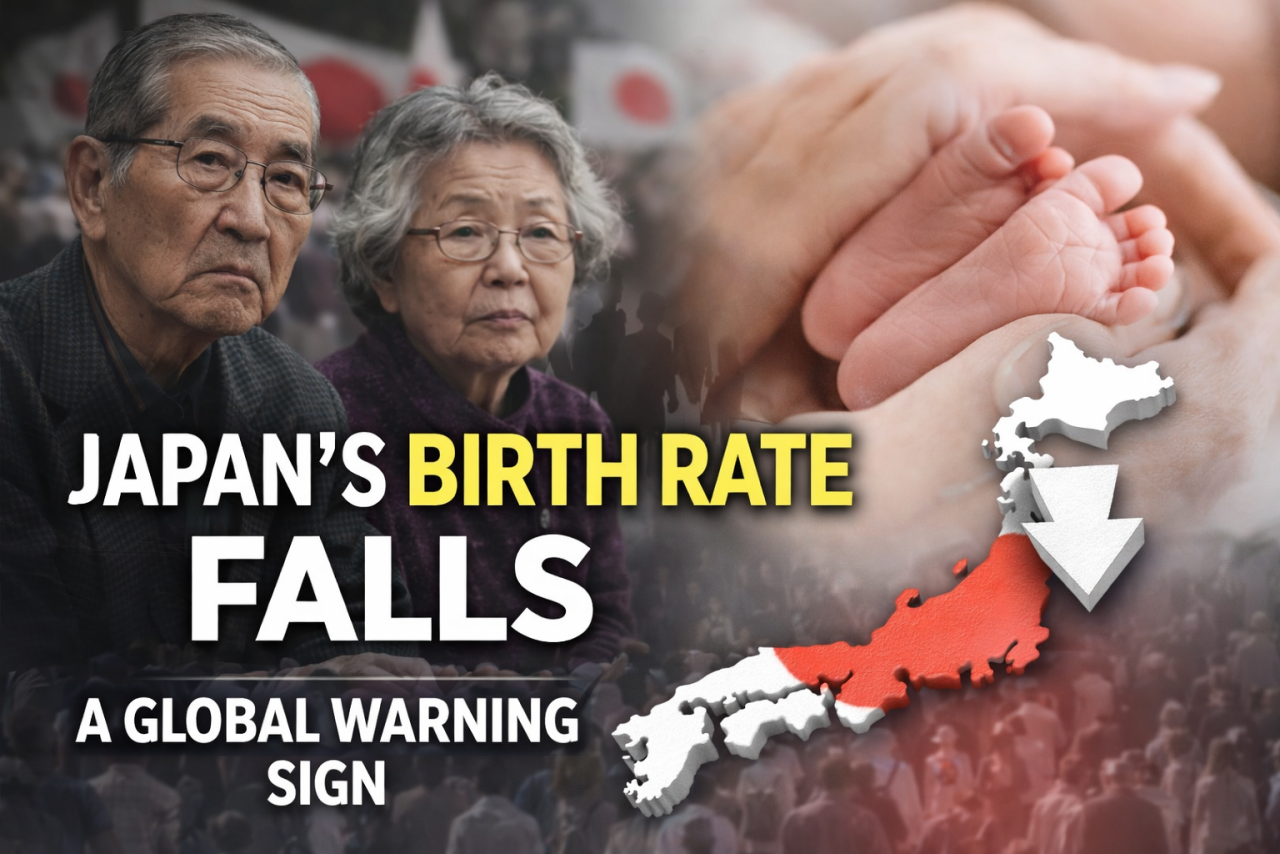
Japan’s birth rate has fallen for a decade straight and it could reshape the global economy sooner than we think.
Japan has just marked a troubling milestone. For the tenth straight year, the number of babies born in the country has fallen. The latest official figures show that only 705,809 babies were born in 2025 — a 2.1% drop from the previous year. At the same time, deaths continue to far outnumber births, pushing the population further into decline.
This is not just a domestic issue for Japan. It is a signal to the rest of the world about what the future may look like for many developed and even developing nations.
Japan, the world’s fourth-largest economy, now has one of the lowest birth rates globally. Its total population has fallen to about 122.86 million. The number of people aged 100 or older is close to 100,000, and nearly 90% of them are women. The country is not just shrinking but ageing rapidly.
Why This Matters Beyond Japan
At first glance, falling birth rates may not seem alarming. Some may argue that fewer people could mean less strain on resources and the environment. But the economic and social impact tells a different story.
Japan is already facing serious labour shortages. With fewer young people entering the workforce, companies struggle to find employees. This slows economic growth and reduces innovation. At the same time, a growing elderly population increases spending on healthcare and pensions.
Fewer workers mean fewer taxpayers. That makes it harder for governments to fund social security systems. Japan already has one of the highest debt ratios among major economies. A shrinking workforce makes managing that debt even more difficult.
Rural communities are being hit hardest. Millions of homes now stand empty. Some towns are on the brink of disappearing entirely. Schools are closing. Local businesses are shutting down. This is not a temporary phase but a structural shift.
The Marriage Factor
The decline in births is closely linked to changing social patterns. In 2025, about 505,656 couples got married — only a slight increase of 1.1%. But this remains far below levels seen decades ago.
In Japan, most children are born within marriage. As fewer people marry and many marry later in life — childbirth is delayed or avoided altogether. Rising living costs, job insecurity, and demanding work culture discourage young people from starting families.
Women in particular face a difficult choice between career and motherhood. Although policies have improved over time, workplace expectations and limited childcare support still create pressure.
A Regional Pattern
Japan is not alone. Singapore’s fertility rate recently fell to 0.87 — one of the lowest in the world. South Korea’s birth rate has also reached record lows in recent years. Across East Asia, advanced economies are confronting the same reality.
Europe faces similar trends. Italy, Spain, and parts of Eastern Europe are experiencing long-term population decline. Even China, once known for its population growth, has started to shrink.
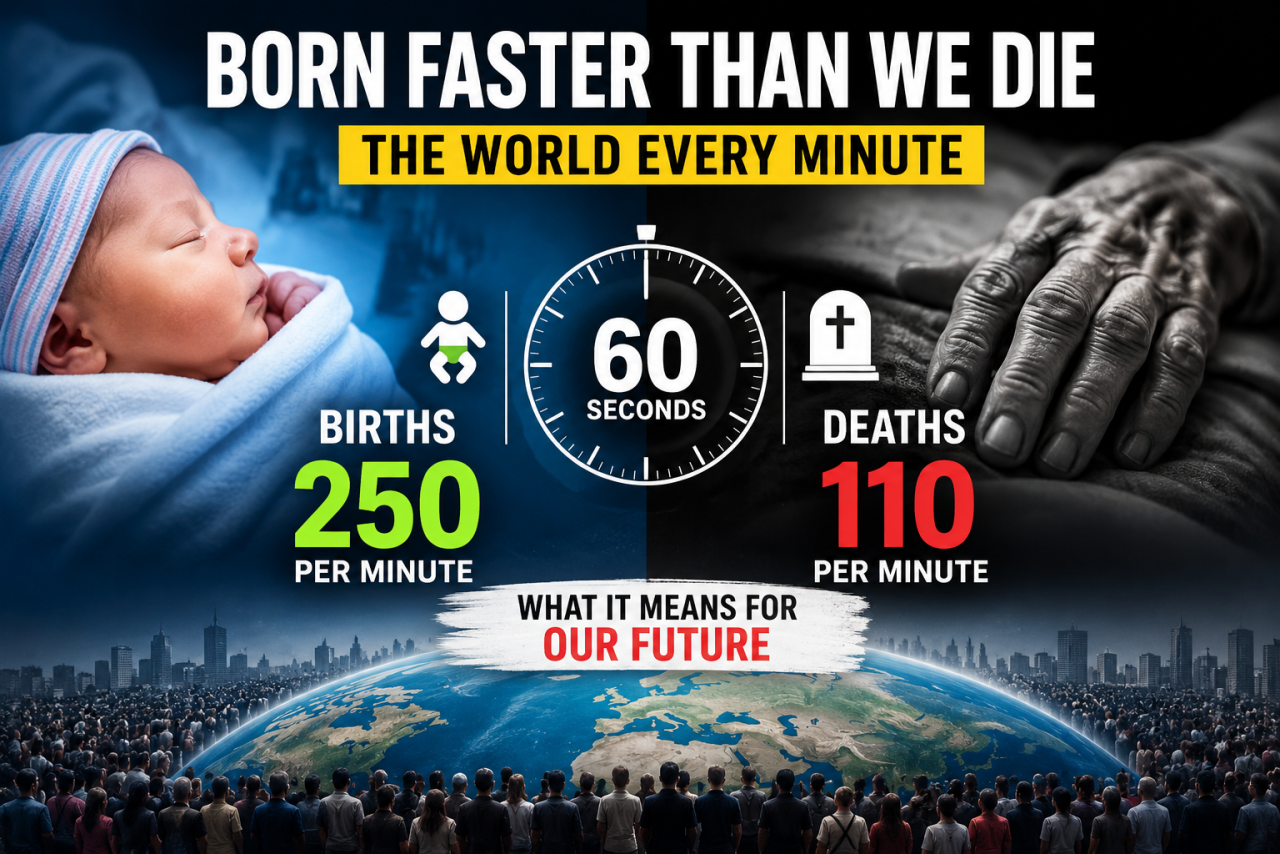
The global population may still be growing overall, but many key economies are entering an era of demographic contraction.
Can Policy Fix It?
Japanese leaders have long promised to reverse the trend. Financial incentives, childcare subsidies, and parental leave policies have been introduced. Yet results remain limited.
This suggests that the issue runs deeper than economics alone. Cultural expectations, work-life balance, gender roles, housing affordability, and social attitudes all play a role.
Simply offering cash bonuses for babies does not address deeper anxieties about the future. Young people want stable jobs, affordable housing, supportive workplaces, and confidence that raising a child will not mean sacrificing their independence or career.
Rethinking the Future
Japan’s situation forces the world to ask difficult questions:
- What happens when societies age faster than they grow?
- Can automation and artificial intelligence replace shrinking workforces?
- Should immigration become a larger part of the solution?
- How can governments redesign cities and communities for older populations?
Japan has traditionally maintained strict immigration policies. However, some experts argue that carefully managed migration may become unavoidable if the labour gap widens further.
At the same time, technological innovation could soften the blow. Robotics and automation are already widespread in Japanese industries and elder care. But technology alone cannot fully replace human connection or community vitality.
A Turning Point for Global Policy
The world often focuses on overpopulation. Yet for many advanced economies, the greater challenge may soon be underpopulation.
Japan offers a glimpse into that future. Empty classrooms, ageing neighbourhoods, mounting pension costs, and shrinking towns are no longer distant possibilities — they are present realities.
This is not a story about decline alone. It is about adaptation. Societies may need to rethink how they define growth, productivity, and prosperity. Economic models built on constant expansion may not work in an era of demographic contraction.
For global policymakers, Japan’s experience is both a warning and a lesson. Waiting too long to address falling birth rates can make recovery extremely difficult. Demographic change happens slowly — but its effects last for generations.
The question is not whether other countries will face similar challenges. Many already are. The real question is whether governments, businesses, and communities are ready to rethink the future before demographic decline becomes irreversible.
Japan’s baby bust is more than a national statistic. It is a global signal that the demographic balance shaping the modern world is quietly but steadily shifting.
Japan has just marked a troubling milestone. For the tenth straight year, the number of babies born in the country has fallen. The latest official figures show that only 705,809 babies were born in 2025 — a 2.1% drop from the previous year. At the same time, deaths continue to far outnumber births, pushing the population further into decline.
This is not just a domestic issue for Japan. It is a signal to the rest of the world about what the future may look like for many developed and even developing nations.
Japan, the world’s fourth-largest economy, now has one of the lowest birth rates globally. Its total population has fallen to about 122.86 million. The number of people aged 100 or older is close to 100,000, and nearly 90% of them are women. The country is not just shrinking but ageing rapidly.
Why This Matters Beyond Japan
At first glance, falling birth rates may not seem alarming. Some may argue that fewer people could mean less strain on resources and the environment. But the economic and social impact tells a different story.
Japan is already facing serious labour shortages. With fewer young people entering the workforce, companies struggle to find employees. This slows economic growth and reduces innovation. At the same time, a growing elderly population increases spending on healthcare and pensions.
Fewer workers mean fewer taxpayers. That makes it harder for governments to fund social security systems. Japan already has one of the highest debt ratios among major economies. A shrinking workforce makes managing that debt even more difficult.
Rural communities are being hit hardest. Millions of homes now stand empty. Some towns are on the brink of disappearing entirely. Schools are closing. Local businesses are shutting down. This is not a temporary phase but a structural shift.
The Marriage Factor
The decline in births is closely linked to changing social patterns. In 2025, about 505,656 couples got married — only a slight increase of 1.1%. But this remains far below levels seen decades ago.
In Japan, most children are born within marriage. As fewer people marry and many marry later in life — childbirth is delayed or avoided altogether. Rising living costs, job insecurity, and demanding work culture discourage young people from starting families.
Women in particular face a difficult choice between career and motherhood. Although policies have improved over time, workplace expectations and limited childcare support still create pressure.
A Regional Pattern
Japan is not alone. Singapore’s fertility rate recently fell to 0.87 — one of the lowest in the world. South Korea’s birth rate has also reached record lows in recent years. Across East Asia, advanced economies are confronting the same reality.
Europe faces similar trends. Italy, Spain, and parts of Eastern Europe are experiencing long-term population decline. Even China, once known for its population growth, has started to shrink.
The global population may still be growing overall, but many key economies are entering an era of demographic contraction.
Can Policy Fix It?
Japanese leaders have long promised to reverse the trend. Financial incentives, childcare subsidies, and parental leave policies have been introduced. Yet results remain limited.
This suggests that the issue runs deeper than economics alone. Cultural expectations, work-life balance, gender roles, housing affordability, and social attitudes all play a role.
Simply offering cash bonuses for babies does not address deeper anxieties about the future. Young people want stable jobs, affordable housing, supportive workplaces, and confidence that raising a child will not mean sacrificing their independence or career.
Rethinking the Future
Japan’s situation forces the world to ask difficult questions:
- What happens when societies age faster than they grow?
- Can automation and artificial intelligence replace shrinking workforces?
- Should immigration become a larger part of the solution?
- How can governments redesign cities and communities for older populations?
Japan has traditionally maintained strict immigration policies. However, some experts argue that carefully managed migration may become unavoidable if the labour gap widens further.
At the same time, technological innovation could soften the blow. Robotics and automation are already widespread in Japanese industries and elder care. But technology alone cannot fully replace human connection or community vitality.
A Turning Point for Global Policy
The world often focuses on overpopulation. Yet for many advanced economies, the greater challenge may soon be underpopulation.
Japan offers a glimpse into that future. Empty classrooms, ageing neighbourhoods, mounting pension costs, and shrinking towns are no longer distant possibilities — they are present realities.
This is not a story about decline alone. It is about adaptation. Societies may need to rethink how they define growth, productivity, and prosperity. Economic models built on constant expansion may not work in an era of demographic contraction.
For global policymakers, Japan’s experience is both a warning and a lesson. Waiting too long to address falling birth rates can make recovery extremely difficult. Demographic change happens slowly — but its effects last for generations.
The question is not whether other countries will face similar challenges. Many already are. The real question is whether governments, businesses, and communities are ready to rethink the future before demographic decline becomes irreversible.
Japan’s baby bust is more than a national statistic. It is a global signal that the demographic balance shaping the modern world is quietly but steadily shifting.

























Leave a Comment