
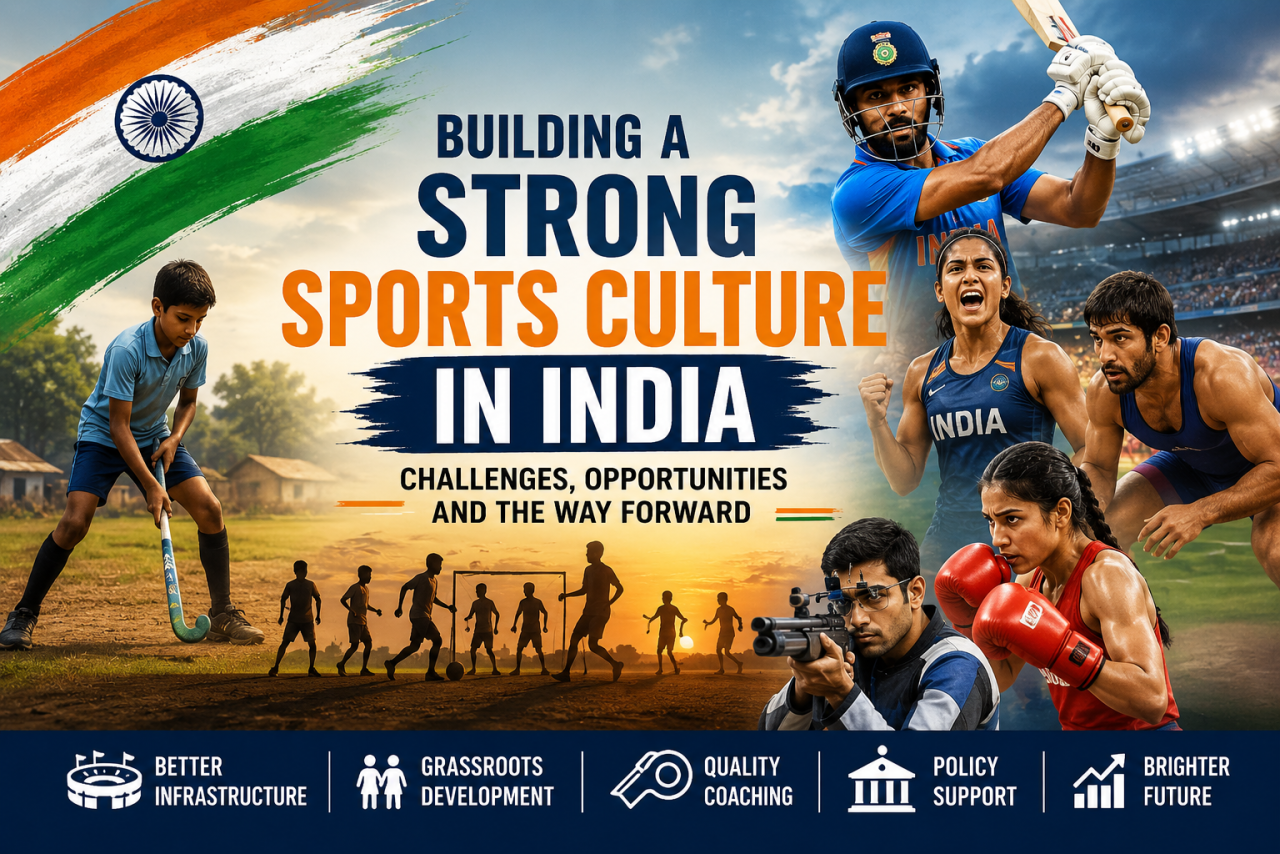
India has the talent to dominate global sports. What's stopping it from becoming a true sporting nation beyond cricket?
India is home to more than 1.4 billion people, making it one of the world's largest reservoirs of sporting talent. Yet, despite producing exceptional athletes in disciplines such as athletics, badminton, wrestling, boxing, shooting, chess, hockey, and para-sports, the country's sporting identity continues to revolve overwhelmingly around cricket. While cricket deserves its popularity, a nation aspiring to become a global sporting powerhouse cannot afford to rely on a single game.
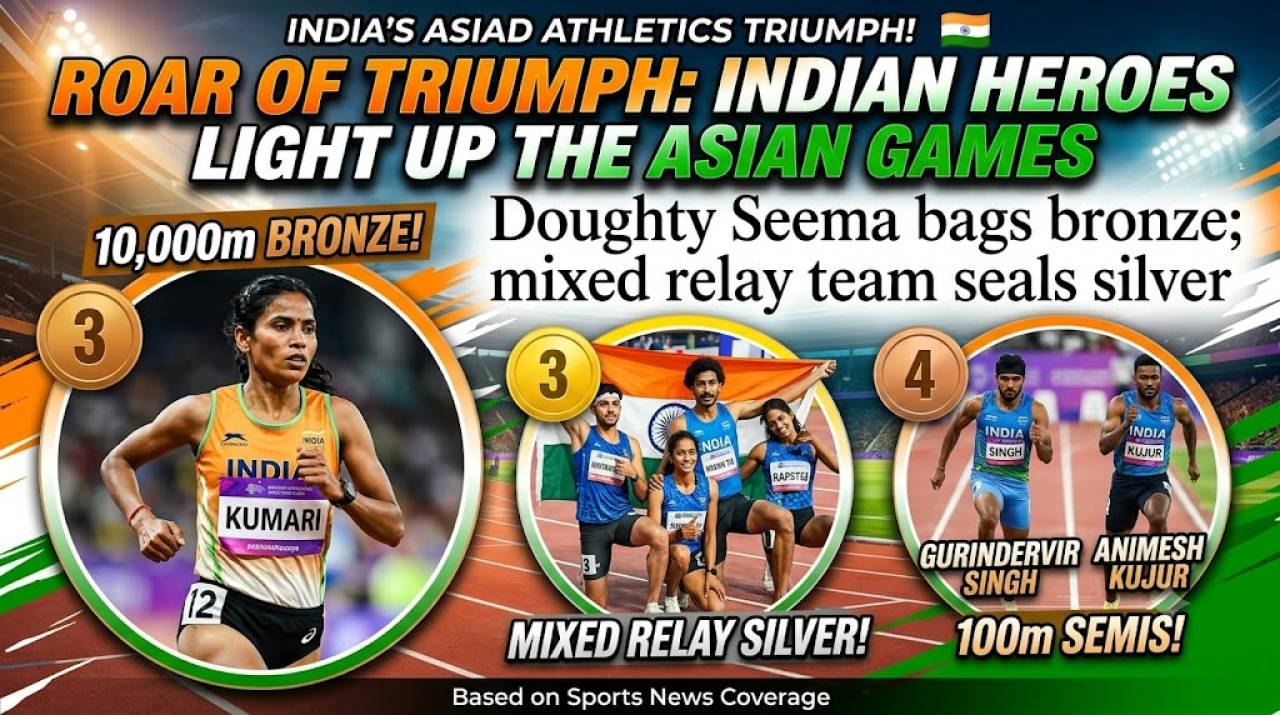
The success of Indian athletes at the Olympics, Paralympics, Commonwealth Games, and Asian Games has demonstrated that talent exists across every region of the country. What remains missing is a strong sports culture that identifies, nurtures, and supports young athletes from childhood. Creating such a culture demands sustained investment in infrastructure, quality coaching, policy reforms, and a shift in public mindset.
Sports Infrastructure Must Reach Every Village
Sports infrastructure is the foundation upon which sporting excellence is built. While metropolitan cities such as Delhi, Mumbai, Bengaluru, Hyderabad, and Bhubaneswar boast modern stadiums, academies, and training centres, the situation changes dramatically in rural and semi-urban India.
Thousands of villages and small towns lack even basic playgrounds, running tracks, indoor halls, or equipment. Government schools often have limited sports facilities, forcing talented children to abandon their ambitions at an early stage. States with large populations, including Bihar, Uttar Pradesh, Madhya Pradesh, Jharkhand, and parts of Uttarakhand, continue to struggle with inadequate sporting infrastructure despite possessing enormous athletic potential.
India cannot build a sporting nation if quality facilities remain concentrated in a handful of urban centres. Every district should have accessible sports complexes, coaching centres, and open grounds where children can train throughout the year.
Grassroots Development Is the Real Game Changer
Most world-class athletes begin their journey at the grassroots level. Unfortunately, grassroots sports in India receive far less attention than elite competitions.
Schools remain the most important platform for identifying talent, yet physical education often receives minimal importance in the academic calendar. In many institutions, sports periods are irregular, and trained physical education teachers are scarce. Competitive tournaments between schools and districts are either poorly organised or receive little encouragement.
A structured grassroots ecosystem should include regular inter-school competitions, talent scouting programmes, scholarships for promising athletes, and partnerships between schools, local clubs, and sports academies. Such initiatives would ensure that talent is discovered irrespective of social or economic background.
Policy Support Must Extend Beyond Cricket
Government initiatives such as Khelo India and TOPS have produced encouraging results, but much more remains to be done. Funding continues to be uneven across different sports, with cricket enjoying unmatched financial strength through sponsorships, broadcasting rights, and league competitions.
Olympic sports, indigenous games, and para-sports require consistent financial support instead of attention only during major international tournaments. Transparent governance, long-term planning, and accountability in sports federations are equally essential to ensure that resources reach athletes rather than being lost to administrative inefficiencies.
Corporate participation should also be expanded beyond marquee events. Incentives for companies to sponsor district-level academies, local tournaments, and youth development programmes can significantly strengthen India's sporting ecosystem.
Better Coaching Creates Better Champions
Talent alone does not produce international medals. Professional coaching, scientific training, nutrition, physiotherapy, sports psychology, and performance analytics have become integral to modern sports.
India still faces a shortage of qualified coaches, particularly outside major cities. Many talented youngsters discontinue training because they lack access to experienced mentors or affordable coaching facilities.
Investment in coach education programmes, certification standards, and continuous professional development would improve athlete performance across disciplines. Modern sports science laboratories and rehabilitation centres should become integral parts of sports academies rather than luxury additions.
Society Must Change Its Mindset
One of the biggest obstacles to sports development in India is societal perception. Academic achievement continues to be viewed as the only reliable path to success, while sports are often treated as extracurricular activities rather than viable careers.
Parents frequently discourage children from pursuing sports because of concerns about financial security and educational disruption. Although professional leagues and government employment opportunities have improved career prospects, awareness remains limited.
Recognising sports as an important component of education can transform this mindset. Regular participation in sports enhances physical fitness, mental resilience, teamwork, discipline, leadership, and problem-solving skills, qualities that benefit every profession.
A Sporting Nation Builds a Healthier Nation
Developing a strong sports culture is not merely about winning medals. It contributes to better public health, reduces lifestyle diseases, promotes gender equality, strengthens social inclusion, and inspires national pride. It also creates employment opportunities in coaching, sports management, fitness, physiotherapy, broadcasting, event management, and sports technology.
India has already shown its potential through remarkable achievements in badminton, chess, wrestling, shooting, athletics, hockey, boxing, and para-sports. With the right ecosystem, many more champions can emerge from every district and every village.
Final Take
India possesses all the ingredients necessary to become a global sporting powerhouse: a young population, growing economic strength, and abundant talent. What it lacks is a deeply rooted sporting culture supported by modern infrastructure, quality coaching, transparent governance, grassroots participation, and social encouragement.
Cricket will undoubtedly remain an integral part of India's identity, but the nation's sporting future depends on embracing every game with equal commitment. When every child has access to quality facilities, professional coaching, and equal opportunities, India will not merely celebrate sporting heroes but will consistently produce them. A truly sporting nation is built not by occasional victories but by creating an environment where every young athlete has the chance to dream, compete, and succeed.
India is home to more than 1.4 billion people, making it one of the world's largest reservoirs of sporting talent. Yet, despite producing exceptional athletes in disciplines such as athletics, badminton, wrestling, boxing, shooting, chess, hockey, and para-sports, the country's sporting identity continues to revolve overwhelmingly around cricket. While cricket deserves its popularity, a nation aspiring to become a global sporting powerhouse cannot afford to rely on a single game.
The success of Indian athletes at the Olympics, Paralympics, Commonwealth Games, and Asian Games has demonstrated that talent exists across every region of the country. What remains missing is a strong sports culture that identifies, nurtures, and supports young athletes from childhood. Creating such a culture demands sustained investment in infrastructure, quality coaching, policy reforms, and a shift in public mindset.
Sports Infrastructure Must Reach Every Village
Sports infrastructure is the foundation upon which sporting excellence is built. While metropolitan cities such as Delhi, Mumbai, Bengaluru, Hyderabad, and Bhubaneswar boast modern stadiums, academies, and training centres, the situation changes dramatically in rural and semi-urban India.
Thousands of villages and small towns lack even basic playgrounds, running tracks, indoor halls, or equipment. Government schools often have limited sports facilities, forcing talented children to abandon their ambitions at an early stage. States with large populations, including Bihar, Uttar Pradesh, Madhya Pradesh, Jharkhand, and parts of Uttarakhand, continue to struggle with inadequate sporting infrastructure despite possessing enormous athletic potential.
India cannot build a sporting nation if quality facilities remain concentrated in a handful of urban centres. Every district should have accessible sports complexes, coaching centres, and open grounds where children can train throughout the year.
Grassroots Development Is the Real Game Changer
Most world-class athletes begin their journey at the grassroots level. Unfortunately, grassroots sports in India receive far less attention than elite competitions.
Schools remain the most important platform for identifying talent, yet physical education often receives minimal importance in the academic calendar. In many institutions, sports periods are irregular, and trained physical education teachers are scarce. Competitive tournaments between schools and districts are either poorly organised or receive little encouragement.
A structured grassroots ecosystem should include regular inter-school competitions, talent scouting programmes, scholarships for promising athletes, and partnerships between schools, local clubs, and sports academies. Such initiatives would ensure that talent is discovered irrespective of social or economic background.
Policy Support Must Extend Beyond Cricket
Government initiatives such as Khelo India and TOPS have produced encouraging results, but much more remains to be done. Funding continues to be uneven across different sports, with cricket enjoying unmatched financial strength through sponsorships, broadcasting rights, and league competitions.
Olympic sports, indigenous games, and para-sports require consistent financial support instead of attention only during major international tournaments. Transparent governance, long-term planning, and accountability in sports federations are equally essential to ensure that resources reach athletes rather than being lost to administrative inefficiencies.
Corporate participation should also be expanded beyond marquee events. Incentives for companies to sponsor district-level academies, local tournaments, and youth development programmes can significantly strengthen India's sporting ecosystem.
Better Coaching Creates Better Champions
Talent alone does not produce international medals. Professional coaching, scientific training, nutrition, physiotherapy, sports psychology, and performance analytics have become integral to modern sports.
India still faces a shortage of qualified coaches, particularly outside major cities. Many talented youngsters discontinue training because they lack access to experienced mentors or affordable coaching facilities.
Investment in coach education programmes, certification standards, and continuous professional development would improve athlete performance across disciplines. Modern sports science laboratories and rehabilitation centres should become integral parts of sports academies rather than luxury additions.
Society Must Change Its Mindset
One of the biggest obstacles to sports development in India is societal perception. Academic achievement continues to be viewed as the only reliable path to success, while sports are often treated as extracurricular activities rather than viable careers.
Parents frequently discourage children from pursuing sports because of concerns about financial security and educational disruption. Although professional leagues and government employment opportunities have improved career prospects, awareness remains limited.
Recognising sports as an important component of education can transform this mindset. Regular participation in sports enhances physical fitness, mental resilience, teamwork, discipline, leadership, and problem-solving skills, qualities that benefit every profession.
A Sporting Nation Builds a Healthier Nation
Developing a strong sports culture is not merely about winning medals. It contributes to better public health, reduces lifestyle diseases, promotes gender equality, strengthens social inclusion, and inspires national pride. It also creates employment opportunities in coaching, sports management, fitness, physiotherapy, broadcasting, event management, and sports technology.
India has already shown its potential through remarkable achievements in badminton, chess, wrestling, shooting, athletics, hockey, boxing, and para-sports. With the right ecosystem, many more champions can emerge from every district and every village.
Final Take
India possesses all the ingredients necessary to become a global sporting powerhouse: a young population, growing economic strength, and abundant talent. What it lacks is a deeply rooted sporting culture supported by modern infrastructure, quality coaching, transparent governance, grassroots participation, and social encouragement.
Cricket will undoubtedly remain an integral part of India's identity, but the nation's sporting future depends on embracing every game with equal commitment. When every child has access to quality facilities, professional coaching, and equal opportunities, India will not merely celebrate sporting heroes but will consistently produce them. A truly sporting nation is built not by occasional victories but by creating an environment where every young athlete has the chance to dream, compete, and succeed.
















Leave a Comment