
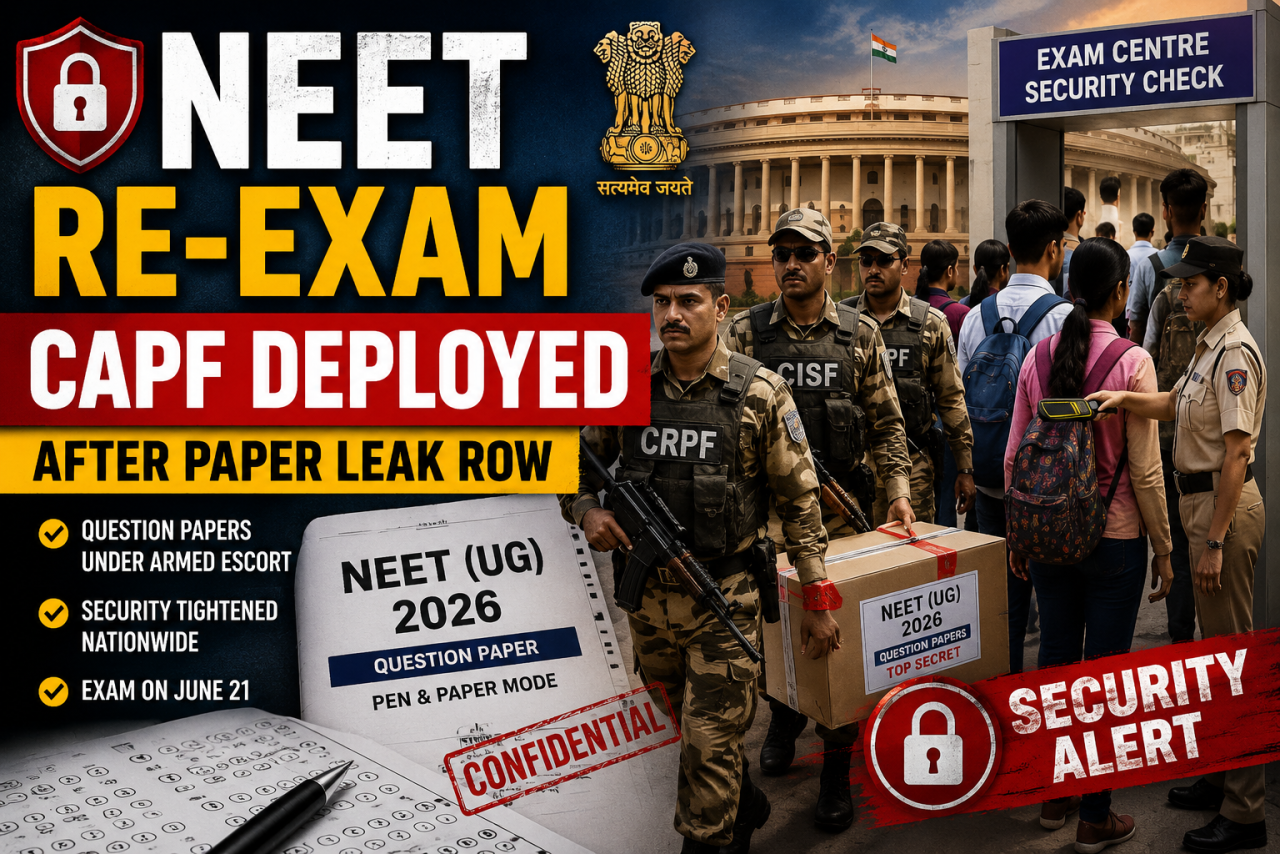
Can tighter security restore confidence in India's biggest medical entrance exam? The Centre has brought in CRPF and CISF personnel for the NEET-UG re-exam, introducing multiple safeguards against paper leaks.
In a significant move aimed at ensuring the integrity of the National Eligibility-cum-Entrance Test (NEET-UG) re-examination, the Union government has deployed personnel from the Central Armed Police Forces (CAPFs), including the Central Reserve Police Force (CRPF) and the Central Industrial Security Force (CISF), to assist in the secure transportation of question papers and strengthen security arrangements ahead of the June 21 examination.
The decision comes in the aftermath of last year's NEET paper leak controversy, which had triggered widespread protests, legal challenges and concerns over the credibility of one of India's most important entrance examinations.
According to official orders, CAPF personnel will provide an additional layer of security during the movement of examination materials from printing centres to examination hubs across the country. The move follows directions issued by the Ministry of Home Affairs (MHA) after consultations with the National Testing Agency (NTA), which conducts the examination.
Security Cover Expanded
The strengthened security framework has been put in place to prevent any possibility of tampering, leakage or unauthorised access to question papers during transit.
Officials said that the NTA had sought support from the government to expedite the distribution of examination material while maintaining strict security standards. Under the revised arrangements, question papers will be escorted by state police forces and guarded by CISF and CRPF personnel throughout their journey.
The papers are expected to travel from printing and distribution centres located in Hyderabad and Ahmedabad to hundreds of examination hubs nationwide. Security agencies have been instructed to monitor every stage of transportation until the materials reach designated centres.
Apart from ground-level protection, authorities are also coordinating with various security and administrative agencies to oversee the process in real time.
The deployment marks one of the most extensive security operations associated with a national entrance examination in recent years.
Faster Delivery Timeline
To reduce logistical risks, the NTA has also revised its distribution schedule. Earlier, question papers were typically dispatched several days before the examination. Under the new plan, the delivery period has been shortened considerably.
Officials believe that reducing transit time will minimise opportunities for interference and enhance overall examination security.
Sources familiar with the arrangements said the decision was taken after reviewing vulnerabilities exposed during previous controversies.
Examination Duration Increased
Alongside security measures, the NTA has announced changes to the conduct of the re-examination itself.
The duration of the examination has been extended by 15 minutes. Candidates will now receive a total of 195 minutes to complete the test instead of the earlier 180 minutes.
The examination will continue to be conducted in pen-and-paper mode and is scheduled to run from 2:00 pm to 5:15 pm.
In addition, the revised question booklet will contain two extra rough-work pages. The agency said the changes were introduced to make the examination more student-friendly and to ensure candidates have adequate time and space to complete calculations and rough work.
Education experts have welcomed the additional time, noting that administrative procedures such as attendance verification and invigilation formalities often consume valuable minutes during large-scale examinations.
Lessons from the Leak Controversy
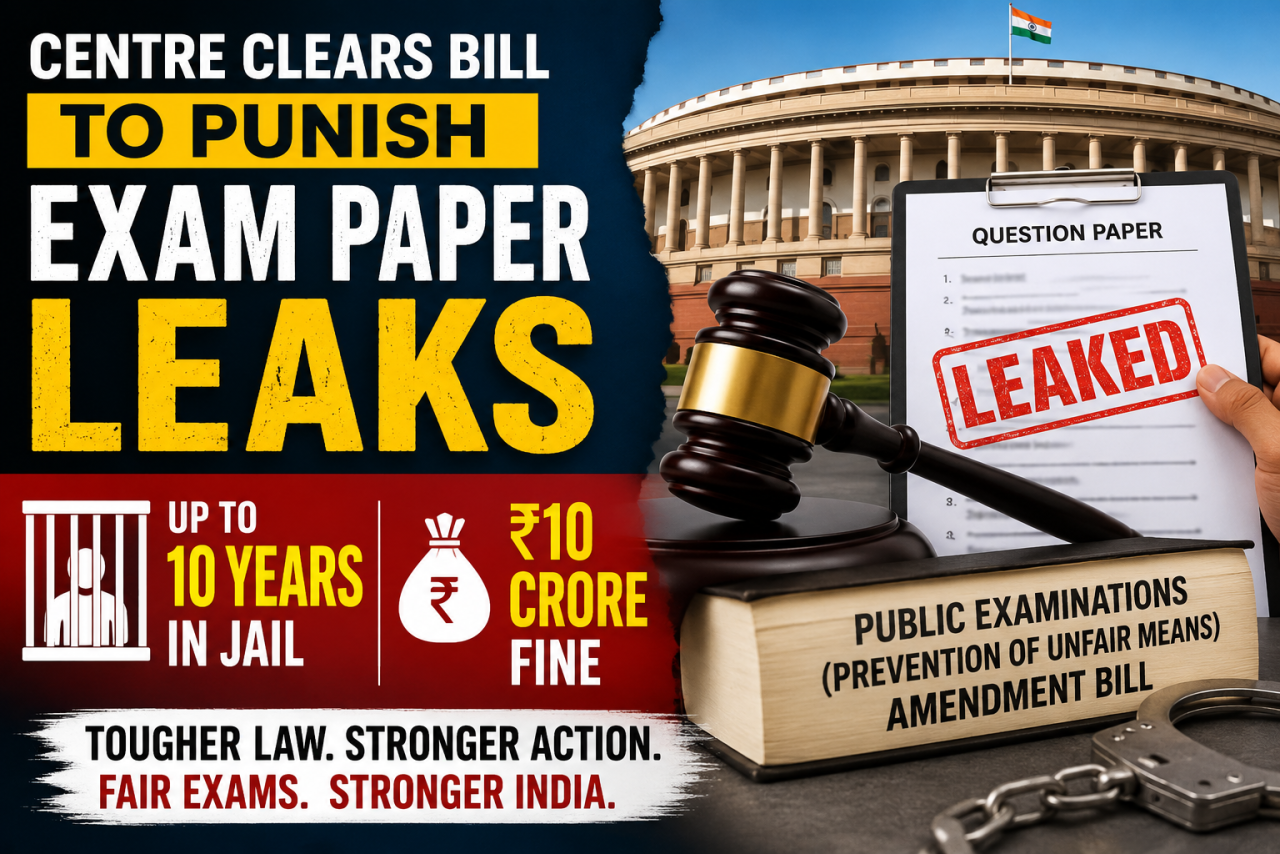
The latest measures are closely linked to the fallout from the NEET-UG paper leak case that surfaced last year. Allegations that examination papers had been accessed illegally before the test led to intense public scrutiny, investigations by central agencies and multiple court proceedings.
The controversy raised broader questions about examination governance, data security and the ability of authorities to conduct high-stakes tests involving millions of students.
By involving specialised security forces and tightening transportation protocols, the government appears determined to restore public confidence in the examination process.
Officials maintain that the revised arrangements are designed not only to prevent malpractice but also to reassure students and parents that every possible safeguard has been implemented.
Legal Developments Continue
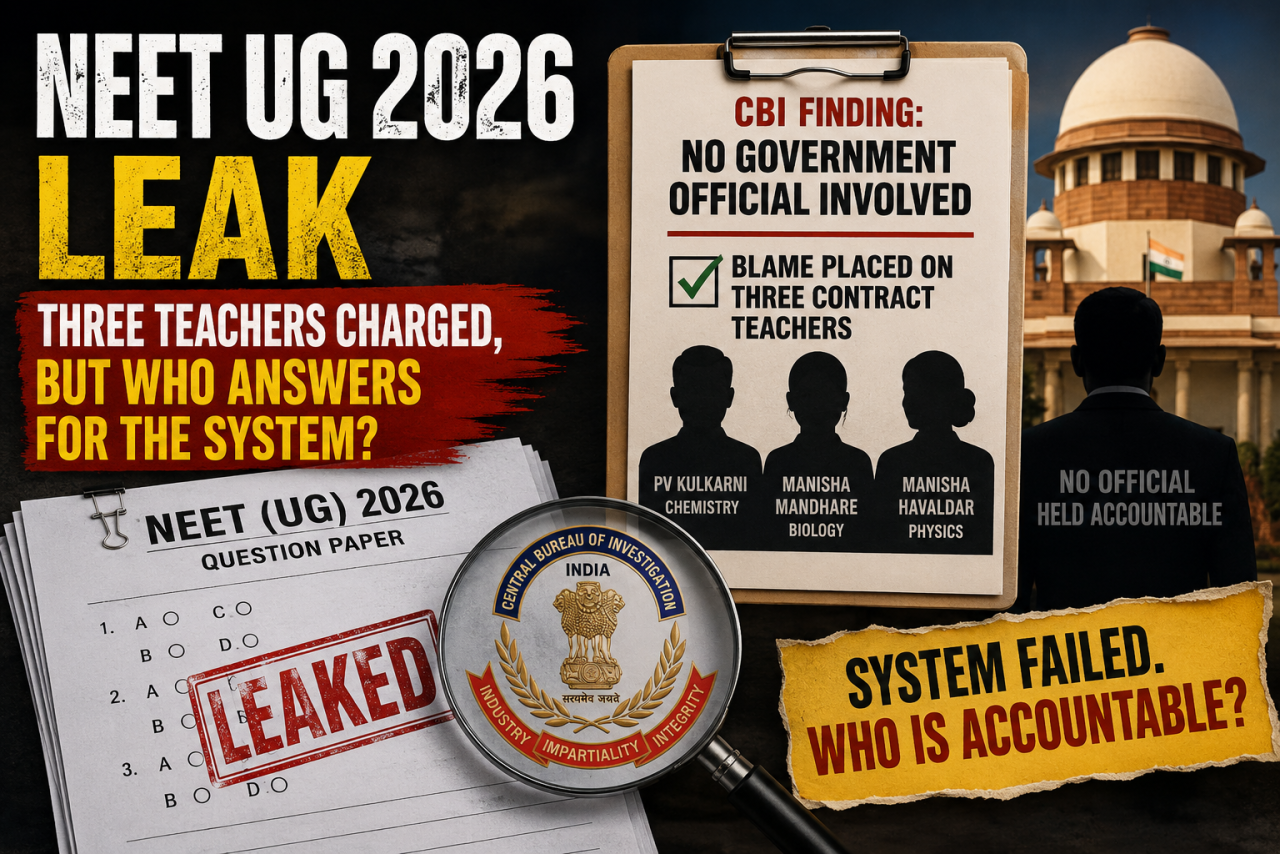
Meanwhile, investigations related to the paper leak case continue.
In a related development, the Central Bureau of Investigation (CBI) has informed a Delhi court that it intends to seek action against an accused individual allegedly linked to the leak case. The agency has indicated that it may request the National Testing Agency to bar the accused from appearing in the upcoming re-examination.
The matter remains under judicial consideration.
A Test of Trust
For more than two million medical aspirants, NEET is the gateway to undergraduate medical education in India. Any disruption to the examination process has far-reaching consequences for students, institutions and the healthcare education system.
The government's decision to deploy CAPF personnel and overhaul security arrangements reflects the high stakes involved. As the June 21 re-examination approaches, authorities face the challenge of ensuring that the test proceeds smoothly and transparently.
For students preparing to appear, the focus remains on performance. For the administration, however, the examination is also a test of trust—one that many hope will help restore confidence in India's most important medical entrance examination.
In a significant move aimed at ensuring the integrity of the National Eligibility-cum-Entrance Test (NEET-UG) re-examination, the Union government has deployed personnel from the Central Armed Police Forces (CAPFs), including the Central Reserve Police Force (CRPF) and the Central Industrial Security Force (CISF), to assist in the secure transportation of question papers and strengthen security arrangements ahead of the June 21 examination.
The decision comes in the aftermath of last year's NEET paper leak controversy, which had triggered widespread protests, legal challenges and concerns over the credibility of one of India's most important entrance examinations.
According to official orders, CAPF personnel will provide an additional layer of security during the movement of examination materials from printing centres to examination hubs across the country. The move follows directions issued by the Ministry of Home Affairs (MHA) after consultations with the National Testing Agency (NTA), which conducts the examination.
Security Cover Expanded
The strengthened security framework has been put in place to prevent any possibility of tampering, leakage or unauthorised access to question papers during transit.
Officials said that the NTA had sought support from the government to expedite the distribution of examination material while maintaining strict security standards. Under the revised arrangements, question papers will be escorted by state police forces and guarded by CISF and CRPF personnel throughout their journey.
The papers are expected to travel from printing and distribution centres located in Hyderabad and Ahmedabad to hundreds of examination hubs nationwide. Security agencies have been instructed to monitor every stage of transportation until the materials reach designated centres.
Apart from ground-level protection, authorities are also coordinating with various security and administrative agencies to oversee the process in real time.
The deployment marks one of the most extensive security operations associated with a national entrance examination in recent years.
Faster Delivery Timeline
To reduce logistical risks, the NTA has also revised its distribution schedule. Earlier, question papers were typically dispatched several days before the examination. Under the new plan, the delivery period has been shortened considerably.
Officials believe that reducing transit time will minimise opportunities for interference and enhance overall examination security.
Sources familiar with the arrangements said the decision was taken after reviewing vulnerabilities exposed during previous controversies.
Examination Duration Increased
Alongside security measures, the NTA has announced changes to the conduct of the re-examination itself.
The duration of the examination has been extended by 15 minutes. Candidates will now receive a total of 195 minutes to complete the test instead of the earlier 180 minutes.
The examination will continue to be conducted in pen-and-paper mode and is scheduled to run from 2:00 pm to 5:15 pm.
In addition, the revised question booklet will contain two extra rough-work pages. The agency said the changes were introduced to make the examination more student-friendly and to ensure candidates have adequate time and space to complete calculations and rough work.
Education experts have welcomed the additional time, noting that administrative procedures such as attendance verification and invigilation formalities often consume valuable minutes during large-scale examinations.
Lessons from the Leak Controversy
The latest measures are closely linked to the fallout from the NEET-UG paper leak case that surfaced last year. Allegations that examination papers had been accessed illegally before the test led to intense public scrutiny, investigations by central agencies and multiple court proceedings.
The controversy raised broader questions about examination governance, data security and the ability of authorities to conduct high-stakes tests involving millions of students.
By involving specialised security forces and tightening transportation protocols, the government appears determined to restore public confidence in the examination process.
Officials maintain that the revised arrangements are designed not only to prevent malpractice but also to reassure students and parents that every possible safeguard has been implemented.
Legal Developments Continue
Meanwhile, investigations related to the paper leak case continue.
In a related development, the Central Bureau of Investigation (CBI) has informed a Delhi court that it intends to seek action against an accused individual allegedly linked to the leak case. The agency has indicated that it may request the National Testing Agency to bar the accused from appearing in the upcoming re-examination.
The matter remains under judicial consideration.
A Test of Trust
For more than two million medical aspirants, NEET is the gateway to undergraduate medical education in India. Any disruption to the examination process has far-reaching consequences for students, institutions and the healthcare education system.
The government's decision to deploy CAPF personnel and overhaul security arrangements reflects the high stakes involved. As the June 21 re-examination approaches, authorities face the challenge of ensuring that the test proceeds smoothly and transparently.
For students preparing to appear, the focus remains on performance. For the administration, however, the examination is also a test of trust—one that many hope will help restore confidence in India's most important medical entrance examination.




















Leave a Comment