
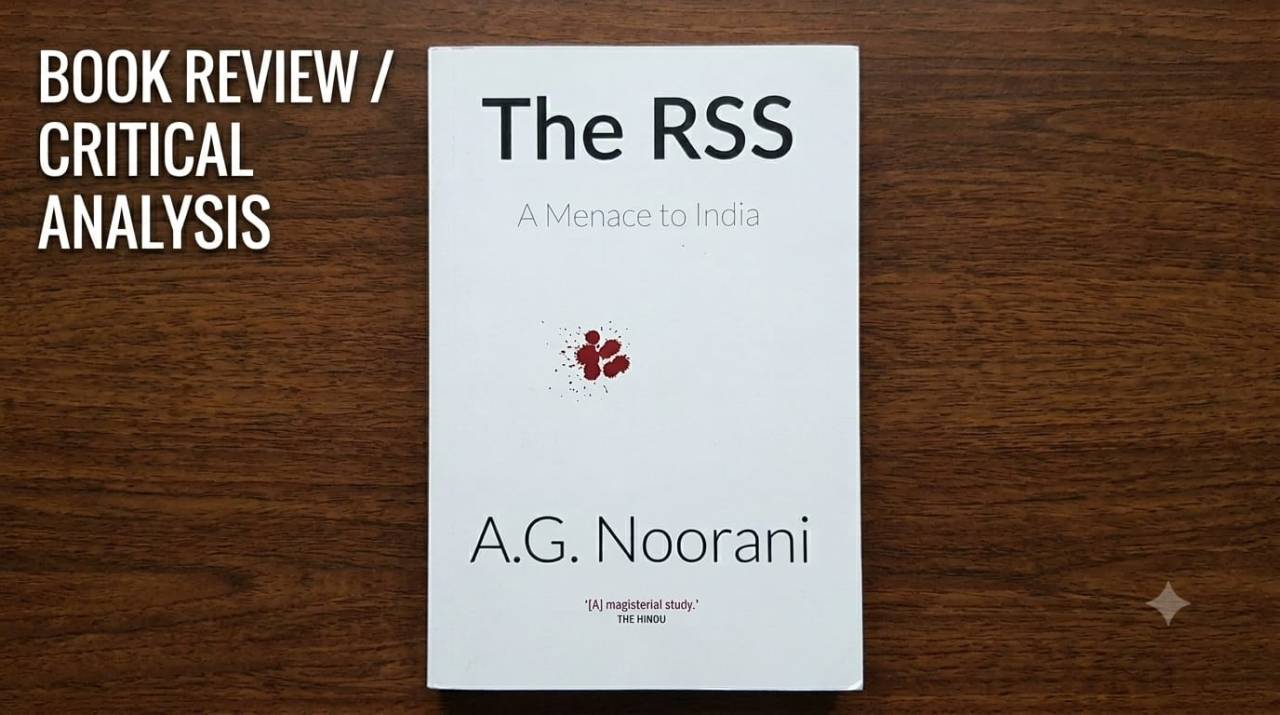
Can a nation remain secular while its dominant political ideology is rooted in cultural nationalism? A.G. Noorani's controversial book The RSS: A Menace to India attempts to answer that question—and continues to fuel debate years after its publication.
Few books on contemporary Indian politics have generated as much debate as A.G. Noorani's The RSS: A Menace to India. Written by one of India's most respected constitutional scholars and legal historians, the book is an uncompromising examination of the Rashtriya Swayamsevak Sangh (RSS), the ideological organization that has shaped much of India's contemporary political landscape.
Published after decades of research into Indian constitutionalism, communal politics, and state institutions, Noorani's work presents a detailed critique of the RSS and its vision for India. The book is less a conventional history and more a sustained argument that the organization's ideological foundations are fundamentally at odds with the secular and pluralist principles enshrined in the Indian Constitution.
Questioning the "Cultural Organization" Narrative
One of Noorani's central arguments concerns the RSS's long-standing description of itself as a cultural and social organization. The RSS has consistently maintained that it is not directly involved in electoral politics and is dedicated to social service, character-building, and cultural revival.
Noorani disputes this characterization. Drawing upon historical documents, speeches, organizational records, and public statements, he argues that the distinction between cultural activity and political influence is far less clear than often presented. According to him, the RSS has exercised significant influence over political developments through a vast network of affiliated organizations collectively known as the Sangh Parivar.
The author contends that the organization's internal structure and operational methods have allowed it to exert influence while avoiding the level of public scrutiny typically associated with political institutions.
The Debate Over Ideological Origins
Perhaps the most controversial section of the book is Noorani's examination of the ideological roots of the RSS. He closely studies the writings of early RSS leaders, particularly M.S. Golwalkar and K.B. Hedgewar, to argue that the movement borrowed certain organizational and ideological elements from European nationalist movements of the early twentieth century.
Noorani highlights the emphasis on centralized leadership, organizational discipline, and cultural nationalism. He argues that these features contributed to a political vision that differs sharply from India's constitutional model of citizenship, which is based on equal rights regardless of religion.
Critics of Noorani have challenged these comparisons, arguing that they oversimplify the historical context of the RSS. Nevertheless, his analysis remains one of the most widely cited critiques of the organization's ideological foundations.
Competing Visions of Indian Nationhood
At the heart of the book lies a larger question: What defines the Indian nation?
Noorani argues that the RSS promotes a conception of India rooted primarily in Hindu civilizational identity. In his view, this stands in contrast to the constitutional vision advanced by leaders of the freedom movement, which emphasized pluralism, secularism, and equal citizenship.
The author warns that redefining national identity through religious majoritarianism risks marginalizing minority communities and weakening the inclusive framework that has guided the republic since independence. Whether one agrees with his conclusions or not, Noorani's work highlights a fundamental ideological contest that continues to shape Indian politics.
History and Collective Memory
Another major theme in the book is the interpretation of Indian history. Noorani accuses the RSS and its affiliates of promoting historical narratives that prioritize religious conflict while downplaying periods of cultural exchange and coexistence.
He points to debates surrounding historical figures such as Ashoka, Akbar, and Jawaharlal Nehru as examples of broader disagreements over how India's past should be understood. According to Noorani, the struggle over history is ultimately a struggle over national identity and political legitimacy.
Supporters of the RSS, however, argue that revisiting historical narratives is necessary to correct what they view as long-standing distortions in mainstream historiography. The debate remains one of the most contested aspects of contemporary public discourse.
Institutions and Political Influence
Noorani also explores the relationship between the RSS and the Bharatiya Janata Party (BJP). He argues that the distinction between the two is often overstated and points to the rise of former RSS workers to influential positions in government and public life.
The book examines the growing presence of individuals associated with the Sangh Parivar across political, educational, and administrative institutions. Noorani interprets this trend as evidence of a broader ideological project aimed at reshaping the character of the Indian state.
His critics view this assessment as overly alarmist, noting that democratic institutions continue to function through electoral accountability and constitutional safeguards.
Why the Book Still Matters
More than a decade after its publication, The RSS: A Menace to India remains relevant because it addresses questions that continue to dominate Indian politics: secularism, nationalism, identity, and the role of ideology in governance.
The book is unapologetically critical and leaves little doubt about Noorani's position. Yet its significance lies not merely in its conclusions but in the questions it raises about the future direction of the Indian republic.
For readers seeking to understand the intellectual arguments surrounding the rise of Hindutva politics, Noorani's work remains one of the most detailed and influential critiques ever written. Whether regarded as a warning, a political intervention, or a historical analysis, it continues to be an essential text in debates over India's democratic and constitutional future.
Few books on contemporary Indian politics have generated as much debate as A.G. Noorani's The RSS: A Menace to India. Written by one of India's most respected constitutional scholars and legal historians, the book is an uncompromising examination of the Rashtriya Swayamsevak Sangh (RSS), the ideological organization that has shaped much of India's contemporary political landscape.
Published after decades of research into Indian constitutionalism, communal politics, and state institutions, Noorani's work presents a detailed critique of the RSS and its vision for India. The book is less a conventional history and more a sustained argument that the organization's ideological foundations are fundamentally at odds with the secular and pluralist principles enshrined in the Indian Constitution.
Questioning the "Cultural Organization" Narrative
One of Noorani's central arguments concerns the RSS's long-standing description of itself as a cultural and social organization. The RSS has consistently maintained that it is not directly involved in electoral politics and is dedicated to social service, character-building, and cultural revival.
Noorani disputes this characterization. Drawing upon historical documents, speeches, organizational records, and public statements, he argues that the distinction between cultural activity and political influence is far less clear than often presented. According to him, the RSS has exercised significant influence over political developments through a vast network of affiliated organizations collectively known as the Sangh Parivar.
The author contends that the organization's internal structure and operational methods have allowed it to exert influence while avoiding the level of public scrutiny typically associated with political institutions.
The Debate Over Ideological Origins
Perhaps the most controversial section of the book is Noorani's examination of the ideological roots of the RSS. He closely studies the writings of early RSS leaders, particularly M.S. Golwalkar and K.B. Hedgewar, to argue that the movement borrowed certain organizational and ideological elements from European nationalist movements of the early twentieth century.
Noorani highlights the emphasis on centralized leadership, organizational discipline, and cultural nationalism. He argues that these features contributed to a political vision that differs sharply from India's constitutional model of citizenship, which is based on equal rights regardless of religion.
Critics of Noorani have challenged these comparisons, arguing that they oversimplify the historical context of the RSS. Nevertheless, his analysis remains one of the most widely cited critiques of the organization's ideological foundations.
Competing Visions of Indian Nationhood
At the heart of the book lies a larger question: What defines the Indian nation?
Noorani argues that the RSS promotes a conception of India rooted primarily in Hindu civilizational identity. In his view, this stands in contrast to the constitutional vision advanced by leaders of the freedom movement, which emphasized pluralism, secularism, and equal citizenship.
The author warns that redefining national identity through religious majoritarianism risks marginalizing minority communities and weakening the inclusive framework that has guided the republic since independence. Whether one agrees with his conclusions or not, Noorani's work highlights a fundamental ideological contest that continues to shape Indian politics.
History and Collective Memory
Another major theme in the book is the interpretation of Indian history. Noorani accuses the RSS and its affiliates of promoting historical narratives that prioritize religious conflict while downplaying periods of cultural exchange and coexistence.
He points to debates surrounding historical figures such as Ashoka, Akbar, and Jawaharlal Nehru as examples of broader disagreements over how India's past should be understood. According to Noorani, the struggle over history is ultimately a struggle over national identity and political legitimacy.
Supporters of the RSS, however, argue that revisiting historical narratives is necessary to correct what they view as long-standing distortions in mainstream historiography. The debate remains one of the most contested aspects of contemporary public discourse.
Institutions and Political Influence
Noorani also explores the relationship between the RSS and the Bharatiya Janata Party (BJP). He argues that the distinction between the two is often overstated and points to the rise of former RSS workers to influential positions in government and public life.
The book examines the growing presence of individuals associated with the Sangh Parivar across political, educational, and administrative institutions. Noorani interprets this trend as evidence of a broader ideological project aimed at reshaping the character of the Indian state.
His critics view this assessment as overly alarmist, noting that democratic institutions continue to function through electoral accountability and constitutional safeguards.
Why the Book Still Matters
More than a decade after its publication, The RSS: A Menace to India remains relevant because it addresses questions that continue to dominate Indian politics: secularism, nationalism, identity, and the role of ideology in governance.
The book is unapologetically critical and leaves little doubt about Noorani's position. Yet its significance lies not merely in its conclusions but in the questions it raises about the future direction of the Indian republic.
For readers seeking to understand the intellectual arguments surrounding the rise of Hindutva politics, Noorani's work remains one of the most detailed and influential critiques ever written. Whether regarded as a warning, a political intervention, or a historical analysis, it continues to be an essential text in debates over India's democratic and constitutional future.
























Leave a Comment