
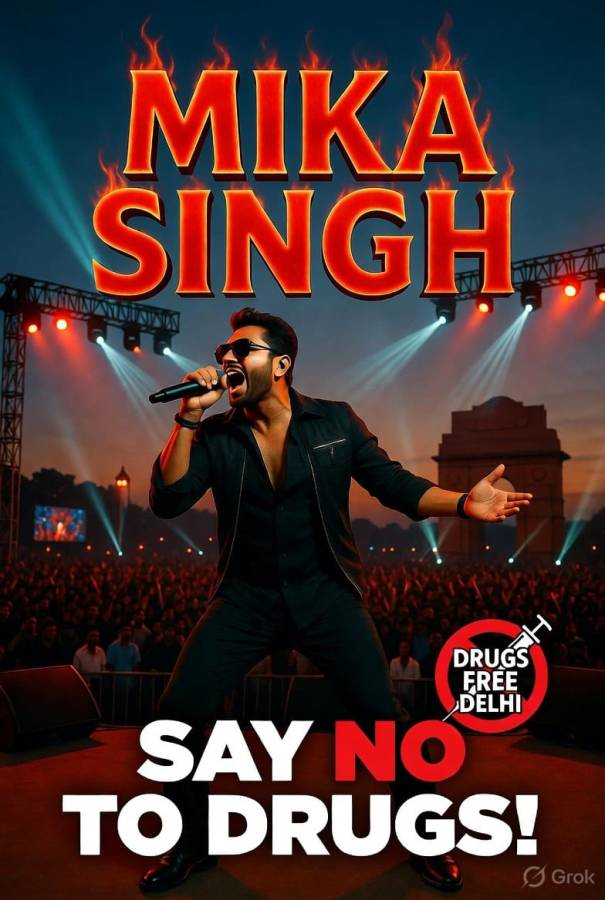
Can music help fight drug abuse? Mika Singh's India Gate concert shows how public awareness is becoming a key part of India's anti-drug campaign.
As the Centre rolls out its three-year strategy to curb narcotics, Delhi witnessed a different kind of anti-drug campaign over the weekend—one that relied on music, public participation and awareness rather than enforcement.
Singer Mika Singh performed at Kartavya Path on Saturday evening as part of an awareness programme organised by the Anti Narcotics Task Force (ANTF) and Delhi Police to mark the International Day Against Drug Abuse and Illicit Trafficking, observed every year on June 26.
The concert attracted large crowds near India Gate, with Mika performing popular songs such as Sawan Mein Lag Gayi Aag, Subha Hone Na De and Mauja Hi Mauja, along with classic hits originally made famous by Kishore Kumar.
For Mika, the event was more than another performance. It was his second consecutive appearance at the venue for the same campaign. Speaking after the concert, he said Delhi always holds a special place for him and that performing before the city's audience is deeply emotional. He described the invitation as an honour and stressed that society must do more than merely express concern about drug abuse. According to him, citizens share the responsibility of encouraging young people to reject drugs and make healthier choices.
The awareness programme extended beyond music. The Delhi Police Band performed before the audience, while a pantomime act used silent theatre to highlight the dangers of substance abuse. An art exhibition on the theme of a drug-free society was also displayed, featuring posters such as "Drugs Free Delhi" that depicted the social and personal consequences of addiction. Senior Delhi Police officials, including the Police Commissioner, attended the event.
Public awareness alongside enforcement
The Kartavya Path programme complements the Centre's broader anti-drug strategy outlined in the Vision Document on Drug Control (2026–2029), which focuses on four areas: stronger enforcement and intelligence-sharing, tighter control of precursor and synthetic drugs, demand reduction and rehabilitation, and institutional capacity-building across ministries and states.
While law enforcement targets traffickers and supply chains, public awareness campaigns address the demand side of the problem. The strategy recognises that enforcement alone cannot eliminate drug abuse without community participation, education and rehabilitation.
According to official data released by the Narcotics Control Bureau, drug-related cases rose by around 53% in 2025, underscoring the scale of the challenge. The figures suggest that reducing drug abuse requires not only stricter policing but also sustained efforts to discourage first-time use, particularly among young people.
Celebrity participation can help amplify that message. A concert cannot dismantle trafficking networks, but it can reach audiences who may not engage with official campaigns. By combining entertainment with public awareness, Delhi Police and the ANTF sought to deliver an anti-drug message in a setting that encourages wider public participation.
Why such campaigns matter
Awareness drives are sometimes criticised as symbolic, but they remain an important part of India's anti-drug strategy. Trafficking networks thrive where demand exists, making prevention and behavioural change essential alongside policing and intelligence operations.
Concerts, school outreach programmes, exhibitions and community events help reinforce that message over time. Their impact may be difficult to measure immediately, but they contribute to creating greater public awareness, especially among young people.
As India works towards its long-term goal of a drug-free society by 2047, initiatives such as the Kartavya Path concert demonstrate that the fight against narcotics extends beyond arrests and seizures. Public engagement, education and community participation remain central to the broader effort to reduce both the demand for and supply of illegal drugs.
As the Centre rolls out its three-year strategy to curb narcotics, Delhi witnessed a different kind of anti-drug campaign over the weekend—one that relied on music, public participation and awareness rather than enforcement.
Singer Mika Singh performed at Kartavya Path on Saturday evening as part of an awareness programme organised by the Anti Narcotics Task Force (ANTF) and Delhi Police to mark the International Day Against Drug Abuse and Illicit Trafficking, observed every year on June 26.
The concert attracted large crowds near India Gate, with Mika performing popular songs such as Sawan Mein Lag Gayi Aag, Subha Hone Na De and Mauja Hi Mauja, along with classic hits originally made famous by Kishore Kumar.
For Mika, the event was more than another performance. It was his second consecutive appearance at the venue for the same campaign. Speaking after the concert, he said Delhi always holds a special place for him and that performing before the city's audience is deeply emotional. He described the invitation as an honour and stressed that society must do more than merely express concern about drug abuse. According to him, citizens share the responsibility of encouraging young people to reject drugs and make healthier choices.
The awareness programme extended beyond music. The Delhi Police Band performed before the audience, while a pantomime act used silent theatre to highlight the dangers of substance abuse. An art exhibition on the theme of a drug-free society was also displayed, featuring posters such as "Drugs Free Delhi" that depicted the social and personal consequences of addiction. Senior Delhi Police officials, including the Police Commissioner, attended the event.
Public awareness alongside enforcement
The Kartavya Path programme complements the Centre's broader anti-drug strategy outlined in the Vision Document on Drug Control (2026–2029), which focuses on four areas: stronger enforcement and intelligence-sharing, tighter control of precursor and synthetic drugs, demand reduction and rehabilitation, and institutional capacity-building across ministries and states.
While law enforcement targets traffickers and supply chains, public awareness campaigns address the demand side of the problem. The strategy recognises that enforcement alone cannot eliminate drug abuse without community participation, education and rehabilitation.
According to official data released by the Narcotics Control Bureau, drug-related cases rose by around 53% in 2025, underscoring the scale of the challenge. The figures suggest that reducing drug abuse requires not only stricter policing but also sustained efforts to discourage first-time use, particularly among young people.
Celebrity participation can help amplify that message. A concert cannot dismantle trafficking networks, but it can reach audiences who may not engage with official campaigns. By combining entertainment with public awareness, Delhi Police and the ANTF sought to deliver an anti-drug message in a setting that encourages wider public participation.
Why such campaigns matter
Awareness drives are sometimes criticised as symbolic, but they remain an important part of India's anti-drug strategy. Trafficking networks thrive where demand exists, making prevention and behavioural change essential alongside policing and intelligence operations.
Concerts, school outreach programmes, exhibitions and community events help reinforce that message over time. Their impact may be difficult to measure immediately, but they contribute to creating greater public awareness, especially among young people.
As India works towards its long-term goal of a drug-free society by 2047, initiatives such as the Kartavya Path concert demonstrate that the fight against narcotics extends beyond arrests and seizures. Public engagement, education and community participation remain central to the broader effort to reduce both the demand for and supply of illegal drugs.

















Leave a Comment