
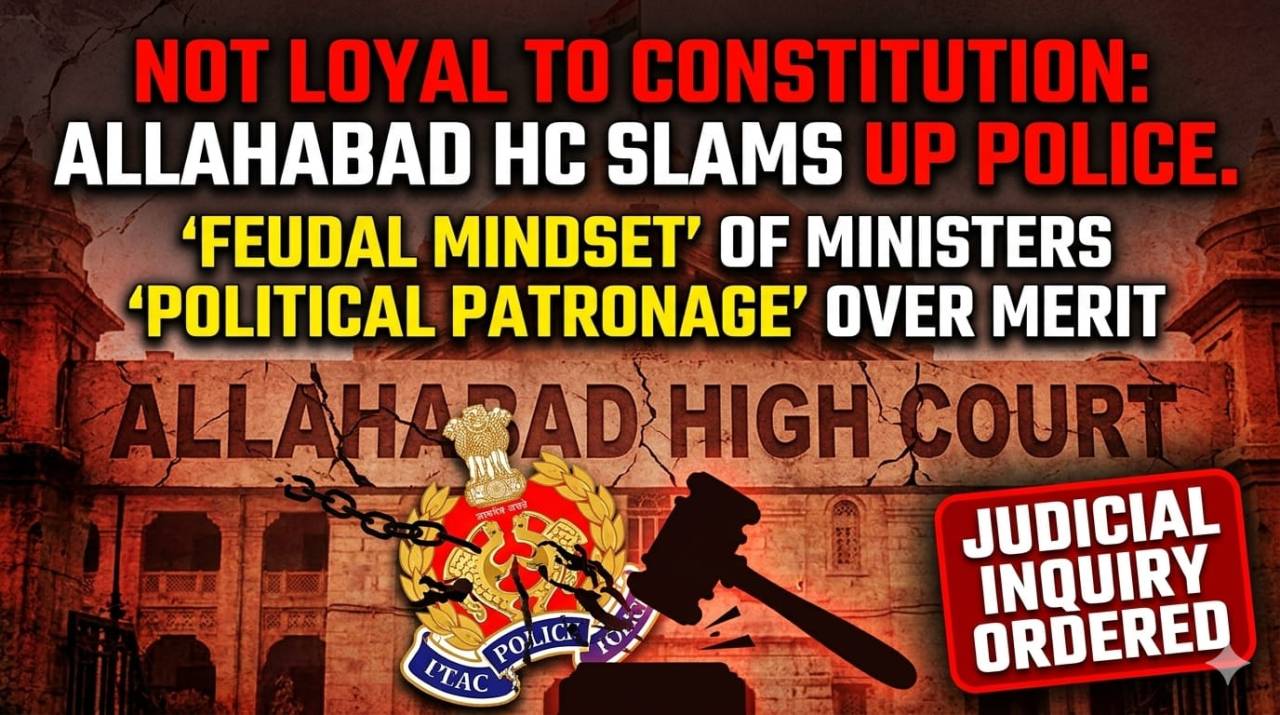
Can a police force remain impartial when careers depend on political loyalty? A sharp Allahabad High Court ruling raises troubling questions about governance.
In a sharply worded judgment that raises serious concerns about the state of policing in Uttar Pradesh, the Allahabad High Court has delivered a scathing critique of the state's law enforcement machinery, accusing it of prioritizing political loyalty over constitutional duty. The court’s observations suggest a troubling erosion of institutional independence, where adherence to the rule of law is increasingly overshadowed by the imperative to please those in power.
A System Governed by ‘Vertical Loyalty’
The court’s remarks came while hearing a petition related to the Uttar Pradesh Gangsters and Anti-Social Activities (Prevention) Act, 1986. Justice Vinod Diwakar painted a disturbing picture of a policing structure heavily influenced by political considerations rather than constitutional principles.
According to the judgment, a deeply rooted “feudal mindset” continues to influence governance in the state. Rather than functioning as impartial public servants, many officials operate within a system of “vertical loyalty,” where professional advancement often depends on maintaining favor with political superiors.
The court observed that the state's transfer and posting culture has created powerful incentives for officers to align themselves with the ruling establishment. Those viewed as politically loyal are frequently rewarded with influential and desirable postings, while officers who demonstrate independence and adhere strictly to the law risk being sidelined through punitive transfers.
Such a system, the court suggested, undermines the very foundations of democratic governance by encouraging allegiance to political authority rather than to the Constitution and the public interest.
Concerns Over Misuse of Legal Powers
The High Court’s criticism was triggered by the case of Rajendra Tyagi, against whom proceedings under the Gangsters Act had been initiated. Quashing the criminal trial, the bench highlighted what it described as a broader pattern of misuse of legal provisions and administrative powers.
The court expressed concern that stringent laws, selective enforcement, and extraordinary police powers are sometimes deployed against individuals for reasons unrelated to genuine law-and-order concerns. It noted that procedural safeguards guaranteed under criminal law, including provisions of the Bharatiya Nagarik Suraksha Sanhita (BNSS), are frequently ignored.
According to the judgment, arrests are often made without proper adherence to due process, First Information Reports (FIRs) are registered or suppressed based on extraneous considerations, and preventive detention powers are occasionally exercised in an arbitrary manner.
In one of its most striking observations, the court remarked that judicial orders are often followed “in form but defeated in substance,” suggesting that compliance is sometimes reduced to a procedural exercise while the intent of the judiciary is effectively undermined.
Accountability Beyond the Police Force
The court’s criticism extended beyond field-level policing and reached the highest levels of the administrative hierarchy. It expressed concern over the role of senior bureaucratic officials, including the State Home Secretary, in maintaining the integrity of governance and administrative decision-making.
The bench observed that key decisions involving postings, disciplinary matters, and responses to court proceedings must be guided by objective constitutional principles rather than personal, political, or extraneous considerations. It stressed that senior officials bear a special responsibility to safeguard institutional independence and ensure that the machinery of government functions within the framework of the law.
To that end, the court directed the state government to independently assess the suitability and effectiveness of senior officers entrusted with critical administrative responsibilities.
A Warning for Democratic Governance
The judgment serves as a powerful reminder that in a constitutional democracy, state institutions derive their legitimacy from the law—not from political patronage. The court’s observations underscore the dangers of a system where law enforcement agencies become instruments of political convenience rather than guardians of citizens’ rights.
By emphasizing accountability, institutional independence, and adherence to constitutional values, the Allahabad High Court has issued a clear warning: the authority of the state must remain subordinate to the Constitution. Any departure from that principle risks weakening public trust, undermining the rule of law, and compromising the democratic foundations upon which governance rests.
The message from the bench is unequivocal—public officials are servants of the Constitution, not of those who temporarily occupy positions of power.
In a sharply worded judgment that raises serious concerns about the state of policing in Uttar Pradesh, the Allahabad High Court has delivered a scathing critique of the state's law enforcement machinery, accusing it of prioritizing political loyalty over constitutional duty. The court’s observations suggest a troubling erosion of institutional independence, where adherence to the rule of law is increasingly overshadowed by the imperative to please those in power.
A System Governed by ‘Vertical Loyalty’
The court’s remarks came while hearing a petition related to the Uttar Pradesh Gangsters and Anti-Social Activities (Prevention) Act, 1986. Justice Vinod Diwakar painted a disturbing picture of a policing structure heavily influenced by political considerations rather than constitutional principles.
According to the judgment, a deeply rooted “feudal mindset” continues to influence governance in the state. Rather than functioning as impartial public servants, many officials operate within a system of “vertical loyalty,” where professional advancement often depends on maintaining favor with political superiors.
The court observed that the state's transfer and posting culture has created powerful incentives for officers to align themselves with the ruling establishment. Those viewed as politically loyal are frequently rewarded with influential and desirable postings, while officers who demonstrate independence and adhere strictly to the law risk being sidelined through punitive transfers.
Such a system, the court suggested, undermines the very foundations of democratic governance by encouraging allegiance to political authority rather than to the Constitution and the public interest.
Concerns Over Misuse of Legal Powers
The High Court’s criticism was triggered by the case of Rajendra Tyagi, against whom proceedings under the Gangsters Act had been initiated. Quashing the criminal trial, the bench highlighted what it described as a broader pattern of misuse of legal provisions and administrative powers.
The court expressed concern that stringent laws, selective enforcement, and extraordinary police powers are sometimes deployed against individuals for reasons unrelated to genuine law-and-order concerns. It noted that procedural safeguards guaranteed under criminal law, including provisions of the Bharatiya Nagarik Suraksha Sanhita (BNSS), are frequently ignored.
According to the judgment, arrests are often made without proper adherence to due process, First Information Reports (FIRs) are registered or suppressed based on extraneous considerations, and preventive detention powers are occasionally exercised in an arbitrary manner.
In one of its most striking observations, the court remarked that judicial orders are often followed “in form but defeated in substance,” suggesting that compliance is sometimes reduced to a procedural exercise while the intent of the judiciary is effectively undermined.
Accountability Beyond the Police Force
The court’s criticism extended beyond field-level policing and reached the highest levels of the administrative hierarchy. It expressed concern over the role of senior bureaucratic officials, including the State Home Secretary, in maintaining the integrity of governance and administrative decision-making.
The bench observed that key decisions involving postings, disciplinary matters, and responses to court proceedings must be guided by objective constitutional principles rather than personal, political, or extraneous considerations. It stressed that senior officials bear a special responsibility to safeguard institutional independence and ensure that the machinery of government functions within the framework of the law.
To that end, the court directed the state government to independently assess the suitability and effectiveness of senior officers entrusted with critical administrative responsibilities.
A Warning for Democratic Governance
The judgment serves as a powerful reminder that in a constitutional democracy, state institutions derive their legitimacy from the law—not from political patronage. The court’s observations underscore the dangers of a system where law enforcement agencies become instruments of political convenience rather than guardians of citizens’ rights.
By emphasizing accountability, institutional independence, and adherence to constitutional values, the Allahabad High Court has issued a clear warning: the authority of the state must remain subordinate to the Constitution. Any departure from that principle risks weakening public trust, undermining the rule of law, and compromising the democratic foundations upon which governance rests.
The message from the bench is unequivocal—public officials are servants of the Constitution, not of those who temporarily occupy positions of power.

























Leave a Comment