

Nearly 8.7 crore young Indians are classified as NEET, but the real question is who gets counted as "idle" and why.
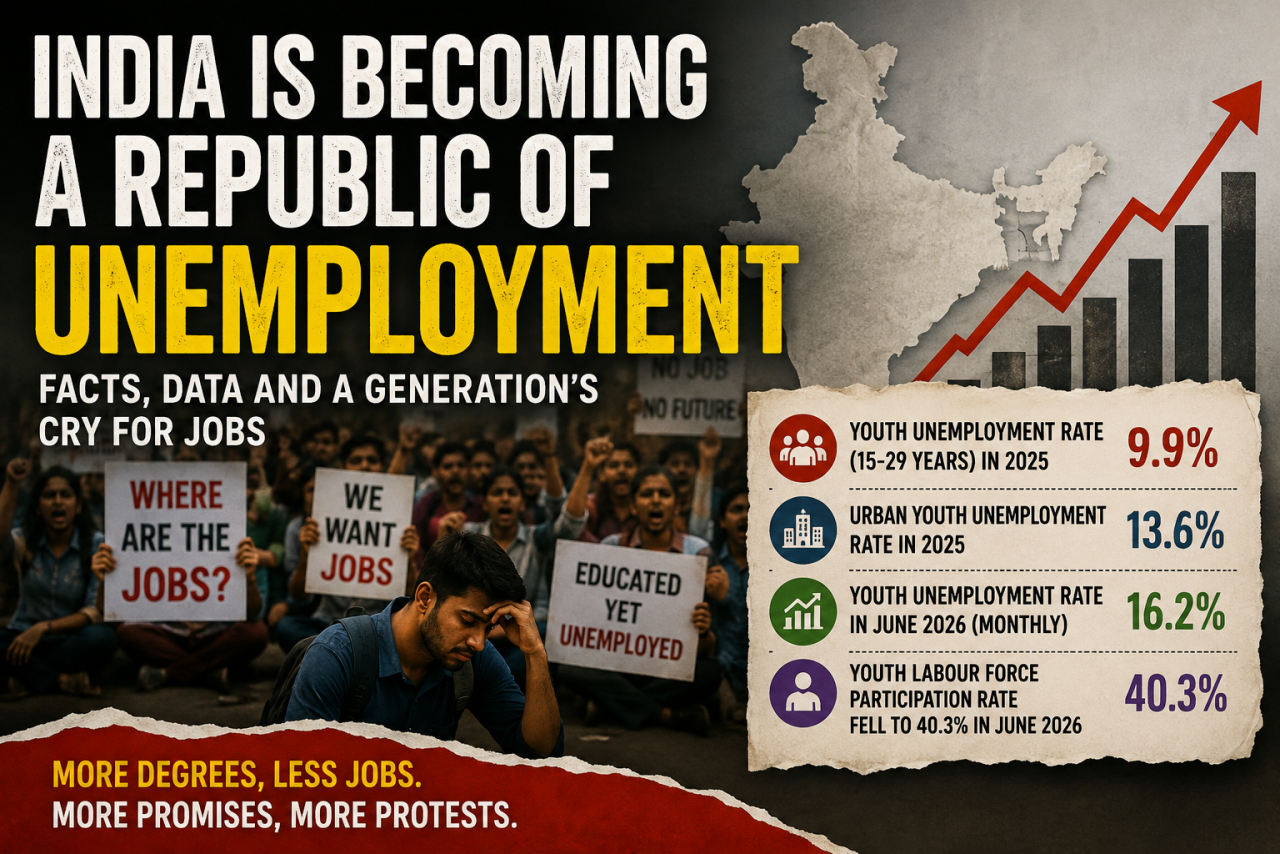
Nearly 8.7 crore young Indians between the ages of 15 and 29 are not studying, working or receiving training for a job. A NITI Aayog report, Reimagining Skilling for Viksit Bharat@2047, puts this figure at nearly 11 per cent of the country's youth population.
The number is alarming. But buried inside the same report is a detail that should concern policymakers even more. Roughly 88 per cent of these young people classified as NEET, meaning "not in employment, education or training", are engaged in domestic work and caregiving. Women make up the overwhelming majority of this group.
This is not a story about laziness or a lack of ambition. It is a story about how India's skilling and employment policies have largely been designed around a male, urban and mobile youth, while the country's actual NEET population is disproportionately female, rural and tied to unpaid household work that formal employment statistics do not recognise as work.
The Hidden Cost of Being a NEET Youth
The NITI Aayog report identifies several barriers that prevent young people from entering education, employment or training. These include poverty, family pressure, unsafe transport, lack of career guidance and early marriage.
Many of these barriers affect young women far more severely than young men.
A young woman who cannot safely travel to a training centre after dark, or who is married before she can complete a course, does not necessarily appear in official statistics as an unemployed worker looking for a job. She appears as NEET, folded into a category that policymakers often discuss in terms of factory employment, formal jobs and the expanding gig economy.
That distinction matters.
India's skilling strategy may be asking the wrong question if it focuses only on how to train young people for available or emerging jobs without first asking why millions cannot reach those training opportunities in the first place.
Two Different Youth Crises
The report, based on the 78th round of the National Sample Survey from 2021, also points to another serious problem. Only 8.25 per cent of graduates work in jobs that match their qualifications.
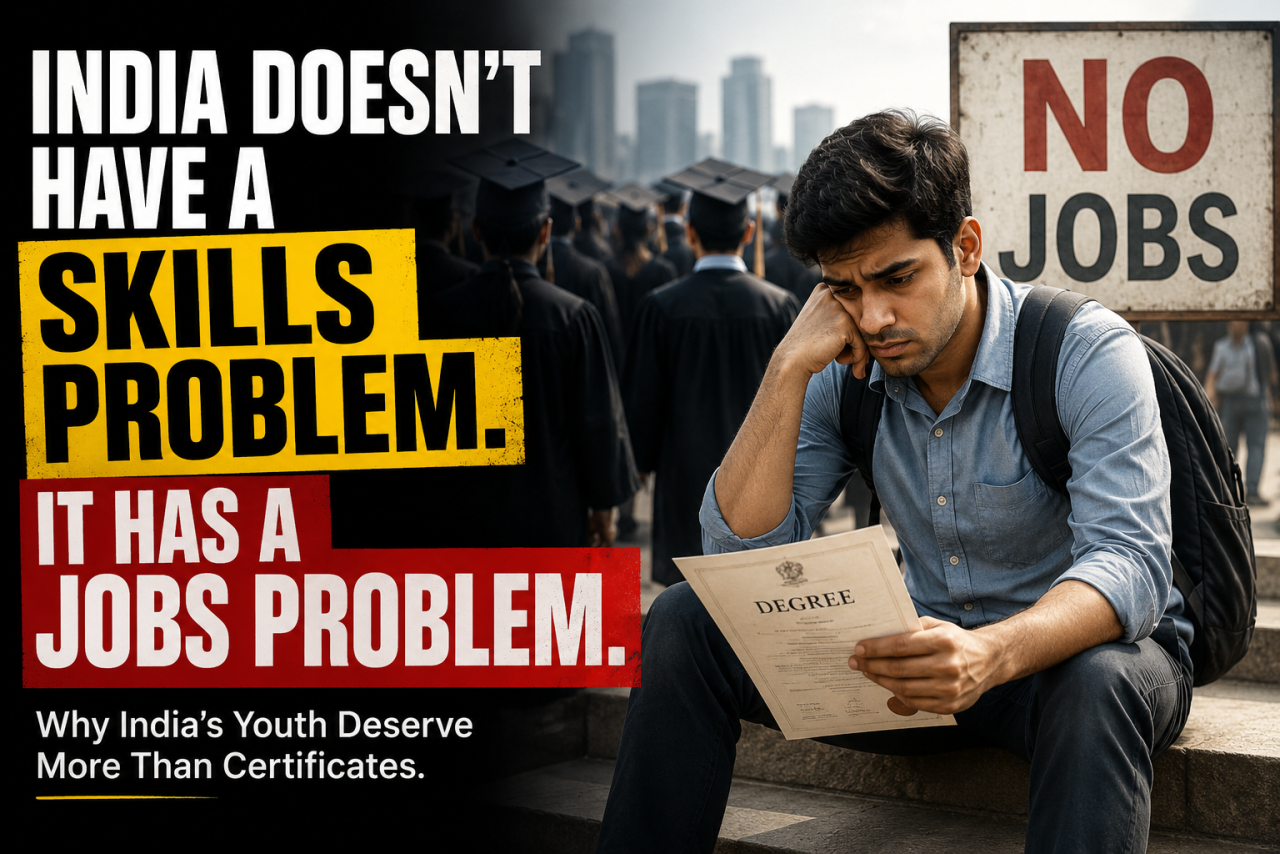
That is a major crisis of educated unemployment and underemployment. But it is not the same crisis as the country's NEET population.
Treating both problems as though they were identical risks producing one-size-fits-all skilling programmes that fail to address the circumstances of the larger and more invisible group.
Since 2014-15, more than 7.67 crore people have been trained under various government skilling schemes. The number is substantial on paper. Yet the NEET population remains extremely large.
One reason may be that training centres, stipends and outreach programmes are often designed for people who can already leave home, travel independently and spend several months in training.
For a young woman in a low-income household, particularly in rural Bihar or eastern Uttar Pradesh, the problem may not simply be the cost of training. The training itself may be physically inaccessible or socially discouraged.
Training Alone Cannot Remove the Barriers
A subsidised training course cannot solve a problem if a young woman cannot safely reach the training centre.
Nor can it help much if attending the course means giving up hours of unpaid childcare, cooking, elder care or other household responsibilities on which her family depends.
This is why skilling programmes need to look beyond course fees and classrooms. Safe transportation, flexible training schedules, childcare support and meaningful stipends can determine whether a young woman is actually able to participate.
The report's observation that young people cannot simply add paid skilling to their existing financial commitments becomes even more significant when those commitments include unpaid domestic responsibilities that never appear in a household income statement.
The Blind Spot in "Local Demand"
There is another gap in the current approach.
The report rightly emphasises the need to connect skilling with local demand and emerging sectors. But local economic demand in many small towns and villages does not necessarily resemble the opportunities highlighted in national conversations about technology and the future of work.
In many communities, demand is concentrated in areas such as tailoring, food processing, retail, caregiving and other service activities.
Women already perform much of this work, often informally and for low wages. Their skills and labour remain largely invisible because they operate outside formal employment structures.
Reimagining skilling for a developed India by 2047 should therefore mean more than preparing young people for new jobs. It should also mean recognising, formalising and fairly rewarding the work that millions of young women are already doing.
India's NEET Problem Needs a Different Lens
The figure of 8.7 crore will continue to make headlines whenever the number appears in public policy discussions. But the more important lesson from the NITI Aayog report is that NEET youth are not a single, homogeneous group.
A young graduate unable to find a job is facing a different problem from a young woman who spends her day caring for children or elderly family members. A rural youth unable to access a training centre faces a different barrier from an urban graduate searching for a better job.
The solutions must reflect those differences.
Until India's skilling policy is redesigned around who is actually outside the system and why, the country risks training the wrong half of its youth for jobs that the other half was never in a position to reach.
India's real youth crisis, therefore, may not simply be unemployment. It is the failure to recognise the millions whose work, constraints and aspirations remain invisible behind the label of "idle".
Nearly 8.7 crore young Indians between the ages of 15 and 29 are not studying, working or receiving training for a job. A NITI Aayog report, Reimagining Skilling for Viksit Bharat@2047, puts this figure at nearly 11 per cent of the country's youth population.
The number is alarming. But buried inside the same report is a detail that should concern policymakers even more. Roughly 88 per cent of these young people classified as NEET, meaning "not in employment, education or training", are engaged in domestic work and caregiving. Women make up the overwhelming majority of this group.
This is not a story about laziness or a lack of ambition. It is a story about how India's skilling and employment policies have largely been designed around a male, urban and mobile youth, while the country's actual NEET population is disproportionately female, rural and tied to unpaid household work that formal employment statistics do not recognise as work.
The Hidden Cost of Being a NEET Youth
The NITI Aayog report identifies several barriers that prevent young people from entering education, employment or training. These include poverty, family pressure, unsafe transport, lack of career guidance and early marriage.
Many of these barriers affect young women far more severely than young men.
A young woman who cannot safely travel to a training centre after dark, or who is married before she can complete a course, does not necessarily appear in official statistics as an unemployed worker looking for a job. She appears as NEET, folded into a category that policymakers often discuss in terms of factory employment, formal jobs and the expanding gig economy.
That distinction matters.
India's skilling strategy may be asking the wrong question if it focuses only on how to train young people for available or emerging jobs without first asking why millions cannot reach those training opportunities in the first place.
Two Different Youth Crises
The report, based on the 78th round of the National Sample Survey from 2021, also points to another serious problem. Only 8.25 per cent of graduates work in jobs that match their qualifications.
That is a major crisis of educated unemployment and underemployment. But it is not the same crisis as the country's NEET population.
Treating both problems as though they were identical risks producing one-size-fits-all skilling programmes that fail to address the circumstances of the larger and more invisible group.
Since 2014-15, more than 7.67 crore people have been trained under various government skilling schemes. The number is substantial on paper. Yet the NEET population remains extremely large.
One reason may be that training centres, stipends and outreach programmes are often designed for people who can already leave home, travel independently and spend several months in training.
For a young woman in a low-income household, particularly in rural Bihar or eastern Uttar Pradesh, the problem may not simply be the cost of training. The training itself may be physically inaccessible or socially discouraged.
Training Alone Cannot Remove the Barriers
A subsidised training course cannot solve a problem if a young woman cannot safely reach the training centre.
Nor can it help much if attending the course means giving up hours of unpaid childcare, cooking, elder care or other household responsibilities on which her family depends.
This is why skilling programmes need to look beyond course fees and classrooms. Safe transportation, flexible training schedules, childcare support and meaningful stipends can determine whether a young woman is actually able to participate.
The report's observation that young people cannot simply add paid skilling to their existing financial commitments becomes even more significant when those commitments include unpaid domestic responsibilities that never appear in a household income statement.
The Blind Spot in "Local Demand"
There is another gap in the current approach.
The report rightly emphasises the need to connect skilling with local demand and emerging sectors. But local economic demand in many small towns and villages does not necessarily resemble the opportunities highlighted in national conversations about technology and the future of work.
In many communities, demand is concentrated in areas such as tailoring, food processing, retail, caregiving and other service activities.
Women already perform much of this work, often informally and for low wages. Their skills and labour remain largely invisible because they operate outside formal employment structures.
Reimagining skilling for a developed India by 2047 should therefore mean more than preparing young people for new jobs. It should also mean recognising, formalising and fairly rewarding the work that millions of young women are already doing.
India's NEET Problem Needs a Different Lens
The figure of 8.7 crore will continue to make headlines whenever the number appears in public policy discussions. But the more important lesson from the NITI Aayog report is that NEET youth are not a single, homogeneous group.
A young graduate unable to find a job is facing a different problem from a young woman who spends her day caring for children or elderly family members. A rural youth unable to access a training centre faces a different barrier from an urban graduate searching for a better job.
The solutions must reflect those differences.
Until India's skilling policy is redesigned around who is actually outside the system and why, the country risks training the wrong half of its youth for jobs that the other half was never in a position to reach.
India's real youth crisis, therefore, may not simply be unemployment. It is the failure to recognise the millions whose work, constraints and aspirations remain invisible behind the label of "idle".























Leave a Comment