
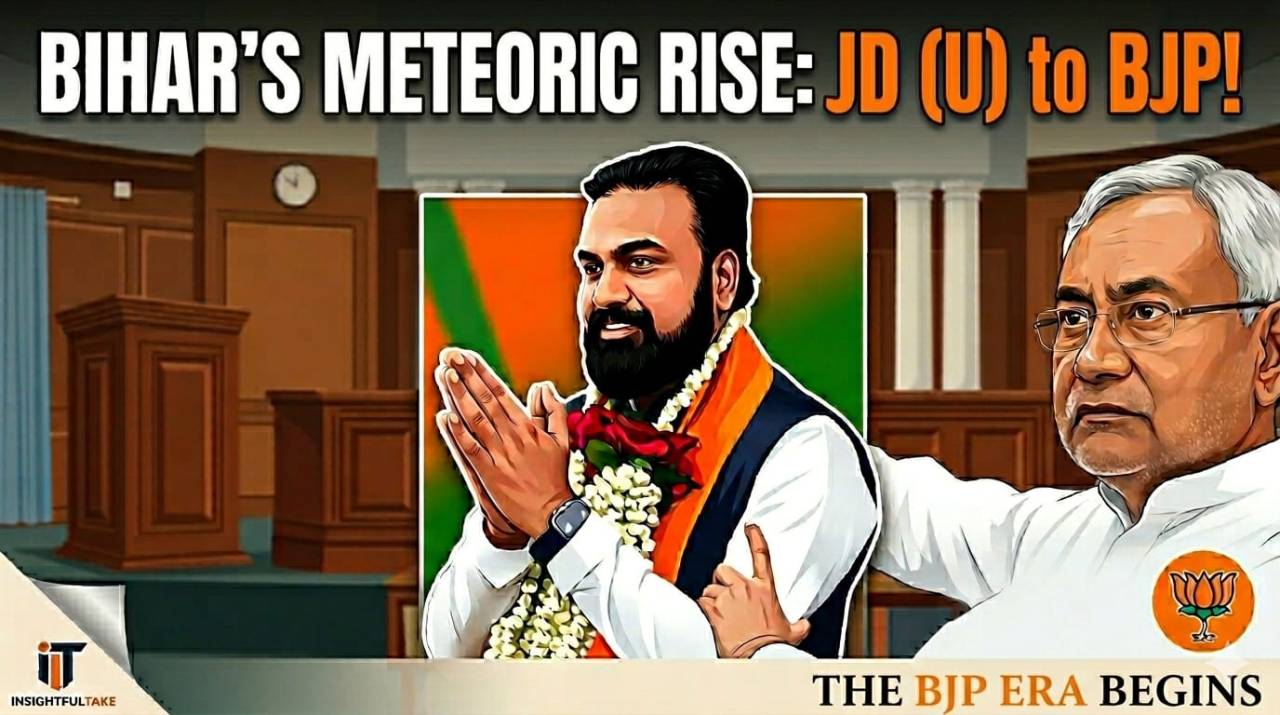
A political era ends in Bihar as Nitish Kumar steps aside and Samrat Choudhary rises—marking BJP’s first Chief Minister in the state.
Bihar politics witnessed a significant shift this week as Nitish Kumar stepped down as Chief Minister after leading the state for over two decades. Taking his place is Samrat Choudhary, a senior leader of the Bharatiya Janata Party (BJP). The transition marks a historic moment—it is the first time a BJP leader has assumed the top post in Bihar.
The Swearing-In Ceremony
The swearing-in ceremony was held in Patna on Wednesday, in a relatively simple and low-key setting. Samrat Choudhary took oath as the 24th Chief Minister of Bihar, administered by Governor Lt Gen (Retd) Syed Ata Hasnain.
Two senior leaders from the Janata Dal (United)—Vijay Kumar Choudhary and Bijendra Prasad Yadav—were sworn in as Deputy Chief Ministers.
This new arrangement reflects a reversal of roles. Until recently, Nitish Kumar led the government with BJP leaders as deputies. Now, the BJP holds the CM position, while JD(U) leaders serve as deputies. Prime Minister Narendra Modi extended his congratulations, praising Choudhary’s energy and organisational capabilities.
Who is Samrat Choudhary?
Samrat Choudhary, 57, hails from a prominent political family. He is the son of Shakuni Choudhary, a former MP and MLA. Belonging to the influential Kushwaha community, he carries significant social and political weight in Bihar.
He began his political career in 1999 with the Rashtriya Janata Dal (RJD), entering the Bihar legislative at a young age. Over the years, he shifted political affiliations before joining the BJP about nine years ago, where he rose rapidly through the ranks.
Known for his organisational acumen, Choudhary has previously served as a minister and also held the post of Deputy Chief Minister. His elevation to the chief ministerial post marks the peak of his political journey so far.
Governance and Responsibilities
As Chief Minister, Samrat Choudhary will oversee 29 departments, including key portfolios such as Home, General Administration, Health, and Agriculture.
Deputy Chief Minister Vijay Kumar Choudhary will handle around ten departments, including Finance and Education, while Bijendra Prasad Yadav will oversee eight departments, including Energy and Planning.
Addressing the media after taking oath, Choudhary described the role as a “sacred responsibility” and pledged to serve the people of Bihar with honesty and dedication. He emphasised his commitment to fulfilling public aspirations and accelerating the state’s development.
The Departure of Nitish Kumar
Nitish Kumar’s resignation marks the end of a long political era in Bihar. A veteran leader, he has now moved to the Rajya Sabha, concluding over 20 years at the helm of the state government.
In his farewell remarks, Kumar highlighted his government’s work and expressed confidence in Bihar’s future progress. Notably, he attended the swearing-in ceremony, symbolising a smooth and orderly transition of power.
What Happens Next?
The newly formed cabinet is currently small, with only three members. A major cabinet expansion is expected soon, likely after the conclusion of elections in key states such as West Bengal and Tamil Nadu, possibly in early May.
As Bihar enters this new political phase, public expectations are high. The state continues to grapple with challenges such as poverty, unemployment, and infrastructure gaps. The new government faces the task of delivering tangible progress while maintaining political stability.
This transition signals not just a change in leadership, but the beginning of a new chapter in Bihar’s governance—one that will be closely watched in the months ahead.
Bihar politics witnessed a significant shift this week as Nitish Kumar stepped down as Chief Minister after leading the state for over two decades. Taking his place is Samrat Choudhary, a senior leader of the Bharatiya Janata Party (BJP). The transition marks a historic moment—it is the first time a BJP leader has assumed the top post in Bihar.
The Swearing-In Ceremony
The swearing-in ceremony was held in Patna on Wednesday, in a relatively simple and low-key setting. Samrat Choudhary took oath as the 24th Chief Minister of Bihar, administered by Governor Lt Gen (Retd) Syed Ata Hasnain.
Two senior leaders from the Janata Dal (United)—Vijay Kumar Choudhary and Bijendra Prasad Yadav—were sworn in as Deputy Chief Ministers.
This new arrangement reflects a reversal of roles. Until recently, Nitish Kumar led the government with BJP leaders as deputies. Now, the BJP holds the CM position, while JD(U) leaders serve as deputies. Prime Minister Narendra Modi extended his congratulations, praising Choudhary’s energy and organisational capabilities.
Who is Samrat Choudhary?
Samrat Choudhary, 57, hails from a prominent political family. He is the son of Shakuni Choudhary, a former MP and MLA. Belonging to the influential Kushwaha community, he carries significant social and political weight in Bihar.
He began his political career in 1999 with the Rashtriya Janata Dal (RJD), entering the Bihar legislative at a young age. Over the years, he shifted political affiliations before joining the BJP about nine years ago, where he rose rapidly through the ranks.
Known for his organisational acumen, Choudhary has previously served as a minister and also held the post of Deputy Chief Minister. His elevation to the chief ministerial post marks the peak of his political journey so far.
Governance and Responsibilities
As Chief Minister, Samrat Choudhary will oversee 29 departments, including key portfolios such as Home, General Administration, Health, and Agriculture.
Deputy Chief Minister Vijay Kumar Choudhary will handle around ten departments, including Finance and Education, while Bijendra Prasad Yadav will oversee eight departments, including Energy and Planning.
Addressing the media after taking oath, Choudhary described the role as a “sacred responsibility” and pledged to serve the people of Bihar with honesty and dedication. He emphasised his commitment to fulfilling public aspirations and accelerating the state’s development.
The Departure of Nitish Kumar
Nitish Kumar’s resignation marks the end of a long political era in Bihar. A veteran leader, he has now moved to the Rajya Sabha, concluding over 20 years at the helm of the state government.
In his farewell remarks, Kumar highlighted his government’s work and expressed confidence in Bihar’s future progress. Notably, he attended the swearing-in ceremony, symbolising a smooth and orderly transition of power.
What Happens Next?
The newly formed cabinet is currently small, with only three members. A major cabinet expansion is expected soon, likely after the conclusion of elections in key states such as West Bengal and Tamil Nadu, possibly in early May.
As Bihar enters this new political phase, public expectations are high. The state continues to grapple with challenges such as poverty, unemployment, and infrastructure gaps. The new government faces the task of delivering tangible progress while maintaining political stability.
This transition signals not just a change in leadership, but the beginning of a new chapter in Bihar’s governance—one that will be closely watched in the months ahead.


























Leave a Comment