
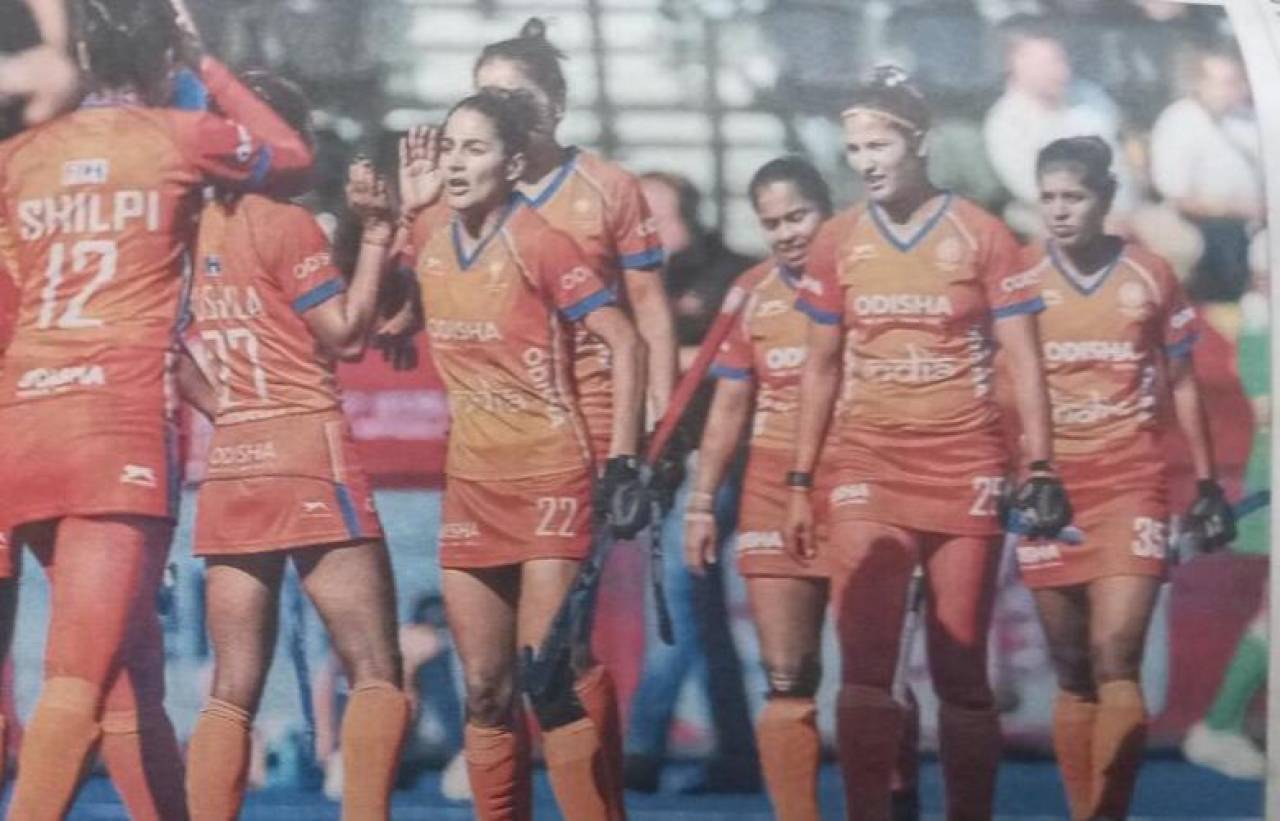
India’s 52-year wait for a Women’s Hockey World Cup semi-final continues, undone not by defeat, but by one crucial goal in a tiebreaker.
Sometimes, a team can produce the kind of defensive performance that deserves applause and still walk away heartbroken.
That was the fate of the Indian women's hockey team at the FIH Hockey World Cup 2026 in Amstelveen. India held Australia to a spirited 0-0 draw at Wagener Stadium, but the result was not enough to keep their semi-final dream alive.
The heartbreak did not come from losing a match. It came from a tiebreaker.
A Must-Win Match That Ended Goalless
The equation before the decisive Pool E clash was brutally simple. India needed a win. Australia needed only a draw.
After the Netherlands defeated China earlier in the day to top the group, India's path to the semi-finals became clear. They had to beat Australia.
For 60 minutes, India refused to give up.
Goalkeeper Bichu Devi produced a series of important saves, while twice the video referral system overturned what appeared to be Australian goals because of dangerous play.
With the clock running down, chief coach Sjoerd Marijne took an enormous gamble. He pulled the goalkeeper and added an extra outfield player, sending India into an all-out attack.
The goal never came.
The final hooter sounded at 0-0.
On paper, a goalless draw against a higher-ranked Australia side looked respectable. In the context of the tournament, however, it was devastating.
The Goal That Changed Everything
India and Australia finished level on two points, with both teams recording an identical goal difference of -2.
Then came the number that decided India's fate.
Australia had scored three goals in their matches. India had scored two.
Under the FIH tiebreaker rules, goals scored became decisive.
Not goals conceded.
Not head-to-head record.
One additional Australian goal was enough to send Australia into the semi-finals and India out.
It was the kind of elimination that feels particularly cruel because there was no single defeat to blame.
The Fine Margins India Could Not Overcome
India did not dominate the match, but they created enough moments to believe that a single goal was possible.
Shilpi's powerful strike flashed dangerously across the goalmouth. Deepika Sehrawat, who had struggled to find her scoring touch during the tournament, came close to converting a teasing ball into the circle.
India's final opportunity came through a late penalty corner, with the goalkeeper already substituted off to give the team an extra attacking player.
But the decisive touch never arrived.
The margins were tiny.
And at a World Cup, tiny margins can decide everything.
A 52-Year Wait Continues
To understand why this result hurts so much, it is necessary to look beyond Amstelveen.
India's women's team last reached a Hockey World Cup semi-final in 1974, at the inaugural edition of the tournament.
More than five decades later, that record remains untouched.
Yet this year's campaign offered genuine reasons for optimism.
India held Olympic silver medallists China to a 2-2 draw. They also fought to a goalless draw against a higher-ranked England side.
Those results suggested something important.
India were no longer simply trying to survive against the world's best. They were capable of standing toe-to-toe with them.
That may ultimately be the most significant lesson from Amstelveen.
Progress Without the Prize
Sport rarely rewards potential.
India's campaign ended without a semi-final berth, but it did not look like the campaign of a team that had been comprehensively outplayed.
Instead, India came within a single goal scored of progressing.
That distinction matters.
For a programme that has spent decades trying to return to the final four, competing this closely with some of the world's strongest teams is evidence of progress.
It simply offers little comfort to players who watched their opportunity disappear after 60 goalless minutes.
What Comes Next for India?
India's World Cup campaign is not entirely over.
Having finished third in Pool E, the team moves into the classification rounds to compete for the lower positions.
But those matches will inevitably feel secondary after coming so close to a semi-final place.
Australia, meanwhile, move into the last four alongside defending champions the Netherlands.
For India, the semi-final will have to wait.
Another four years.
Another World Cup.
Another opportunity to try to end the 52-year wait.
A Cruel Ending, But Perhaps a Beginning
Indian hockey fans will remember this result not because their team played badly, but because it played well enough to believe that something bigger was possible.
A brilliant defensive display kept Australia at bay. India's goalkeeper stood tall. The team threw everything forward when victory became essential.
But the ball never crossed the line.
And when the final calculations were made, two goals were not enough when three were required.
Sometimes, a World Cup dream does not disappear in a defeat.
Sometimes, it disappears in a decimal point, a tiebreaker, or one goal that was never scored.
For Indian women's hockey, the 52-year wait continues.
But after Amstelveen, there is at least a reason to believe that the next chapter could be different.
Sometimes, a team can produce the kind of defensive performance that deserves applause and still walk away heartbroken.
That was the fate of the Indian women's hockey team at the FIH Hockey World Cup 2026 in Amstelveen. India held Australia to a spirited 0-0 draw at Wagener Stadium, but the result was not enough to keep their semi-final dream alive.
The heartbreak did not come from losing a match. It came from a tiebreaker.
A Must-Win Match That Ended Goalless
The equation before the decisive Pool E clash was brutally simple. India needed a win. Australia needed only a draw.
After the Netherlands defeated China earlier in the day to top the group, India's path to the semi-finals became clear. They had to beat Australia.
For 60 minutes, India refused to give up.
Goalkeeper Bichu Devi produced a series of important saves, while twice the video referral system overturned what appeared to be Australian goals because of dangerous play.
With the clock running down, chief coach Sjoerd Marijne took an enormous gamble. He pulled the goalkeeper and added an extra outfield player, sending India into an all-out attack.
The goal never came.
The final hooter sounded at 0-0.
On paper, a goalless draw against a higher-ranked Australia side looked respectable. In the context of the tournament, however, it was devastating.
The Goal That Changed Everything
India and Australia finished level on two points, with both teams recording an identical goal difference of -2.
Then came the number that decided India's fate.
Australia had scored three goals in their matches. India had scored two.
Under the FIH tiebreaker rules, goals scored became decisive.
Not goals conceded.
Not head-to-head record.
One additional Australian goal was enough to send Australia into the semi-finals and India out.
It was the kind of elimination that feels particularly cruel because there was no single defeat to blame.
The Fine Margins India Could Not Overcome
India did not dominate the match, but they created enough moments to believe that a single goal was possible.
Shilpi's powerful strike flashed dangerously across the goalmouth. Deepika Sehrawat, who had struggled to find her scoring touch during the tournament, came close to converting a teasing ball into the circle.
India's final opportunity came through a late penalty corner, with the goalkeeper already substituted off to give the team an extra attacking player.
But the decisive touch never arrived.
The margins were tiny.
And at a World Cup, tiny margins can decide everything.
A 52-Year Wait Continues
To understand why this result hurts so much, it is necessary to look beyond Amstelveen.
India's women's team last reached a Hockey World Cup semi-final in 1974, at the inaugural edition of the tournament.
More than five decades later, that record remains untouched.
Yet this year's campaign offered genuine reasons for optimism.
India held Olympic silver medallists China to a 2-2 draw. They also fought to a goalless draw against a higher-ranked England side.
Those results suggested something important.
India were no longer simply trying to survive against the world's best. They were capable of standing toe-to-toe with them.
That may ultimately be the most significant lesson from Amstelveen.
Progress Without the Prize
Sport rarely rewards potential.
India's campaign ended without a semi-final berth, but it did not look like the campaign of a team that had been comprehensively outplayed.
Instead, India came within a single goal scored of progressing.
That distinction matters.
For a programme that has spent decades trying to return to the final four, competing this closely with some of the world's strongest teams is evidence of progress.
It simply offers little comfort to players who watched their opportunity disappear after 60 goalless minutes.
What Comes Next for India?
India's World Cup campaign is not entirely over.
Having finished third in Pool E, the team moves into the classification rounds to compete for the lower positions.
But those matches will inevitably feel secondary after coming so close to a semi-final place.
Australia, meanwhile, move into the last four alongside defending champions the Netherlands.
For India, the semi-final will have to wait.
Another four years.
Another World Cup.
Another opportunity to try to end the 52-year wait.
A Cruel Ending, But Perhaps a Beginning
Indian hockey fans will remember this result not because their team played badly, but because it played well enough to believe that something bigger was possible.
A brilliant defensive display kept Australia at bay. India's goalkeeper stood tall. The team threw everything forward when victory became essential.
But the ball never crossed the line.
And when the final calculations were made, two goals were not enough when three were required.
Sometimes, a World Cup dream does not disappear in a defeat.
Sometimes, it disappears in a decimal point, a tiebreaker, or one goal that was never scored.
For Indian women's hockey, the 52-year wait continues.
But after Amstelveen, there is at least a reason to believe that the next chapter could be different.
























Leave a Comment