
Who controls history often shapes the future. Harvey J. Kaye's latest book explains why historical memory remains one of democracy's most contested battlegrounds.
History is often presented as a record of what has already happened. According to Harvey J. Kaye, the struggle over history is inseparable from the struggle over the present and the future. In Why Do Ruling Classes Fear History?, he argues that the stories societies choose to preserve, revise, or erase profoundly shape public understanding, political legitimacy, and the possibilities for democratic change.
At the heart of Kaye's book lies a deceptively simple question: why do those in positions of power so often seek to control historical narratives? His answer is that history is far more than an account of past events. It is a source of legitimacy, identity, and political influence. Whoever defines the past gains considerable influence over how people understand the present and imagine the future.
Kaye's central argument is both compelling and timely. Political, economic, and cultural elites have long sought to shape collective memory by emphasizing certain episodes while ignoring or downplaying others. Victories are celebrated, failures are forgotten, and uncomfortable truths are often softened or omitted. Such selective storytelling does more than preserve reputations—it can reinforce existing institutions, justify unequal systems, and narrow the range of political possibilities available to future generations.
Rather than treating history as a neutral collection of dates and facts, Kaye presents it as a continuous conversation about power, justice, democracy, and social change. The stories a nation chooses to remember—and those it chooses to overlook—help shape public values, national identity, and civic culture. Historical memory, therefore, is never merely about preserving the past; it influences the decisions societies make in the present.
One of the book's greatest strengths is its emphasis on historical consciousness. Kaye argues that an informed understanding of history enables citizens to question official narratives, recognize recurring patterns of inequality, and appreciate the long struggles that have expanded rights, freedoms, and democratic participation. Progress rarely arrives as a gift from those in authority. More often, it emerges through sustained efforts by ordinary people who organize, protest, and challenge established systems. Remembering those struggles is essential to understanding how meaningful change occurs.
The book also encourages readers to think critically about contemporary debates over education, museums, monuments, archives, and public memory. Disagreements about school curricula or historical interpretation are frequently portrayed as disputes over isolated facts. Kaye suggests they are something much larger: contests over whose experiences deserve recognition and whose voices are included in the national story. In this sense, debates about history are also debates about citizenship, identity, and democratic values.
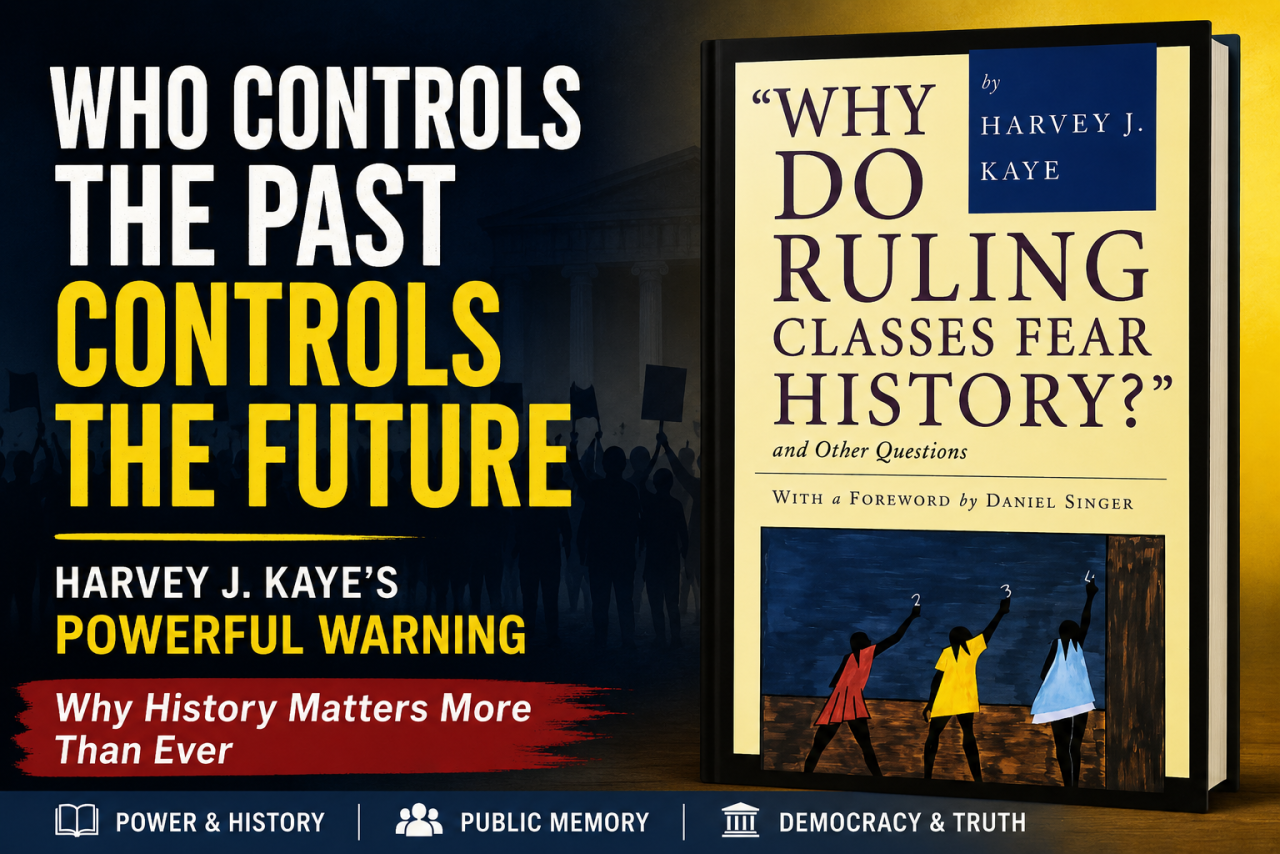
The book's cover reinforces these themes through powerful symbolism. The silhouettes of raised figures evoke collective action, public memory, and civic participation, reflecting the experiences of workers, reformers, activists, and countless ordinary people whose contributions have often been overshadowed in traditional historical narratives. It serves as a reminder that history is shaped not only by rulers and institutions but also by citizens whose efforts transformed societies from the ground up.
Equally impressive is Kaye's writing style. He avoids unnecessary academic jargon without sacrificing intellectual depth, making complex historical arguments accessible to a broad audience. His prose is direct, engaging, and grounded in the belief that history should not remain confined to universities or scholarly circles. Instead, it belongs to everyone because every citizen has a stake in understanding the forces that have shaped society.
The book arrives at a moment when questions surrounding historical interpretation have become increasingly prominent across democracies worldwide. Public debates over monuments, textbooks, national identity, colonial legacies, and collective memory demonstrate that the past remains deeply contested. Kaye's work offers readers a valuable framework for understanding why these debates matter and why competing interpretations of history continue to carry profound political significance.
Whether readers agree with all of Kaye's conclusions or not, Why Do Ruling Classes Fear History? succeeds in posing an essential democratic question: who gets to tell the story of the past? That question extends far beyond historians and classrooms. It touches every society that values informed citizenship, open debate, and democratic accountability. By encouraging readers to engage critically with historical narratives rather than accept them uncritically, Kaye reminds us that preserving an honest understanding of the past is indispensable to building a more informed, more democratic, and more equitable future.
History is often presented as a record of what has already happened. According to Harvey J. Kaye, the struggle over history is inseparable from the struggle over the present and the future. In Why Do Ruling Classes Fear History?, he argues that the stories societies choose to preserve, revise, or erase profoundly shape public understanding, political legitimacy, and the possibilities for democratic change.
At the heart of Kaye's book lies a deceptively simple question: why do those in positions of power so often seek to control historical narratives? His answer is that history is far more than an account of past events. It is a source of legitimacy, identity, and political influence. Whoever defines the past gains considerable influence over how people understand the present and imagine the future.
Kaye's central argument is both compelling and timely. Political, economic, and cultural elites have long sought to shape collective memory by emphasizing certain episodes while ignoring or downplaying others. Victories are celebrated, failures are forgotten, and uncomfortable truths are often softened or omitted. Such selective storytelling does more than preserve reputations—it can reinforce existing institutions, justify unequal systems, and narrow the range of political possibilities available to future generations.
Rather than treating history as a neutral collection of dates and facts, Kaye presents it as a continuous conversation about power, justice, democracy, and social change. The stories a nation chooses to remember—and those it chooses to overlook—help shape public values, national identity, and civic culture. Historical memory, therefore, is never merely about preserving the past; it influences the decisions societies make in the present.
One of the book's greatest strengths is its emphasis on historical consciousness. Kaye argues that an informed understanding of history enables citizens to question official narratives, recognize recurring patterns of inequality, and appreciate the long struggles that have expanded rights, freedoms, and democratic participation. Progress rarely arrives as a gift from those in authority. More often, it emerges through sustained efforts by ordinary people who organize, protest, and challenge established systems. Remembering those struggles is essential to understanding how meaningful change occurs.
The book also encourages readers to think critically about contemporary debates over education, museums, monuments, archives, and public memory. Disagreements about school curricula or historical interpretation are frequently portrayed as disputes over isolated facts. Kaye suggests they are something much larger: contests over whose experiences deserve recognition and whose voices are included in the national story. In this sense, debates about history are also debates about citizenship, identity, and democratic values.
The book's cover reinforces these themes through powerful symbolism. The silhouettes of raised figures evoke collective action, public memory, and civic participation, reflecting the experiences of workers, reformers, activists, and countless ordinary people whose contributions have often been overshadowed in traditional historical narratives. It serves as a reminder that history is shaped not only by rulers and institutions but also by citizens whose efforts transformed societies from the ground up.
Equally impressive is Kaye's writing style. He avoids unnecessary academic jargon without sacrificing intellectual depth, making complex historical arguments accessible to a broad audience. His prose is direct, engaging, and grounded in the belief that history should not remain confined to universities or scholarly circles. Instead, it belongs to everyone because every citizen has a stake in understanding the forces that have shaped society.
The book arrives at a moment when questions surrounding historical interpretation have become increasingly prominent across democracies worldwide. Public debates over monuments, textbooks, national identity, colonial legacies, and collective memory demonstrate that the past remains deeply contested. Kaye's work offers readers a valuable framework for understanding why these debates matter and why competing interpretations of history continue to carry profound political significance.
Whether readers agree with all of Kaye's conclusions or not, Why Do Ruling Classes Fear History? succeeds in posing an essential democratic question: who gets to tell the story of the past? That question extends far beyond historians and classrooms. It touches every society that values informed citizenship, open debate, and democratic accountability. By encouraging readers to engage critically with historical narratives rather than accept them uncritically, Kaye reminds us that preserving an honest understanding of the past is indispensable to building a more informed, more democratic, and more equitable future.

.jpeg)




















Leave a Comment