
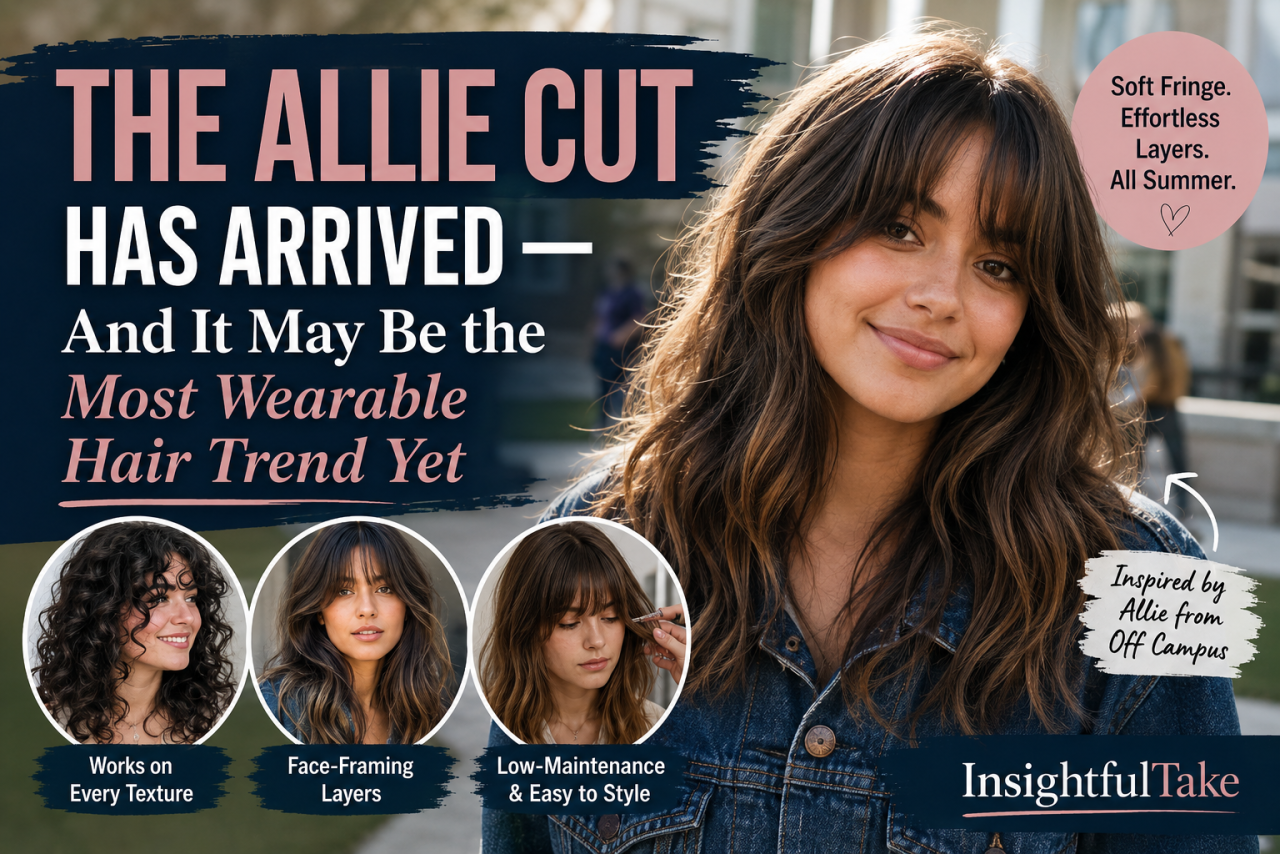
Soft, effortless and surprisingly easy to maintain, the Allie Cut is proving that the biggest hair trend of the season is also one of the most wearable.
Every few years, a haircut emerges that perfectly captures the mood of the moment. It goes beyond fashion magazines and celebrity salons to become a cultural shorthand for a particular aesthetic. The Rachel defined the 1990s. The wolf cut dominated social media in recent years. Now, the Allie Cut is stepping into the spotlight—and it may be the most accessible hair trend yet.
If your social media feeds have recently been filled with soft fringes, face-framing layers, and effortlessly tousled hairstyles, chances are you have already encountered the Allie Cut.
What Is the Allie Cut?
The Allie Cut takes inspiration from Mika Abdalla's character Allie in the popular series Off Campus. Like many memorable pop-culture hairstyles before it, the cut succeeds because it strikes a balance between polished and natural.
The style combines a soft French-inspired fringe with longer layers that gently frame the face. Unlike traditional blunt bangs that require frequent trimming and daily styling, the Allie Cut features wispy bangs that sit lightly above the eyebrows and blend naturally into the rest of the hair.
The face-framing layers create movement and texture without adding excessive volume. The result is a hairstyle that feels relaxed, flattering, and modern without appearing overly styled.
Why Is It Trending?
The Allie Cut did not emerge in isolation. It builds upon a long-standing fascination with French-inspired beauty, particularly hairstyles that appear effortless rather than meticulously crafted.
For decades, French beauty culture has celebrated soft fringes, natural texture, and an understated elegance that avoids perfection. The Allie Cut updates that philosophy for a generation that values authenticity and practicality.
Social media has accelerated its rise. Beauty influencers, hairstylists, and content creators have embraced the look through tutorials, styling demonstrations, and transformation videos. Once a hairstyle becomes easy to replicate and widely shared online, it quickly moves from niche trend to mainstream phenomenon.
The cut's adaptability has also contributed to its popularity. Hairstylists note that it complements a wide variety of face shapes and works across different hair textures, including naturally wavy and curly hair. Rather than fighting natural movement, the style enhances it.
Can You Maintain It Yourself?
One reason the Allie Cut has gained traction is its relatively low-maintenance nature.
While the initial haircut is best handled by a professional stylist who can properly shape the fringe and layers, ongoing upkeep is manageable at home. Small fringe adjustments between salon visits can be done carefully using scissors and conservative trimming techniques.
Experts recommend point-cutting vertically into the ends rather than trimming straight across. This preserves the soft, feathered texture that gives the Allie Cut its signature appearance.
Working on dry hair is equally important, as hair often appears longer when wet and can end up shorter than intended once dry.
How to Style the Look
The appeal of the Allie Cut lies in its simplicity.
For everyday styling, gently blow-dry the fringe from side to side while the hair is still damp. This technique prevents a harsh centre parting and creates the soft movement associated with the style.
A round brush can help shape the fringe, but the goal is not perfection. Once the hair is mostly dry, allowing it to finish naturally helps maintain the effortless effect.
A lightweight texturising spray or dry shampoo can add volume and movement without making the hair feel heavy. Over-styling often works against the aesthetic, which is designed to look naturally lived-in rather than salon-perfect.
More Than Just a Haircut
The popularity of the Allie Cut reflects a broader shift in beauty culture. High-maintenance hairstyles that demand constant styling are increasingly giving way to cuts that work with natural texture and fit easily into everyday life.
Consumers today are looking for hairstyles that remain attractive between salon appointments, require fewer products, and feel authentic rather than heavily constructed. The Allie Cut delivers on all three fronts.
Its growing popularity suggests that the future of beauty may be less about perfection and more about practicality—without sacrificing style.
For anyone curious about trying a fringe but hesitant to commit to a dramatic transformation, the Allie Cut offers an appealing middle ground. Effortless, versatile, and easy to wear, it may well become the defining haircut of the season.
Every few years, a haircut emerges that perfectly captures the mood of the moment. It goes beyond fashion magazines and celebrity salons to become a cultural shorthand for a particular aesthetic. The Rachel defined the 1990s. The wolf cut dominated social media in recent years. Now, the Allie Cut is stepping into the spotlight—and it may be the most accessible hair trend yet.
If your social media feeds have recently been filled with soft fringes, face-framing layers, and effortlessly tousled hairstyles, chances are you have already encountered the Allie Cut.
What Is the Allie Cut?
The Allie Cut takes inspiration from Mika Abdalla's character Allie in the popular series Off Campus. Like many memorable pop-culture hairstyles before it, the cut succeeds because it strikes a balance between polished and natural.
The style combines a soft French-inspired fringe with longer layers that gently frame the face. Unlike traditional blunt bangs that require frequent trimming and daily styling, the Allie Cut features wispy bangs that sit lightly above the eyebrows and blend naturally into the rest of the hair.
The face-framing layers create movement and texture without adding excessive volume. The result is a hairstyle that feels relaxed, flattering, and modern without appearing overly styled.
Why Is It Trending?
The Allie Cut did not emerge in isolation. It builds upon a long-standing fascination with French-inspired beauty, particularly hairstyles that appear effortless rather than meticulously crafted.
For decades, French beauty culture has celebrated soft fringes, natural texture, and an understated elegance that avoids perfection. The Allie Cut updates that philosophy for a generation that values authenticity and practicality.
Social media has accelerated its rise. Beauty influencers, hairstylists, and content creators have embraced the look through tutorials, styling demonstrations, and transformation videos. Once a hairstyle becomes easy to replicate and widely shared online, it quickly moves from niche trend to mainstream phenomenon.
The cut's adaptability has also contributed to its popularity. Hairstylists note that it complements a wide variety of face shapes and works across different hair textures, including naturally wavy and curly hair. Rather than fighting natural movement, the style enhances it.
Can You Maintain It Yourself?
One reason the Allie Cut has gained traction is its relatively low-maintenance nature.
While the initial haircut is best handled by a professional stylist who can properly shape the fringe and layers, ongoing upkeep is manageable at home. Small fringe adjustments between salon visits can be done carefully using scissors and conservative trimming techniques.
Experts recommend point-cutting vertically into the ends rather than trimming straight across. This preserves the soft, feathered texture that gives the Allie Cut its signature appearance.
Working on dry hair is equally important, as hair often appears longer when wet and can end up shorter than intended once dry.
How to Style the Look
The appeal of the Allie Cut lies in its simplicity.
For everyday styling, gently blow-dry the fringe from side to side while the hair is still damp. This technique prevents a harsh centre parting and creates the soft movement associated with the style.
A round brush can help shape the fringe, but the goal is not perfection. Once the hair is mostly dry, allowing it to finish naturally helps maintain the effortless effect.
A lightweight texturising spray or dry shampoo can add volume and movement without making the hair feel heavy. Over-styling often works against the aesthetic, which is designed to look naturally lived-in rather than salon-perfect.
More Than Just a Haircut
The popularity of the Allie Cut reflects a broader shift in beauty culture. High-maintenance hairstyles that demand constant styling are increasingly giving way to cuts that work with natural texture and fit easily into everyday life.
Consumers today are looking for hairstyles that remain attractive between salon appointments, require fewer products, and feel authentic rather than heavily constructed. The Allie Cut delivers on all three fronts.
Its growing popularity suggests that the future of beauty may be less about perfection and more about practicality—without sacrificing style.
For anyone curious about trying a fringe but hesitant to commit to a dramatic transformation, the Allie Cut offers an appealing middle ground. Effortless, versatile, and easy to wear, it may well become the defining haircut of the season.



















Leave a Comment