
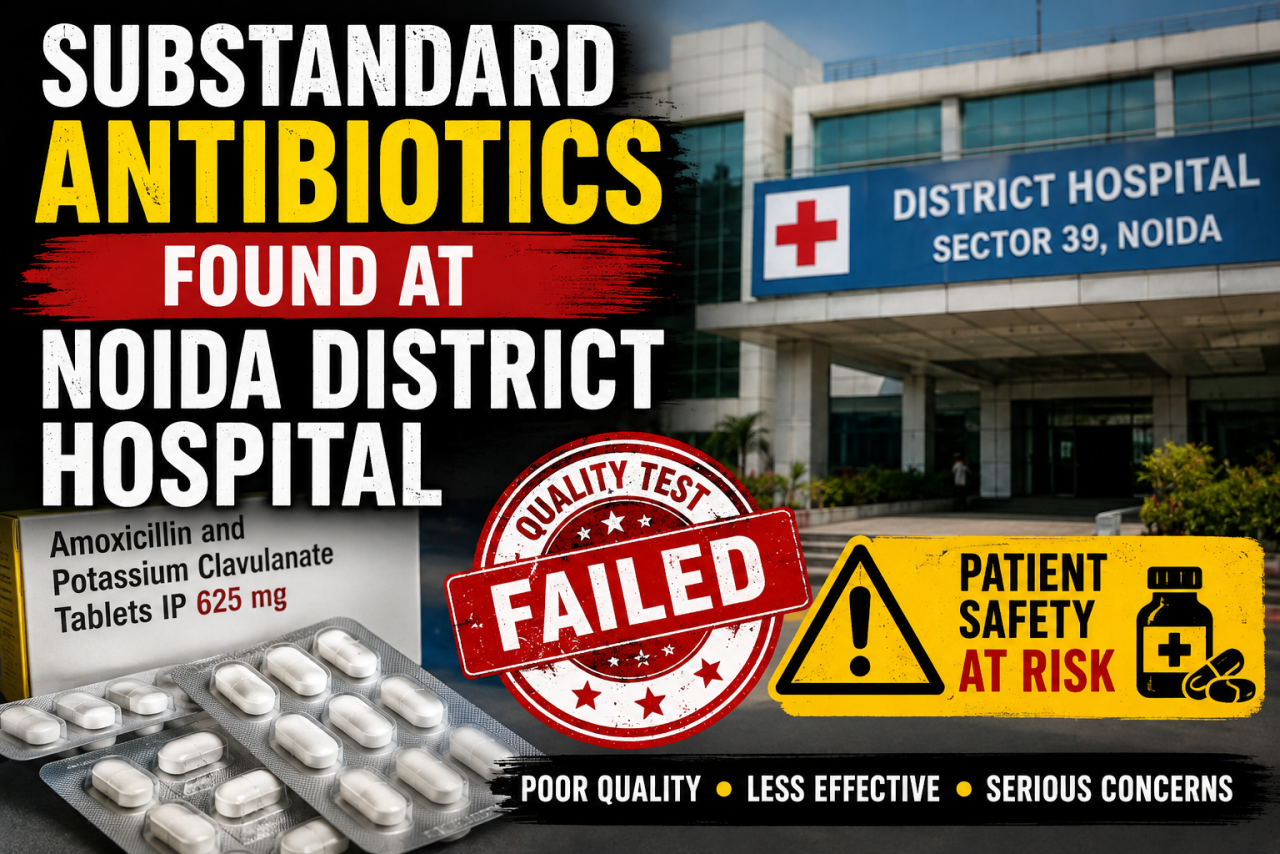
Substandard antibiotics found at Noida District Hospital raise troubling questions about medicine quality, patient safety and the effectiveness of India's healthcare supply chain.
The discovery of a substandard batch of antibiotics at Noida District Hospital has raised serious questions about the quality control of medicines supplied to government healthcare facilities and the safeguards in place to protect patients.
The medicine in question is amoxicillin and potassium clavulanate (IP 625 mg), a commonly prescribed antibiotic used to treat a range of bacterial infections. Samples of the drug supplied to patients at the District Hospital in Sector 39, Noida, reportedly failed quality testing conducted by the Food Safety and Drug Administration (FSDA).
The antibiotics were supplied by a pharmaceutical company based in Indore. Following the test results, authorities seized the available stock and halted further distribution of the medicine to hospitals while the matter is investigated.
Antibiotic Fails Quality Test
According to FSDA officials, the quality test found that the potassium clavulanate component in the tested medicine was significantly below the required content level.
Officials said that pharmaceutical ingredients are expected to meet prescribed quality standards to ensure that medicines deliver the intended therapeutic effect. In this case, the potassium clavulanate content was reportedly found to be below 80%, compared with the required standard cited by officials.
The finding is particularly significant because the effectiveness of a medicine depends not only on its presence in the tablet but also on whether its active ingredients are present in the appropriate quantity and quality.
Potassium clavulanate is combined with amoxicillin to help overcome certain mechanisms through which bacteria can resist antibiotics. If the formulation does not contain the required amount of an active component, the medicine may not provide the expected therapeutic benefit.
Drug quality therefore cannot be treated as a minor administrative issue. For patients who depend on antibiotics to control bacterial infections, the consistency, potency, and safety of every dose matter.
Around 8,000 Tablets Distributed
The issue has become more concerning because a substantial quantity of the medicine had already been distributed to patients.
According to FSDA officials, nearly 8,000 tablets of amoxicillin and potassium clavulanate were distributed during the previous month. The authorities have now moved to secure the remaining stock and stop further distribution while the investigation continues.
The available stock is expected to be returned or otherwise dealt with in accordance with regulatory procedures. Officials are also examining how the substandard batch entered the hospital's supply chain and whether adequate quality checks were conducted before the medicine was distributed.
The investigation could therefore extend beyond the immediate question of the drug's quality to the broader procurement and quality-assurance process followed by the hospital and the supplier.
Routine Testing Raises a Bigger Question
The samples were reportedly collected as part of routine drug-quality testing.
Noida Drug Inspector Jai Singh said that samples of three medicines were sent to a laboratory for testing and that the results were not satisfactory.
Routine testing is an important safeguard in the public healthcare system because government hospitals procure medicines in large quantities and distribute them to patients who may have limited access to alternative treatment.
The incident consequently raises an important question: How effectively are medicines being tested before they reach patients?
While random sampling and laboratory testing can identify defective or substandard batches, the larger objective should be to prevent such medicines from reaching hospitals in the first place.
Why Substandard Antibiotics Are a Serious Concern
Antibiotics require particular attention because their effectiveness has consequences beyond an individual patient's immediate recovery.
A medicine that does not contain the required amount of an active ingredient may fail to work as intended. In the case of antibiotics, inadequate treatment can potentially contribute to persistent infections and other complications.
It is therefore important not to dismiss a deficiency in drug content as a simple manufacturing error. Every medicine supplied to a hospital should meet the quality standards prescribed by the regulator and the relevant pharmacopoeial requirements.
At the same time, authorities have indicated that the identified batch was considered substandard rather than necessarily toxic, meaning the primary concern reported in this case is reduced efficacy rather than an immediate poisoning risk. Patients who may have received the medicine should nevertheless follow the advice of qualified healthcare professionals rather than discontinue or change antibiotic treatment on their own.
Hospital Promises Thorough Investigation
The hospital administration has acknowledged the seriousness of the matter.
Dr. Renu Agarwal, Chief Medical Superintendent (CMS) of the hospital, described the incident as unacceptable and said the hospital would investigate the matter thoroughly.
The administration is expected to examine how the medicine was procured, received, stored, tested, and distributed. It will also be important to determine whether the problem was confined to a single batch or whether similar issues could affect other medicines supplied through the same procurement chain.
Such an investigation should ideally establish responsibility at every stage, from pharmaceutical manufacturing and quality control to procurement and hospital-level verification.
Regulatory Action May Follow
With the stock already seized and further distribution stopped, the focus now shifts to the outcome of the investigation.
Authorities may examine the pharmaceutical supplier, manufacturing records, laboratory reports, procurement documents, and the distribution history of the affected batch. Depending on the findings, regulatory or legal action could follow against those found responsible.
The case also highlights the importance of maintaining transparent records of medicine batches supplied to public hospitals. Such records can help authorities quickly trace medicines, identify affected patients where necessary, and prevent further distribution of a problematic batch.
A Warning for Public Healthcare
The incident at Noida District Hospital serves as a reminder that medicine quality is as important as medicine availability.
Government hospitals often serve patients who depend heavily on affordable or free medicines. When a medicine fails to meet prescribed quality standards, the consequences can extend beyond the individual patient to public confidence in the healthcare system.
Strong procurement procedures, independent quality testing, effective batch tracking, regular inspections, and swift recalls are essential components of a reliable medicine-supply system.
The discovery of substandard antibiotics should therefore not end with the seizure of one batch. The larger priority should be to identify the point at which the quality-control system failed and ensure that the same problem does not recur.
For patients, the episode is a reminder of the importance of taking medicines only as prescribed and consulting healthcare professionals if treatment does not appear to be working. For policymakers and hospital administrators, it is an opportunity to strengthen the systems designed to ensure that every medicine reaching a patient is safe, effective, and of the required quality.
The discovery of a substandard batch of antibiotics at Noida District Hospital has raised serious questions about the quality control of medicines supplied to government healthcare facilities and the safeguards in place to protect patients.
The medicine in question is amoxicillin and potassium clavulanate (IP 625 mg), a commonly prescribed antibiotic used to treat a range of bacterial infections. Samples of the drug supplied to patients at the District Hospital in Sector 39, Noida, reportedly failed quality testing conducted by the Food Safety and Drug Administration (FSDA).
The antibiotics were supplied by a pharmaceutical company based in Indore. Following the test results, authorities seized the available stock and halted further distribution of the medicine to hospitals while the matter is investigated.
Antibiotic Fails Quality Test
According to FSDA officials, the quality test found that the potassium clavulanate component in the tested medicine was significantly below the required content level.
Officials said that pharmaceutical ingredients are expected to meet prescribed quality standards to ensure that medicines deliver the intended therapeutic effect. In this case, the potassium clavulanate content was reportedly found to be below 80%, compared with the required standard cited by officials.
The finding is particularly significant because the effectiveness of a medicine depends not only on its presence in the tablet but also on whether its active ingredients are present in the appropriate quantity and quality.
Potassium clavulanate is combined with amoxicillin to help overcome certain mechanisms through which bacteria can resist antibiotics. If the formulation does not contain the required amount of an active component, the medicine may not provide the expected therapeutic benefit.
Drug quality therefore cannot be treated as a minor administrative issue. For patients who depend on antibiotics to control bacterial infections, the consistency, potency, and safety of every dose matter.
Around 8,000 Tablets Distributed
The issue has become more concerning because a substantial quantity of the medicine had already been distributed to patients.
According to FSDA officials, nearly 8,000 tablets of amoxicillin and potassium clavulanate were distributed during the previous month. The authorities have now moved to secure the remaining stock and stop further distribution while the investigation continues.
The available stock is expected to be returned or otherwise dealt with in accordance with regulatory procedures. Officials are also examining how the substandard batch entered the hospital's supply chain and whether adequate quality checks were conducted before the medicine was distributed.
The investigation could therefore extend beyond the immediate question of the drug's quality to the broader procurement and quality-assurance process followed by the hospital and the supplier.
Routine Testing Raises a Bigger Question
The samples were reportedly collected as part of routine drug-quality testing.
Noida Drug Inspector Jai Singh said that samples of three medicines were sent to a laboratory for testing and that the results were not satisfactory.
Routine testing is an important safeguard in the public healthcare system because government hospitals procure medicines in large quantities and distribute them to patients who may have limited access to alternative treatment.
The incident consequently raises an important question: How effectively are medicines being tested before they reach patients?
While random sampling and laboratory testing can identify defective or substandard batches, the larger objective should be to prevent such medicines from reaching hospitals in the first place.
Why Substandard Antibiotics Are a Serious Concern
Antibiotics require particular attention because their effectiveness has consequences beyond an individual patient's immediate recovery.
A medicine that does not contain the required amount of an active ingredient may fail to work as intended. In the case of antibiotics, inadequate treatment can potentially contribute to persistent infections and other complications.
It is therefore important not to dismiss a deficiency in drug content as a simple manufacturing error. Every medicine supplied to a hospital should meet the quality standards prescribed by the regulator and the relevant pharmacopoeial requirements.
At the same time, authorities have indicated that the identified batch was considered substandard rather than necessarily toxic, meaning the primary concern reported in this case is reduced efficacy rather than an immediate poisoning risk. Patients who may have received the medicine should nevertheless follow the advice of qualified healthcare professionals rather than discontinue or change antibiotic treatment on their own.
Hospital Promises Thorough Investigation
The hospital administration has acknowledged the seriousness of the matter.
Dr. Renu Agarwal, Chief Medical Superintendent (CMS) of the hospital, described the incident as unacceptable and said the hospital would investigate the matter thoroughly.
The administration is expected to examine how the medicine was procured, received, stored, tested, and distributed. It will also be important to determine whether the problem was confined to a single batch or whether similar issues could affect other medicines supplied through the same procurement chain.
Such an investigation should ideally establish responsibility at every stage, from pharmaceutical manufacturing and quality control to procurement and hospital-level verification.
Regulatory Action May Follow
With the stock already seized and further distribution stopped, the focus now shifts to the outcome of the investigation.
Authorities may examine the pharmaceutical supplier, manufacturing records, laboratory reports, procurement documents, and the distribution history of the affected batch. Depending on the findings, regulatory or legal action could follow against those found responsible.
The case also highlights the importance of maintaining transparent records of medicine batches supplied to public hospitals. Such records can help authorities quickly trace medicines, identify affected patients where necessary, and prevent further distribution of a problematic batch.
A Warning for Public Healthcare
The incident at Noida District Hospital serves as a reminder that medicine quality is as important as medicine availability.
Government hospitals often serve patients who depend heavily on affordable or free medicines. When a medicine fails to meet prescribed quality standards, the consequences can extend beyond the individual patient to public confidence in the healthcare system.
Strong procurement procedures, independent quality testing, effective batch tracking, regular inspections, and swift recalls are essential components of a reliable medicine-supply system.
The discovery of substandard antibiotics should therefore not end with the seizure of one batch. The larger priority should be to identify the point at which the quality-control system failed and ensure that the same problem does not recur.
For patients, the episode is a reminder of the importance of taking medicines only as prescribed and consulting healthcare professionals if treatment does not appear to be working. For policymakers and hospital administrators, it is an opportunity to strengthen the systems designed to ensure that every medicine reaching a patient is safe, effective, and of the required quality.


























Leave a Comment