
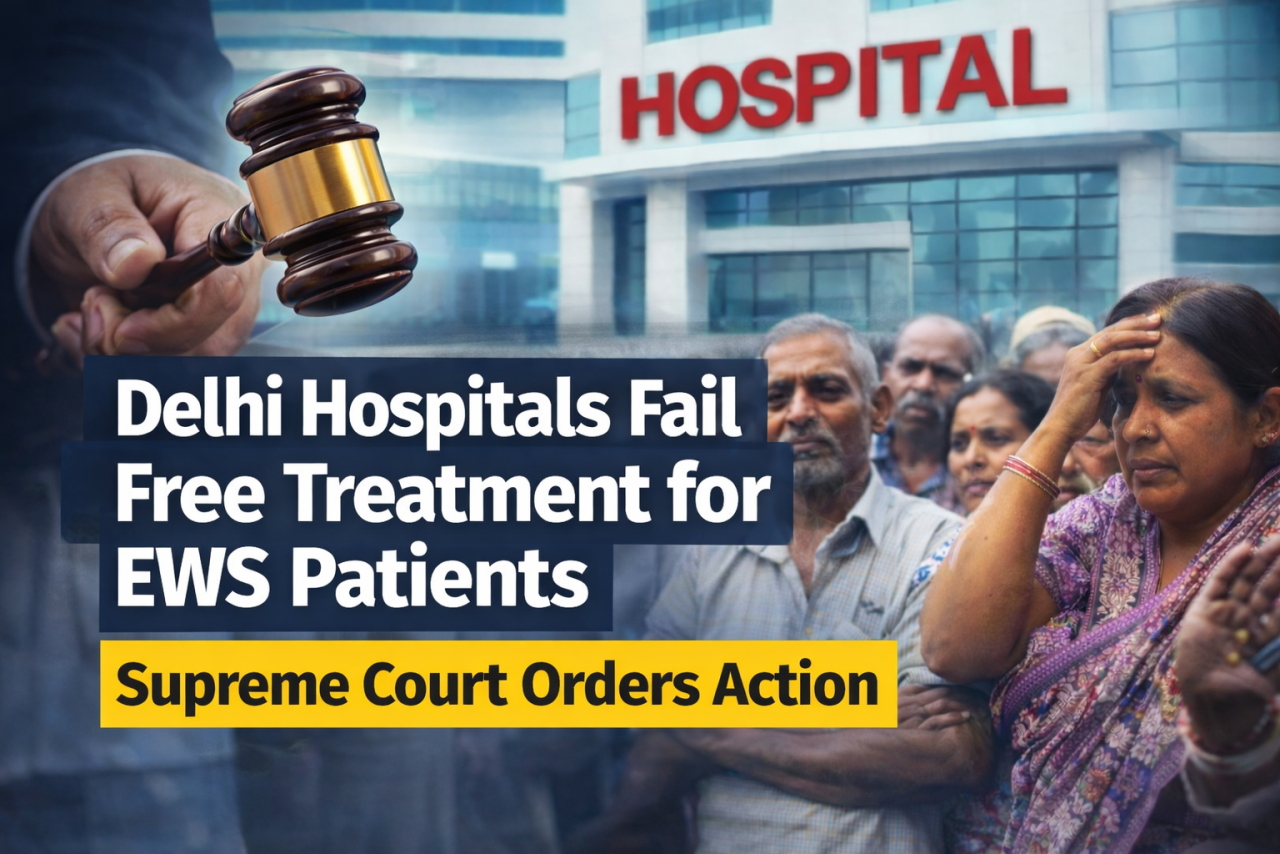
Are EWS patients getting their rightful healthcare? Delhi hospitals under the scanner for violations.
The Delhi government is facing a serious challenge. The Supreme Court has directed action against 14 private hospitals for not following rules to provide free treatment to patients from the Economically Weaker Section (EWS). These hospitals had received land at concessional rates, but they failed to meet their obligations.
The court’s order came on Wednesday (Jan 21, 2026). It highlighted that these hospitals must provide 10% of beds in the in-patient department (IPD) and 25% of outpatient services (OPD) to EWS patients. This was part of their lease agreement with the Delhi government.
A bench of justices Prashant Kumar Mishra and NV Anjaria said the government must take strict action against the hospitals. They asked the authorities to file affidavits on compliance. This is not the first time the issue has been raised. In 2018, the court had passed a similar order requiring regular reports on hospital compliance.
According to a report submitted by the Delhi government on November 18, 2025, all 14 hospitals were found to be violating the free treatment clause. The report listed the hospitals that failed to meet the criteria. These include Arya Vaidyasala Kottakkal, Kailash Deepak Hospital, Ft Lt Rajan Fortis Hospital, Delhi ENT Hospital, MGS Hospital, MKW Hospital, Max Super Specialty Hospital (Press Enclave), Mool Chand Khairati Lal Hospital, Primus Super Specialty Hospital, Sita Ram Bharti Hospital, Venkateshwar Hospital, Vinayak Hospital, VIMHANS Hospital, and Max Smart Hospital.
The report showed poor compliance in both outpatient and inpatient services. Against the requirement of 25% OPD services for EWS patients, the hospitals reported only 1-10%. For IPD services, all hospitals except one failed to meet the 10% target.
Swati Ghildiyal, counsel for the Delhi government, explained that the list of hospitals is dynamic. It changes based on monthly reports submitted by the hospitals. Sometimes hospitals follow the rules, and sometimes they do not.
The Supreme Court has asked the Delhi government to take necessary steps against hospitals that are not complying. The authorities have been instructed to affix a board at the hospital entry and exit. This board must clearly state that the hospital is required to provide free treatment and beds to poor patients.
In addition, hospitals must mark 10% of their beds as “free beds” for EWS patients. This step is intended to make the free treatment program more transparent and accountable.
The issue of hospital compliance with EWS rules is very serious. These hospitals received land at cheaper rates specifically to serve poor patients. By failing to provide free services, they violate not only their lease agreements but also the rights of EWS patients. Many families depend on these services for medical care. When hospitals fail to provide free treatment, it affects the health and wellbeing of the most vulnerable in society.
Experts say that hospitals need stricter monitoring. The system of monthly reports should be followed carefully. There should be penalties for hospitals that fail to comply repeatedly. Transparency is key. Patients should know about the availability of free treatment before visiting the hospital.
The Delhi government’s role is also important. It must ensure that hospitals comply with the rules. Regular inspections, audits, and public notices can help improve the situation. Only when both the government and hospitals take responsibility can the system work effectively.
The Supreme Court’s action sends a strong message. Land given at concessional rates comes with responsibilities. Private hospitals cannot ignore the needs of poor patients. EWS patients have the legal right to access free medical care. Hospitals must respect this right.
This issue highlights a larger concern in India. Many poor people rely on private hospitals for treatment because government hospitals are overcrowded or under-resourced. When private hospitals fail to provide free care, it increases the burden on public hospitals. It also leads to inequality in access to healthcare.
Finally, the Supreme Court’s order against 14 hospitals is a crucial step. It aims to ensure that free treatment for EWS patients is not just a promise on paper. Hospitals must follow the rules. The Delhi government must enforce compliance strictly. Families in need of care should not have to face barriers due to negligence. Public interest and social justice demand that free healthcare obligations are met.














Leave a Comment