
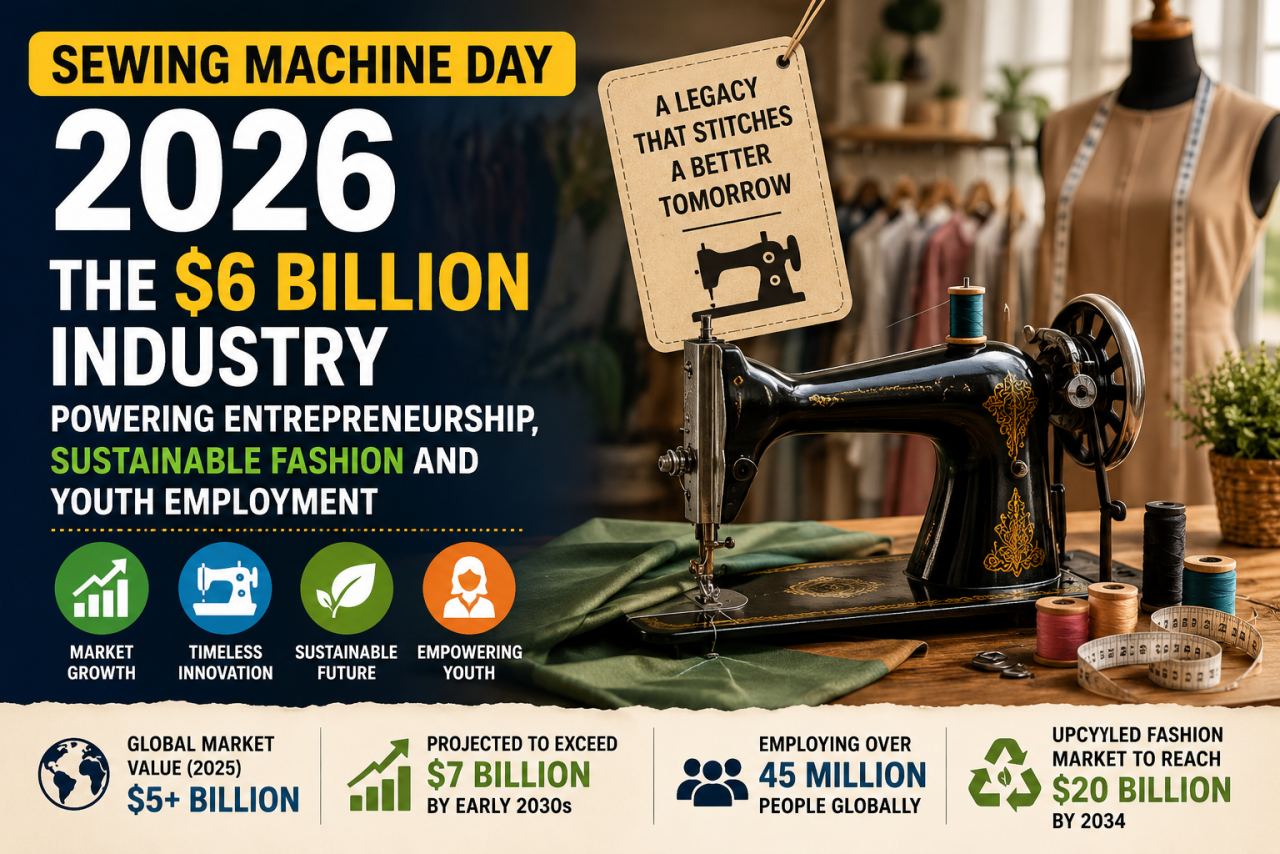
A technology nearly 180 years old is powering a $5 billion global industry, creating jobs, enabling entrepreneurship and helping drive the shift toward sustainable fashion and responsible consumption.
In an age dominated by artificial intelligence, robotics and automation, the humble sewing machine may appear to be a relic of the Industrial Revolution. Yet on Sewing Machine Day, observed annually on June 13, industry experts say the invention remains one of the world's most powerful tools for employment generation, small-business creation and sustainable fashion.
Invented in the nineteenth century and popularised by pioneers such as Elias Howe and Isaac Singer, the sewing machine revolutionised garment production, helping build what is today a global textile and apparel industry worth well over $1.7 trillion. Nearly two centuries later, it continues to drive economic activity—from large-scale export factories to home-based entrepreneurs selling products through social media and e-commerce platforms.
A Market Still Growing
Far from declining, the sewing machine industry continues to expand.
According to industry estimates, the global sewing machine market is valued at more than $5 billion and is projected to exceed $7 billion by the early 2030s, driven by growing demand from textile manufacturers, hobbyists, fashion entrepreneurs, tailoring services and vocational training institutions.
The Asia-Pacific region accounts for the largest share of this market, reflecting the dominance of countries such as China, India, Bangladesh and Vietnam in global garment production.
India occupies a particularly significant position. According to government data, the country's textile and apparel sector contributes roughly 2.3% to GDP, 13% to industrial production and around 12% to exports. The industry directly employs more than 45 million people and supports over 100 million jobs across the value chain, making it one of India's largest employment generators after agriculture.
Behind much of this activity lies a simple but indispensable machine.
A Tool of Entrepreneurship
The rapid growth of digital commerce has transformed the economics of sewing.
A decade ago, launching a fashion label required substantial investment in retail space, inventory and marketing. Today, many young entrepreneurs begin with a single sewing machine, a smartphone and access to social media platforms.
Customised apparel, handmade accessories, children's clothing, pet products, embroidered items and home décor products have emerged as profitable niche markets. Platforms such as Instagram, YouTube, Pinterest and online marketplaces allow creators to reach customers directly without relying on traditional retail networks.
Industry observers note that sewing-based businesses have among the lowest barriers to entry. A relatively modest investment can generate a sustainable income stream, particularly in Tier-II and Tier-III cities where demand for tailoring, alterations and custom-made garments remains strong.
For many aspiring entrepreneurs, sewing has become a gateway to self-employment rather than merely a vocational skill.
Sustainability Is Driving a Revival
Perhaps the most important factor behind sewing's resurgence is the global push toward sustainable consumption.
The fashion industry has come under increasing scrutiny for its environmental impact. According to the United Nations Environment Programme (UNEP), the sector accounts for an estimated 2% to 8% of global carbon emissions and generates significant textile waste every year.
As consumers become more environmentally conscious, repairing, reusing and repurposing clothing is gaining acceptance.
Sewing skills allow individuals to extend the lifespan of garments, reduce waste and participate in the growing upcycling movement. Old jeans become handbags, discarded fabrics become home furnishings and worn-out clothing finds a second life instead of ending up in landfills.
Market analysts estimate that the global upcycled fashion market, valued at approximately $8.5 billion in 2022, could exceed $20 billion by 2034, reflecting a broader shift toward circular fashion and responsible consumption.
For many consumers, the sewing machine has become more than a household appliance—it has become a sustainability tool.
Opportunities for the Next Generation
The revival of sewing is particularly visible among younger consumers.
Workshops and training programmes across major cities report increasing participation from students, professionals and creators seeking practical skills outside conventional career pathways.
Unlike many occupations threatened by automation, sewing combines technical ability with creativity, craftsmanship and personalisation. While machines can automate repetitive stitching, human judgment remains essential for design, fitting, customisation and innovation.
Experts identify several emerging opportunities for young people:
- Fashion design and boutique labels
- Alteration and repair services
- Online handmade-product businesses
- Sustainable fashion ventures
- Costume and event-wear production
- Sewing education and digital tutorials
- Embroidery and textile-art enterprises
These sectors require relatively low capital investment while offering considerable scope for growth.
Technology Meets Tradition
Modern sewing machines bear little resemblance to their nineteenth-century predecessors.
Today's models feature computerized controls, programmable stitching patterns, embroidery capabilities, automatic thread management and digital design integration. Some industrial systems even incorporate AI-assisted quality control and precision manufacturing technologies.
Manufacturers are increasingly targeting first-time users with compact, beginner-friendly machines designed for hobbyists, creators and aspiring entrepreneurs.
This blend of traditional craftsmanship and modern technology is helping attract a new generation of users who view sewing not as a domestic chore but as a creative and commercial opportunity.
More Relevant Than Ever
As the world celebrates Sewing Machine Day 2026, the machine's significance extends far beyond tailoring. It remains a critical link in a global textile industry worth nearly $2 trillion, supports millions of livelihoods and is helping a new generation build businesses with minimal capital.
At a time when economies are searching for solutions that combine sustainability, creativity and employment generation, the sewing machine offers a rare example of technology that has remained relevant across centuries.
Nearly 180 years after its commercial breakthrough, it continues to stitch together opportunity, innovation and economic growth—proving that some inventions never go out of style.
In an age dominated by artificial intelligence, robotics and automation, the humble sewing machine may appear to be a relic of the Industrial Revolution. Yet on Sewing Machine Day, observed annually on June 13, industry experts say the invention remains one of the world's most powerful tools for employment generation, small-business creation and sustainable fashion.
Invented in the nineteenth century and popularised by pioneers such as Elias Howe and Isaac Singer, the sewing machine revolutionised garment production, helping build what is today a global textile and apparel industry worth well over $1.7 trillion. Nearly two centuries later, it continues to drive economic activity—from large-scale export factories to home-based entrepreneurs selling products through social media and e-commerce platforms.
A Market Still Growing
Far from declining, the sewing machine industry continues to expand.
According to industry estimates, the global sewing machine market is valued at more than $5 billion and is projected to exceed $7 billion by the early 2030s, driven by growing demand from textile manufacturers, hobbyists, fashion entrepreneurs, tailoring services and vocational training institutions.
The Asia-Pacific region accounts for the largest share of this market, reflecting the dominance of countries such as China, India, Bangladesh and Vietnam in global garment production.
India occupies a particularly significant position. According to government data, the country's textile and apparel sector contributes roughly 2.3% to GDP, 13% to industrial production and around 12% to exports. The industry directly employs more than 45 million people and supports over 100 million jobs across the value chain, making it one of India's largest employment generators after agriculture.
Behind much of this activity lies a simple but indispensable machine.
A Tool of Entrepreneurship
The rapid growth of digital commerce has transformed the economics of sewing.
A decade ago, launching a fashion label required substantial investment in retail space, inventory and marketing. Today, many young entrepreneurs begin with a single sewing machine, a smartphone and access to social media platforms.
Customised apparel, handmade accessories, children's clothing, pet products, embroidered items and home décor products have emerged as profitable niche markets. Platforms such as Instagram, YouTube, Pinterest and online marketplaces allow creators to reach customers directly without relying on traditional retail networks.
Industry observers note that sewing-based businesses have among the lowest barriers to entry. A relatively modest investment can generate a sustainable income stream, particularly in Tier-II and Tier-III cities where demand for tailoring, alterations and custom-made garments remains strong.
For many aspiring entrepreneurs, sewing has become a gateway to self-employment rather than merely a vocational skill.
Sustainability Is Driving a Revival
Perhaps the most important factor behind sewing's resurgence is the global push toward sustainable consumption.
The fashion industry has come under increasing scrutiny for its environmental impact. According to the United Nations Environment Programme (UNEP), the sector accounts for an estimated 2% to 8% of global carbon emissions and generates significant textile waste every year.
As consumers become more environmentally conscious, repairing, reusing and repurposing clothing is gaining acceptance.
Sewing skills allow individuals to extend the lifespan of garments, reduce waste and participate in the growing upcycling movement. Old jeans become handbags, discarded fabrics become home furnishings and worn-out clothing finds a second life instead of ending up in landfills.
Market analysts estimate that the global upcycled fashion market, valued at approximately $8.5 billion in 2022, could exceed $20 billion by 2034, reflecting a broader shift toward circular fashion and responsible consumption.
For many consumers, the sewing machine has become more than a household appliance—it has become a sustainability tool.
Opportunities for the Next Generation
The revival of sewing is particularly visible among younger consumers.
Workshops and training programmes across major cities report increasing participation from students, professionals and creators seeking practical skills outside conventional career pathways.
Unlike many occupations threatened by automation, sewing combines technical ability with creativity, craftsmanship and personalisation. While machines can automate repetitive stitching, human judgment remains essential for design, fitting, customisation and innovation.
Experts identify several emerging opportunities for young people:
- Fashion design and boutique labels
- Alteration and repair services
- Online handmade-product businesses
- Sustainable fashion ventures
- Costume and event-wear production
- Sewing education and digital tutorials
- Embroidery and textile-art enterprises
These sectors require relatively low capital investment while offering considerable scope for growth.
Technology Meets Tradition
Modern sewing machines bear little resemblance to their nineteenth-century predecessors.
Today's models feature computerized controls, programmable stitching patterns, embroidery capabilities, automatic thread management and digital design integration. Some industrial systems even incorporate AI-assisted quality control and precision manufacturing technologies.
Manufacturers are increasingly targeting first-time users with compact, beginner-friendly machines designed for hobbyists, creators and aspiring entrepreneurs.
This blend of traditional craftsmanship and modern technology is helping attract a new generation of users who view sewing not as a domestic chore but as a creative and commercial opportunity.
More Relevant Than Ever
As the world celebrates Sewing Machine Day 2026, the machine's significance extends far beyond tailoring. It remains a critical link in a global textile industry worth nearly $2 trillion, supports millions of livelihoods and is helping a new generation build businesses with minimal capital.
At a time when economies are searching for solutions that combine sustainability, creativity and employment generation, the sewing machine offers a rare example of technology that has remained relevant across centuries.
Nearly 180 years after its commercial breakthrough, it continues to stitch together opportunity, innovation and economic growth—proving that some inventions never go out of style.

























Leave a Comment