
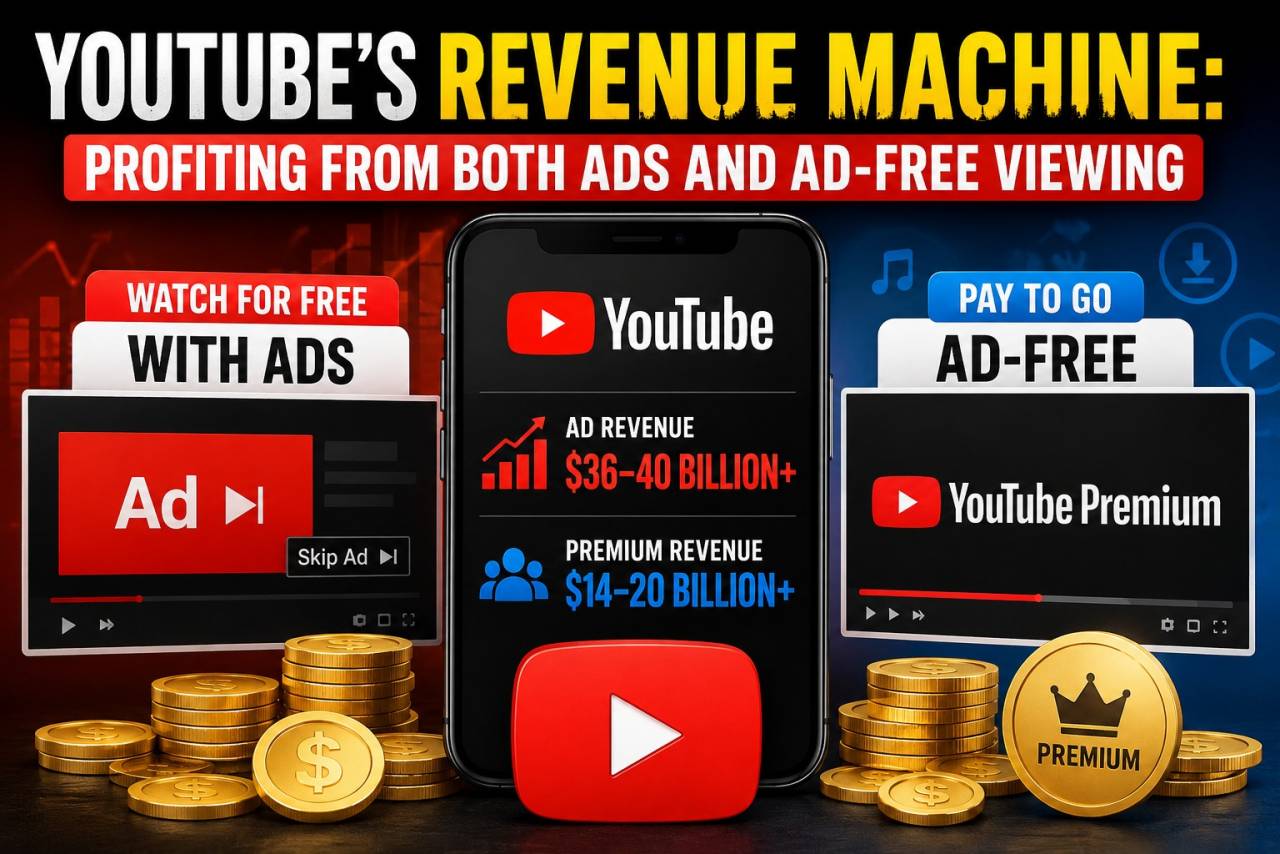
YouTube earns billions from ads—and billions more from users paying to avoid them. Is it smart business, or a system that profits from both the problem and the solution?
For years, YouTube sold itself as one of the internet's greatest bargains: unlimited video content, available to anyone, free of charge. Millions of creators uploaded content, billions of viewers consumed it, and advertisers paid for access to those audiences. It was a simple exchange that helped turn YouTube into the world's dominant video platform.
But that bargain has changed.
Today, YouTube earns money not only from people who watch advertisements but also from those who pay to avoid them. The company collects billions from advertisers seeking attention and billions more from subscribers purchasing relief from those same advertisements. Critics argue that this has created one of the most effective—and controversial—revenue models in modern tech.
The concern is straightforward: when a company profits from both showing ads and removing ads, does it have an incentive to make advertising increasingly difficult to tolerate?
The Business of Selling Both the Problem and the Solution
At its core, YouTube operates a two-sided revenue machine.
The first side is familiar. Advertisers pay YouTube to place commercials before, during, and after videos. Every interruption, every pre-roll advertisement, and every mid-video break generates revenue.
The second side is YouTube Premium. For a monthly fee, subscribers can watch videos without ads, download content, and enjoy additional features such as background playback.
On paper, this appears to be consumer choice. Watch ads and access the platform for free, or pay a subscription fee for a smoother experience.
In practice, critics argue that YouTube has positioned itself to profit regardless of what viewers decide. If users tolerate advertisements, the company earns advertising revenue. If they become frustrated and upgrade to Premium, the company earns subscription revenue instead.
Either outcome benefits YouTube.
That is why some observers describe the model as a form of "double monetization"—a system in which the platform gets paid from both sides of the same user experience.
Why Users Are Growing Frustrated
The criticism would likely be less intense if advertisements remained relatively unobtrusive. However, many long-time users argue that the ad experience has become increasingly aggressive.
Videos that once played with a single advertisement may now contain multiple ad breaks. Two advertisements before a video have become common. Mid-roll interruptions appear more frequently, even in relatively short content. On smart TVs and mobile devices, viewers often report seeing longer and more repetitive advertisements than they encountered just a few years ago.
This trend has led many users to ask an uncomfortable question: is the free experience becoming worse because YouTube wants more people to subscribe?
There is no public evidence that YouTube deliberately worsens advertising to force Premium adoption. Yet the economics create an undeniable perception problem.
The more irritating advertisements become, the more attractive Premium appears.
In effect, YouTube benefits financially from the frustration advertisements create.
A Model Built on Consumer Irritation?
Imagine a cinema that charges companies to play commercials before a movie and then sells customers a special ticket to skip those commercials. Most people would recognize the conflict immediately.
That is the ethical dilemma critics see in YouTube's strategy.
The platform controls both the advertising experience and the ad-free alternative. It decides how many advertisements appear, how long they last, how often they interrupt content, and how aggressively Premium is promoted.
When the same company controls both the inconvenience and the escape route, questions about incentives become unavoidable.
The issue is not whether YouTube has the right to charge for Premium. Businesses are entitled to offer paid upgrades. The concern is whether the company has a financial incentive to gradually degrade the free experience in order to increase subscription revenue.
If that incentive exists, then users are not simply paying for additional features. They are paying to avoid a problem that the platform itself controls.
What About Creators?
Creators often find themselves caught in the middle of this debate.
YouTube argues that both advertising revenue and Premium subscriptions help support creators, and there is truth in that claim. Many creators receive a share of Premium revenue based on watch time, while advertising remains a significant source of income.
Yet creators have little influence over how the platform balances these competing interests.
Many continue to face demonetization issues, algorithm changes, fluctuating earnings, and growing dependence on sponsorship deals. Smaller creators, in particular, often struggle to build sustainable businesses despite generating substantial engagement.
Meanwhile, YouTube continues collecting revenue from advertisers and subscribers alike.
For creators, the system can feel like one in which the platform enjoys the greatest stability while those producing the content assume much of the uncertainty.
The Bigger Question
Defenders of YouTube point out that running the world's largest video platform is extraordinarily expensive. Billions of videos must be stored, delivered, moderated, and recommended to users across the globe. Multiple revenue streams help fund that infrastructure.
That argument has merit.
However, the ethical concern is not about whether YouTube should make money. It is about how that money is made.
When a company earns revenue by showing advertisements and then earns additional revenue by selling freedom from those advertisements, the distinction between service and strategy becomes blurred.
Critics argue that this model effectively monetizes both the cause and the cure. Advertisements create frustration. Premium removes frustration. Both generate profit.
That may be a brilliant business strategy, but it also raises legitimate questions about consumer fairness.
The Future of Platform Economics
YouTube's approach reflects a broader trend across the digital economy. Increasingly, technology companies are looking for ways to charge users while continuing to monetize them through advertising.
The result is a new internet model in which consumers are asked to pay for services that are still heavily influenced by advertising economics.
For YouTube, the strategy has been enormously successful. Revenue continues to grow, Premium subscriptions continue to rise, and the platform remains largely unrivaled in online video.
But success does not eliminate scrutiny.
As YouTube becomes more deeply embedded in everyday life, the debate surrounding its revenue model is likely to intensify. The platform has every right to generate profits. The real question is whether profiting from both advertisements and the desire to avoid them represents innovation—or simply a more sophisticated way of charging consumers twice for the same experience.
For years, YouTube sold itself as one of the internet's greatest bargains: unlimited video content, available to anyone, free of charge. Millions of creators uploaded content, billions of viewers consumed it, and advertisers paid for access to those audiences. It was a simple exchange that helped turn YouTube into the world's dominant video platform.
But that bargain has changed.
Today, YouTube earns money not only from people who watch advertisements but also from those who pay to avoid them. The company collects billions from advertisers seeking attention and billions more from subscribers purchasing relief from those same advertisements. Critics argue that this has created one of the most effective—and controversial—revenue models in modern tech.
The concern is straightforward: when a company profits from both showing ads and removing ads, does it have an incentive to make advertising increasingly difficult to tolerate?
The Business of Selling Both the Problem and the Solution
At its core, YouTube operates a two-sided revenue machine.
The first side is familiar. Advertisers pay YouTube to place commercials before, during, and after videos. Every interruption, every pre-roll advertisement, and every mid-video break generates revenue.
The second side is YouTube Premium. For a monthly fee, subscribers can watch videos without ads, download content, and enjoy additional features such as background playback.
On paper, this appears to be consumer choice. Watch ads and access the platform for free, or pay a subscription fee for a smoother experience.
In practice, critics argue that YouTube has positioned itself to profit regardless of what viewers decide. If users tolerate advertisements, the company earns advertising revenue. If they become frustrated and upgrade to Premium, the company earns subscription revenue instead.
Either outcome benefits YouTube.
That is why some observers describe the model as a form of "double monetization"—a system in which the platform gets paid from both sides of the same user experience.
Why Users Are Growing Frustrated
The criticism would likely be less intense if advertisements remained relatively unobtrusive. However, many long-time users argue that the ad experience has become increasingly aggressive.
Videos that once played with a single advertisement may now contain multiple ad breaks. Two advertisements before a video have become common. Mid-roll interruptions appear more frequently, even in relatively short content. On smart TVs and mobile devices, viewers often report seeing longer and more repetitive advertisements than they encountered just a few years ago.
This trend has led many users to ask an uncomfortable question: is the free experience becoming worse because YouTube wants more people to subscribe?
There is no public evidence that YouTube deliberately worsens advertising to force Premium adoption. Yet the economics create an undeniable perception problem.
The more irritating advertisements become, the more attractive Premium appears.
In effect, YouTube benefits financially from the frustration advertisements create.
A Model Built on Consumer Irritation?
Imagine a cinema that charges companies to play commercials before a movie and then sells customers a special ticket to skip those commercials. Most people would recognize the conflict immediately.
That is the ethical dilemma critics see in YouTube's strategy.
The platform controls both the advertising experience and the ad-free alternative. It decides how many advertisements appear, how long they last, how often they interrupt content, and how aggressively Premium is promoted.
When the same company controls both the inconvenience and the escape route, questions about incentives become unavoidable.
The issue is not whether YouTube has the right to charge for Premium. Businesses are entitled to offer paid upgrades. The concern is whether the company has a financial incentive to gradually degrade the free experience in order to increase subscription revenue.
If that incentive exists, then users are not simply paying for additional features. They are paying to avoid a problem that the platform itself controls.
What About Creators?
Creators often find themselves caught in the middle of this debate.
YouTube argues that both advertising revenue and Premium subscriptions help support creators, and there is truth in that claim. Many creators receive a share of Premium revenue based on watch time, while advertising remains a significant source of income.
Yet creators have little influence over how the platform balances these competing interests.
Many continue to face demonetization issues, algorithm changes, fluctuating earnings, and growing dependence on sponsorship deals. Smaller creators, in particular, often struggle to build sustainable businesses despite generating substantial engagement.
Meanwhile, YouTube continues collecting revenue from advertisers and subscribers alike.
For creators, the system can feel like one in which the platform enjoys the greatest stability while those producing the content assume much of the uncertainty.
The Bigger Question
Defenders of YouTube point out that running the world's largest video platform is extraordinarily expensive. Billions of videos must be stored, delivered, moderated, and recommended to users across the globe. Multiple revenue streams help fund that infrastructure.
That argument has merit.
However, the ethical concern is not about whether YouTube should make money. It is about how that money is made.
When a company earns revenue by showing advertisements and then earns additional revenue by selling freedom from those advertisements, the distinction between service and strategy becomes blurred.
Critics argue that this model effectively monetizes both the cause and the cure. Advertisements create frustration. Premium removes frustration. Both generate profit.
That may be a brilliant business strategy, but it also raises legitimate questions about consumer fairness.
The Future of Platform Economics
YouTube's approach reflects a broader trend across the digital economy. Increasingly, technology companies are looking for ways to charge users while continuing to monetize them through advertising.
The result is a new internet model in which consumers are asked to pay for services that are still heavily influenced by advertising economics.
For YouTube, the strategy has been enormously successful. Revenue continues to grow, Premium subscriptions continue to rise, and the platform remains largely unrivaled in online video.
But success does not eliminate scrutiny.
As YouTube becomes more deeply embedded in everyday life, the debate surrounding its revenue model is likely to intensify. The platform has every right to generate profits. The real question is whether profiting from both advertisements and the desire to avoid them represents innovation—or simply a more sophisticated way of charging consumers twice for the same experience.















Leave a Comment