
Your face might be revealing more than you think. From puffiness to dull skin, the viral “cortisol face” trend claims stress is reshaping how you look. But is it really that simple—or are we missing the bigger picture behind our tired reflection?
The internet has a unique talent for turning complex biology into catchy, slightly alarming buzzwords. The latest to flood our feeds? “Cortisol Face.” Fuelled by viral content and celebrity routines, social media suggests that chronic stress is visibly reshaping our faces—causing puffiness, sagging, and a perpetually exhausted look.
But like most trends born online, the truth is more nuanced than a quick skincare hack or a 30-second video can capture.
What Is “Cortisol Face”?
In simple terms, “Cortisol Face” is a non-medical term used to describe the visible effects of prolonged stress on the face.
Cortisol—often called the stress hormone—is produced by the adrenal glands and plays a crucial role in survival. It regulates metabolism, inflammation, and the body’s fight-or-flight response. But when stress becomes chronic, cortisol levels stay elevated longer than they should.
Over time, this can lead to noticeable physical changes:
- Water Retention: Increased cortisol affects salt balance, leading to puffiness—especially around the cheeks and under the eyes.
- Collagen Breakdown: High cortisol accelerates the breakdown of collagen and elastin, reducing skin firmness and elasticity.
- Inflammation: Chronic stress triggers low-grade inflammation, worsening acne, redness, and dullness.
In short, your face can become a reflection of what your body is enduring internally.
The Celebrity “Fix”: Does Gua Sha Really Work?
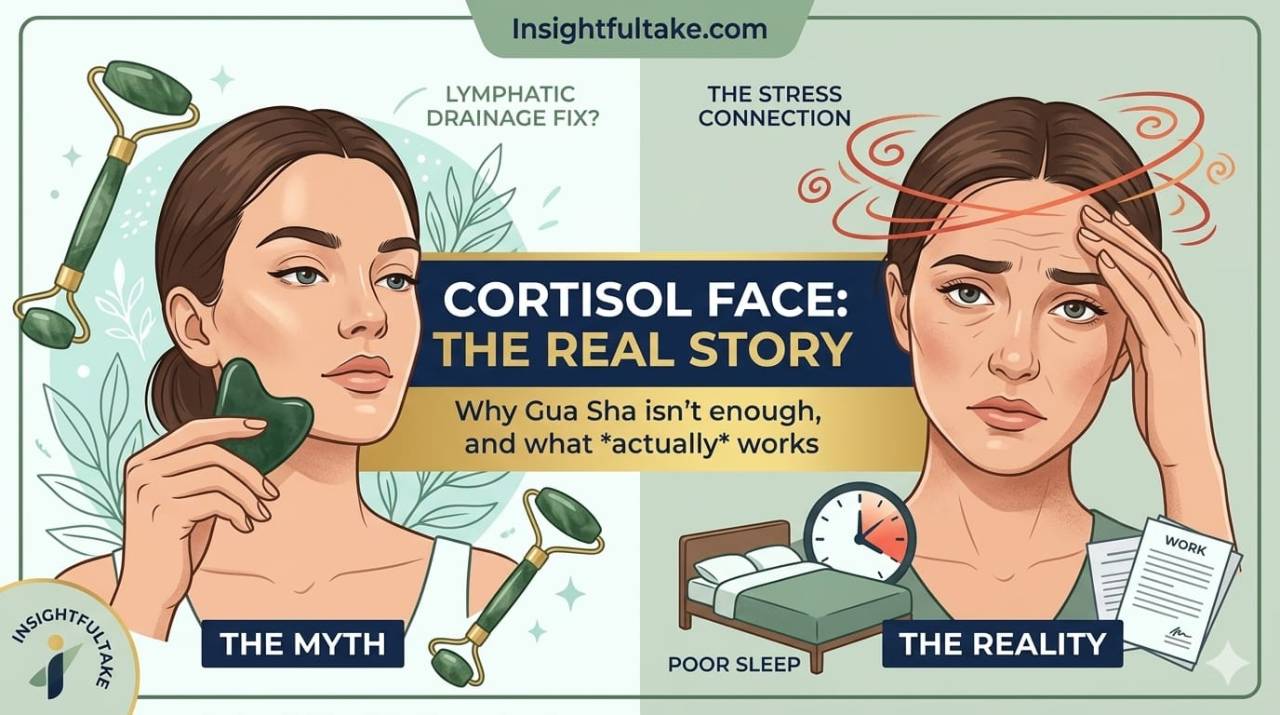
Scroll through Instagram or TikTok, and you’ll likely see influencers and celebrities using Gua Sha tools or jade rollers to sculpt their faces and reduce puffiness. These techniques focus on lymphatic drainage, helping move excess fluid away from tissues.
And yes—they do work… but only to a limited extent.
- They can temporarily reduce swelling
- They improve circulation
- They offer a relaxing, self-care ritual
However, they do not lower cortisol levels or address the root cause: chronic stress.
The danger lies in the illusion that you can “roll away” a systemic issue. You can’t.
Why It’s Not Just About One Hormone
Blaming cortisol alone oversimplifies the issue. Your face is influenced by a combination of lifestyle factors that often overlap:
1. Poor Sleep
Lack of quality sleep disrupts hormone balance and prevents proper skin repair, leading to dullness and puffiness.
2. High Sodium Intake
Late-night salty snacks can cause water retention that mimics “stress face.”
3. The Mind-Skin Connection
Mental burnout doesn’t just affect mood—it redirects the body’s energy away from skin health toward essential survival functions, leaving your face looking tired and depleted.
In reality, what we call “Cortisol Face” is often a mirror of overall lifestyle imbalance, not just a single hormone at work.
Myth vs Reality
The Social Media Myth
The Scientific Reality
Gua Sha cures stress-related puffiness
It provides temporary relief, not a hormonal fix
Cortisol supplements are necessary
Many lack evidence and may be unsafe without medical advice
Stress only affects appearance
It impacts heart health, metabolism, immunity, and more
Regulating Cortisol: What Actually Works
If the goal is a healthier, more radiant appearance, the solution isn’t found in a beauty tool—it’s found in lifestyle regulation.
Prioritize Sleep
Aim for 7–9 hours. This is when your body repairs skin, balances hormones, and reduces inflammation.
Choose the Right Movement
High-intensity workouts can sometimes spike cortisol temporarily. Instead, include calming activities like walking, yoga, or swimming.
Eat for Balance
Cut down on processed foods, sugar, and excess salt. Focus on whole foods that support skin and hormone health.
Final Take
The “Cortisol Face” trend is a useful reminder: your skin reflects your internal state. But it also highlights a growing problem—our obsession with quick fixes for deeper issues.
A Gua Sha tool can be a great addition to your routine. But it isn’t a substitute for sleep, nutrition, or stress management.
If your face looks tired, puffy, or worn out, it may not need another product—it may need rest, balance, and a reset.
Because real radiance doesn’t come from a roller.
It starts with how you live.
The internet has a unique talent for turning complex biology into catchy, slightly alarming buzzwords. The latest to flood our feeds? “Cortisol Face.” Fuelled by viral content and celebrity routines, social media suggests that chronic stress is visibly reshaping our faces—causing puffiness, sagging, and a perpetually exhausted look.
But like most trends born online, the truth is more nuanced than a quick skincare hack or a 30-second video can capture.
What Is “Cortisol Face”?
In simple terms, “Cortisol Face” is a non-medical term used to describe the visible effects of prolonged stress on the face.
Cortisol—often called the stress hormone—is produced by the adrenal glands and plays a crucial role in survival. It regulates metabolism, inflammation, and the body’s fight-or-flight response. But when stress becomes chronic, cortisol levels stay elevated longer than they should.
Over time, this can lead to noticeable physical changes:
- Water Retention: Increased cortisol affects salt balance, leading to puffiness—especially around the cheeks and under the eyes.
- Collagen Breakdown: High cortisol accelerates the breakdown of collagen and elastin, reducing skin firmness and elasticity.
- Inflammation: Chronic stress triggers low-grade inflammation, worsening acne, redness, and dullness.
In short, your face can become a reflection of what your body is enduring internally.
The Celebrity “Fix”: Does Gua Sha Really Work?
Scroll through Instagram or TikTok, and you’ll likely see influencers and celebrities using Gua Sha tools or jade rollers to sculpt their faces and reduce puffiness. These techniques focus on lymphatic drainage, helping move excess fluid away from tissues.
And yes—they do work… but only to a limited extent.
- They can temporarily reduce swelling
- They improve circulation
- They offer a relaxing, self-care ritual
However, they do not lower cortisol levels or address the root cause: chronic stress.
The danger lies in the illusion that you can “roll away” a systemic issue. You can’t.
Why It’s Not Just About One Hormone
Blaming cortisol alone oversimplifies the issue. Your face is influenced by a combination of lifestyle factors that often overlap:
1. Poor Sleep
Lack of quality sleep disrupts hormone balance and prevents proper skin repair, leading to dullness and puffiness.
2. High Sodium Intake
Late-night salty snacks can cause water retention that mimics “stress face.”
3. The Mind-Skin Connection
Mental burnout doesn’t just affect mood—it redirects the body’s energy away from skin health toward essential survival functions, leaving your face looking tired and depleted.
In reality, what we call “Cortisol Face” is often a mirror of overall lifestyle imbalance, not just a single hormone at work.
Myth vs Reality
|
The Social Media Myth |
The Scientific Reality |
|
Gua Sha cures stress-related puffiness |
It provides temporary relief, not a hormonal fix |
|
Cortisol supplements are necessary |
Many lack evidence and may be unsafe without medical advice |
|
Stress only affects appearance |
It impacts heart health, metabolism, immunity, and more |
Regulating Cortisol: What Actually Works
If the goal is a healthier, more radiant appearance, the solution isn’t found in a beauty tool—it’s found in lifestyle regulation.
Prioritize Sleep
Aim for 7–9 hours. This is when your body repairs skin, balances hormones, and reduces inflammation.
Choose the Right Movement
High-intensity workouts can sometimes spike cortisol temporarily. Instead, include calming activities like walking, yoga, or swimming.
Eat for Balance
Cut down on processed foods, sugar, and excess salt. Focus on whole foods that support skin and hormone health.
Final Take
The “Cortisol Face” trend is a useful reminder: your skin reflects your internal state. But it also highlights a growing problem—our obsession with quick fixes for deeper issues.
A Gua Sha tool can be a great addition to your routine. But it isn’t a substitute for sleep, nutrition, or stress management.
If your face looks tired, puffy, or worn out, it may not need another product—it may need rest, balance, and a reset.
Because real radiance doesn’t come from a roller.
It starts with how you live.























Leave a Comment