
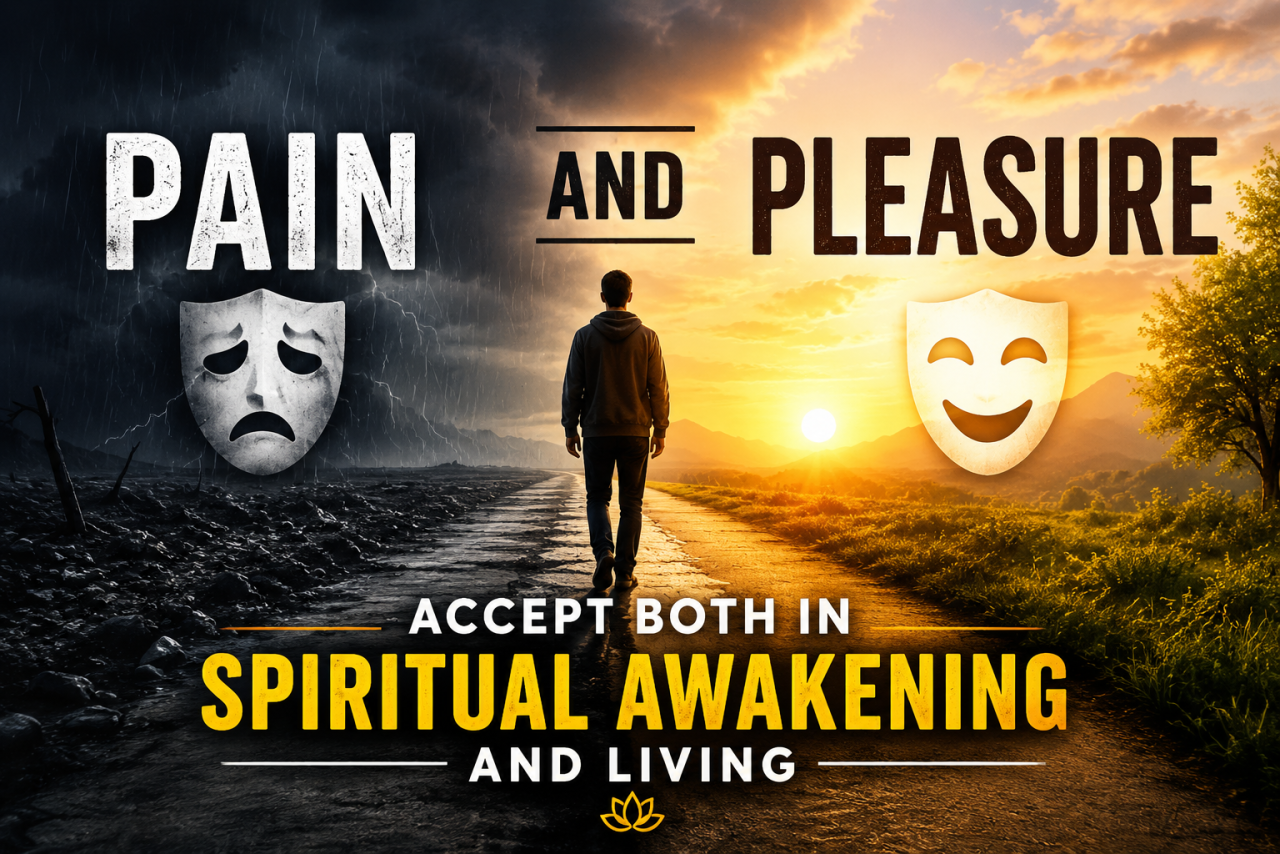
Pain and pleasure are not opposites—they are life's greatest teachers. Discover how embracing both can transform suffering into wisdom and lead to genuine spiritual awakening and lasting inner peace.
Every day, every moment, a silent battle unfolds within us. The world we see—our loved ones, daily routines, responsibilities, successes, and failures—is often nothing more than a reflection of the conflicts taking place in our inner lives. We encounter countless obstacles: illness, emotional attachments, loneliness, boredom, hopelessness, and, above all, fear. Alongside these come ego, attachment, the instinct for self-preservation, and an endless desire for control. No matter how much we wish to escape them, they remain an inseparable part of human existence.
Ironically, it is often in our deepest moments of sorrow that genuine transformation begins. When grief grips the heart and life seems enveloped in an inexplicable darkness, a different kind of light quietly emerges from within. Hidden in the deepest corners of our being, it begins to illuminate the path ahead. These are the moments when many people turn inward, seeking answers that reason, logic, and worldly calculations cannot provide. The journey gradually shifts from the material to the spiritual.
Yet the spiritual dimension cannot be fully understood through material means alone. The greatest inner transformations rarely happen by force. Spiritual awakening cannot simply be manufactured through rigid routines or intellectual effort. Disciplined practices certainly have their place—they prepare and purify the mind—but awakening itself unfolds naturally when the heart becomes ready to receive it.
What Is the Purpose of Spiritual Living?
A question naturally arises: What is the purpose of spiritual practice? Why strive to overcome limitations and attachments? Would it not be easier simply to accept life as it comes?
The phrase "take life as it comes" carries profound wisdom. If we could truly live by it, much of our suffering would disappear. Yet most of us cannot. The reason is simple: we place our trust in what our senses reveal and what our minds perceive. We mistake appearances for reality. But existence extends far beyond what the senses can grasp. Countless dimensions of life remain hidden from ordinary perception.
Perhaps the greatest lesson pain teaches is that nothing is more liberating than renunciation—not the renunciation of life itself, but of attachment to desires. From the depths of our hearts, we gradually learn to let go.
In youth, we are driven by ambition. We want to accomplish great things, prove ourselves, and even change the world. As we grow older, however, we begin to recognize how many desires we have left behind, either willingly or through circumstance. Surprisingly, we discover that the peace we now experience often comes not from acquiring more, but from wanting less.
Renunciation does not mean abandoning purpose or ceasing to strive. Rather, it means pursuing one's goals without becoming emotionally dependent on their outcomes. It is the difference between action rooted in freedom and action driven by attachment.
Two Sides of the Same Coin
Almost every pleasure in life carries within it the seed of some future pain. Desire itself is born from a sense of lack, and wherever there is lack, suffering inevitably follows. Human desires have no natural limit. We continue wanting more, and when those desires remain unfulfilled, disappointment arises.
Many of the difficulties we experience are not random. The law of cause and effect operates beneath the surface of our lives, often beyond the reach of ordinary understanding. Some actions bear fruit immediately, while others unfold only after years. Misfortune, illness, emotional turmoil, and unexpected hardships may appear meaningless, yet they are often part of a larger chain of causes and consequences that our limited perception cannot fully comprehend.
Our vision remains confined to the surface because ego obscures a deeper understanding of reality.
True goodness is that which brings lasting peace without producing harmful consequences. Yet expecting uninterrupted happiness in the material world is itself an illusion. We naturally long for stability and comfort, but life continually reminds us that everything external is subject to change.
The wiser path is not to resist suffering but to accept both the light and the shadow with courage. Pain and pleasure are not enemies; they are complementary teachers. One reveals the limitations of worldly attachment, while the other offers moments of gratitude and hope. Together, they guide us toward a deeper understanding of ourselves.
Lasting happiness is unconditional. It does not depend on circumstances but gradually emerges as the spirit becomes freer from attachment. Attaining such freedom is neither quick nor easy, yet it remains one of the most meaningful journeys a human being can undertake.
Every day, every moment, a silent battle unfolds within us. The world we see—our loved ones, daily routines, responsibilities, successes, and failures—is often nothing more than a reflection of the conflicts taking place in our inner lives. We encounter countless obstacles: illness, emotional attachments, loneliness, boredom, hopelessness, and, above all, fear. Alongside these come ego, attachment, the instinct for self-preservation, and an endless desire for control. No matter how much we wish to escape them, they remain an inseparable part of human existence.
Ironically, it is often in our deepest moments of sorrow that genuine transformation begins. When grief grips the heart and life seems enveloped in an inexplicable darkness, a different kind of light quietly emerges from within. Hidden in the deepest corners of our being, it begins to illuminate the path ahead. These are the moments when many people turn inward, seeking answers that reason, logic, and worldly calculations cannot provide. The journey gradually shifts from the material to the spiritual.
Yet the spiritual dimension cannot be fully understood through material means alone. The greatest inner transformations rarely happen by force. Spiritual awakening cannot simply be manufactured through rigid routines or intellectual effort. Disciplined practices certainly have their place—they prepare and purify the mind—but awakening itself unfolds naturally when the heart becomes ready to receive it.
What Is the Purpose of Spiritual Living?
A question naturally arises: What is the purpose of spiritual practice? Why strive to overcome limitations and attachments? Would it not be easier simply to accept life as it comes?
The phrase "take life as it comes" carries profound wisdom. If we could truly live by it, much of our suffering would disappear. Yet most of us cannot. The reason is simple: we place our trust in what our senses reveal and what our minds perceive. We mistake appearances for reality. But existence extends far beyond what the senses can grasp. Countless dimensions of life remain hidden from ordinary perception.
Perhaps the greatest lesson pain teaches is that nothing is more liberating than renunciation—not the renunciation of life itself, but of attachment to desires. From the depths of our hearts, we gradually learn to let go.
In youth, we are driven by ambition. We want to accomplish great things, prove ourselves, and even change the world. As we grow older, however, we begin to recognize how many desires we have left behind, either willingly or through circumstance. Surprisingly, we discover that the peace we now experience often comes not from acquiring more, but from wanting less.
Renunciation does not mean abandoning purpose or ceasing to strive. Rather, it means pursuing one's goals without becoming emotionally dependent on their outcomes. It is the difference between action rooted in freedom and action driven by attachment.
Two Sides of the Same Coin
Almost every pleasure in life carries within it the seed of some future pain. Desire itself is born from a sense of lack, and wherever there is lack, suffering inevitably follows. Human desires have no natural limit. We continue wanting more, and when those desires remain unfulfilled, disappointment arises.
Many of the difficulties we experience are not random. The law of cause and effect operates beneath the surface of our lives, often beyond the reach of ordinary understanding. Some actions bear fruit immediately, while others unfold only after years. Misfortune, illness, emotional turmoil, and unexpected hardships may appear meaningless, yet they are often part of a larger chain of causes and consequences that our limited perception cannot fully comprehend.
Our vision remains confined to the surface because ego obscures a deeper understanding of reality.
True goodness is that which brings lasting peace without producing harmful consequences. Yet expecting uninterrupted happiness in the material world is itself an illusion. We naturally long for stability and comfort, but life continually reminds us that everything external is subject to change.
The wiser path is not to resist suffering but to accept both the light and the shadow with courage. Pain and pleasure are not enemies; they are complementary teachers. One reveals the limitations of worldly attachment, while the other offers moments of gratitude and hope. Together, they guide us toward a deeper understanding of ourselves.
Lasting happiness is unconditional. It does not depend on circumstances but gradually emerges as the spirit becomes freer from attachment. Attaining such freedom is neither quick nor easy, yet it remains one of the most meaningful journeys a human being can undertake.





















Leave a Comment