
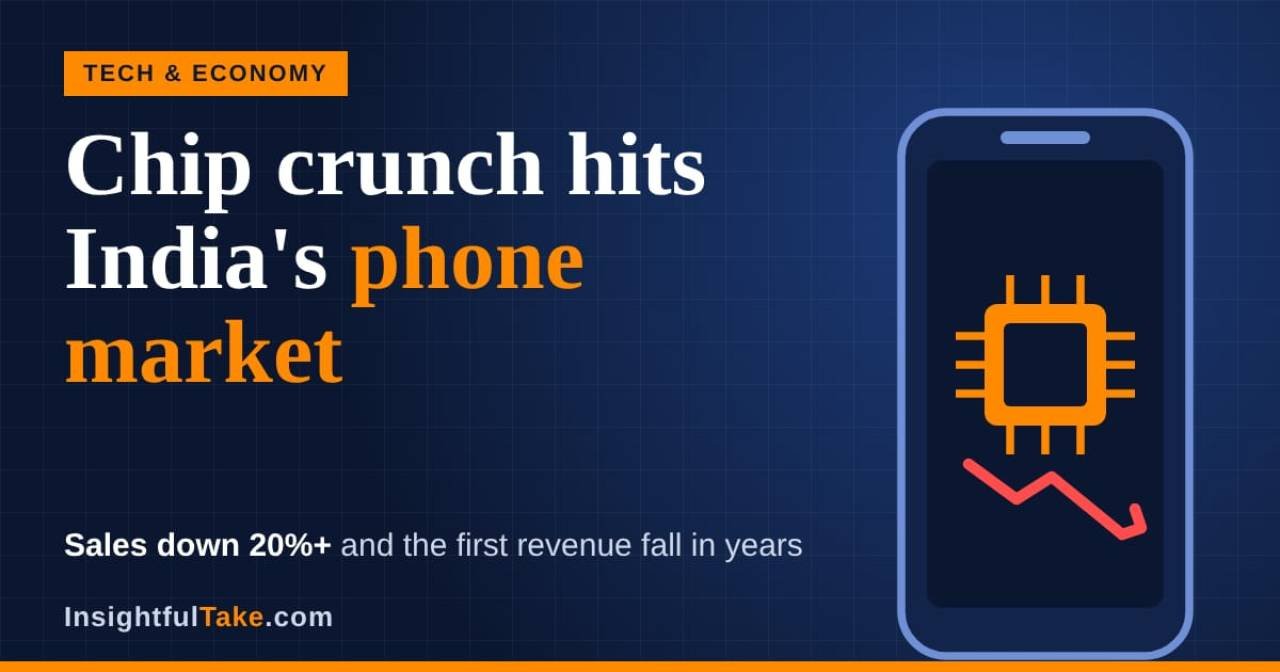
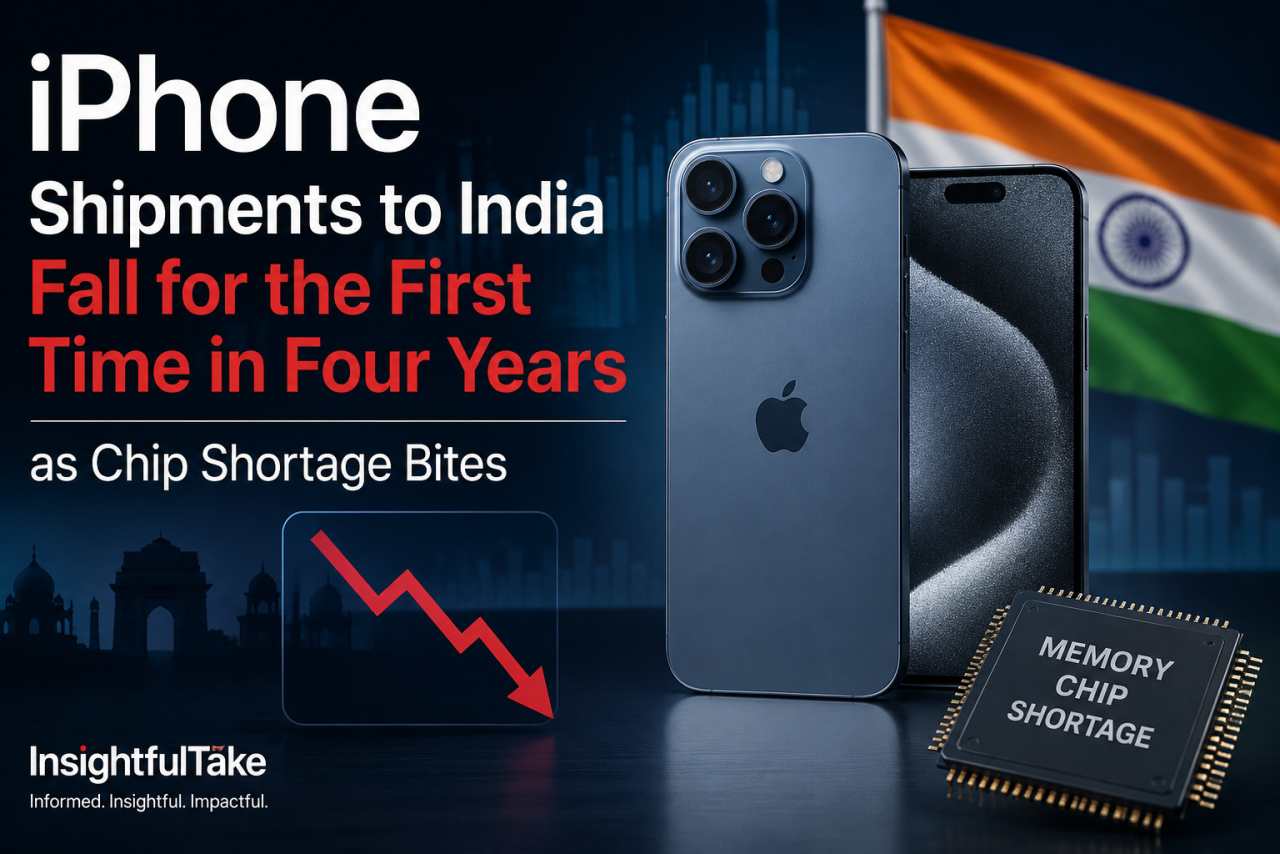
A global memory chip shortage, fuelled by the AI boom, is making smartphones costlier and threatening India's decade-long growth story.
India's smartphone market, which has expanded almost every year over the past decade, is heading towards its first annual revenue decline in 2026. The problem is not a lack of interest in smartphones. It is a shortage of the memory chip.
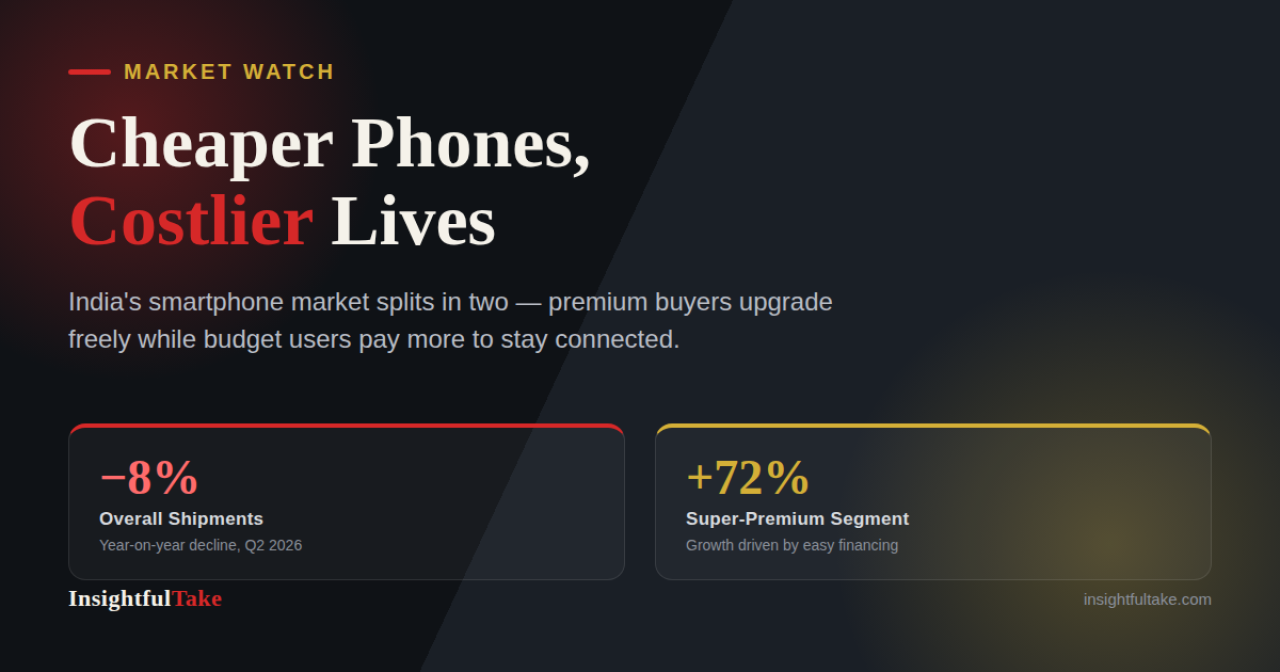
In 2025, Indians bought approximately 151 million smartphones, representing a market worth around $43 billion. This year, unit sales are expected to fall by at least 20 per cent, marking the steepest decline in a decade. Almost every major smartphone manufacturer, from Apple and Samsung to Vivo, Oppo and Xiaomi, is expected to feel the pressure.
The irony is that smartphones are becoming more expensive just as fewer people are willing to buy them.
Why a Small Chip Matters So Much
Memory chips are essential to a smartphone's functioning. They allow devices to run applications, process data and store photographs, messages, videos and other information. Without them, even the most sophisticated handset would have little practical use.
Since the middle of 2025, the prices of memory chips used in consumer electronics have risen sharply. The reasons lie in a global shift in semiconductor manufacturing priorities.
Chip manufacturers have limited production capacity, and several are increasingly prioritising specialised, enterprise-grade memory required to power artificial intelligence (AI) data centres. These orders are larger and more profitable than conventional consumer electronics orders.
As a result, smartphones and laptops are competing for a shrinking share of available memory chip supplies. Manufacturers are being forced to pay more for components, pushing up production costs.
This leaves smartphone companies with two difficult choices. They can absorb the higher costs and accept lower profit margins, or pass the additional expense on to consumers through higher prices. Most manufacturers are doing a combination of both.
The impact is not limited to smartphones. Laptop sales are also expected to slow as manufacturers confront the same supply constraints and rising component costs.
When Higher Prices Do Not Mean Higher Earnings
A decline in market revenue may appear counterintuitive when smartphone prices are increasing. Ordinarily, higher selling prices should translate into greater earnings. But the equation changes when the number of buyers falls sharply.
Market analysts point out that India's smartphone market was already showing signs of demand weakness. Consumers were not necessarily rushing to replace their existing devices, making the market increasingly dependent on replacement cycles and higher-value purchases.
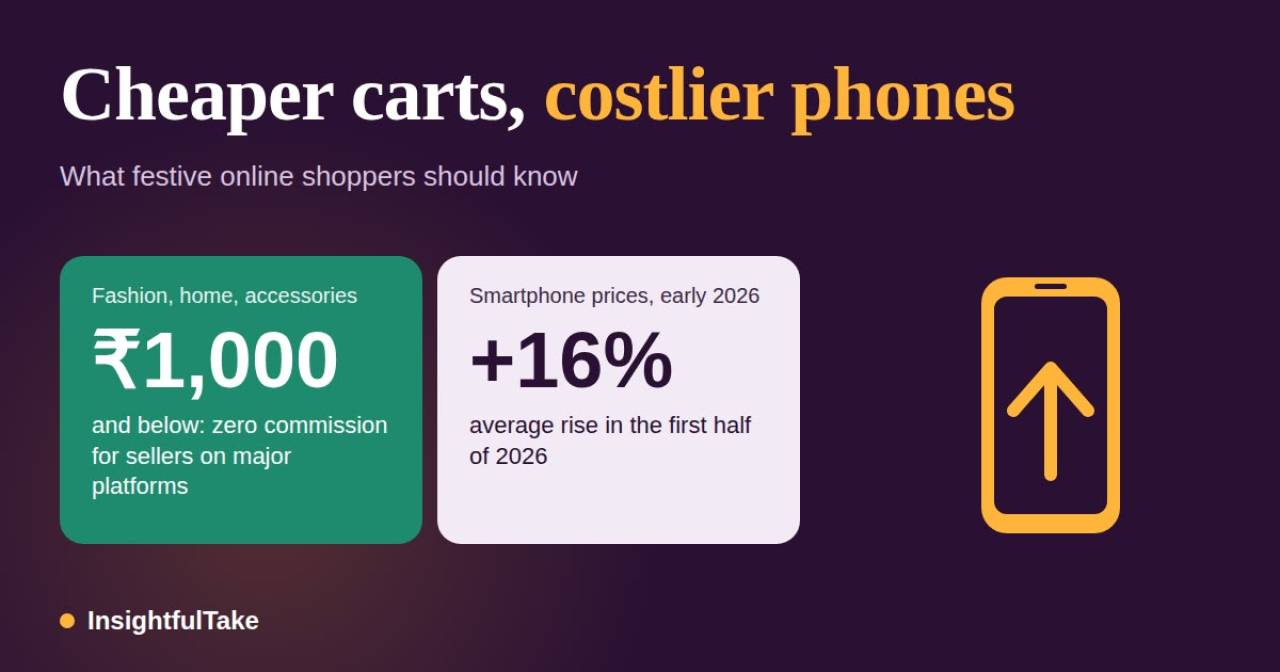
Rising memory chip costs have pushed up average smartphone prices, temporarily supporting the market's overall value. However, this price advantage cannot compensate indefinitely for a substantial decline in the number of devices sold.
One analyst expects India's smartphone market revenue to register a modest decline in 2026, followed by a single-digit fall in 2027. The coming year could prove even more challenging for electronics manufacturers as the full impact of higher memory chip prices works its way through the supply chain.
In effect, the industry is facing a double challenge: weaker consumer demand and higher manufacturing costs.
Not Every Brand Is Equally Exposed
The impact of the memory chip shortage is unlikely to be uniform across smartphone brands. Their pricing strategies, customer profiles and product portfolios will determine how well they withstand the pressure.
Apple appears relatively better positioned. Two of the three analysts cited in the report expect the company to continue growing its revenue in India, even if its unit sales decline. An approximately 20 per cent increase in the prices of its entry-level iPhone models could help sustain revenue growth.
However, even Apple is unlikely to remain untouched. Higher prices may encourage some consumers to postpone upgrades or explore the refurbished smartphone market. Its growth in India could therefore slow.
Android manufacturers face a more complicated situation. Samsung, Vivo, Oppo and Xiaomi have increasingly relied on higher-priced smartphones to strengthen their business performance in India. But when consumers become more cautious about spending, premiumisation becomes a less reliable growth strategy.
Samsung could have a relative advantage because of its broad product portfolio, which covers several price segments. This diversification may help the company absorb some of the pressure better than competitors that depend more heavily on particular price categories.
The companies mentioned in the report did not respond to emailed questions at the time of publication.
What It Means for Indian Smartphone Buyers
For consumers planning to replace their smartphones, the immediate outlook is not encouraging. Higher prices are becoming a reality, and there is little indication that the pressure will disappear quickly.
Many buyers are already responding by extending the life of their existing devices rather than upgrading every two or three years. Others are exploring second-hand and refurbished smartphones as more affordable alternatives.
This shift could have lasting consequences for India's smartphone ecosystem. The market's growth has traditionally depended on first-time buyers, consumers moving from basic handsets to smartphones, and regular upgrades to newer models. If replacement cycles become longer, manufacturers will have to rethink their sales strategies.
The developments also reveal how the global AI boom is beginning to affect ordinary consumers. The race to build AI infrastructure is not confined to technology companies, semiconductor factories or data centres. Its consequences are now reaching the price tags of everyday electronic devices.
India, with its enormous smartphone user base and price-sensitive consumers, is particularly vulnerable to this shift. Even a relatively small increase in handset prices can influence purchasing decisions across millions of households.
Final Take
The recovery of India's smartphone market will depend substantially on how quickly global semiconductor manufacturers expand production and restore the balance between AI-related demand and consumer electronics requirements.
Until memory chip supplies improve, smartphone manufacturers will have to navigate rising costs, uncertain demand and increasingly cautious consumers.
For buyers, waiting longer before upgrading may become the most practical option. For manufacturers, the challenge is more complicated: selling fewer devices at higher prices cannot remain a sustainable growth strategy.
India's smartphone market is facing a test that has little to do with the popularity of smartphones themselves. A tiny component, caught in the middle of a global technology race, is reshaping what millions of Indians can afford to carry in their pockets.






















Leave a Comment