
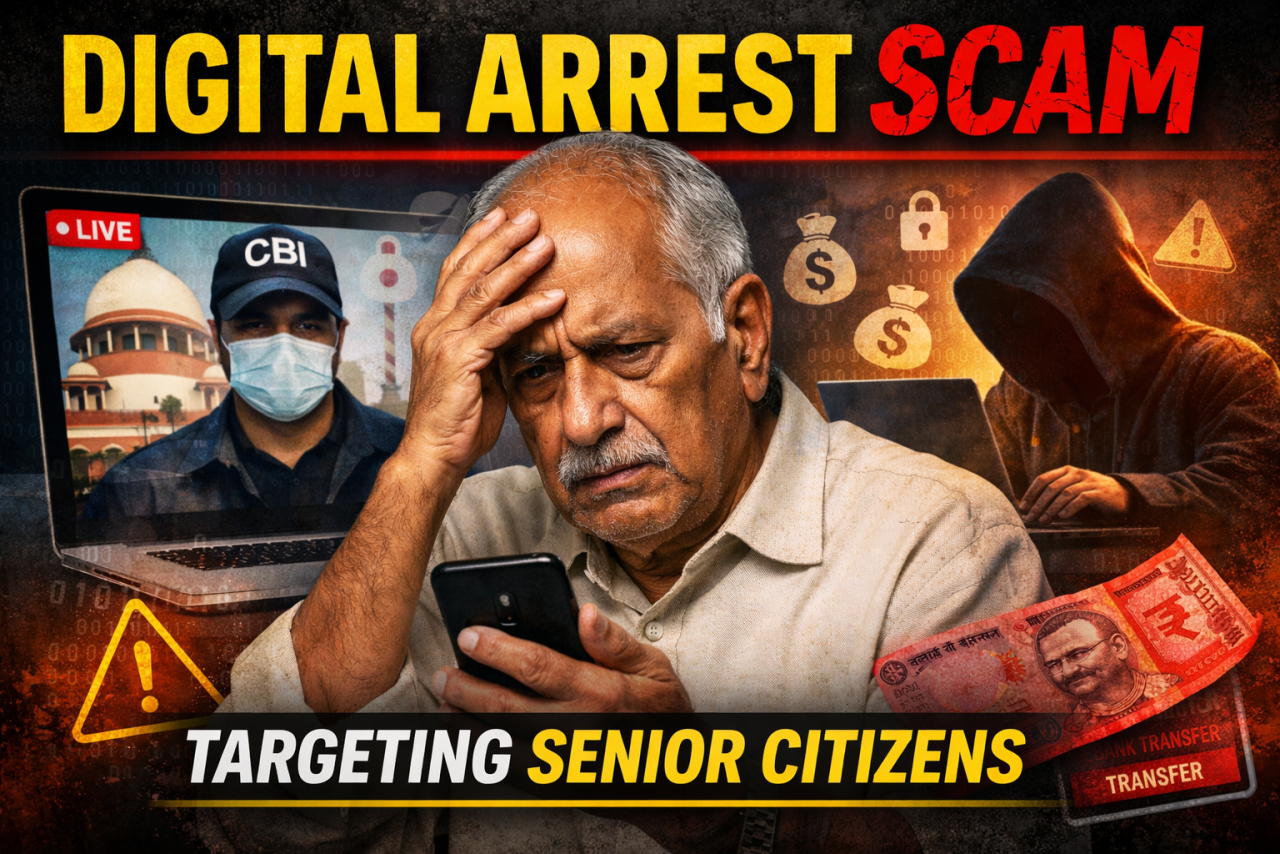
An alarming new scam is using fake video calls to trap India’s senior citizens.
India’s digital revolution was meant to empower. Instead, for a growing number of senior citizens, it has become a trap.
A disturbing new cybercrime—misleadingly termed “digital arrest”—has exposed the dark underside of Digital India. The scam recently reached the Supreme Court after 78-year-old former banker Naresh Malhotra was defrauded of more than ₹23 crore, one of the largest individual cyber frauds in the country.
The paradox is stark. As the state promotes cashless transactions and online governance, criminals are weaponising the same systems to terrorise and bankrupt the elderly.
A so-called digital arrest is not a legal process but a psychological siege. Fraudsters impersonate officials from the CBI, Enforcement Directorate, Narcotics Bureau, and even the Supreme Court, contacting victims through video calls on WhatsApp or Skype. Virtual courtrooms, forged warrants, and fluent legal jargon create an illusion of authority.
Victims are told they are under investigation for serious crimes such as money laundering or terror financing. They are ordered to stay on camera at all times, forbidden from contacting family, and instructed to transfer their savings into “government-verified” accounts for scrutiny. What follows is financial devastation.
The Supreme Court has expressed shock that even educated seniors fall for such scams. But this is less about intelligence and more about conditioning. Many older Indians grew up in an era where a summons from the state inspired unquestioned compliance. Add to this a digital knowledge gap—where spoofed numbers and deepfake visuals are difficult to detect—and isolation becomes a weapon. The scam works precisely because victims are cut off from those who might intervene.
While Digital India has succeeded in financial inclusion, digital protection has lagged dangerously behind. Banks process unusually large transfers without pause. Telecom networks allow spoofed calls to flourish. Accountability remains fragmented.
Recognising this failure, the Supreme Court has issued notices to the Union Government and the RBI, seeking systemic safeguards. The Malhotra petition calls for automatic alerts on high-value transactions involving senior citizens and a national mechanism to instantly freeze suspect accounts—measures that are long overdue.
Public awareness, however, remains the first line of defence. There is no such thing as a digital arrest. No Indian law enforcement agency interrogates or arrests citizens over video calls. The government never asks for money transfers to private accounts for verification. Any such demand is fraud—without exception.
Suspected scams must be reported immediately to the National Cyber Crime Helpline (1930) or through the official cybercrime portal.
India cannot afford a digital economy that leaves its elders exposed and afraid. Progress must be measured not just by adoption rates, but by safety. Technology may evolve, but the law still functions through physical presence and due process.
If someone claims to arrest you through a screen, they are not enforcing the law but exploiting its absence.























Leave a Comment