
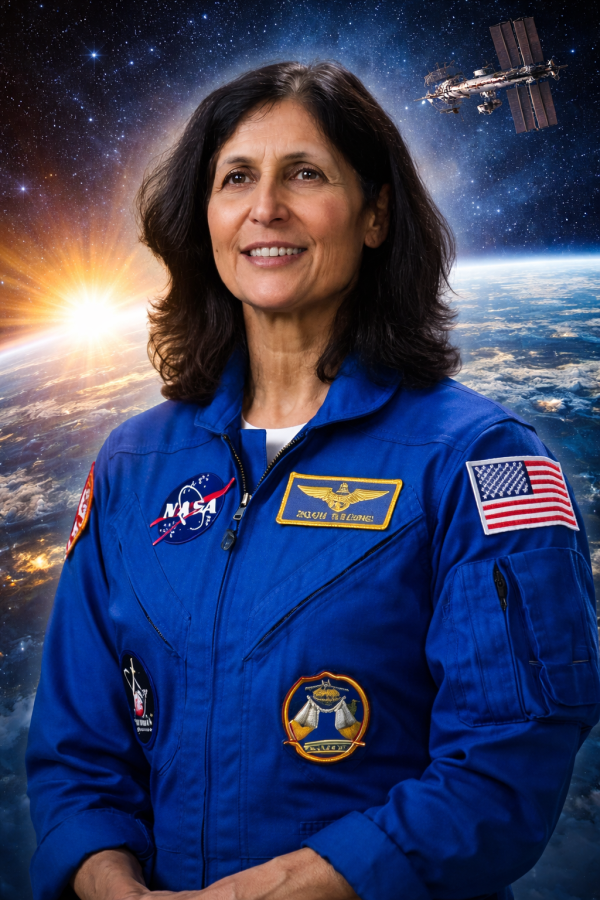
As NASA and SpaceX pause Sunita Williams’ return, the moment reveals the real risks behind humanity’s push beyond Earth.
The vastness of space has always fascinated humanity. It represents hope, ambition, and the desire to push beyond known limits. At the same time, it is unforgiving and unpredictable. The recent delay in the rescue mission involving NASA and SpaceX, meant to bring back astronauts including Indian-American astronaut Sunita Williams, has once again drawn attention to both the risks and rewards of space exploration. This incident serves as a reminder that even with advanced technology, space travel remains one of the most complex and challenging endeavors undertaken by humans.
Sunita Williams and her fellow astronaut Butch Wilmore have been aboard the International Space Station for months, carrying out scientific experiments, maintenance work, and research that supports future missions. Their return to Earth was planned through a joint mission by NASA and SpaceX, using the Falcon 9 rocket and Crew Dragon spacecraft. The launch was scheduled to take place from the Kennedy Space Center in Florida. However, just before liftoff, engineers detected a problem in the hydraulic system, forcing the mission to be postponed.
Such last-minute delays are not uncommon in space missions, but each one highlights how carefully every component must function. The hydraulic system plays a critical role in ground operations, and even a minor fault can pose serious risks. NASA and SpaceX decided not to proceed until the issue could be fully examined and resolved. Although the delay caused disappointment and concern among observers, the decision reflected the space agencies’ firm commitment to safety.
For Sunita Williams, this delay means spending additional time aboard the International Space Station, far from family and Earth’s familiar environment. Life in space demands physical strength, mental discipline, and emotional resilience. Astronauts live in confined spaces, follow strict routines, and adapt to microgravity, which affects muscles, bones, and even vision. Extended missions require constant monitoring of health and equipment, making patience and endurance essential qualities.
Williams is no stranger to such challenges. Over the course of her career, she has completed multiple missions and spent more than 300 days in space. She has conducted several spacewalks and contributed to critical research in areas such as fluid dynamics, biology, and engineering. Her work helps scientists understand how the human body adapts to space, knowledge that is vital for long-term missions to the Moon or Mars. Her experience and calm approach during uncertain situations reflect the professionalism expected of astronauts.
The delayed rescue also highlights the broader nature of space exploration. Every mission depends on thousands of engineers, scientists, technicians, and support staff working together. Even with years of preparation, unexpected issues can arise. What matters most is how these challenges are handled. Careful testing, transparent decision-making, and cooperation between agencies ensure that human lives are not put at unnecessary risk.
Space exploration is not only about reaching new destinations. It pushes technological development, strengthens international cooperation, and inspires younger generations to pursue careers in science and engineering. Many technologies used on Earth today, including satellite communication, weather forecasting, and medical imaging, are outcomes of space research. Missions like these remind the public that progress often involves uncertainty and setbacks.
As the world waits for a revised launch schedule, there is confidence that Sunita Williams and her crewmate will return safely. The delay, while frustrating, reinforces the importance of caution and preparation in space travel. It also demonstrates the responsibility space agencies carry when human lives are involved.
The story of Sunita Williams is not just about a delayed mission. It is about courage, commitment, and the willingness to face the unknown. Astronauts accept that even small technical problems can alter plans, yet they continue to push boundaries for the benefit of humanity. Their work reminds us that exploration comes with risks, but it also brings knowledge, innovation, and inspiration.
As space missions become more frequent and ambitious, incidents like this serve as lessons rather than failures. They show that exploration is a gradual process built on learning, patience, and trust in science. Sunita Williams’ journey, even with its delays, stands as a powerful example of the human spirit striving beyond Earth while respecting the limits that nature imposes.




























Leave a Comment