
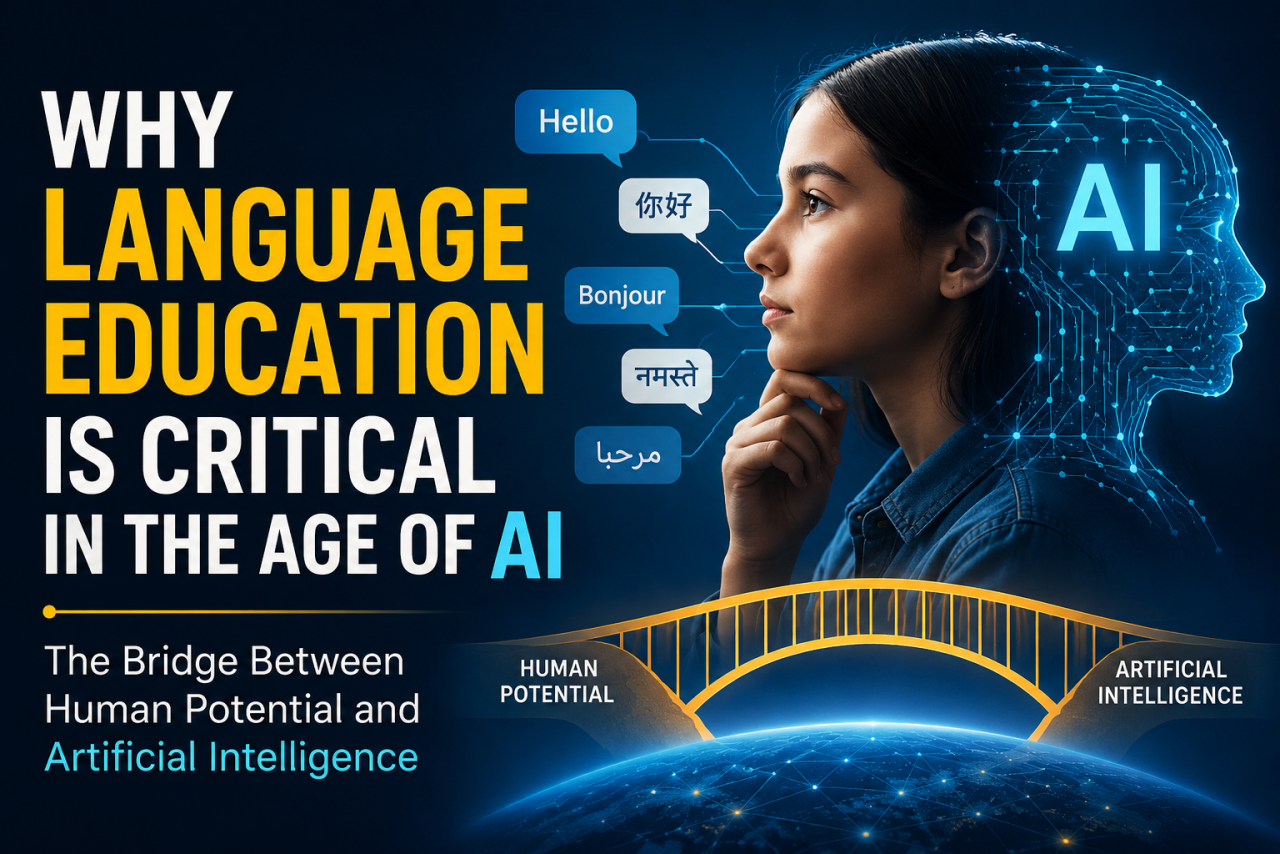
AI runs on data, but it responds to language. The better we communicate, the better technology works for us.
For centuries, language has been the primary tool through which human beings have shared knowledge, built civilizations, and preserved culture. Today, in the age of Artificial Intelligence (AI), its importance has not diminished; it has expanded. As machines become capable of processing information, generating content, and assisting in decision-making, language has emerged as the critical bridge connecting human intelligence with artificial intelligence.
The AI revolution is often associated with algorithms, computing power, and data. Yet behind every successful AI interaction lies language. Whether a person is asking a chatbot a question, instructing an AI system to create an image, searching for information, or using a voice assistant, language serves as the interface through which humans communicate with machines. In many ways, AI understands the world through language, and humans access AI through the same medium.
This shift has elevated language skills from being merely educational assets to becoming essential professional competencies. A few years ago, technical knowledge alone was considered sufficient for many careers. Today, the ability to communicate clearly, frame precise questions, and articulate ideas effectively can significantly influence how successfully an individual uses AI tools. The quality of output generated by AI often depends on the quality of the input provided by humans.
The rise of "prompt engineering" illustrates this reality. While the term may sound technical, its foundation is linguistic. Individuals who can communicate their intent accurately often receive better results from AI systems than those who cannot. In workplaces across sectors, professionals are discovering that clear writing, logical structuring of information, and strong language skills directly improve productivity when working with AI-powered platforms.
Recent trends support this observation. According to the World Economic Forum's Future of Jobs Report 2025, analytical thinking, communication, creativity, and technological literacy rank among the most sought-after skills for the future workforce. Notably, communication remains a core competency even as automation expands. This highlights an important truth: AI may process information, but humans must still define goals, provide context, and evaluate outcomes.
Language also plays a central role in the development of AI itself. Large Language Models (LLMs) such as ChatGPT, Gemini, and Claude are trained on enormous amounts of text drawn from books, articles, websites, and other written material. Their ability to answer questions, summarize information, and generate content stems from patterns learned through language. In essence, AI's intelligence is built upon humanity's collective linguistic knowledge.
Beyond technology, language continues to shape cognitive development. Research in neuroscience and education has long shown that strong language abilities improve critical thinking, reasoning, and problem-solving skills. These qualities are becoming even more valuable as AI takes over routine tasks. The jobs most resistant to automation are often those requiring nuanced communication, judgment, negotiation, leadership, and emotional understanding—all of which depend heavily on language.
Multilingualism offers an additional advantage. As businesses, educational institutions, and digital platforms operate across borders, individuals who can communicate in multiple languages are better positioned to collaborate globally. UNESCO estimates that more than 40 percent of the world's population does not have access to education in a language they fully understand. Addressing this gap through multilingual education can improve learning outcomes while preparing future generations for participation in an increasingly interconnected economy.
At the same time, AI presents new opportunities for language preservation. Translation tools, speech-recognition systems, and digital archives are helping document and revitalize languages that might otherwise face decline. Communities can now preserve oral traditions and make cultural knowledge accessible to wider audiences. Rather than replacing human languages, AI has the potential to strengthen linguistic diversity when used responsibly.
However, the growing influence of AI also highlights the need for stronger language education. Schools and universities must move beyond rote grammar instruction and focus on communication, comprehension, argumentation, and digital literacy. Students should learn not only how to speak and write effectively but also how to interact intelligently with AI systems, verify information, and communicate ideas ethically.
The future will not belong solely to those who understand technology. It will belong to those who can communicate with technology and, more importantly, communicate through it. In the AI era, language is no longer just a medium of expression; it is the bridge between human creativity and machine capability.
As artificial intelligence reshapes industries and societies, one lesson is becoming increasingly clear: the better we understand language, the better we will understand the future. Language remains humanity's most powerful tool—not despite the rise of AI, but because of it.
For centuries, language has been the primary tool through which human beings have shared knowledge, built civilizations, and preserved culture. Today, in the age of Artificial Intelligence (AI), its importance has not diminished; it has expanded. As machines become capable of processing information, generating content, and assisting in decision-making, language has emerged as the critical bridge connecting human intelligence with artificial intelligence.
The AI revolution is often associated with algorithms, computing power, and data. Yet behind every successful AI interaction lies language. Whether a person is asking a chatbot a question, instructing an AI system to create an image, searching for information, or using a voice assistant, language serves as the interface through which humans communicate with machines. In many ways, AI understands the world through language, and humans access AI through the same medium.
This shift has elevated language skills from being merely educational assets to becoming essential professional competencies. A few years ago, technical knowledge alone was considered sufficient for many careers. Today, the ability to communicate clearly, frame precise questions, and articulate ideas effectively can significantly influence how successfully an individual uses AI tools. The quality of output generated by AI often depends on the quality of the input provided by humans.
The rise of "prompt engineering" illustrates this reality. While the term may sound technical, its foundation is linguistic. Individuals who can communicate their intent accurately often receive better results from AI systems than those who cannot. In workplaces across sectors, professionals are discovering that clear writing, logical structuring of information, and strong language skills directly improve productivity when working with AI-powered platforms.
Recent trends support this observation. According to the World Economic Forum's Future of Jobs Report 2025, analytical thinking, communication, creativity, and technological literacy rank among the most sought-after skills for the future workforce. Notably, communication remains a core competency even as automation expands. This highlights an important truth: AI may process information, but humans must still define goals, provide context, and evaluate outcomes.
Language also plays a central role in the development of AI itself. Large Language Models (LLMs) such as ChatGPT, Gemini, and Claude are trained on enormous amounts of text drawn from books, articles, websites, and other written material. Their ability to answer questions, summarize information, and generate content stems from patterns learned through language. In essence, AI's intelligence is built upon humanity's collective linguistic knowledge.
Beyond technology, language continues to shape cognitive development. Research in neuroscience and education has long shown that strong language abilities improve critical thinking, reasoning, and problem-solving skills. These qualities are becoming even more valuable as AI takes over routine tasks. The jobs most resistant to automation are often those requiring nuanced communication, judgment, negotiation, leadership, and emotional understanding—all of which depend heavily on language.
Multilingualism offers an additional advantage. As businesses, educational institutions, and digital platforms operate across borders, individuals who can communicate in multiple languages are better positioned to collaborate globally. UNESCO estimates that more than 40 percent of the world's population does not have access to education in a language they fully understand. Addressing this gap through multilingual education can improve learning outcomes while preparing future generations for participation in an increasingly interconnected economy.
At the same time, AI presents new opportunities for language preservation. Translation tools, speech-recognition systems, and digital archives are helping document and revitalize languages that might otherwise face decline. Communities can now preserve oral traditions and make cultural knowledge accessible to wider audiences. Rather than replacing human languages, AI has the potential to strengthen linguistic diversity when used responsibly.
However, the growing influence of AI also highlights the need for stronger language education. Schools and universities must move beyond rote grammar instruction and focus on communication, comprehension, argumentation, and digital literacy. Students should learn not only how to speak and write effectively but also how to interact intelligently with AI systems, verify information, and communicate ideas ethically.
The future will not belong solely to those who understand technology. It will belong to those who can communicate with technology and, more importantly, communicate through it. In the AI era, language is no longer just a medium of expression; it is the bridge between human creativity and machine capability.
As artificial intelligence reshapes industries and societies, one lesson is becoming increasingly clear: the better we understand language, the better we will understand the future. Language remains humanity's most powerful tool—not despite the rise of AI, but because of it.
























Leave a Comment