
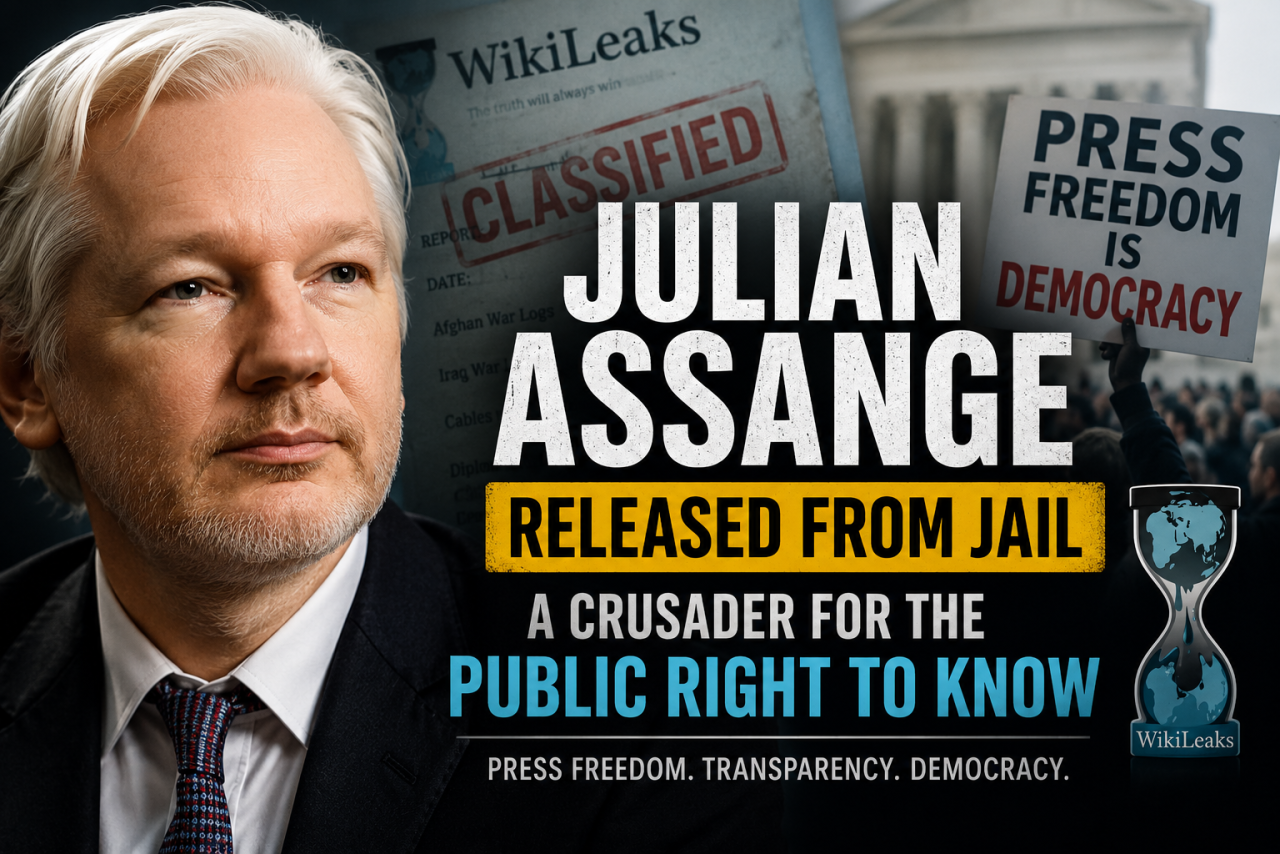
Julian Assange's release is more than the end of a legal battle. It has reopened a global conversation on press freedom, government secrecy, and the public's right to know.
The release of WikiLeaks founder Julian Assange marked the end of one of the most controversial legal battles involving journalism, national security, and government transparency in recent history. After years of imprisonment and legal proceedings related to the publication of classified U.S. military and diplomatic documents, Assange's return to freedom has reignited a global debate over press freedom, whistleblowing, and the public's right to know.
To supporters, Assange is a fearless publisher who exposed uncomfortable truths about war, diplomacy, and state power. To critics, he crossed ethical and legal boundaries by publishing classified information that could have endangered national security and intelligence operations. The differing views surrounding his work continue to shape discussions on the future of investigative journalism.
Who Is Julian Assange?
Julian Assange founded WikiLeaks in 2006 with the stated mission of publishing confidential documents that governments and powerful institutions preferred to keep hidden. The platform gained worldwide attention in 2010 after releasing hundreds of thousands of classified U.S. military records, diplomatic cables, and reports related to the wars in Afghanistan and Iraq.
The disclosures revealed civilian casualties, allegations of human rights violations, military misconduct, and the gap between official statements and events on the ground. The publications became one of the largest leaks of classified government information in modern history and fundamentally changed conversations about transparency in the digital age.
Why Did Julian Assange Face Legal Action?
Following the publication of classified documents, the United States charged Assange under the Espionage Act, arguing that his actions endangered national security and placed confidential sources at risk. Assange and many press freedom advocates, however, argued that his prosecution threatened investigative journalism by criminalizing the publication of information that was undeniably in the public interest.
After spending years inside the Ecuadorian Embassy in London and later in a British prison while fighting extradition, Assange eventually secured his release through a plea agreement that ended years of legal uncertainty.
Why Supporters Consider Assange a Champion of Transparency
For many journalists, civil liberties organizations, and advocates of government accountability, Julian Assange represents one of the most determined defenders of the public's right to know.
In an era when political influence, corporate ownership, and commercial pressures increasingly shape news agendas, Assange chose confrontation over compromise. Rather than merely reporting official narratives, he published documents that challenged powerful governments and compelled citizens to examine decisions taken in their name.
Supporters argue that WikiLeaks exposed facts that would otherwise have remained hidden from public scrutiny. The Afghan War Logs and Iraq War Logs revealed troubling details about civilian deaths, military conduct, and the realities of modern warfare. These disclosures intensified global discussions about accountability and transparency in democratic societies.
To many observers, Assange demonstrated that journalism is not only about reporting events but also about questioning authority and ensuring that governments remain answerable to the people they govern.
The Ethical Debate Around WikiLeaks
Assange's work has also generated significant criticism.
Many legal experts, intelligence officials, and journalists have argued that publishing unredacted classified documents carries serious risks. Critics contend that such disclosures can compromise intelligence operations, expose confidential sources, and potentially endanger lives.
These concerns remain central to the debate surrounding WikiLeaks. Responsible journalism requires balancing the public's right to know with the obligation to minimize unnecessary harm.
At the same time, supporters argue that governments frequently invoke national security to shield politically inconvenient information from public scrutiny. The Assange case therefore raises an enduring question: where should democratic societies draw the line between state secrecy and public accountability?
What Julian Assange's Case Means for Press Freedom
Regardless of where one stands, Julian Assange's legal battle has become a defining moment in the history of modern journalism.
His prosecution forced governments, courts, media organizations, and civil society to confront difficult questions about the limits of investigative reporting in the digital era. It highlighted the tension between protecting national security and preserving a free press capable of scrutinizing those in power.
The case also exposed differing global perspectives on transparency, whistleblowing, and freedom of information. For many press freedom advocates, the outcome will continue to influence how journalists handle classified information for years to come.
Final Take
Viewed through an editorial lens, Julian Assange remains one of the most consequential figures in contemporary journalism.
He challenged governments that possessed extraordinary political and military influence and demonstrated that information itself can become a powerful instrument of accountability. Whether admired or criticized, his work compelled the world to confront issues that many preferred to avoid.
Supporters see him as a crusader for transparency who sacrificed years of personal freedom to publish information he believed belonged to the public. Critics continue to question aspects of his methods while acknowledging the profound impact WikiLeaks has had on global journalism.
History will ultimately decide how Assange is remembered. Yet his case has already transformed discussions about investigative reporting, government secrecy, and democratic accountability.
As journalism navigates an era shaped by digital misinformation, political polarization, and growing public distrust, the questions raised by Julian Assange remain deeply relevant. Can democracy flourish without a press willing to challenge power? How should societies balance national security with transparency? These are debates that will continue long after Assange's legal battles have ended.
The release of WikiLeaks founder Julian Assange marked the end of one of the most controversial legal battles involving journalism, national security, and government transparency in recent history. After years of imprisonment and legal proceedings related to the publication of classified U.S. military and diplomatic documents, Assange's return to freedom has reignited a global debate over press freedom, whistleblowing, and the public's right to know.
To supporters, Assange is a fearless publisher who exposed uncomfortable truths about war, diplomacy, and state power. To critics, he crossed ethical and legal boundaries by publishing classified information that could have endangered national security and intelligence operations. The differing views surrounding his work continue to shape discussions on the future of investigative journalism.
Who Is Julian Assange?
Julian Assange founded WikiLeaks in 2006 with the stated mission of publishing confidential documents that governments and powerful institutions preferred to keep hidden. The platform gained worldwide attention in 2010 after releasing hundreds of thousands of classified U.S. military records, diplomatic cables, and reports related to the wars in Afghanistan and Iraq.
The disclosures revealed civilian casualties, allegations of human rights violations, military misconduct, and the gap between official statements and events on the ground. The publications became one of the largest leaks of classified government information in modern history and fundamentally changed conversations about transparency in the digital age.
Why Did Julian Assange Face Legal Action?
Following the publication of classified documents, the United States charged Assange under the Espionage Act, arguing that his actions endangered national security and placed confidential sources at risk. Assange and many press freedom advocates, however, argued that his prosecution threatened investigative journalism by criminalizing the publication of information that was undeniably in the public interest.
After spending years inside the Ecuadorian Embassy in London and later in a British prison while fighting extradition, Assange eventually secured his release through a plea agreement that ended years of legal uncertainty.
Why Supporters Consider Assange a Champion of Transparency
For many journalists, civil liberties organizations, and advocates of government accountability, Julian Assange represents one of the most determined defenders of the public's right to know.
In an era when political influence, corporate ownership, and commercial pressures increasingly shape news agendas, Assange chose confrontation over compromise. Rather than merely reporting official narratives, he published documents that challenged powerful governments and compelled citizens to examine decisions taken in their name.
Supporters argue that WikiLeaks exposed facts that would otherwise have remained hidden from public scrutiny. The Afghan War Logs and Iraq War Logs revealed troubling details about civilian deaths, military conduct, and the realities of modern warfare. These disclosures intensified global discussions about accountability and transparency in democratic societies.
To many observers, Assange demonstrated that journalism is not only about reporting events but also about questioning authority and ensuring that governments remain answerable to the people they govern.
The Ethical Debate Around WikiLeaks
Assange's work has also generated significant criticism.
Many legal experts, intelligence officials, and journalists have argued that publishing unredacted classified documents carries serious risks. Critics contend that such disclosures can compromise intelligence operations, expose confidential sources, and potentially endanger lives.
These concerns remain central to the debate surrounding WikiLeaks. Responsible journalism requires balancing the public's right to know with the obligation to minimize unnecessary harm.
At the same time, supporters argue that governments frequently invoke national security to shield politically inconvenient information from public scrutiny. The Assange case therefore raises an enduring question: where should democratic societies draw the line between state secrecy and public accountability?
What Julian Assange's Case Means for Press Freedom
Regardless of where one stands, Julian Assange's legal battle has become a defining moment in the history of modern journalism.
His prosecution forced governments, courts, media organizations, and civil society to confront difficult questions about the limits of investigative reporting in the digital era. It highlighted the tension between protecting national security and preserving a free press capable of scrutinizing those in power.
The case also exposed differing global perspectives on transparency, whistleblowing, and freedom of information. For many press freedom advocates, the outcome will continue to influence how journalists handle classified information for years to come.
Final Take
Viewed through an editorial lens, Julian Assange remains one of the most consequential figures in contemporary journalism.
He challenged governments that possessed extraordinary political and military influence and demonstrated that information itself can become a powerful instrument of accountability. Whether admired or criticized, his work compelled the world to confront issues that many preferred to avoid.
Supporters see him as a crusader for transparency who sacrificed years of personal freedom to publish information he believed belonged to the public. Critics continue to question aspects of his methods while acknowledging the profound impact WikiLeaks has had on global journalism.
History will ultimately decide how Assange is remembered. Yet his case has already transformed discussions about investigative reporting, government secrecy, and democratic accountability.
As journalism navigates an era shaped by digital misinformation, political polarization, and growing public distrust, the questions raised by Julian Assange remain deeply relevant. Can democracy flourish without a press willing to challenge power? How should societies balance national security with transparency? These are debates that will continue long after Assange's legal battles have ended.

















Leave a Comment