
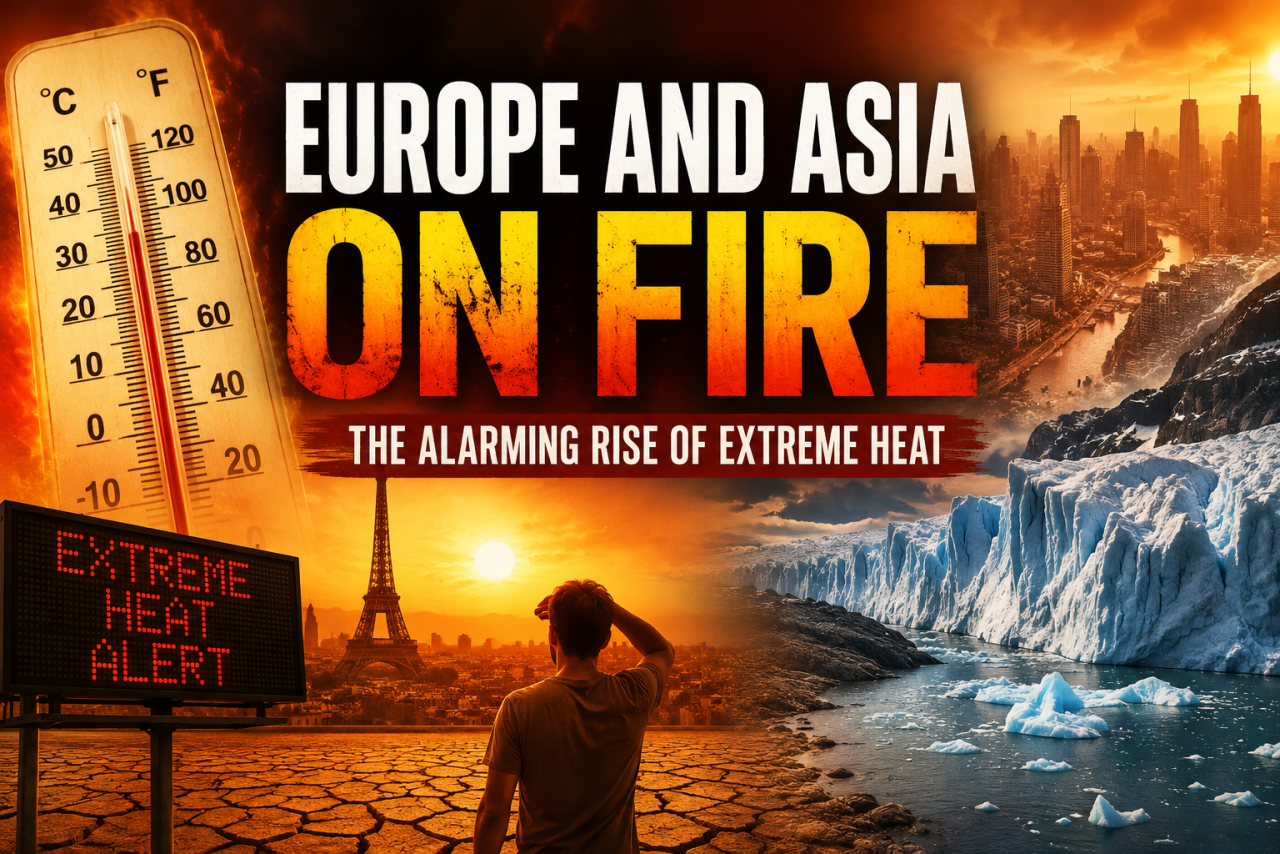
Europe and Asia are enduring record-breaking heat. The climate crisis is no longer a future warning—it is unfolding before our eyes.
The summer of 2026 is proving to be far more than another warm season. Across Europe and Asia, prolonged and intense heat waves are pushing temperature records to new extremes, threatening lives, straining power grids, disrupting transportation, and placing enormous pressure on ecosystems already under stress. What was once considered a once-in-a-generation event is increasingly becoming a recurring feature of modern summers.
A Continent Gasping for Air
Tens of millions of people across Europe are battling dangerous temperatures as an intense heat wave stretches across the continent. In Paris, residents have sought relief at public mist fountains and cooling stations as authorities urge people to remain indoors during the hottest hours of the day.
The heat has also exposed the vulnerability of Europe's energy infrastructure. In parts of France and Switzerland, some nuclear power plants have reduced output or temporarily halted operations because nearby rivers, which supply cooling water, have become unusually warm. The episode highlights how climate change is beginning to affect even the systems designed to keep modern economies running.
Several European countries have issued heat alerts as temperatures climb well above seasonal averages. Parts of Germany, the Czech Republic, and neighbouring countries have experienced temperatures approaching or exceeding 40°C, while several regions have reported their hottest conditions in decades. Health authorities across the continent have warned of increased risks for older adults, children, and outdoor workers.
Switzerland's Glaciers: A Ticking Clock
Few images illustrate the climate crisis more starkly than Switzerland's rapidly shrinking glaciers. According to the Swiss glacier monitoring network, prolonged heat and limited snowfall have accelerated ice loss across the Alps at an alarming pace.
Scientists warn that some glaciers are reaching seasonal "tipping points" weeks earlier than expected, meaning they begin losing more ice than they can naturally recover during winter. Measurements from multiple monitoring stations show record rates of ice melt and snow loss, underscoring how quickly conditions are changing.
"We are just seeing enormous melt rates all over the Alps," said Matthias Huss, chief of the GLAMOS glacier monitoring network.
If this trend continues, many of Switzerland's glaciers could largely disappear within this century. Beyond altering one of Europe's most iconic landscapes, their disappearance would threaten freshwater supplies, hydropower generation, agriculture, and river ecosystems that support millions of people downstream.
Asia Faces the Same Crisis
While Europe has dominated international headlines, much of Asia is confronting an equally severe heat emergency.
Across South and East Asia, prolonged periods of extreme heat have pushed temperatures beyond safe levels for millions of people. In India, several regions have experienced temperatures exceeding 45°C, placing enormous strain on electricity networks, reducing outdoor working hours, and increasing heat-related illnesses. Authorities in multiple states have issued public health advisories urging residents to remain hydrated and avoid unnecessary exposure.
Neighbouring countries, including Bangladesh and Pakistan, have also reported dangerous heat conditions, while hospitals across parts of the region have recorded rising numbers of patients suffering from heat exhaustion and dehydration.
In China, recurring heat waves and drought conditions have affected sections of the Yangtze River basin, reducing water availability and raising concerns about agricultural production. Japan has likewise issued heat alerts across multiple prefectures, encouraging residents to limit outdoor activities as temperatures continue to climb.
More Than a Weather Story
Extreme heat is no longer only a public health challenge. It has become an economic one.
Scorching temperatures reduce crop yields, increase electricity demand, disrupt rail and road transport, and lower labour productivity, particularly for outdoor workers in construction and agriculture. Insurance costs continue to rise as climate-related disasters become more frequent, while governments face growing pressure to strengthen infrastructure that was never designed for such prolonged periods of extreme heat.
Why Is This Happening?
The scientific consensus is clear. Human-driven climate change, primarily caused by the burning of fossil fuels, has increased concentrations of greenhouse gases in the atmosphere, trapping more heat and making heat waves more frequent, more intense, and longer-lasting.
Global average temperatures have already risen by roughly 1.2°C above pre-industrial levels. Although that increase may appear modest, it has significantly altered weather patterns, increasing the likelihood of extreme weather events across much of the world.
What Can Be Done?
Addressing the heat crisis requires both immediate action and long-term planning.
Governments must accelerate the transition to cleaner energy, invest in greener cities through expanded parks, tree cover, and reflective building materials, and strengthen early-warning systems that protect vulnerable populations during extreme weather.
Individuals also have a role to play. Staying hydrated, limiting outdoor activity during peak heat, checking on elderly neighbours and family members, and reducing unnecessary electricity consumption during periods of peak demand can help save lives and ease pressure on overstretched power systems.
Final Take
The extreme heat gripping Europe and Asia is not an isolated event. It is part of a broader pattern that scientists have warned about for decades. Every broken temperature record, every shrinking glacier, and every heat-related emergency serves as another reminder that climate change is no longer a distant possibility—it is a present-day reality.
Whether the summers of the future become even more dangerous will depend largely on the decisions governments, businesses, and individuals make today. The window to limit the worst impacts is narrowing, but it has not yet closed.
The summer of 2026 is proving to be far more than another warm season. Across Europe and Asia, prolonged and intense heat waves are pushing temperature records to new extremes, threatening lives, straining power grids, disrupting transportation, and placing enormous pressure on ecosystems already under stress. What was once considered a once-in-a-generation event is increasingly becoming a recurring feature of modern summers.
A Continent Gasping for Air
Tens of millions of people across Europe are battling dangerous temperatures as an intense heat wave stretches across the continent. In Paris, residents have sought relief at public mist fountains and cooling stations as authorities urge people to remain indoors during the hottest hours of the day.
The heat has also exposed the vulnerability of Europe's energy infrastructure. In parts of France and Switzerland, some nuclear power plants have reduced output or temporarily halted operations because nearby rivers, which supply cooling water, have become unusually warm. The episode highlights how climate change is beginning to affect even the systems designed to keep modern economies running.
Several European countries have issued heat alerts as temperatures climb well above seasonal averages. Parts of Germany, the Czech Republic, and neighbouring countries have experienced temperatures approaching or exceeding 40°C, while several regions have reported their hottest conditions in decades. Health authorities across the continent have warned of increased risks for older adults, children, and outdoor workers.
Switzerland's Glaciers: A Ticking Clock
Few images illustrate the climate crisis more starkly than Switzerland's rapidly shrinking glaciers. According to the Swiss glacier monitoring network, prolonged heat and limited snowfall have accelerated ice loss across the Alps at an alarming pace.
Scientists warn that some glaciers are reaching seasonal "tipping points" weeks earlier than expected, meaning they begin losing more ice than they can naturally recover during winter. Measurements from multiple monitoring stations show record rates of ice melt and snow loss, underscoring how quickly conditions are changing.
"We are just seeing enormous melt rates all over the Alps," said Matthias Huss, chief of the GLAMOS glacier monitoring network.
If this trend continues, many of Switzerland's glaciers could largely disappear within this century. Beyond altering one of Europe's most iconic landscapes, their disappearance would threaten freshwater supplies, hydropower generation, agriculture, and river ecosystems that support millions of people downstream.
Asia Faces the Same Crisis
While Europe has dominated international headlines, much of Asia is confronting an equally severe heat emergency.
Across South and East Asia, prolonged periods of extreme heat have pushed temperatures beyond safe levels for millions of people. In India, several regions have experienced temperatures exceeding 45°C, placing enormous strain on electricity networks, reducing outdoor working hours, and increasing heat-related illnesses. Authorities in multiple states have issued public health advisories urging residents to remain hydrated and avoid unnecessary exposure.
Neighbouring countries, including Bangladesh and Pakistan, have also reported dangerous heat conditions, while hospitals across parts of the region have recorded rising numbers of patients suffering from heat exhaustion and dehydration.
In China, recurring heat waves and drought conditions have affected sections of the Yangtze River basin, reducing water availability and raising concerns about agricultural production. Japan has likewise issued heat alerts across multiple prefectures, encouraging residents to limit outdoor activities as temperatures continue to climb.
More Than a Weather Story
Extreme heat is no longer only a public health challenge. It has become an economic one.
Scorching temperatures reduce crop yields, increase electricity demand, disrupt rail and road transport, and lower labour productivity, particularly for outdoor workers in construction and agriculture. Insurance costs continue to rise as climate-related disasters become more frequent, while governments face growing pressure to strengthen infrastructure that was never designed for such prolonged periods of extreme heat.
Why Is This Happening?
The scientific consensus is clear. Human-driven climate change, primarily caused by the burning of fossil fuels, has increased concentrations of greenhouse gases in the atmosphere, trapping more heat and making heat waves more frequent, more intense, and longer-lasting.
Global average temperatures have already risen by roughly 1.2°C above pre-industrial levels. Although that increase may appear modest, it has significantly altered weather patterns, increasing the likelihood of extreme weather events across much of the world.
What Can Be Done?
Addressing the heat crisis requires both immediate action and long-term planning.
Governments must accelerate the transition to cleaner energy, invest in greener cities through expanded parks, tree cover, and reflective building materials, and strengthen early-warning systems that protect vulnerable populations during extreme weather.
Individuals also have a role to play. Staying hydrated, limiting outdoor activity during peak heat, checking on elderly neighbours and family members, and reducing unnecessary electricity consumption during periods of peak demand can help save lives and ease pressure on overstretched power systems.
Final Take
The extreme heat gripping Europe and Asia is not an isolated event. It is part of a broader pattern that scientists have warned about for decades. Every broken temperature record, every shrinking glacier, and every heat-related emergency serves as another reminder that climate change is no longer a distant possibility—it is a present-day reality.
Whether the summers of the future become even more dangerous will depend largely on the decisions governments, businesses, and individuals make today. The window to limit the worst impacts is narrowing, but it has not yet closed.
























Leave a Comment