
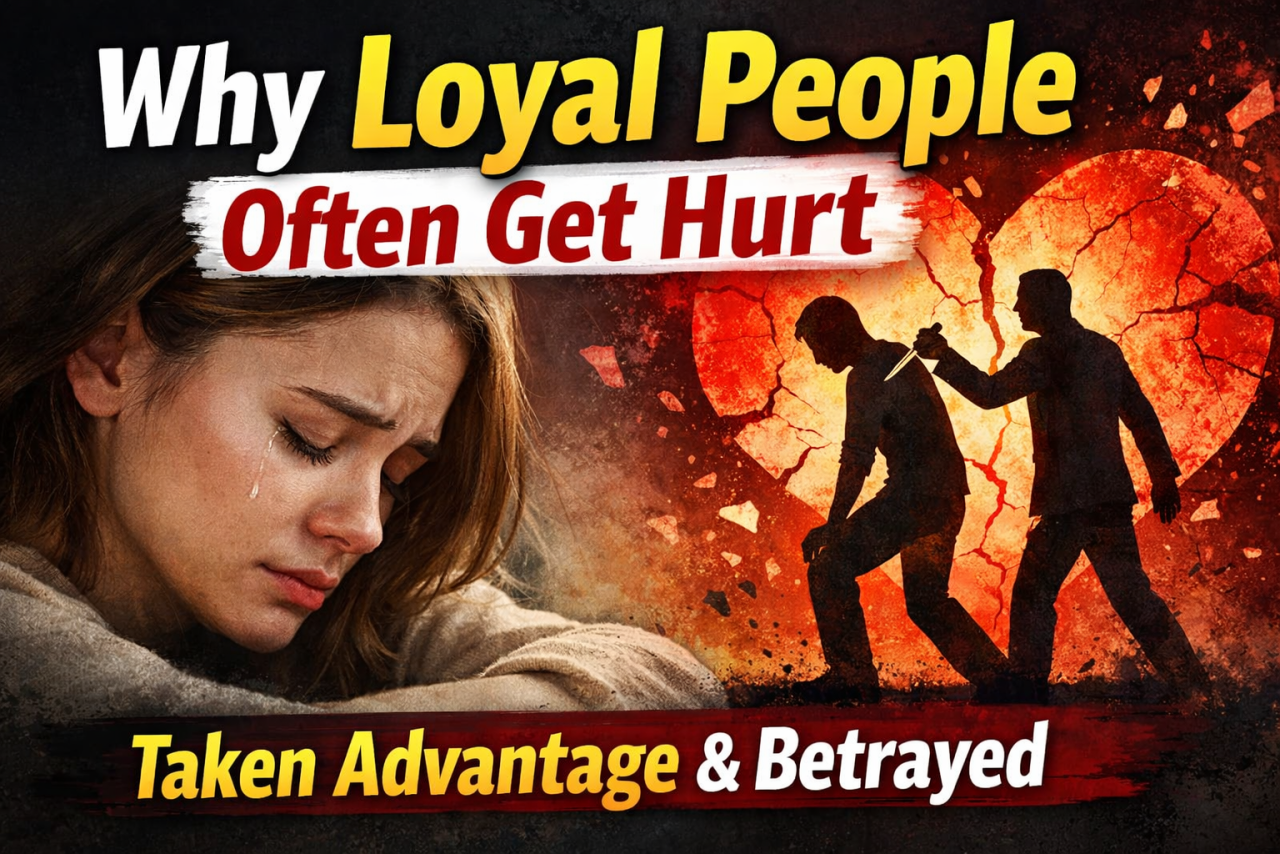
The more loyal you are, the more painful betrayal becomes—and science explains why.
Loyalty is seen as a good quality. It means being faithful, supportive, and sticking by someone or something through good and bad times. However, many people notice that those who are very loyal often end up feeling hurt or taken advantage of. This is not just a feeling. There are psychological, social, and biological reasons why this happens.
The Psychology of Attachment and Expectation
At its core, loyalty is a form of emotional investment. Psychologists link it to attachment theory. This theory explains how we form emotional bonds with others. People with a secure attachment style can be loyal in a healthy way. But many loyal people have an anxious-preoccupied attachment style. They deeply fear abandonment and go to great lengths to keep relationships, often by being extremely loyal. This can make them ignore their own needs.
A key reason for hurt is unmet expectations. Loyal people operate on a simple rule: "If I am faithful and supportive, others will treat me the same way." This is based on the psychological principle of reciprocity. Normally, when someone helps us, we feel a need to help them back. But this is not a universal law. Some people do not follow this rule. The loyal person expects fair treatment, but when it doesn’t happen, they feel betrayed. This betrayal is more painful because of their high investment.
The Social and Evolutionary Perspective
From a social viewpoint, loyalty is a valuable trait for group survival. In our evolutionary past, being part of a loyal group increased chances of safety and food. However, this same system can be exploited. In any group, there can be a mix of "cooperators" (loyal people) and "free-riders" (those who take advantage).
Social scientists and economists study this using game theory, specifically the "Prisoner's Dilemma." In repeated games, cooperation (loyalty) benefits everyone. But if one player is always cooperative and the other is selfish, the cooperative player loses every time. In real life, a consistently loyal person interacting with a selfish one is in this losing position. They keep cooperating, hoping for mutual benefit, while the other party takes advantage without returning the favor.
Data from workplace studies show this clearly. A study published in the Journal of Organizational Behavior found that employees who reported high organizational loyalty often experienced higher levels of stress and burnout. Why? Because their loyalty led them to accept heavier workloads, fewer promotions, and lower pay raises, assuming their sacrifice would be recognized. Often, it was not, leading to emotional exhaustion.
The Brain Chemistry of Betrayal
The pain loyal people feel is not just emotional; it has a biological basis. When we are loyal and connected to someone, our brain releases oxytocin, often called the "bonding hormone." This chemical promotes feelings of trust, attachment, and contentment. It reinforces loyal behavior.
However, when betrayal occurs, the brain's response is similar to physical pain. Neuroscientists have found that social rejection and betrayal activate the same regions of the brain as physical pain—the anterior cingulate cortex and the insula. For a loyal person, the betrayal is a double shock. First, the oxytocin-driven bond is violently broken. Second, the brain processes it as a genuine threat, causing intense distress. The greater the trust and investment (loyalty), the more severe this neural pain response can be.
The "Nice Guy" Phenomenon and Low Self-Esteem
Often, extreme loyalty can stem from low self-esteem. People who do not value themselves highly may believe that their only worth lies in their unwavering support of others. They become "people-pleasers." They are loyal because they fear that setting boundaries or saying no will make people leave them.
This creates a perfect setup for hurt. The loyal person consistently prioritizes others' needs over their own. Over time, this becomes the expected norm in their relationships. When they finally feel drained and ask for something in return, it can cause conflict or dismissal, because the other person has grown accustomed to the one-sided dynamic. The loyal person then feels used, which reinforces their low self-esteem in a vicious cycle.
The Data on Friendship and Relationships
Research on friendships and romantic partnerships supports this. A longitudinal study on friendship found that imbalances in emotional support often lead to relationship dissolution. The person giving more support (the loyal friend) often reports lower relationship satisfaction and higher feelings of resentment over time. In divorce research, a common theme among one partner is the feeling of having been "taken for granted" after years of steadfast commitment.
Conclusion: It's About Imbalance, Not the Trait
The conclusion is not that loyalty is bad. It is a virtue that builds strong families, teams, and societies. The problem arises from asymmetry—when loyalty is one-sided and not respected or reciprocated.
Loyal people get hurt the most because they invest the most emotional capital in relationships. They operate on a rulebook that not everyone else is reading. Their psychological expectations, combined with social structures that can exploit cooperation and a brain that registers betrayal as acute pain, create a perfect storm for deep hurt.
The solution is not to become disloyal, but to develop discriminating loyalty. This means being loyal to principles and to people who have earned that loyalty through reciprocal respect and kindness. It involves setting healthy boundaries and understanding that true loyalty should include being loyal to one’s own well-being. By balancing loyalty with self-respect, the risk of profound hurt can be greatly reduced, allowing this good quality to be a source of strength rather than pain.














Leave a Comment