
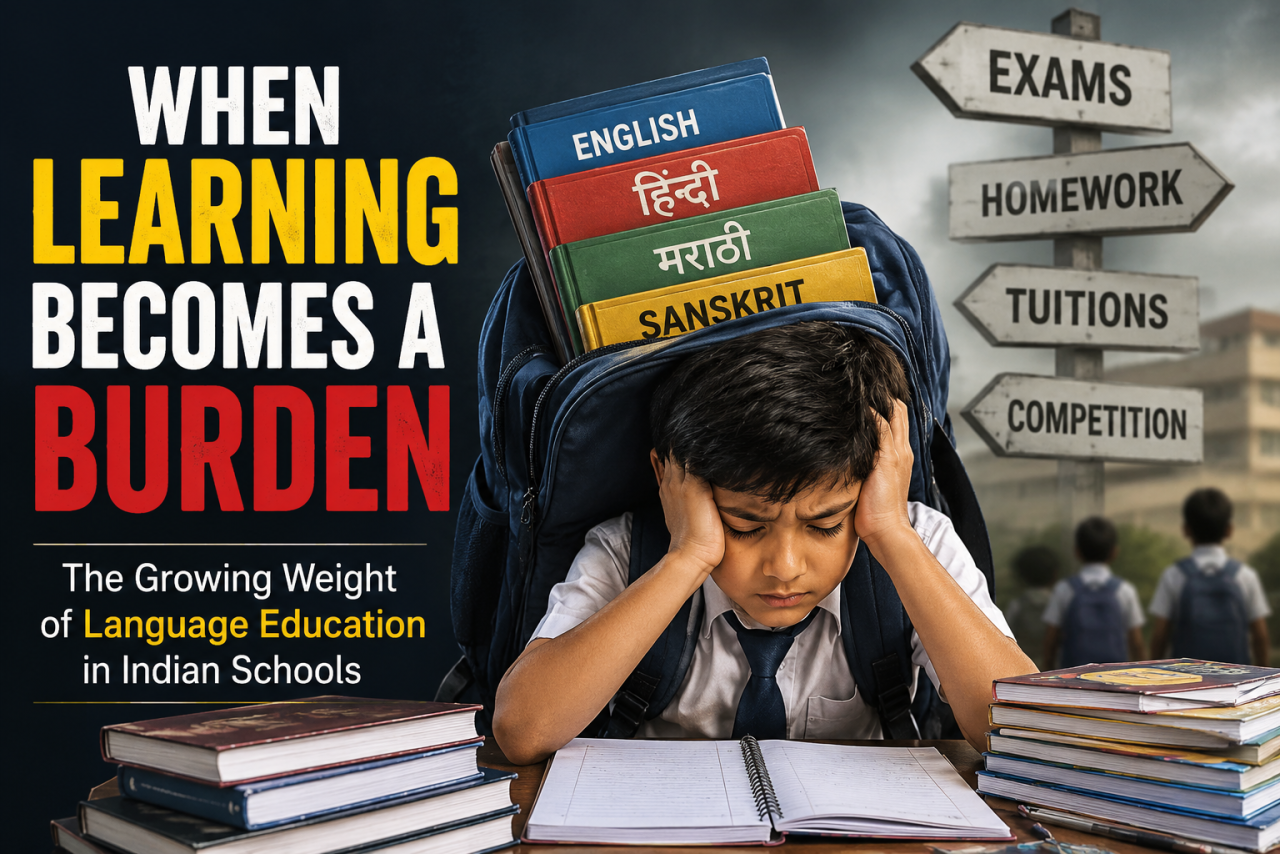
A child may learn several languages before adolescence, but should that achievement come at the cost of play, curiosity, and a stress-free childhood?
The global conversation around education is increasingly centered on preparing children for an interconnected future. Across academic conferences, policy papers, and curriculum frameworks, one idea enjoys near-universal support—children should begin learning multiple languages as early as possible.
Research frequently cited by educators and international organizations suggests that multilingual exposure during childhood can enhance cognitive flexibility, strengthen problem-solving abilities, improve memory, and foster cultural awareness. In an economy where cross-border communication is becoming essential, multilingualism is often portrayed not merely as an educational advantage but as a prerequisite for success. Some projections even suggest that multilingual skills will become increasingly valuable in the global workforce over the coming decades.
Yet when this well-intentioned idea enters the Indian education system, it often takes on a very different form. Instead of nurturing curiosity and communication skills, the pursuit of multilingualism frequently translates into a heavy academic burden imposed on some of the country's youngest learners.
The Problem with the “More Is Better” Approach
At first glance, the logic appears sound. If learning multiple languages benefits children, then exposing them to three or more languages from an early age should produce even better outcomes.
This assumption has gradually shaped educational policy and school practices across India. Many students are expected to learn English, Hindi, and a regional or additional language simultaneously during their formative years. The objective is admirable: creating globally competitive, culturally aware citizens.
The challenge lies not in the goal but in the method.
In countries often cited as models for multilingual education, language acquisition is frequently embedded within play, storytelling, music, conversation, and immersive experiences. Children learn naturally through interaction rather than through excessive formal instruction.
In contrast, language education in many Indian schools remains deeply rooted in rote learning. Young students are expected to memorize vocabulary lists, master grammar rules, write multiple scripts, complete extensive homework assignments, and prepare for formal examinations. Rather than experiencing language as a living medium of expression, they encounter it as another subject to be tested and graded.
For a six- or seven-year-old child, navigating the demands of multiple language textbooks, notebooks, and examinations can become an overwhelming task.
When Schools Shift the Burden Home
The challenge is further compounded by a significant structural gap within the education system.
Many schools proudly advertise multilingual programs as evidence of academic excellence and global standards. However, the availability of trained language teachers and effective teaching methodologies often fails to match these ambitions.
When schools struggle to deliver meaningful language instruction within classroom hours, the responsibility shifts to families.
This creates what many parents and students experience as a second school day.
Children return home only to spend additional hours completing language assignments, attending tuition classes, memorizing spellings, and practicing scripts. Evenings that could have been devoted to play, creativity, or rest become extensions of the classroom.
The physical consequences are visible. School bags become heavier as students carry multiple textbooks and workbooks. The emotional consequences are less obvious but equally significant. Frustration, anxiety, and exhaustion become common features of childhood.
Parents, meanwhile, often feel trapped by the same system. Concerned about future competition and employment prospects, many accept the growing workload as a necessary sacrifice. Some even encourage additional tutoring, believing that more academic pressure will translate into greater future opportunities.
The result is a cycle in which schools, parents, and policymakers all contribute to increasing educational demands, while the child bears the cumulative weight.
The Irony of Cognitive Overload
Perhaps the greatest irony is that excessive academic pressure can undermine the very benefits multilingual education is supposed to provide.
Studies on language acquisition consistently emphasize the importance of positive and low-stress learning environments. Children learn languages most effectively when they feel comfortable experimenting, making mistakes, and engaging in meaningful communication.
When language learning becomes associated with constant testing, correction, and performance anxiety, the process changes fundamentally.
Instead of developing confidence, children often develop fear. Instead of curiosity, they experience fatigue. Instead of enjoying communication, they focus solely on avoiding mistakes.
The outcome is a familiar paradox. Many students become proficient at answering grammar questions and reproducing memorized content in examinations, yet struggle to communicate naturally and confidently in the languages they have studied for years.
In such cases, education succeeds in producing examination results while failing to cultivate genuine linguistic ability.
Final Take
The solution is not to abandon multilingual education. India's linguistic diversity remains one of its greatest cultural strengths, and exposure to multiple languages can offer tremendous intellectual and social benefits.
What requires reconsideration is the way languages are introduced and assessed.
Primary education should place greater emphasis on immersion rather than examination. Storytelling, conversations, songs, theatre, and interactive activities can make language learning both effective and enjoyable. Formal written assessments for multiple languages should be minimized during the early years, allowing children to develop fluency before being judged on technical accuracy.
Equally important is reducing curriculum overload. Educational success should not be measured by the number of textbooks a child carries or the volume of homework completed each evening.
Childhood is not a race against future employment statistics. It is a critical period of intellectual, emotional, and social development.
If India truly wishes to create multilingual, globally capable citizens, it must ensure that language education inspires rather than exhausts. Until then, the promise of multilingualism risks becoming yet another burden carried by children who are asked to learn more than they can meaningfully absorb.
The global conversation around education is increasingly centered on preparing children for an interconnected future. Across academic conferences, policy papers, and curriculum frameworks, one idea enjoys near-universal support—children should begin learning multiple languages as early as possible.
Research frequently cited by educators and international organizations suggests that multilingual exposure during childhood can enhance cognitive flexibility, strengthen problem-solving abilities, improve memory, and foster cultural awareness. In an economy where cross-border communication is becoming essential, multilingualism is often portrayed not merely as an educational advantage but as a prerequisite for success. Some projections even suggest that multilingual skills will become increasingly valuable in the global workforce over the coming decades.
Yet when this well-intentioned idea enters the Indian education system, it often takes on a very different form. Instead of nurturing curiosity and communication skills, the pursuit of multilingualism frequently translates into a heavy academic burden imposed on some of the country's youngest learners.
The Problem with the “More Is Better” Approach
At first glance, the logic appears sound. If learning multiple languages benefits children, then exposing them to three or more languages from an early age should produce even better outcomes.
This assumption has gradually shaped educational policy and school practices across India. Many students are expected to learn English, Hindi, and a regional or additional language simultaneously during their formative years. The objective is admirable: creating globally competitive, culturally aware citizens.
The challenge lies not in the goal but in the method.
In countries often cited as models for multilingual education, language acquisition is frequently embedded within play, storytelling, music, conversation, and immersive experiences. Children learn naturally through interaction rather than through excessive formal instruction.
In contrast, language education in many Indian schools remains deeply rooted in rote learning. Young students are expected to memorize vocabulary lists, master grammar rules, write multiple scripts, complete extensive homework assignments, and prepare for formal examinations. Rather than experiencing language as a living medium of expression, they encounter it as another subject to be tested and graded.
For a six- or seven-year-old child, navigating the demands of multiple language textbooks, notebooks, and examinations can become an overwhelming task.
When Schools Shift the Burden Home
The challenge is further compounded by a significant structural gap within the education system.
Many schools proudly advertise multilingual programs as evidence of academic excellence and global standards. However, the availability of trained language teachers and effective teaching methodologies often fails to match these ambitions.
When schools struggle to deliver meaningful language instruction within classroom hours, the responsibility shifts to families.
This creates what many parents and students experience as a second school day.
Children return home only to spend additional hours completing language assignments, attending tuition classes, memorizing spellings, and practicing scripts. Evenings that could have been devoted to play, creativity, or rest become extensions of the classroom.
The physical consequences are visible. School bags become heavier as students carry multiple textbooks and workbooks. The emotional consequences are less obvious but equally significant. Frustration, anxiety, and exhaustion become common features of childhood.
Parents, meanwhile, often feel trapped by the same system. Concerned about future competition and employment prospects, many accept the growing workload as a necessary sacrifice. Some even encourage additional tutoring, believing that more academic pressure will translate into greater future opportunities.
The result is a cycle in which schools, parents, and policymakers all contribute to increasing educational demands, while the child bears the cumulative weight.
The Irony of Cognitive Overload
Perhaps the greatest irony is that excessive academic pressure can undermine the very benefits multilingual education is supposed to provide.
Studies on language acquisition consistently emphasize the importance of positive and low-stress learning environments. Children learn languages most effectively when they feel comfortable experimenting, making mistakes, and engaging in meaningful communication.
When language learning becomes associated with constant testing, correction, and performance anxiety, the process changes fundamentally.
Instead of developing confidence, children often develop fear. Instead of curiosity, they experience fatigue. Instead of enjoying communication, they focus solely on avoiding mistakes.
The outcome is a familiar paradox. Many students become proficient at answering grammar questions and reproducing memorized content in examinations, yet struggle to communicate naturally and confidently in the languages they have studied for years.
In such cases, education succeeds in producing examination results while failing to cultivate genuine linguistic ability.
Final Take
The solution is not to abandon multilingual education. India's linguistic diversity remains one of its greatest cultural strengths, and exposure to multiple languages can offer tremendous intellectual and social benefits.
What requires reconsideration is the way languages are introduced and assessed.
Primary education should place greater emphasis on immersion rather than examination. Storytelling, conversations, songs, theatre, and interactive activities can make language learning both effective and enjoyable. Formal written assessments for multiple languages should be minimized during the early years, allowing children to develop fluency before being judged on technical accuracy.
Equally important is reducing curriculum overload. Educational success should not be measured by the number of textbooks a child carries or the volume of homework completed each evening.
Childhood is not a race against future employment statistics. It is a critical period of intellectual, emotional, and social development.
If India truly wishes to create multilingual, globally capable citizens, it must ensure that language education inspires rather than exhausts. Until then, the promise of multilingualism risks becoming yet another burden carried by children who are asked to learn more than they can meaningfully absorb.























Leave a Comment