
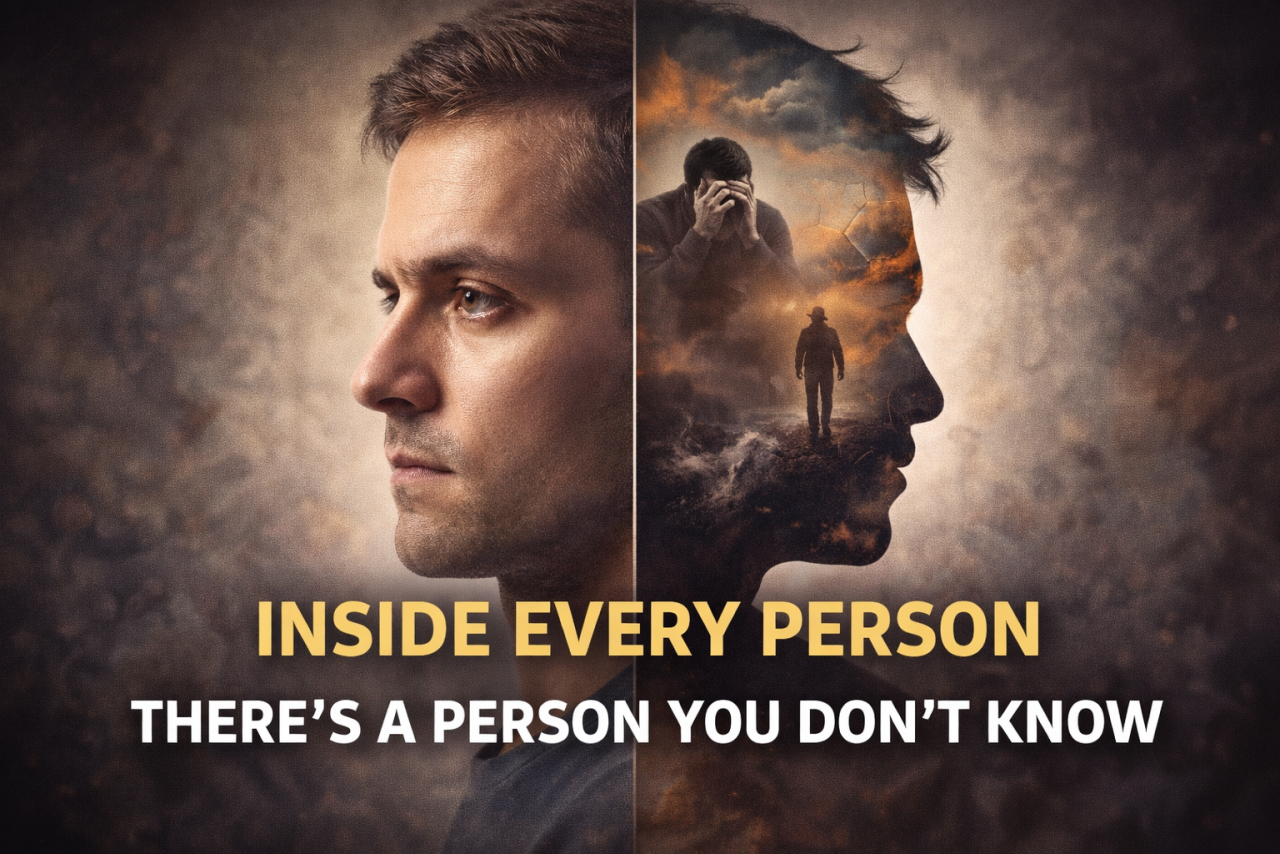
We often believe that we understand the people around us. Family members, colleagues, friends, public figures—many appear familiar through daily interaction, social media presence, or public roles. Yet psychologists, sociologists, and journalists consistently point to a simple truth: inside every person, there is a person you do not know. This is not a poetic idea but a fact supported by research on human behavior, mental health, and social interaction.
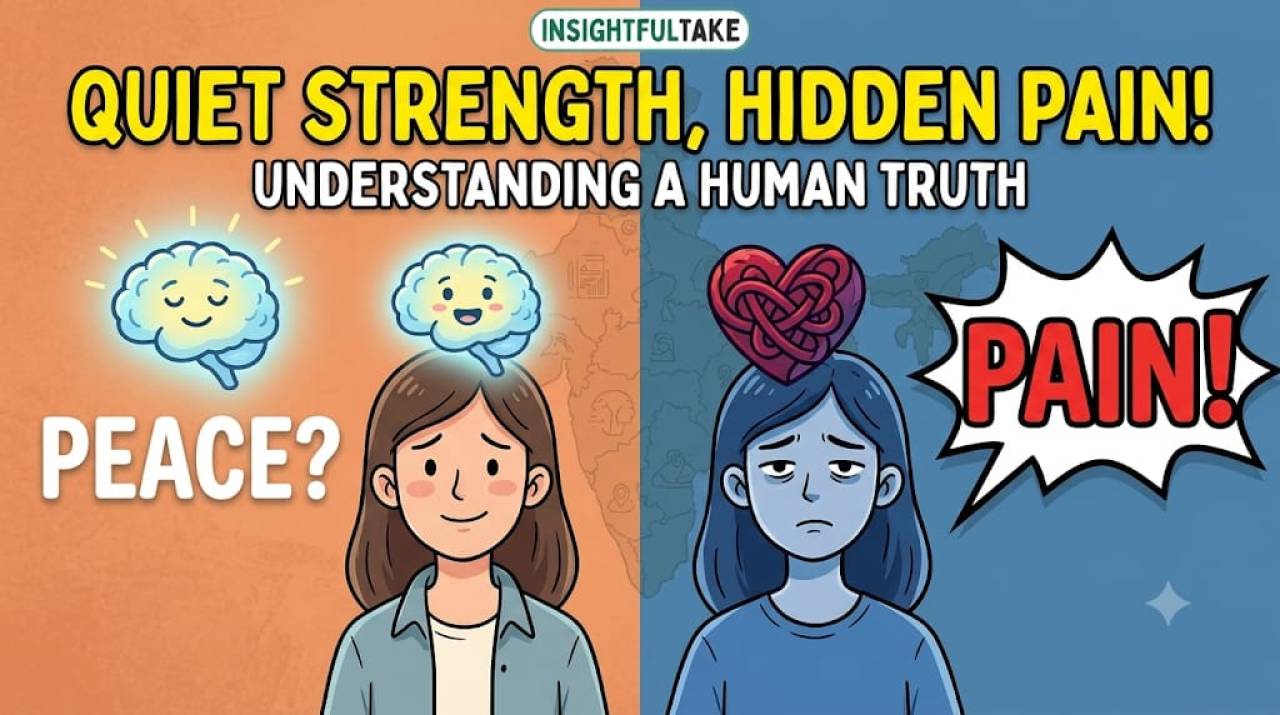
Modern psychology explains this through the concept of the “inner self” and the “outer self.” The outer self is what people show to the world. It includes behavior, speech, routines, and roles shaped by social expectations. The inner self includes private thoughts, fears, unresolved experiences, moral conflicts, and emotional memories. Studies published by the American Psychological Association show that individuals regularly suppress emotions to function socially and professionally. This means that much of a person’s emotional life remains invisible, even to those closest to them.
Social behavior research also confirms that people actively manage impressions. Sociologist Erving Goffman described everyday life as a performance, where individuals present different versions of themselves depending on context. At work, a person may appear confident and efficient while privately struggling with anxiety or self-doubt. At home, the same person may appear calm while dealing with grief, financial stress, or personal loss that is never spoken about publicly.
Mental health data further reinforces this gap between appearance and reality. According to the World Health Organization, depression and anxiety disorders are among the leading causes of disability worldwide. A significant percentage of people experiencing these conditions continue to work, socialize, and fulfill responsibilities without visible signs. Many people who later die by suicide are described by others as “normal,” “successful,” or “happy.” These outcomes highlight how limited external observation can be.
Trauma research provides another factual dimension. Trauma does not always come from dramatic or visible events. It can stem from long-term emotional neglect, repeated criticism, unstable childhood environments, or unaddressed loss. The National Institute of Mental Health notes that many individuals normalize distressing experiences and never discuss them, especially in cultures where emotional expression is discouraged. As a result, people carry internal narratives shaped by experiences that others may never know about.
Neuroscience also shows that internal processing varies widely among individuals. Brain imaging studies reveal that people respond differently to the same situations based on past experiences, personality traits, and emotional conditioning. What looks like indifference from the outside may be emotional overload. What appears as anger may be fear or shame. Human responses are complex, and surface behavior rarely tells the full story.
Social media has further complicated public understanding of personal identity. Online platforms encourage curated versions of life that highlight success, happiness, and control. Research from the University of Pennsylvania and other institutions links heavy social media use with increased feelings of loneliness and inadequacy. People often compare their private struggles with others’ public highlights, reinforcing the illusion that everyone else is emotionally stable. This gap increases isolation and reduces the likelihood that people will speak openly about their internal struggles.
Journalistic investigations into workplace culture, education systems, and public institutions frequently reveal similar patterns. Employees facing burnout often hide exhaustion due to fear of appearing weak. Students dealing with academic pressure may conceal anxiety to meet expectations. Public figures, including politicians, athletes, and entertainers, often reveal years later that they struggled with mental health issues while maintaining a composed public image. These revelations are not exceptions; they reflect a broader reality of emotional concealment.
This understanding has practical implications for society. First, it challenges assumptions. Judging people based on limited interaction can lead to misunderstanding and conflict. Second, it underscores the importance of empathy. Recognizing that unseen factors influence behavior can change how individuals respond to anger, withdrawal, or inconsistency in others. Third, it highlights the need for better mental health awareness and support systems that do not rely on visible distress as a trigger for intervention.
Institutions are beginning to acknowledge this reality. Some workplaces now include mental health days, anonymous counseling services, and training on emotional well-being. Schools are introducing social-emotional learning programs to help students identify and express feelings. Media organizations increasingly report on mental health issues with greater depth and less stigma. These steps are responses to growing evidence that internal struggles are widespread and often hidden.
Understanding that there is always a part of a person we do not know does not mean abandoning accountability or boundaries. It means balancing judgment with awareness. People are shaped by histories, pressures, and emotional landscapes that are not immediately visible. Recognizing this complexity can lead to more humane interactions and more responsible public discourse.
Inside every person, there is a private world shaped by memory, fear, hope, and unresolved questions. Facts from psychology, neuroscience, and social research confirm that much of human experience remains unseen. Accepting this reality is not a philosophical exercise. It is a practical step toward a more informed, empathetic, and realistic understanding of human behavior.
























Leave a Comment