
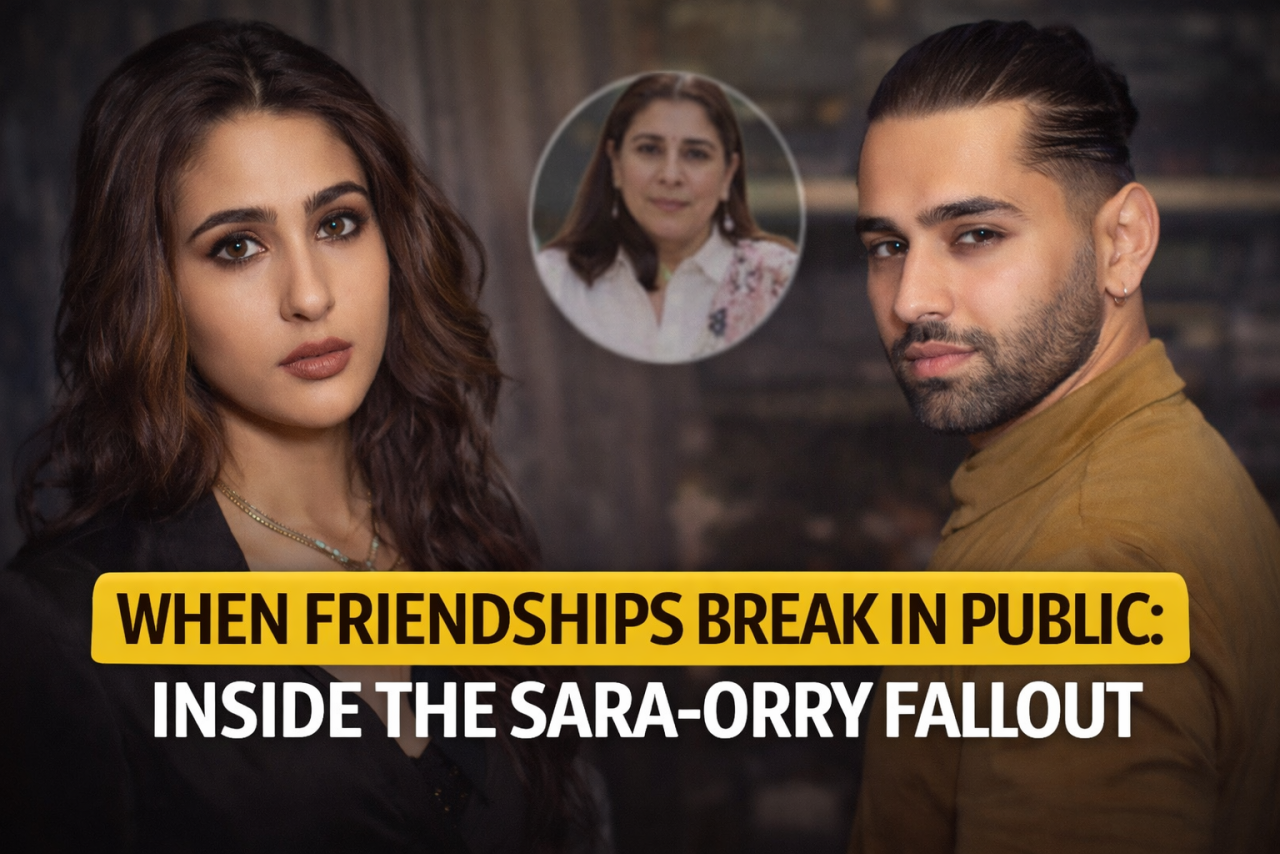
Behind the curated smiles and social posts lies a story of hurt, distance, and a friendship that could not survive the spotlight.
Celebrity friendships often look effortless from the outside—stylish photos, inside jokes, late-night parties, and an unspoken promise of loyalty. But when those bonds crack, the fallout rarely remains private. The recent public spat involving Sara Ali Khan, her mother Amrita Singh, and socialite Orry is a reminder of how quickly personal relationships can turn into public spectacle in the age of social media and celebrity culture.
At the heart of the controversy is Orry’s blunt claim that he cannot pretend to be friends with Sara Ali Khan because her mother “put him through trauma.” The statement, splashed across headlines, immediately shifted the narrative from casual celebrity gossip to a more complicated conversation about emotional boundaries, power dynamics, and the cost of proximity to fame.
According to the context laid out in the report, the friendship between Sara and Orry had been under strain for some time. What appeared on the surface as playful banter and social-media digs slowly evolved into something sharper and more personal. Subtle online jabs, unfollowing sprees, and cryptic posts created an atmosphere of unease, culminating in Orry’s decision to speak openly about his discomfort and emotional distress.
What makes this episode particularly striking is the involvement of family. In Bollywood, parents are rarely just parents—they are managers, protectors, gatekeepers, and sometimes enforcers. Orry’s accusation against Sara’s mother brings attention to how influential family figures can shape not just careers, but also personal relationships. Whether intentional or not, such interventions can leave lasting emotional impressions, especially when there is an imbalance of status or authority.
The controversy also highlights the blurred line between private pain and public storytelling. Orry’s remarks have divided opinion. Some view his candour as a necessary act of self-preservation—an assertion of mental and emotional boundaries in a world that often dismisses them. Others see it as an unnecessary airing of private grievances that fuels gossip culture. Yet, the very intensity of this debate reflects a larger shift: emotional well-being is no longer something people are expected to suffer through silently, even in elite social circles.
Adding another layer to the drama is the role of social media. Screenshots, leaked chats, Instagram comments, and reaction posts have turned what could have been a closed-door fallout into a crowd-sourced narrative. Every emoji, every caption, and every silence is interpreted, dissected, and judged. In this environment, maintaining dignity becomes as difficult as maintaining privacy.
Sara Ali Khan’s response—largely restrained and indirect—contrasts with Orry’s more expressive approach. Her musical post, interpreted by many as a subtle reply, reflects how celebrities increasingly communicate emotions without naming them outright. It’s a language shaped by algorithms and audience expectations, where ambiguity often feels safer than clarity.
Beyond the personalities involved, this episode speaks to a broader lifestyle reality: friendships don’t always survive growth, fame, or differing emotional needs. When expectations clash and communication breaks down, even long-standing bonds can become sources of stress rather than support. For public figures, the challenge is magnified by constant scrutiny and the pressure to appear unbothered.
Ultimately, the Sara–Orry fallout is less about choosing sides and more about understanding how vulnerability, power, and visibility intersect. It reminds us that behind curated images and glamorous appearances are real individuals navigating complex emotions. In a culture quick to consume conflict as entertainment, perhaps the most meaningful takeaway is the importance of boundaries—and the courage it takes to step away from relationships that no longer feel safe.






















Leave a Comment