
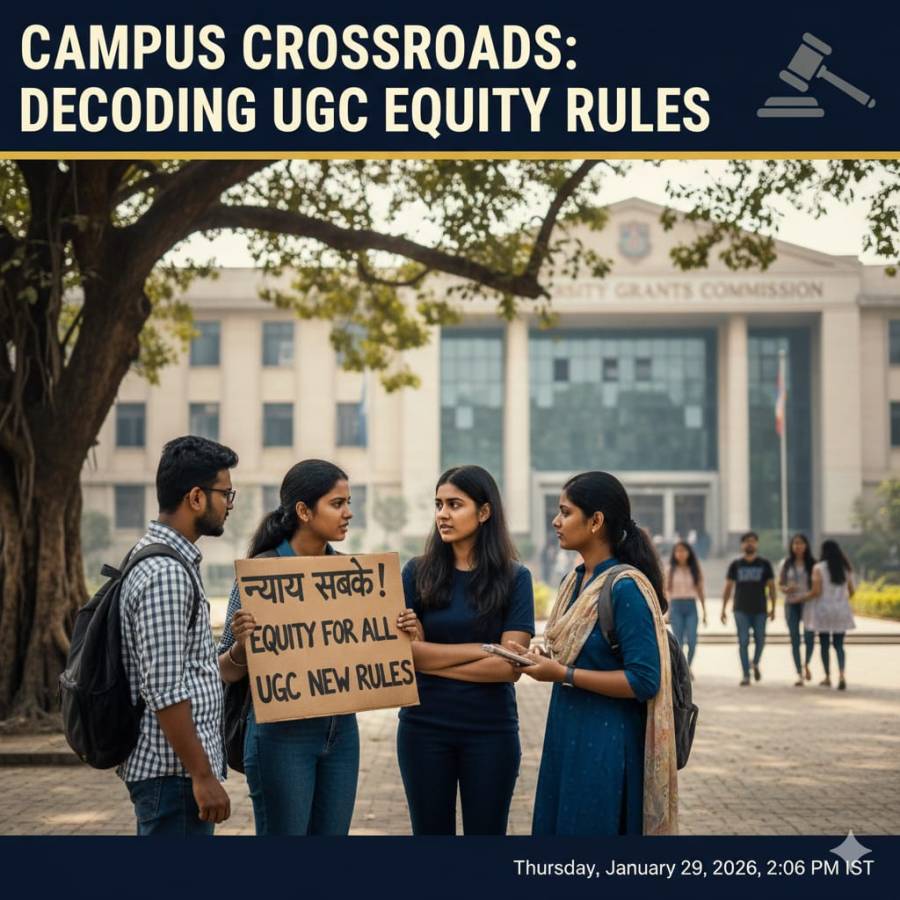
A rule meant to end discrimination on Indian campuses has instead ignited protests, legal battles, and a national debate over who equity truly protects.
Education is often described as a “level playing field,” but for many students in India, the reality of campus life has remained far from equal. On January 13, 2026, the University Grants Commission (UGC) notified the Promotion of Equity in Higher Education Institutions Regulations, 2026. These rules, which replace the older 2012 framework, have sparked a nationwide debate, leading to student protests and legal challenges in the Supreme Court.
To understand why a policy meant to promote “equity” has become so controversial, we must look closely at what the rules actually say and why different groups are reacting so strongly.
What Are the New UGC Regulations?
The 2026 regulations were born out of a long-standing legal battle. In 2019, the mothers of Rohith Vemula and Payal Tadvi—two students whose tragic deaths by suicide highlighted the harsh reality of campus discrimination—petitioned the Supreme Court for stronger safeguards. In response, the court directed the UGC to create a more effective system.
The new rules mandate that every university and college must:
- Establish an Equal Opportunity Centre (EOC): A dedicated office to promote inclusion.
- Form an Equity Committee: Chaired by the head of the institution, this committee must include representatives from the SC, ST, OBC, women, and persons with disabilities.
- Create a 24×7 Helpline: Students can now report discrimination through online portals or a round-the-clock helpline.
- Follow Strict Timelines: Committees must convene within 24 hours of a complaint and complete inquiries within 15 working days.
The Core of the Controversy: Defining “Caste-Based Discrimination”
The primary flashpoint of the current unrest lies in how the 2026 rules define discrimination. While the regulations aim to protect everyone from bias based on religion, gender, or disability, they create a specific legal category for “caste-based discrimination.”
According to Regulation 3(c), caste-based discrimination is defined specifically as unfair treatment against members of the Scheduled Castes (SC), Scheduled Tribes (ST), and Other Backward Classes (OBC). For the first time, OBCs have been explicitly included in this definition, a move recommended by a Parliamentary Standing Committee.
The Critique from the General Category
Students from the unreserved or “general category” have raised two major concerns:
- Exclusive Protection: Critics argue that by defining caste discrimination only in relation to reserved categories, the law presumes that students from the general category cannot be victims of caste-linked bias. They call this an “untenable presumption” that ignores the complexities of campus social life.
- Lack of Safeguards Against Misuse: A draft version of these rules in 2025 included a clause to punish “false complaints” with a fine. However, the final 2026 notification removed this provision. Protesters fear this could lead to the harassment of faculty or students through unsubstantiated allegations.
The Official Stance: “Aggrieved Person” Includes Everyone
The Ministry of Education and UGC officials have stepped in to clarify these points. They point out that the definition of an “aggrieved person” in the rules is universal. It refers to any person who has a complaint related to the regulations.
Government officials argue that while the “caste-based” category highlights groups with historical disadvantages, the broader protections against discrimination based on religion, race, or place of birth apply to all students, including those from the general category. They maintain that the removal of the “false complaint” clause was necessary to ensure that genuine victims are not scared away from seeking justice.
A Campus Divided?
The reaction on the ground has been intense. In states like Uttar Pradesh, student groups have held rallies calling the regulations a “black law” that could “poison the atmosphere” of unity on campuses. Conversely, many activists and student bodies representing marginalized groups have welcomed the rules as a long-overdue mechanism to hold university administrations accountable.
As of late January 2026, the Supreme Court has begun examining these objections. The court’s primary concern remains whether the regulations are “too sweeping” or if they provide a balanced framework for harmony.
Final Take
The 2026 UGC Equity Rules represent a significant shift from symbolic gestures to institutional accountability. By making the heads of universities directly responsible for campus culture, the UGC is attempting to ensure that dignity is not a privilege but a right. However, the path forward requires addressing the fears of all students to ensure that “equity” does not become a source of further division.























Leave a Comment