
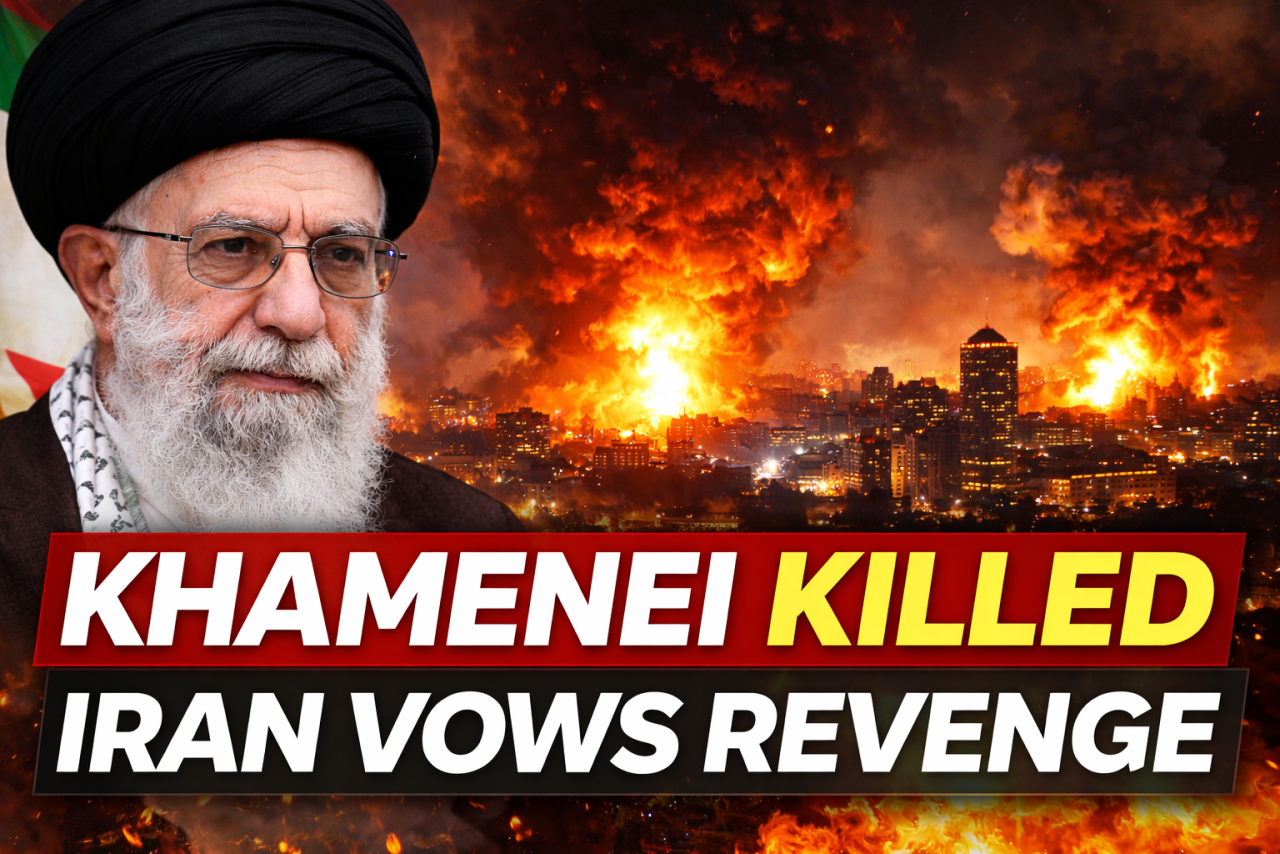
The killing of Iran’s Supreme Leader Ali Khamenei in U.S.–Israeli strikes has pushed the Middle East to the edge, with Tehran already launching retaliation and the world bracing for what comes next.
Iran’s Supreme Leader Ali Khamenei has been confirmed dead following coordinated airstrikes carried out by the United States and Israel, according to official statements from Washington, Tel Aviv, and Tehran. The development marks one of the most dramatic turning points in Middle Eastern politics in recent decades and has sharply raised fears of a wider regional conflict.
Late Saturday night, U.S. President Donald Trump publicly acknowledged that reports of Khamenei’s death were accurate. Speaking to reporters and posting on social media, he described the operation as a decisive strike against Iran’s leadership and military command structure. Israeli officials also confirmed that high-value targets in Tehran were hit during the air operation, including what they described as strategic command locations.
Shortly after those confirmations, Iranian state media announced that Khamenei had been killed in the strikes. Authorities declared 40 days of national mourning, a traditional period of observance in Shiite Islam for major religious and political figures. State television referred to Khamenei as a martyr and said Iran would respond with “severe and heavy retaliation” against those responsible for the attack.
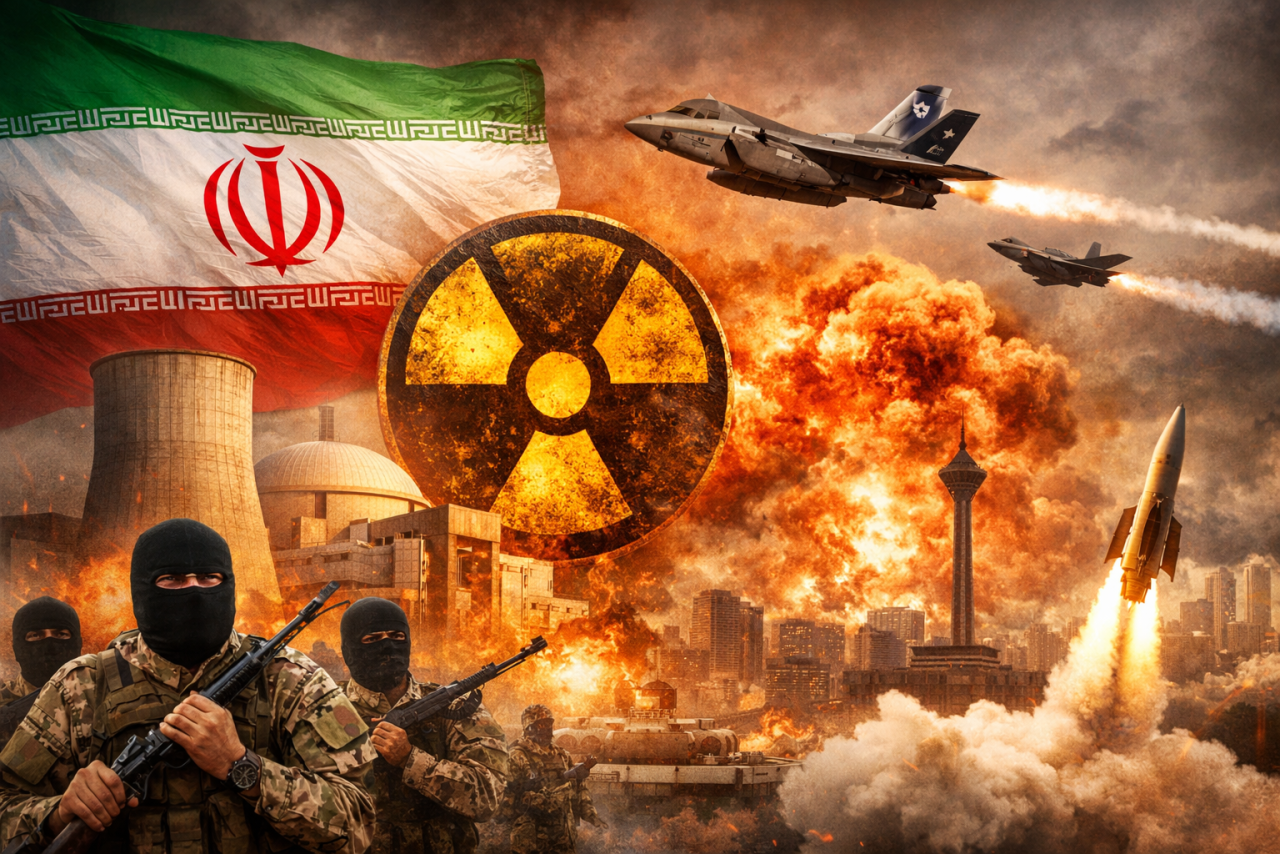
According to military sources, the operation involved multiple waves of aircraft and precision-guided missiles targeting military facilities and leadership compounds in and around Tehran. Reports also suggest that several senior commanders from Iran’s armed forces and security establishment were killed in the same strikes, though official details remain limited.
Within hours of the announcement, Iran began its response. Missiles and armed drones were launched toward Israeli territory and at U.S. military installations in the region. Air defense systems were activated in Israel and at American bases across the Middle East. Sirens sounded in several cities as authorities urged civilians to seek shelter. While full damage assessments are still ongoing, regional governments have confirmed that defensive systems intercepted many incoming threats.
The situation has placed the entire region on high alert. Neighboring countries have increased security around key infrastructure, especially oil facilities and ports. Several airlines have suspended flights through affected airspace, and global markets have reacted nervously, with energy prices showing signs of volatility.
Ali Khamenei had led Iran since 1989, following the death of Ayatollah Ruhollah Khomeini. As Supreme Leader, he held ultimate authority over the country’s armed forces, judiciary, intelligence agencies, and key aspects of foreign policy. Although Iran has an elected president and parliament, the Supreme Leader stands above those institutions in the political system. Khamenei played a central role in shaping Iran’s regional alliances and its long-standing tensions with both Israel and the United States.
His death leaves a major leadership vacuum. Under Iran’s constitution, the Assembly of Experts is responsible for appointing a new Supreme Leader. This body, made up of senior clerics elected by the public, must now begin the process of selecting a successor. However, the timing is critical. With military operations ongoing and tensions at a peak, the transition of leadership could be complicated by internal political pressures and security concerns.
Security forces have reportedly increased their presence in Tehran and other major cities. Large gatherings are expected during the mourning period, and authorities appear focused on maintaining order while also projecting strength. Officials have stated that national unity is essential during what they describe as a historic and dangerous moment for the country.
International reaction has been swift. The United Nations has called for restraint and urged all parties to avoid further escalation. European governments have appealed for immediate de-escalation, warning that a broader war would have devastating humanitarian and economic consequences. Countries in the Gulf region are closely monitoring the situation, given their proximity to both Iran and key shipping routes.
One major concern is the Strait of Hormuz, a narrow waterway near Iran through which a significant share of the world’s oil supply passes. Any disruption in that corridor could affect global energy markets and fuel prices worldwide. Analysts say that if hostilities expand or shipping routes are threatened, the economic impact could be felt far beyond the Middle East.
For the United States and Israel, officials have framed the strikes as a response to security threats posed by Iran’s military activities. Iranian leaders, on the other hand, have described the attack as an act of aggression and have vowed that retaliation will continue.
At this stage, the full consequences of Khamenei’s death are still unfolding. What is clear is that the balance of power in the region has been shaken. With military exchanges already underway and strong statements coming from all sides, the risk of further escalation remains high.
Governments across the world are watching closely, hoping that diplomatic efforts can prevent the situation from spiraling into a larger and more destructive conflict. For now, the Middle East stands at a critical and uncertain moment.













Leave a Comment