
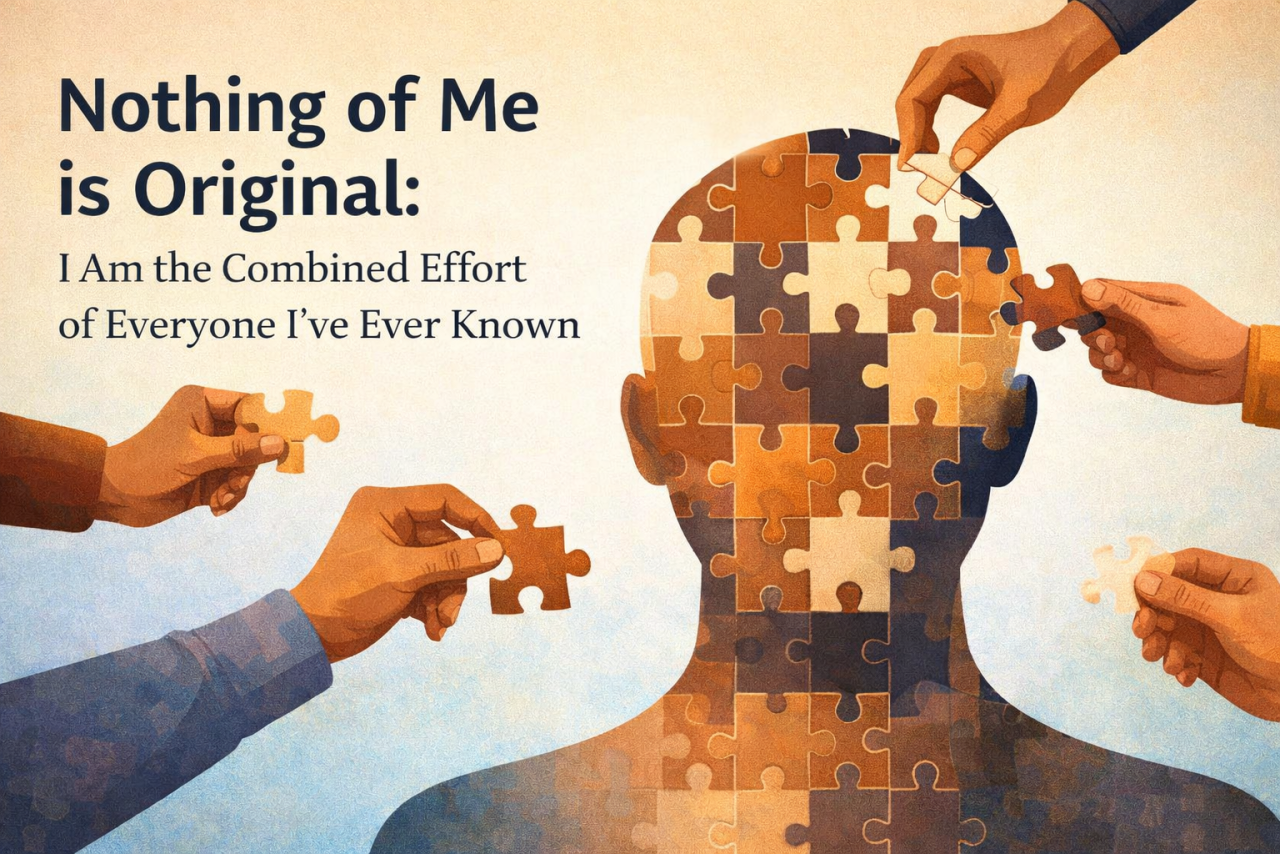
Most people grow up believing that who they are today is largely the result of personal effort, individual choices, and inner strength. The idea of being “self-made” is deeply appealing, especially in a world that celebrates independence and personal achievement. Yet, when examined closely, this belief begins to unravel. The truth is less flattering to the ego but far more honest: none of us is entirely self-made.
Every thought we hold, every value we defend, and even the way we interpret the world has been shaped by forces outside ourselves. Language, the most basic tool of thinking, is inherited. We do not invent words; we receive them. The same applies to ideas. Education, culture, family, success, failure, and chance encounters quietly mould the mind long before we become aware of their influence. What we often call originality is usually the rearrangement of what we have absorbed over time.
Human thinking does not develop in isolation. A child learns not only facts but also attitudes by observing adults. A student carries the imprint of teachers long after classrooms are left behind. Even resistance plays a role. People we disagree with often sharpen our thinking more than those who agree with us. In this sense, every individual is a living record of countless interactions, visible and invisible.
Philosophically, this challenges the popular notion of a fixed, independent self. Many thinkers have argued that identity is not a solid core but a continuous process shaped by experience. What feels like a stable “I” is, in reality, a collection of memories, habits, beliefs, and emotional responses formed over time. Eastern philosophies have long emphasized this view, suggesting that the self is relational rather than isolated. We are not separate islands but intersections where influences meet.
This understanding finds strong support across religious traditions as well. Christianity speaks of humanity as one body, where each part affects the whole. Islam emphasizes the idea of community and the transmission of knowledge through generations. Hindu thought describes how mental impressions formed through experience shape one’s character and actions. These traditions differ in theology but converge on one insight: human beings are formed through relationships, not apart from them.
Religious teachings also warn against excessive pride. The belief that one stands entirely on one’s own often leads to arrogance, while recognizing dependence fosters humility. Acknowledging that we are shaped by others does not diminish human dignity; it deepens it. It places the individual within a larger moral and spiritual framework where gratitude, responsibility, and awareness matter.
In everyday life, this realization has practical consequences. It changes how we judge others. When we understand that people are products of circumstances, upbringing, and experiences beyond their control, harsh judgment gives way to empathy. It also reframes success. Achievements are no longer seen as solitary triumphs but as outcomes made possible by mentors, critics, supporters, and even rivals. This perspective does not deny personal effort; it simply places it in context.
There is also a quieter responsibility embedded in this truth. If we are shaped by others, then we are shaping others in return. Words spoken casually, values lived consistently, and behavior observed silently all leave marks. Whether we intend it or not, we become part of someone else’s formation. This makes everyday actions more meaningful than they appear.
In a time dominated by self-promotion and personal branding, the idea that we are not self-made feels almost uncomfortable. Yet it offers relief as well. It allows people to let go of the pressure to be entirely original and instead focus on being honest, thoughtful, and aware. Authenticity does not come from denying influence but from understanding it.
To say that you are not self-made is not to say you are insignificant. It is to recognize that your life is part of a larger human story, shaped by many hands but still open to choice and direction. You are not the sole author of who you are, but you are an active participant in who you become. That awareness, quietly and powerfully, changes everything.





















Leave a Comment