

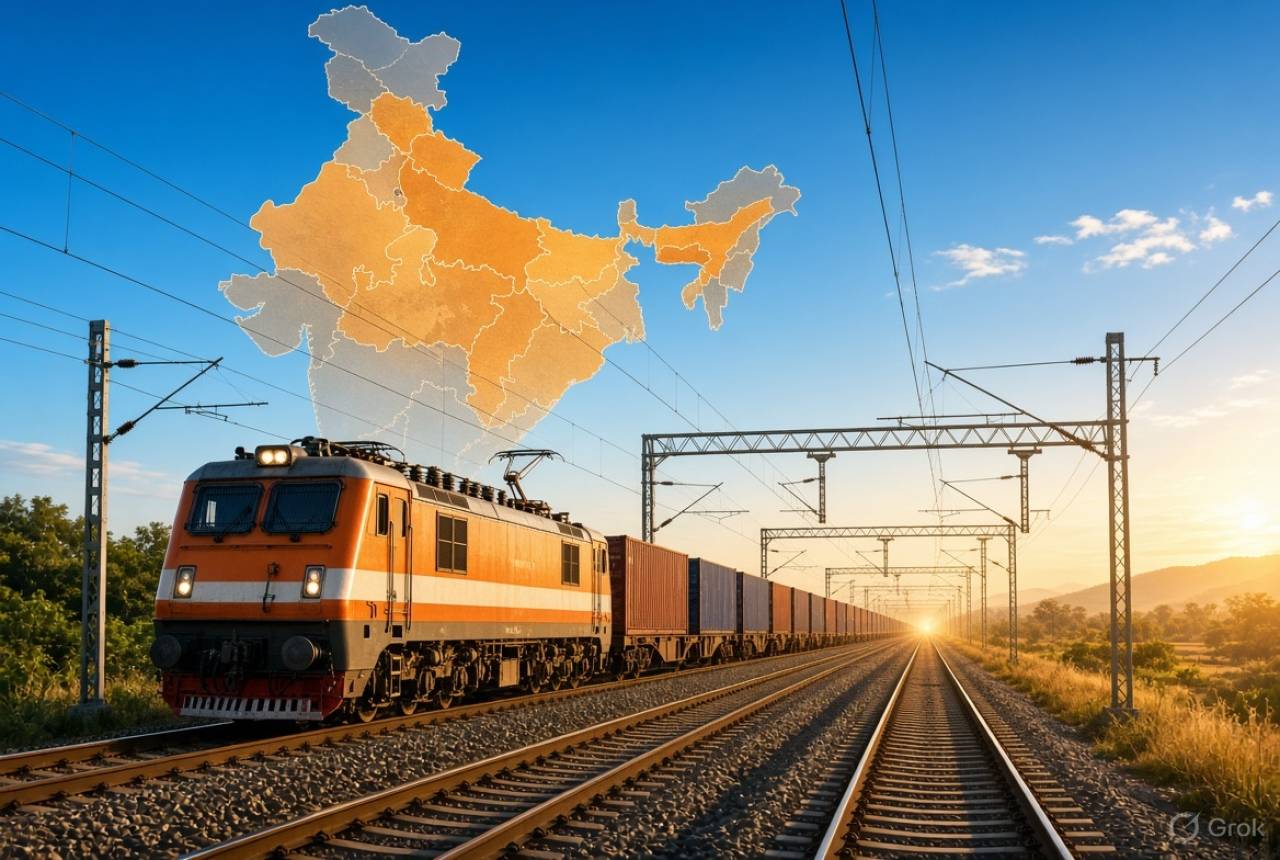
On Sunday, December 21, 2025, Indian Railways quietly announced a fresh “rationalisation” of passenger fares, to be implemented from December 26. The numbers themselves appear modest—about ₹10 extra for a 500-kilometre journey—but the implications are anything but small. As with every adjustment to railway pricing, the move has reopened an old and emotionally charged question: how does India balance the railways’ role as a social lifeline with the hard economics of running one of the world’s largest transport networks?
For a country where millions depend on trains not merely for travel but for livelihoods, education, and family ties, even a marginal fare hike resonates far beyond balance sheets. The latest decision once again places Indian Railways at the intersection of public service, political ideology, and fiscal reality.
Understanding the New Fare Structure
The current revision is carefully calibrated to minimise public backlash while nudging revenues upward. According to railway officials, the focus is firmly on long-distance and premium travel, leaving everyday commuters largely untouched.
- Suburban and short-distance travel: Local suburban trains and Monthly Season Tickets (MSTs) remain unchanged, a clear signal that daily wage earners and office commuters are being shielded.
- Ordinary class: No increase for journeys up to 215 kilometres. Beyond this threshold, fares rise by a nominal 1 paisa per kilometre.
- Mail, Express, and AC classes: A uniform hike of 2 paise per kilometre across categories.
In practical terms, this translates into an additional ₹10–₹15 for most long-distance travellers—hardly enough to derail travel plans, but sufficient to trigger political debate.
The Cost Pressures Behind the Decision
Railway officials insist the move is unavoidable. For the financial year 2024–25, Indian Railways’ operational costs have ballooned to an estimated ₹2.63 lakh crore. A substantial portion of this burden comes from manpower expenses, with salaries accounting for around ₹1.15 lakh crore and pension payouts touching ₹60,000 crore.
Add to this the rising costs of fuel, maintenance, safety upgrades, and infrastructure expansion, and the fiscal strain becomes evident. The latest fare rationalisation is expected to generate around ₹600 crore in additional revenue—a small fraction of total expenditure, but a step toward narrowing the gap.
Two Eras, Two Philosophies: UPA vs NDA
To understand the broader context, it helps to compare the approach of the current BJP-led NDA government (2014–2024) with that of the Manmohan Singh-led UPA (2004–2014). The contrast reveals two distinct philosophies in managing the “lifeline of the nation.”
The UPA Years (2004–2014): Politics Over Pricing
For nearly nine years, passenger fares under the UPA remained largely frozen. Coalition politics played a significant role, particularly pressure from allies like the Trinamool Congress, which viewed fare hikes as politically risky and “anti-poor.”
The strategy during this period relied heavily on cross-subsidisation. Freight tariffs were repeatedly increased to compensate for stagnant passenger fares, a move that kept ticket prices low but gradually eroded the railways’ competitiveness in cargo transport.
The turning point came in January 2013, when mounting losses forced the government to act. Passenger fares were raised across the board for the first time in almost a decade, resulting in a sharp, one-time shock to travellers.
The NDA Approach (2014–Present): Incremental and Structural
The Modi government has opted for a different path. Rather than allowing fares to stagnate and then imposing steep hikes, it has introduced smaller, more frequent adjustments alongside structural changes.
One of the most notable reforms was the introduction of dynamic pricing through the “Flexi-Fare” system in 2016 for premium trains like Rajdhani and Shatabdi, where ticket prices rise as seat availability shrinks.
Critics, however, argue that fare hikes are sometimes masked. Reclassifying “Ordinary” trains as “Express” or “Superfast” automatically attracts higher surcharges without formally revising base fares. While technically sound, this approach has drawn accusations of opacity.
The government counters these criticisms by pointing to tangible improvements: the rapid expansion of electrification, the rollout of Vande Bharat trains, upgraded stations, enhanced safety mechanisms, and a renewed focus on punctuality and passenger experience.
So, Who Raised Fares More?
If measured purely by the frequency of fare revisions, the NDA has been more active. If judged by passenger impact, the UPA’s long freeze followed by a sudden hike created a different kind of disruption. Both approaches carry political and economic costs.
The Larger Dilemma
Today, Indian Railways finds itself walking a fiscal tightrope. It must remain affordable for millions who have no alternative, while also evolving into a modern, efficient, and financially sustainable system. Opposition leaders, including Pawan Khera, have questioned the timing of the hike—coming just weeks before the Union Budget—but for the average passenger, the calculation is simpler.
Is an extra ₹10 a fair price for safer tracks, faster trains, and a system better equipped for the future? As India’s railways continue their balancing act, that question remains at the heart of every journey.











Leave a Comment