
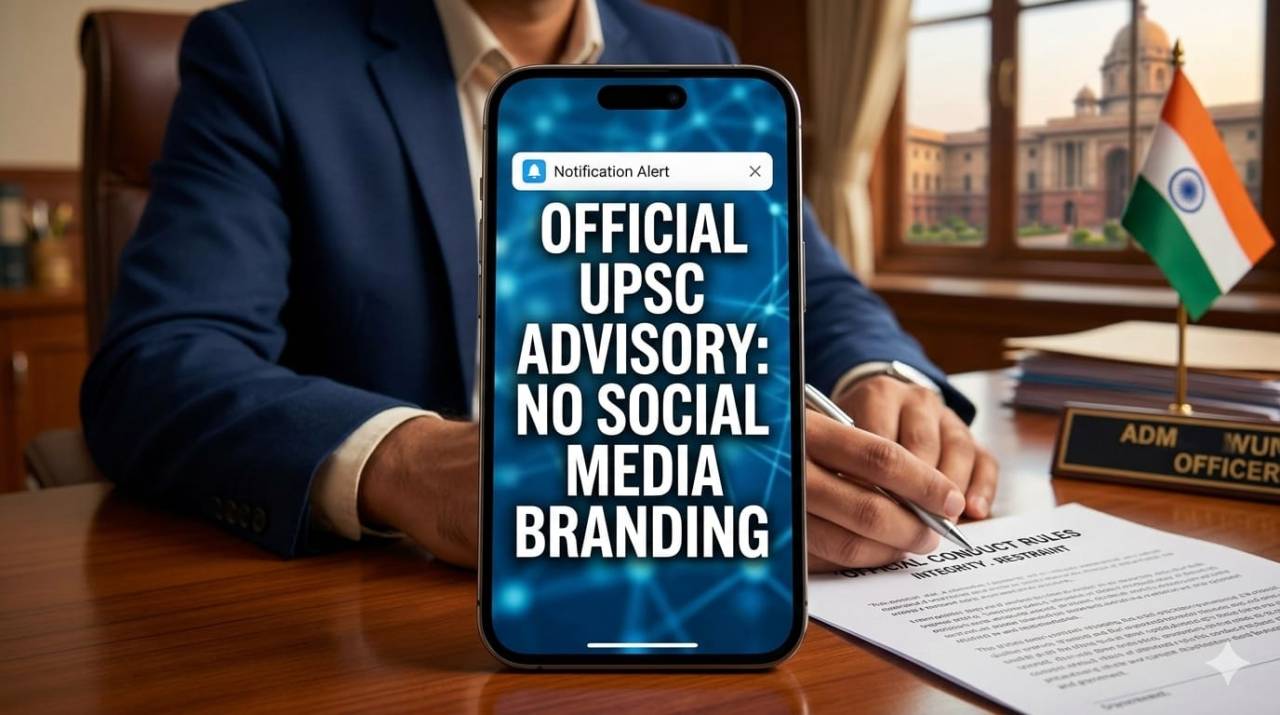
In an age where every moment can go viral, the Union Public Service Commission is drawing a decisive line—reminding India’s future officers that authority is earned through service, not social media fame.
In the power corridors of New Delhi, a clear message is taking shape for India’s newest civil servants: public service is not a stage for personal branding. Soon after declaring the 2025 Civil Services Examination (CSE) results, the Union Public Service Commission (UPSC) issued an unusually detailed advisory to its 958 successful candidates—one that signals a decisive shift in how the institution views social media conduct.
Unlike the routine, procedural notices of previous years, this advisory reads as a course correction. It addresses a growing trend where young IAS and IPS officers, fresh from their success, step into the spotlight as digital personalities. Over time, the image of the civil servant has begun to blur—between administrator and influencer, between duty and display. The UPSC now appears intent on restoring that boundary.
A Push for Digital Restraint
Released on March 16, 2026, the advisory calls on the 659 men and 299 women recommended for appointment to maintain a “professional distance” from endorsements—both commercial and institutional. At its core, the concern is about credibility and influence: how easily the prestige of public service can be leveraged in the age of viral content.
Officials point to a familiar pattern. As soon as results are announced, coaching institutes rush to associate themselves with toppers. Some claims are legitimate; many are not. Yet the faces of successful candidates quickly find their way onto billboards, social media campaigns, and promotional videos. The UPSC has now made it clear that such use of a candidate’s name or image for commercial purposes is unacceptable.
Beyond Coaching Ads
But the advisory doesn’t stop there. It extends into the everyday digital behavior of future officers. Candidates are urged to use social media thoughtfully and sparingly, keeping in mind the expectations of their roles. The tone is not punitive, but it is unmistakably firm: civil service demands restraint, neutrality, and a sense of proportion in public expression.
Recent years have seen instances where officers—sometimes unintentionally—have drawn criticism for prioritizing visibility over responsibility. Stylized “entry” videos, behind-the-scenes office vlogs, or opinionated posts have occasionally crossed into questionable territory. The UPSC’s message is simple: even before formal training begins, recruits represent the service. Their online presence should reflect that responsibility.
Reclaiming Institutional Identity
At a deeper level, this move is about preserving the ethos of the civil services. Traditionally, Indian bureaucracy has drawn its strength from a certain anonymity—where work speaks louder than personality. The rise of social media has challenged that idea, making visibility easy and often rewarding.
However, visibility can come at a cost. When an officer builds a public persona, questions of impartiality can arise. Even subtle brand associations or personal endorsements risk creating conflicts of interest. More importantly, the focus may gradually shift from governance to perception—something the UPSC clearly wants to avoid.
Over the past two years, the Commission has reportedly received multiple complaints about online conduct that didn’t align with the dignity of the service. This advisory is, in many ways, a response to those concerns.
A Different Kind of Test
For the 958 candidates—selected from nearly 9.38 lakh applicants—the journey is far from over. If clearing the exam tested their knowledge and endurance, this phase will test their judgment and discipline. The challenge now is quieter but no less significant: balancing personal expression with institutional responsibility.
There are indications that the UPSC is prepared to enforce these norms seriously, even coordinating with state authorities when required. The intent is not to discourage social media use entirely, but to ensure it does not overshadow the core purpose of the role.
In the end, the Commission’s message is measured but unmistakable. Public service is about impact, not impressions. For these future officers, credibility will not come from followers or views, but from the trust they build through their work.





Leave a Comment