
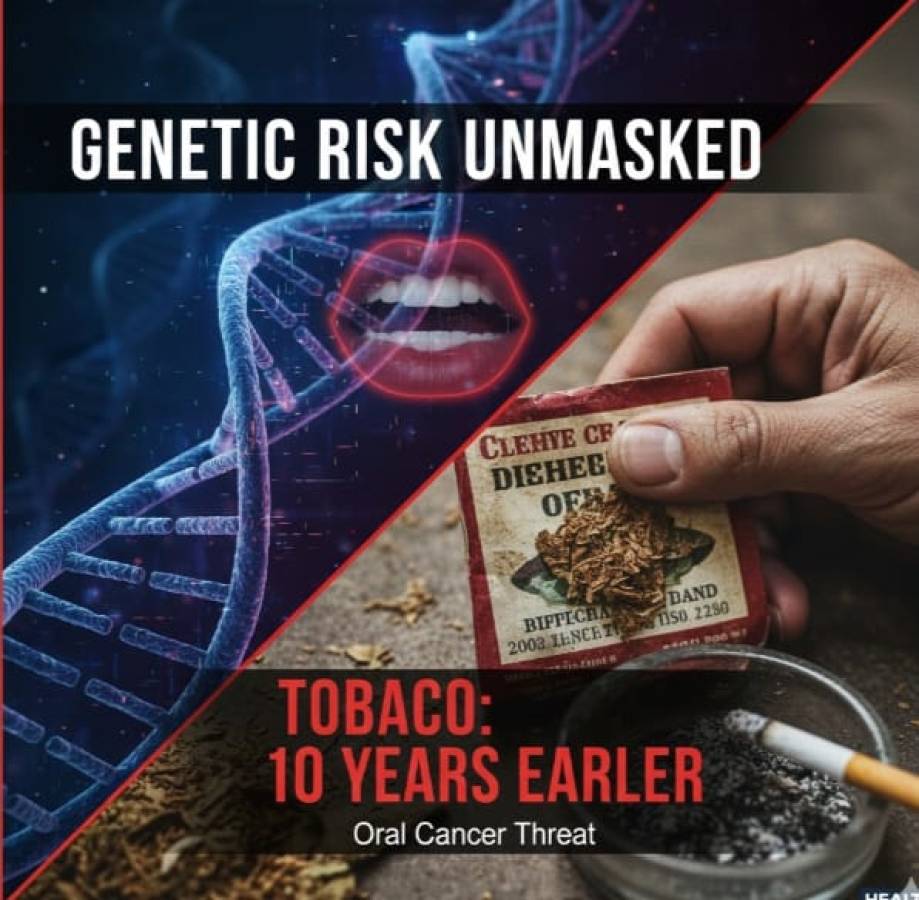
A groundbreaking study analyzing the DNA of thousands of individuals has shed crucial light on why some tobacco chewers develop oral cancer a decade earlier than others. This research, conducted by the Centre for Cancer Epidemiology at the Tata Memorial Centre, has pinpointed a confluence of high-risk genetic variations and tobacco use, dramatically amplifying the danger for a significant portion of the population.
The study, published in the esteemed journal eBioMedicine, involved the meticulous analysis of DNA samples from 2,160 people with buccal mucosa cancer and 2,325 people without the disease. The core finding is stark: individuals possessing a high Polygenic Risk Score (PRS), a measure reflecting the combined effect of many small genetic variants, face an exponentially higher risk of developing oral cancer, particularly the buccal mucosa type common among tobacco users in India.
The researchers, led by Dr. Abhishek Sharma, discovered that having a high PRS means a person's lifetime risk of developing oral cancer is significantly multiplied when combined with tobacco chewing. This genetic predisposition is so powerful that, for those with high-risk variants, the onset of oral cancer can occur nearly 20 years earlier than in those with similar habits but fewer genetic risks. This finding is a seismic shift in how we understand the etiology of this devastating disease.
The Role of Genetics: Hotspots and the NOTCH1 Gene
The study's team identified several genetic "hotspots," specific locations on the chromosomes where genetic variations significantly influence how the body responds to carcinogens, the cancer-causing substances found in tobacco. These substances are known to damage a cell's DNA, leading to mutations and ultimately, cancer. This discovery provides a clearer mechanistic view of why tobacco, the biggest cause of oral cancer, proves so lethal.
Furthermore, the research highlighted the role of the NOTCH1 gene. While this gene is already known to cause cancer, the study suggests that individuals with variations in NOTCH1 are genetically predisposed to suppress tumors. However, even this protective mechanism appears to be overcome by the powerful, cancer-inducing effects of tobacco.
The scientists employed sophisticated statistical modeling to calculate the Polygenic Risk Score, which accounts for the subtle impact of multiple small genetic variations. They found that this high PRS, combined with tobacco use, could elevate the lifetime risk of developing oral cancer by an astonishing 26 times. For the people in the study with the highest genetic risk, the increase in cancer occurrence was a palpable 24% rise.
Implications for Prevention and Public Health
The research carries profound implications for public health, particularly in a country like India where smokeless tobacco use is widespread. Dr. Pankaj Chaturvedi, Director of ACTREC and an author of the study, emphasized that the findings underline the need for strong public health action, particularly in the realm of tobacco policy.
The traditional approach to cancer prevention has largely focused on general lifestyle modifications. This new study introduces a critical biological variable: genetic susceptibility.
Dr. Sharayu Mhaskar, another author, pointed out that people with high genetic susceptibility are particularly common in India due to the widespread use of "smokeless" tobacco. This form of tobacco is often held in the mouth for extended periods, maximizing the exposure of the buccal mucosa to carcinogens. The study's results strongly suggest that public health interventions should not only aim to reduce tobacco consumption but also identify individuals at high genetic risk.
While the study is not meant to promote genetic testing for the general public right now, it provides a strong scientific basis for personalized prevention strategies in the future. In the immediate term, the message is clear and urgent: those who know or suspect they have a family history of oral cancer or are habitual tobacco users must be aware that their individual risk profile might be far more severe than previously estimated.
The researchers, including Dr. Rajan Dikshit, Director of the Centre for Cancer Epidemiology, concluded that understanding these individual high-risk factors works in isolation but interacts with tobacco, alcohol, pollution, and other cofactors. The most effective preventative step, therefore, remains to quit tobacco and prioritize early screenings, especially for those who fall into this newly defined high-risk category. This study is a powerful mandate for intensified public awareness campaigns and a reminder that for some, the time bomb is ticking much faster.



























Leave a Comment