
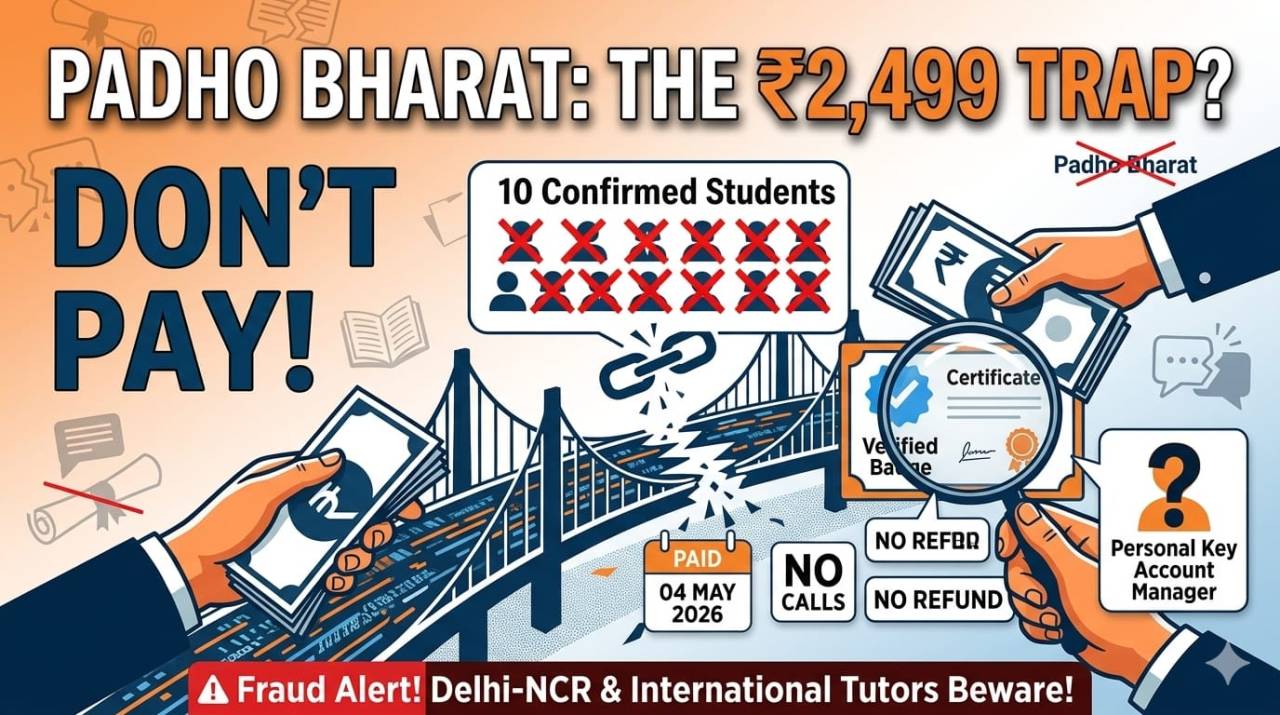
What begins as a “premium tutoring opportunity” is allegedly ending in silence, vanished support, and financial loss for teachers across Delhi-NCR.
India’s booming online education market has created thousands of opportunities for freelance tutors, home educators, and online teachers. But alongside genuine growth, a darker side of the tutoring industry is also emerging. Across Delhi-NCR, multiple educators are now raising concerns against an entity operating under the name “Padho Bharat,” accusing it of functioning as a sophisticated “pay-and-ghost” scheme that allegedly targets desperate tutors searching for students.
The platform presents itself as a professional tutoring network connecting teachers with students in India and abroad. However, according to several complaints circulating online and among tutor communities, the experience after payment tells a very different story.
The Promise That Hooks Educators
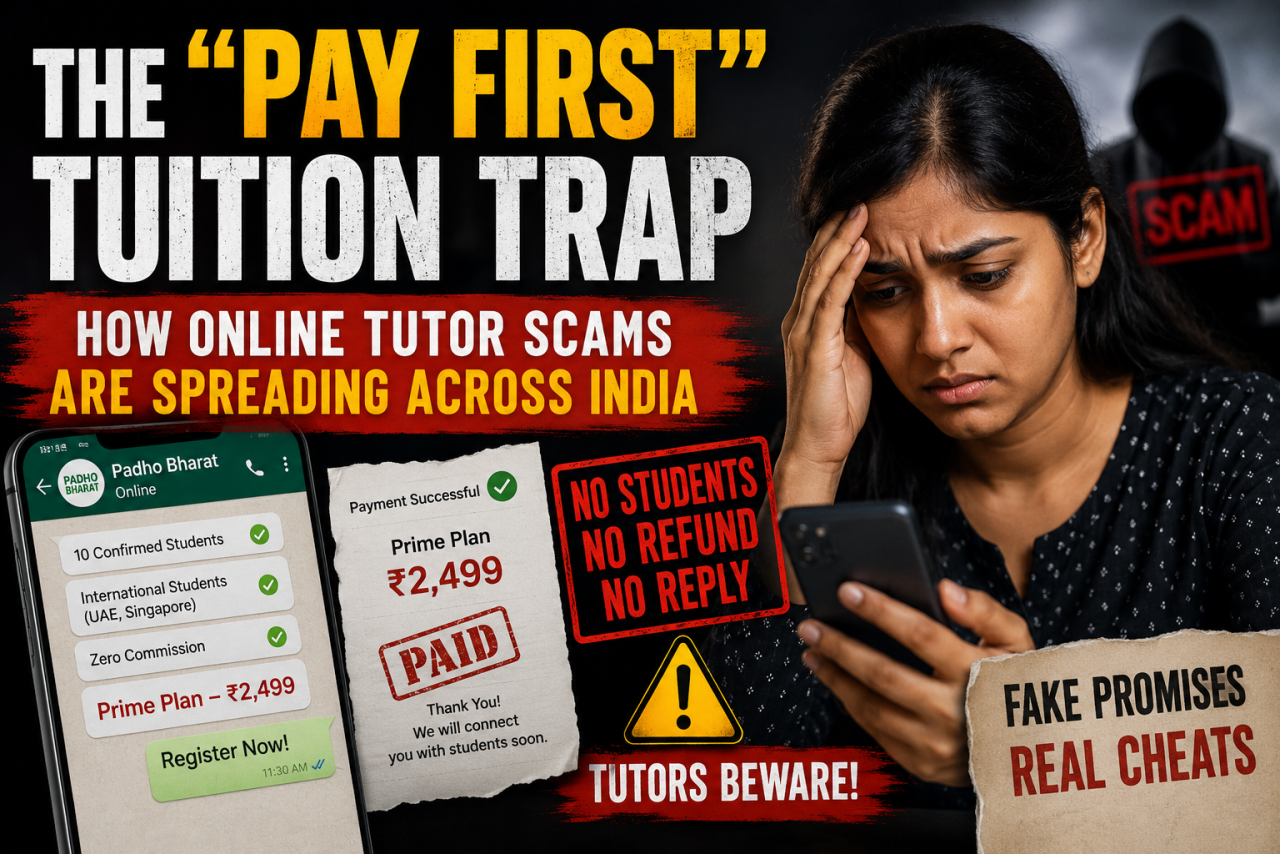
The alleged scam usually begins with a WhatsApp message, social media advertisement, or direct call claiming to offer “premium tutoring opportunities.” Teachers are encouraged to purchase a “Prime Plan” costing around Rs. 2,499, inclusive of GST.
The offer appears attractive, especially for independent educators struggling to find steady tuition leads. According to promotional claims shared with tutors, the package includes:
- 10 confirmed students
- International tuition opportunities in countries like the UAE and Singapore
- Zero commission on monthly earnings
- A dedicated relationship manager
- Tutor ID cards and certificates
- A 21-day money-back guarantee
For many teachers, particularly fresh graduates, homemakers, or freelance tutors, the offer feels legitimate and affordable. The amount is positioned carefully — large enough to generate profits for the operators, yet small enough that victims may hesitate to pursue legal action later.
What Alleged Victims Claim Happens After Payment
According to accounts shared by educators, the situation reportedly changes immediately after payment confirmation is sent.
Teachers allege that once the registration fee is transferred through online payment gateways, communication begins to disappear. Calls reportedly go unanswered, WhatsApp replies become irregular, and promised account managers never contact the tutor.
Some educators claim they received professional-looking invoices and tutor IDs, which initially strengthened their trust in the company’s legitimacy. However, despite repeated follow-ups, many allege they never received the promised students or refunds.
Victims further claim that:
- Support numbers either remain switched off or avoid direct responses
- Emails allegedly receive no meaningful reply
- The promised “guaranteed students” never materialize
- Refund requests are ignored despite money-back claims
Several tutors say the company’s professionalism appears limited to the sales stage, after which the interaction effectively ends.
Why Such Schemes Continue to Work
Education remains one of the most emotionally driven professions in India. Many tutors rely entirely on private teaching for income, especially in metro regions like Delhi, Ghaziabad, Noida, and Gurgaon. Fraudulent operations allegedly exploit this urgency.
Experts say these schemes often succeed because they combine psychological persuasion with professional branding. Formal invoices, GST mentions, ID numbers, and polished WhatsApp communication create the illusion of credibility.
The promise of “international students” is another major attraction. For freelance teachers, overseas tutoring opportunities can significantly increase income. Scammers allegedly use this aspiration to convince educators that the registration fee is a worthwhile investment.
Additionally, many victims reportedly avoid filing complaints because the financial loss appears “too small” to justify lengthy legal procedures. This allows such operations to continue targeting new individuals repeatedly.
Warning Signs Tutors Should Never Ignore
As online tutoring platforms continue to expand, educators must remain cautious before paying any agency upfront. Experts advise teachers to watch for several major red flags:
1. Upfront Registration Fees
Most legitimate tutoring platforms either offer free registration or charge commissions only after successful student onboarding.
2. Guaranteed Students
No genuine agency can realistically guarantee a fixed number of confirmed students instantly without screening or demo sessions.
3. Urgent Payment Pressure
Scammers often push “limited-time offers” to prevent victims from researching online reviews or complaints.
4. Lack of Verified Office Presence
Tutors should verify whether the company has a legitimate physical office, registered business records, and accessible customer support.
5. Communication Only Through WhatsApp
Businesses relying exclusively on WhatsApp communication without transparent operational details should be treated cautiously.
What Tutors Can Do If They Have Been Targeted
Educators who believe they may have been scammed should act quickly instead of remaining silent.
Report the Incident
Victims can file complaints through India’s official cybercrime portal:
National Cyber Crime Reporting Portal
Contact the Payment Gateway or Bank
If payment was made digitally, tutors should immediately dispute the transaction through their bank or payment service provider.
Preserve All Evidence
Screenshots, invoices, chat histories, call logs, payment confirmations, and promotional materials can help authorities investigate the matter.
Raise Public Awareness
Posting factual experiences on professional platforms and review forums can warn other educators before they fall into similar traps.
The Bigger Problem in India’s EdTech Ecosystem
The allegations surrounding Padho Bharat also highlight a broader issue within India’s rapidly growing education economy. As demand for online learning rises, regulation around tutoring marketplaces and freelance educator recruitment remains weak.
Thousands of tutors enter the market every year hoping to build independent careers. Unfortunately, the absence of strong verification systems creates space for fraudulent intermediaries posing as educational startups.
For educators, the lesson is increasingly clear: genuine teaching opportunities are built through transparent systems, verified platforms, and trust earned over time — not through expensive “Prime Plans” sold over WhatsApp.
Final Take
The allegations against Padho Bharat serve as a warning for teachers across Delhi-NCR and beyond. While the platform promises quick students, international leads, and professional growth, multiple tutors allege they were instead left financially cheated and completely ignored after payment.
As India’s tutoring economy grows, educators must exercise caution before trusting flashy promises and upfront-fee models. A few minutes of verification today could prevent financial loss tomorrow.
For teachers searching for opportunities, the safest rule remains simple: if a company demands money before providing real work, proceed carefully.
India’s booming online education market has created thousands of opportunities for freelance tutors, home educators, and online teachers. But alongside genuine growth, a darker side of the tutoring industry is also emerging. Across Delhi-NCR, multiple educators are now raising concerns against an entity operating under the name “Padho Bharat,” accusing it of functioning as a sophisticated “pay-and-ghost” scheme that allegedly targets desperate tutors searching for students.
The platform presents itself as a professional tutoring network connecting teachers with students in India and abroad. However, according to several complaints circulating online and among tutor communities, the experience after payment tells a very different story.
The Promise That Hooks Educators
The alleged scam usually begins with a WhatsApp message, social media advertisement, or direct call claiming to offer “premium tutoring opportunities.” Teachers are encouraged to purchase a “Prime Plan” costing around Rs. 2,499, inclusive of GST.
The offer appears attractive, especially for independent educators struggling to find steady tuition leads. According to promotional claims shared with tutors, the package includes:
- 10 confirmed students
- International tuition opportunities in countries like the UAE and Singapore
- Zero commission on monthly earnings
- A dedicated relationship manager
- Tutor ID cards and certificates
- A 21-day money-back guarantee
For many teachers, particularly fresh graduates, homemakers, or freelance tutors, the offer feels legitimate and affordable. The amount is positioned carefully — large enough to generate profits for the operators, yet small enough that victims may hesitate to pursue legal action later.
What Alleged Victims Claim Happens After Payment
According to accounts shared by educators, the situation reportedly changes immediately after payment confirmation is sent.
Teachers allege that once the registration fee is transferred through online payment gateways, communication begins to disappear. Calls reportedly go unanswered, WhatsApp replies become irregular, and promised account managers never contact the tutor.
Some educators claim they received professional-looking invoices and tutor IDs, which initially strengthened their trust in the company’s legitimacy. However, despite repeated follow-ups, many allege they never received the promised students or refunds.
Victims further claim that:
- Support numbers either remain switched off or avoid direct responses
- Emails allegedly receive no meaningful reply
- The promised “guaranteed students” never materialize
- Refund requests are ignored despite money-back claims
Several tutors say the company’s professionalism appears limited to the sales stage, after which the interaction effectively ends.
Why Such Schemes Continue to Work
Education remains one of the most emotionally driven professions in India. Many tutors rely entirely on private teaching for income, especially in metro regions like Delhi, Ghaziabad, Noida, and Gurgaon. Fraudulent operations allegedly exploit this urgency.
Experts say these schemes often succeed because they combine psychological persuasion with professional branding. Formal invoices, GST mentions, ID numbers, and polished WhatsApp communication create the illusion of credibility.
The promise of “international students” is another major attraction. For freelance teachers, overseas tutoring opportunities can significantly increase income. Scammers allegedly use this aspiration to convince educators that the registration fee is a worthwhile investment.
Additionally, many victims reportedly avoid filing complaints because the financial loss appears “too small” to justify lengthy legal procedures. This allows such operations to continue targeting new individuals repeatedly.
Warning Signs Tutors Should Never Ignore
As online tutoring platforms continue to expand, educators must remain cautious before paying any agency upfront. Experts advise teachers to watch for several major red flags:
1. Upfront Registration Fees
Most legitimate tutoring platforms either offer free registration or charge commissions only after successful student onboarding.
2. Guaranteed Students
No genuine agency can realistically guarantee a fixed number of confirmed students instantly without screening or demo sessions.
3. Urgent Payment Pressure
Scammers often push “limited-time offers” to prevent victims from researching online reviews or complaints.
4. Lack of Verified Office Presence
Tutors should verify whether the company has a legitimate physical office, registered business records, and accessible customer support.
5. Communication Only Through WhatsApp
Businesses relying exclusively on WhatsApp communication without transparent operational details should be treated cautiously.
What Tutors Can Do If They Have Been Targeted
Educators who believe they may have been scammed should act quickly instead of remaining silent.
Report the Incident
Victims can file complaints through India’s official cybercrime portal:
National Cyber Crime Reporting Portal
Contact the Payment Gateway or Bank
If payment was made digitally, tutors should immediately dispute the transaction through their bank or payment service provider.
Preserve All Evidence
Screenshots, invoices, chat histories, call logs, payment confirmations, and promotional materials can help authorities investigate the matter.
Raise Public Awareness
Posting factual experiences on professional platforms and review forums can warn other educators before they fall into similar traps.
The Bigger Problem in India’s EdTech Ecosystem
The allegations surrounding Padho Bharat also highlight a broader issue within India’s rapidly growing education economy. As demand for online learning rises, regulation around tutoring marketplaces and freelance educator recruitment remains weak.
Thousands of tutors enter the market every year hoping to build independent careers. Unfortunately, the absence of strong verification systems creates space for fraudulent intermediaries posing as educational startups.
For educators, the lesson is increasingly clear: genuine teaching opportunities are built through transparent systems, verified platforms, and trust earned over time — not through expensive “Prime Plans” sold over WhatsApp.
Final Take
The allegations against Padho Bharat serve as a warning for teachers across Delhi-NCR and beyond. While the platform promises quick students, international leads, and professional growth, multiple tutors allege they were instead left financially cheated and completely ignored after payment.
As India’s tutoring economy grows, educators must exercise caution before trusting flashy promises and upfront-fee models. A few minutes of verification today could prevent financial loss tomorrow.
For teachers searching for opportunities, the safest rule remains simple: if a company demands money before providing real work, proceed carefully.

























Leave a Comment