
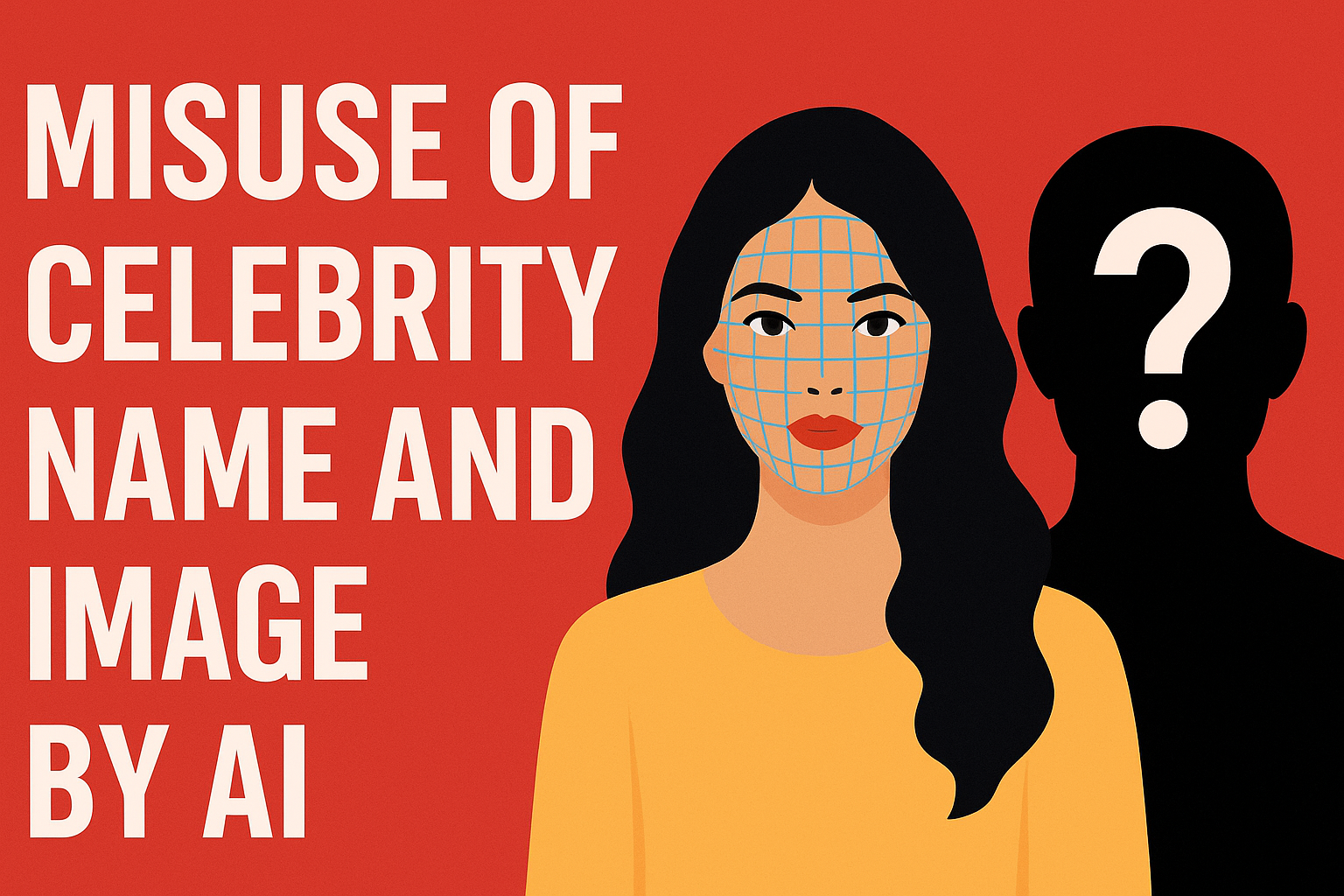
Artificial Intelligence has opened new frontiers in creativity, communication, and commerce. From personalized recommendations to medical research, its applications are reshaping how societies function. Yet the same tools that inspire innovation have also created troubling risks, especially for public figures. Celebrities today face a new kind of challenge: the misuse of their names, images, and voices through AI-powered technologies. This rising issue threatens not only their personal dignity but also the fundamental ethics of digital culture.
The problem has become more visible with the increasing sophistication of deepfake technology. Using publicly available photos, videos, and audio clips, AI can now create highly convincing but entirely fabricated content. For celebrities, whose faces and voices are widely circulated, the risk is far greater. Their images are being morphed into misleading videos, placed on the bodies of other people, or made to endorse products without permission. What once required expensive software and technical skill can now be done with a simple application, making abuse easier than ever.
One of the most alarming misuses involves deepfake pornography. Celebrities, particularly women, have been subjected to having their faces superimposed onto explicit content. This not only violates their privacy but also reduces them to tools for commercial or voyeuristic gain. The harm goes beyond personal humiliation; it damages reputations, distorts public perception, and can cause long-term psychological consequences. For fans and the general public, it blurs the line between truth and fabrication, eroding trust in media altogether.
Another growing concern is the unauthorized commercial exploitation of celebrity identity. Brands, influencers, and even anonymous creators sometimes use AI-generated versions of celebrities to market products or drive online engagement. For example, a synthetic voice that perfectly mimics a well-known actor may be used in advertisements without their knowledge. Such practices infringe on publicity rights, which are meant to protect a celebrity’s name, image, and distinctive attributes from unauthorized use. They also deprive the celebrity of rightful economic benefits while misleading consumers.
Legal systems around the world are only beginning to respond. In India, the Delhi High Court has already intervened in cases involving misuse of actors’ identities, including veteran stars like Amitabh Bachchan and Anil Kapoor. More recently, Aishwarya Rai Bachchan approached the court after her image was allegedly morphed using AI for unauthorized purposes. The court’s indication of protection highlights the urgency of safeguarding personality rights in the digital era. Other countries, too, are considering stricter regulations against deepfakes and identity theft.
Still, legal remedies often lag behind technology. By the time courts issue injunctions, harmful content may already have gone viral. The global nature of the internet further complicates enforcement, as malicious content can be hosted on servers outside national jurisdictions. This makes preventive measures, ethical AI development, and responsible platform governance all the more important.
Social media companies and technology firms hold a significant share of responsibility. They must strengthen content moderation tools, invest in AI detection systems, and ensure faster takedowns of infringing material. Equally important is raising awareness among users about the consequences of sharing or consuming such content. Public education can reduce the demand that fuels unauthorized AI-generated media.
For celebrities, protecting their digital identity now requires vigilance and proactive action. Many are registering their names and voices as trademarks, while others are working with legal teams to monitor the internet for misuse. Industry bodies and guilds are also pushing for collective safeguards, recognizing that the problem is systemic and not limited to a few individuals.
The misuse of celebrity identity by AI is more than just a legal or technological issue; it is a question of respect for human dignity. Fame does not make someone’s image public property. As societies navigate the promises and perils of artificial intelligence, a balance must be struck between innovation and accountability. Without stronger protections, the very tools designed to enhance creativity could end up eroding trust, privacy, and the personal rights that every individual deserves to preserve.
















Leave a Comment