
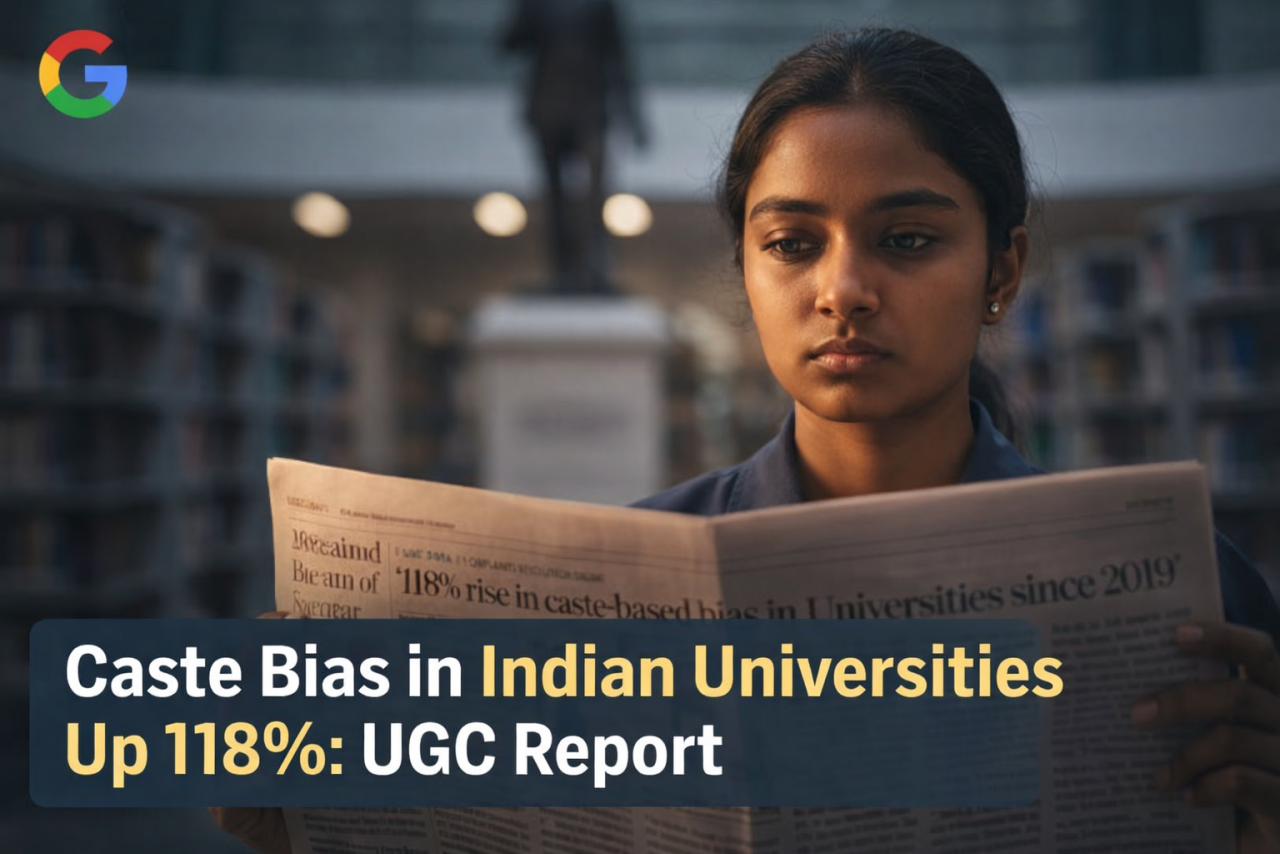
For a student from a marginalized background, getting into a top university is often seen as the ultimate “ticket out” of poverty and social exclusion. However, recent data suggests that for many, the campus itself is becoming a new battleground for dignity.
New data from the University Grants Commission (UGC) reveals a startling 118.4% rise in caste-based discrimination complaints over the last five years. In the 2019–20 academic year, there were 173 reported cases; by 2023–24, that number jumped to 378.
While authorities argue that this rise is due to “increased awareness,” a closer look at the ground reality tells a more complex and human story of a system struggling to protect its most vulnerable students.
Understanding the Numbers: Awareness or Apathy?
The UGC reports a 90% resolution rate for these complaints, which sounds encouraging on paper. But many academic experts and students feel these statistics are misleading.
- The Power Gap: Most SC/ST Cells in colleges are headed by administration-nominated members. Students argue these cells lack the independence to challenge their own bosses.
- The “Silent” Cases: For every official complaint, many go unrecorded. A PhD scholar recently shared that her supervisor stalled her research for a year and denied her access to labs. When she tried to complain, she was discouraged by the very committees meant to protect her.
- The Weight of Pending Cases: Despite the high resolution rate, the number of “unresolved” cases is growing. Pending complaints rose from just 18 in 2019 to 108 this year, leaving students in a state of academic and emotional limbo.
The Human Cost: Ten Years Since Rohith Vemula
The timing of this data is heavy with symbolism. It has been a decade since the death of PhD scholar Rohith Vemula, whose suicide in 2016 became a national catalyst for the anti-discrimination movement.
Today, his mother, Radhika Vemula, continues to lead the fight. Just this week, she met with Telangana’s Deputy Chief Minister to push for the “Rohith Vemula Act.” This proposed law aims to move beyond “guidelines” and make caste discrimination a specific, punishable crime in educational institutions.
A New Legal Push
The Supreme Court has now stepped in, directing the UGC to strengthen its 2012 regulations. As of January 2026, new rules are being implemented:
- Mandatory Equity Committees: Every college must have a committee with representation from SC, ST, OBC, and women members.
- 24/7 Help: Institutions are now required to run round-the-clock equity helplines.
- Strict Deadlines: New regulations mandate that committees must meet within 24 hours of a complaint and finish inquiries within 15 days.
Final Take
For the average reader, these aren’t just statistics; they represent the dreams of thousands of families. A 118% rise in complaints is a loud signal that our “temples of learning” are still struggling with age-old prejudices.
While “increased awareness” is a positive sign—meaning students are finally finding the courage to speak up—the true measure of success will be when the number of complaints begins to fall because the discrimination itself has stopped. Until then, laws like the proposed Rohith Vemula Act represent a desperate need for a system that values a student’s merit over their identity.


























Leave a Comment