
The gentleman’s game has rarely looked less gentlemanly. Over the last twelve months, the once-steady cricketing bridge between India and Bangladesh has effectively buckled under the weight of political friction, leading to a diplomatic standoff that now threatens the integrity of the 2026 T20 World Cup. What began as a series of isolated grievances has evolved into a full-blown "cricket war," leaving fans, players, and the ICC caught in a crossfire of security claims and retaliatory bans.
The Spark: The Mustafizur 'Banishment'
The current crisis reached a breaking point with the unceremonious exit of Bangladeshi pacer Mustafizur Rahman from the 2026 IPL season. Despite being a marquee signing for the Kolkata Knight Riders (KKR) at a staggering ₹9.2 crore, Mustafizur was released following a direct intervention by the BCCI. The Indian board cited "recent developments" and "unspecified circumstances"—widely understood to be a reaction to the deteriorating political climate and reported attacks on minorities in Bangladesh.
Dhaka’s response was swift and visceral. Labeling the move "discriminatory and insulting," the Bangladesh government didn't just stop at a formal protest; they immediately banned the broadcast of all IPL matches within the country, a move designed to strike at the commercial heart of Indian cricket.
The "Sri Lanka Maneuver" and the Pakistan Parallel
In what many see as a "knee-jerk" retaliatory strike, the Bangladesh Cricket Board (BCB) sent a series of letters to the ICC, formally refusing to travel to India for the T20 World Cup. Citing "safety and security concerns," the BCB demanded that their matches, originally scheduled for Kolkata and Mumbai, be shifted to Sri Lanka.
The move is a clear attempt to mimic the "Hybrid Model" previously granted to Pakistan. Due to long-standing political hostility, Pakistan has been allowed to play its World Cup fixtures on Sri Lankan soil. However, the ICC has so far flatly rejected Bangladesh’s request. Unlike the Pakistan arrangement, which was established through years of verified security assessments and long-term planning, the ICC stated that its independent risk assessments for Bangladesh in India remain "low to moderate." The word from Dubai was straightforward—either travel to India or face the loss of tournament points.
The Sharfuddoula Paradox: A Glaring Inconsistency?
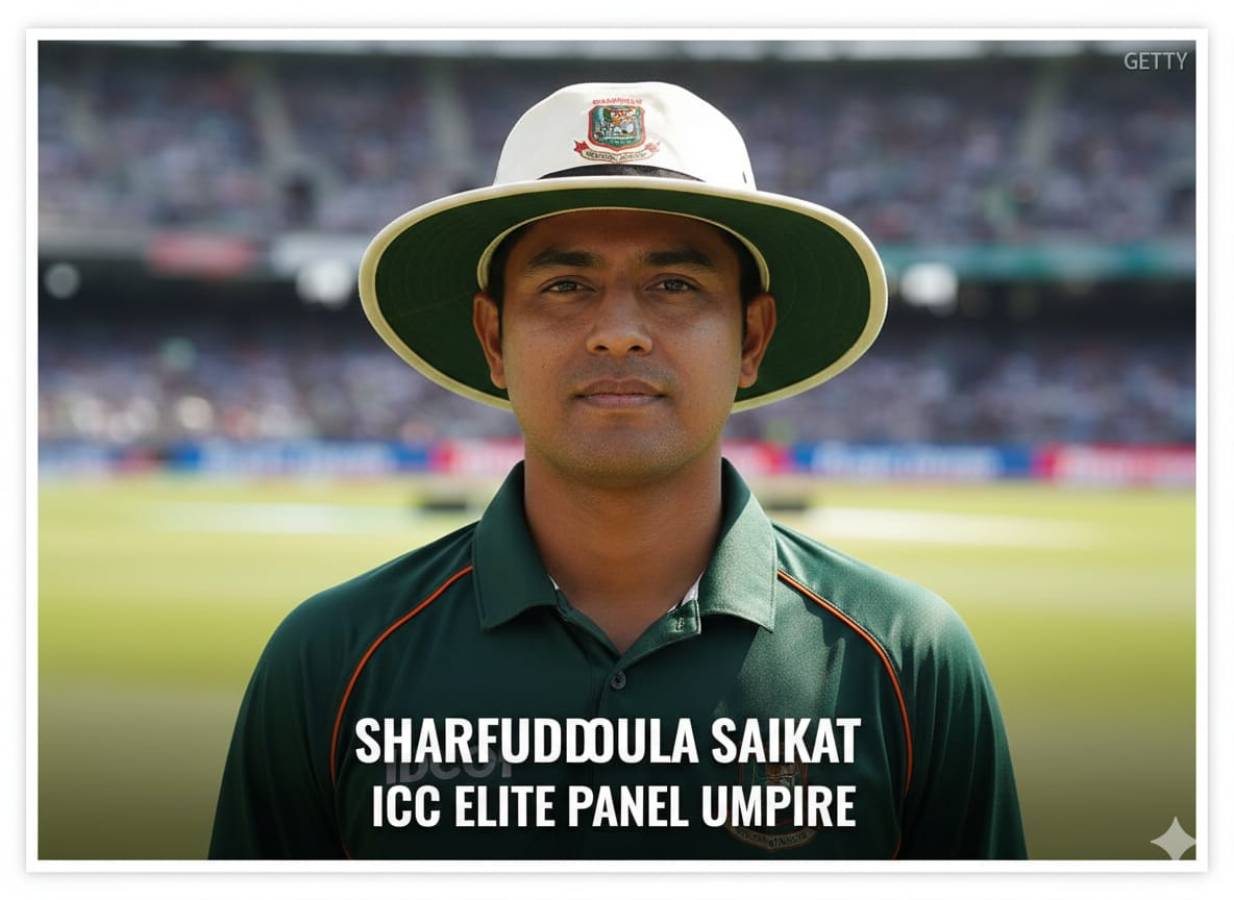
While the BCB officially claims that India is unsafe for its national team, a curious development on the field has undermined their narrative. Sharfuddoula Ibne Shahid Saikat, Bangladesh’s first umpire on the ICC Elite Panel, is currently in India, freely officiating the India-New Zealand ODI series in Vadodara.
His presence has sparked intense debate. If the environment in India is too perilous for eleven cricketers, how is it safe for a lone Bangladeshi umpire to stand in the middle of an Indian stadium? When pressed on this glaring contradiction, the BCB’s response was tellingly bureaucratic. BCB umpires’ chairman Iftekhar Rahman clarified that Saikat is under a direct contract with the ICC:
"In the job contract he has with me, it is written that if he has any ICC engagement, he must be automatically released. There is no authority for me to decide whether I give permission or not."
This "automatic leave" excuse suggests a board that is politically committed to a boycott but logistically unable (or perhaps unwilling) to stop its individual professionals from reaping the benefits of global assignments on Indian soil.
A New Rivalry of "Dread"
For years, the India-Bangladesh rivalry was seen as a younger sibling's struggle for respect. Today, it has taken on a sharper, more bitter edge, mirroring the "dread" traditionally reserved for India-Pakistan ties. As the 2026 T20 World Cup looms, the sport finds itself at a crossroads. Will the BCB blink and send their team to Kolkata, or will they follow through on their threat to stay home, permanently altering the landscape of South Asian cricket?


















Leave a Comment