
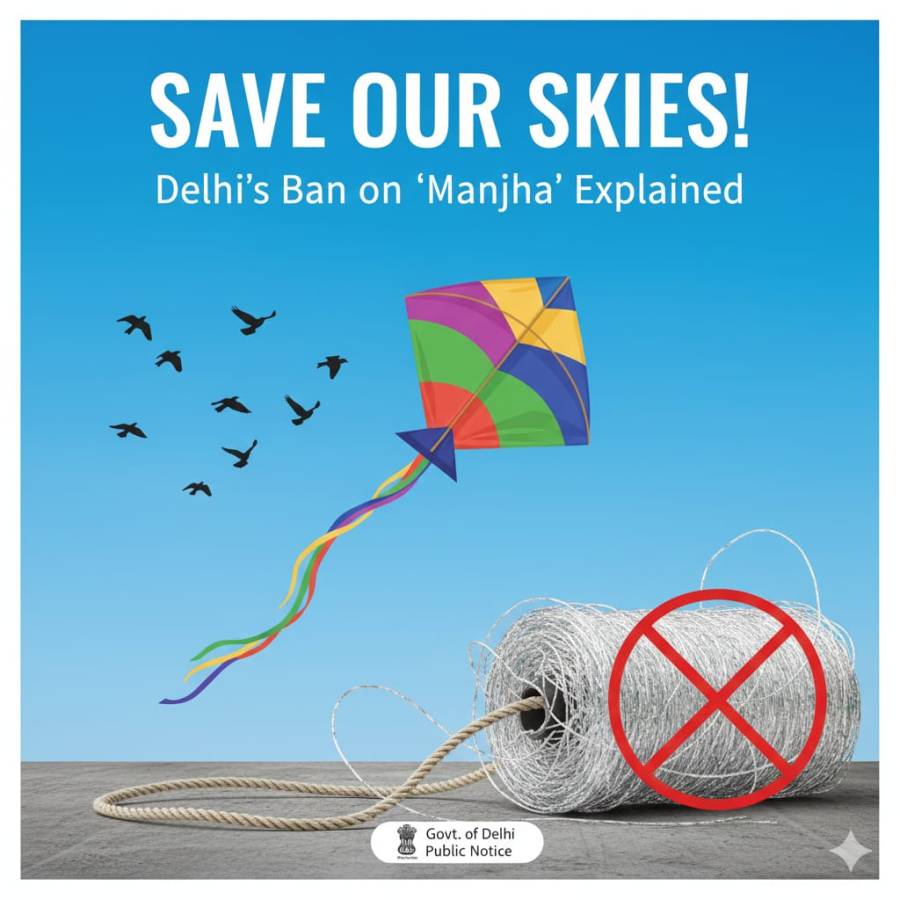
NCT of Delhi Bans Dangerous Kite Strings: Protect Birds and Humans This Festive Season!
Kite flying is a vibrant tradition in India, symbolizing freedom, joy, and celebration. However, in recent years, this beloved activity has come under scrutiny due to serious environmental and safety concerns. The primary culprit is the use of sharp synthetic or nylon kite-flying threads, popularly known as “Chinese Manjha.” Recognizing the danger posed by these materials, the Department of Environment, Government of NCT of Delhi, has issued a strict public notice enforcing a complete ban on their use, sale, and production.
The Menace of Synthetic Manjha
Unlike traditional cotton threads, Chinese Manjha is made of nylon, plastic, or other synthetic polymers. These materials are non-biodegradable and extremely strong. To gain an advantage in kite fighting, these threads are often coated with glass, metal, or adhesives to make them razor-sharp.
While effective in competitions, these threads turn into lethal hazards in urban areas. Because synthetic threads rarely break, they remain tangled in trees, poles, and buildings for years, creating hidden dangers for birds, humans, and the environment.
Impact on Life and the Environment
The consequences of synthetic manjha are serious and wide-ranging:
- Avian Mortality: Birds are the most frequent victims. Invisible, unbreakable threads can cause deep cuts, wing amputations, or death. Endangered and migratory species are particularly at risk.
- Public Safety: Humans, especially two-wheeler commuters and children, face severe risks. Stray synthetic strings have caused facial and throat injuries, sometimes fatal.
- Ecological Degradation: Nylon does not decompose. It contributes to plastic pollution, clogs drains, and eventually breaks into harmful microplastics that affect soil and water health.
- Threat to Cattle: Stray cattle grazing in open fields may ingest these threads, causing internal injuries and long-term health problems.
Legal Framework and Directives
Under Section 5 of the Environment (Protection) Act, 1986, the Government of Delhi has issued clear instructions:
- Complete Prohibition: Sale, production, storage, supply, import, and use of kite-flying threads made of nylon, plastic, or any synthetic material is strictly banned.
- Permissible Alternatives: Kite flying is allowed only with cotton threads that are free from sharp metals, glass, or adhesives.
- Legal Consequences: Violating these rules is punishable under Section 15 of the Environment (Protection) Act, 1986, with penalties of up to five years’ imprisonment and/or a fine of Rs. 1 lakh.
Reporting and Civic Responsibility
It is the duty of every citizen to protect life and the environment. Any violations of this ban should be reported immediately:
|
Authority |
Email ID |
Helpline |
|
Commissioner of Police |
112 |
|
|
Divisional Commissioner |
1077 |
|
|
Chief Wildlife Warden |
011-23378513 |
|
|
MCD Commissioner |
155305 |
Final Take
Tradition and science must coexist with ethics. Kite flying is a cherished pastime, but it should never endanger lives or harm the environment. Choosing cotton threads over synthetic ones is a simple yet powerful step toward conservation and empathy. Let us fly our kites responsibly and keep our skies safe for all living beings.












Leave a Comment