
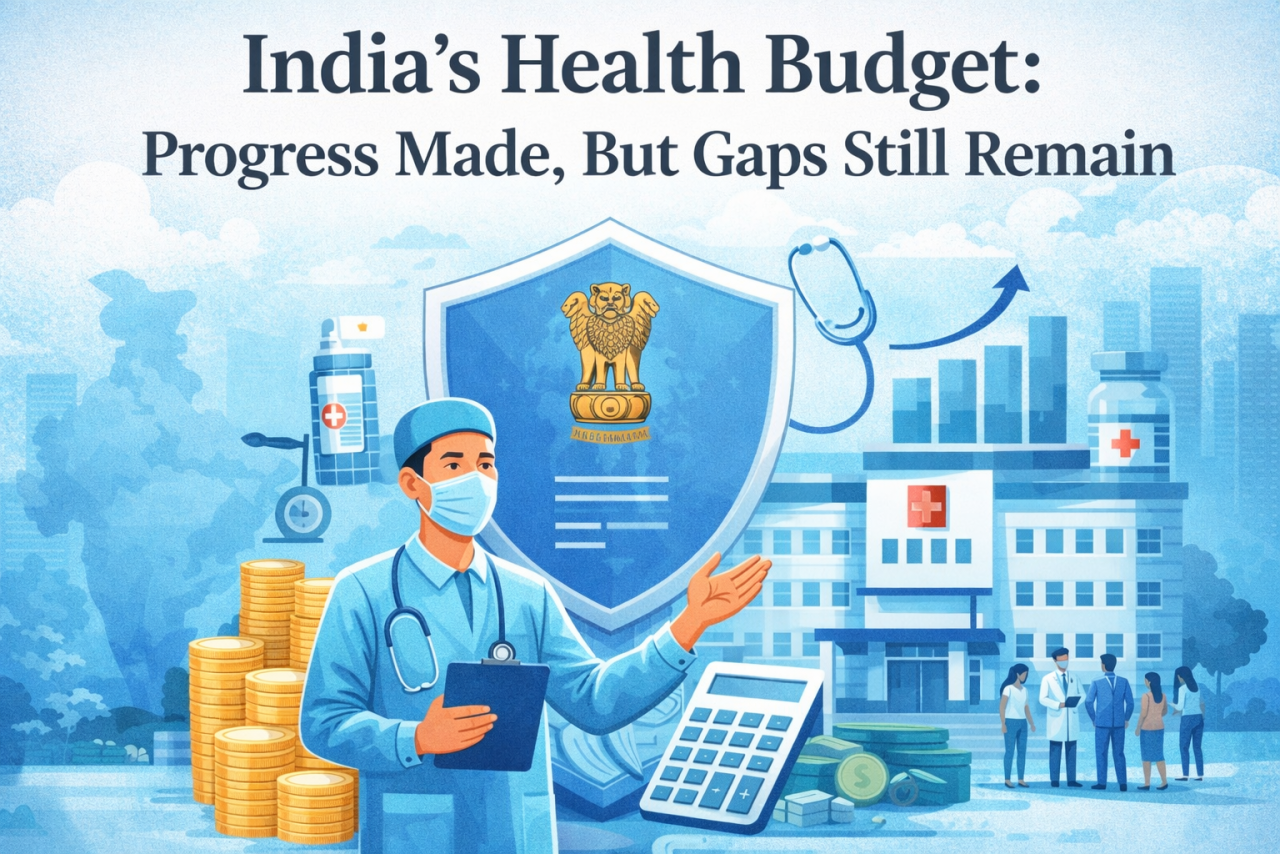
India is increasing its spending on healthcare, but many people still struggle to get proper treatment. This raises an important question about whether higher budgets are actually improving healthcare on the ground.
India’s health budget has seen steady attention in recent years, especially after the Covid-19 pandemic exposed deep gaps in the country’s healthcare system. While there has been an overall increase in government spending compared to the past, the pace, priorities, and real impact of this spending continue to be debated.
The Union Budget 2025–26 allocated around ₹90,000 crore to the health sector, which is higher than the allocations seen before the pandemic. In addition, states also spend significantly on health, making the combined public health expenditure higher. However, when this spending is measured as a percentage of GDP, India still lags behind many developing and developed countries. Public health expenditure in India remains around 2–2.5% of GDP, which is lower than the global average.
One important trend is that per capita health spending has increased since the pandemic years but is now stabilizing. During Covid-19, emergency investments were made in hospitals, vaccines, testing, and awareness campaigns. This caused a temporary spike in spending. As the crisis eased, growth in health expenditure slowed down, and in some areas, spending has even declined slightly in real terms.
A large share of the health budget is focused on flagship schemes such as Ayushman Bharat. This scheme aims to provide health insurance coverage to millions of poor and vulnerable families. It has helped reduce out-of-pocket expenses for many people, especially in cases of hospitalization. However, experts point out that insurance alone cannot solve the larger issue. Without strong primary healthcare and government hospitals, the burden on the system continues.
Infrastructure remains a major concern. India still faces shortages of hospital beds, doctors, nurses, and diagnostic facilities, especially in rural areas. While new medical colleges and hospitals are being announced, their actual completion and functionality take time. Many existing facilities struggle with lack of staff and equipment. This gap becomes more visible during emergencies like disease outbreaks or seasonal health spikes.
Another issue is uneven spending between states. Some states invest more in healthcare and have better outcomes, while others lag behind. This creates a situation where access to quality healthcare depends heavily on where a person lives. Strengthening coordination between the central and state governments is important to ensure more balanced development.
Preventive healthcare is an area that still needs more focus. A large part of health spending goes into treatment rather than prevention. Diseases like diabetes, heart problems, and respiratory issues are rising in India. Pollution, lifestyle changes, and lack of awareness contribute to this trend. Investing in early screening, public awareness, and basic healthcare services can reduce long-term costs and improve overall health outcomes.
The role of the private sector in India’s healthcare system is also significant. A majority of people depend on private hospitals and clinics for treatment. This often leads to high out-of-pocket expenses, pushing many families into financial stress. While government schemes try to reduce this burden, regulation of private healthcare costs and quality remains a challenge.
Digital health is emerging as a new focus area. Initiatives like the National Digital Health Mission aim to create digital health records and improve access to services through technology. Telemedicine has also grown, especially after the pandemic. These steps can improve efficiency, but they require strong implementation and awareness at the ground level.
Another positive development is the growing attention to health research and vaccine production. India played a major role in vaccine manufacturing during Covid-19, and the government is now investing more in research infrastructure. This can help the country prepare better for future health challenges.
Despite these improvements, the biggest challenge remains ensuring that increased budget allocations translate into real benefits for people. Often, funds are not fully utilized due to administrative delays, lack of planning, or weak monitoring systems. Improving governance and accountability is as important as increasing spending.
In simple terms, India’s health budget is moving in the right direction, but it is not enough yet. More consistent investment, better planning, and stronger public healthcare systems are needed. The focus should not only be on big schemes but also on basic healthcare services that reach every village and town.
Healthcare is not just about hospitals and doctors; it is about ensuring that every citizen can live a healthy life without financial stress. India has made progress, but there is still a long way to go before quality healthcare becomes accessible and affordable for all.

























Leave a Comment