
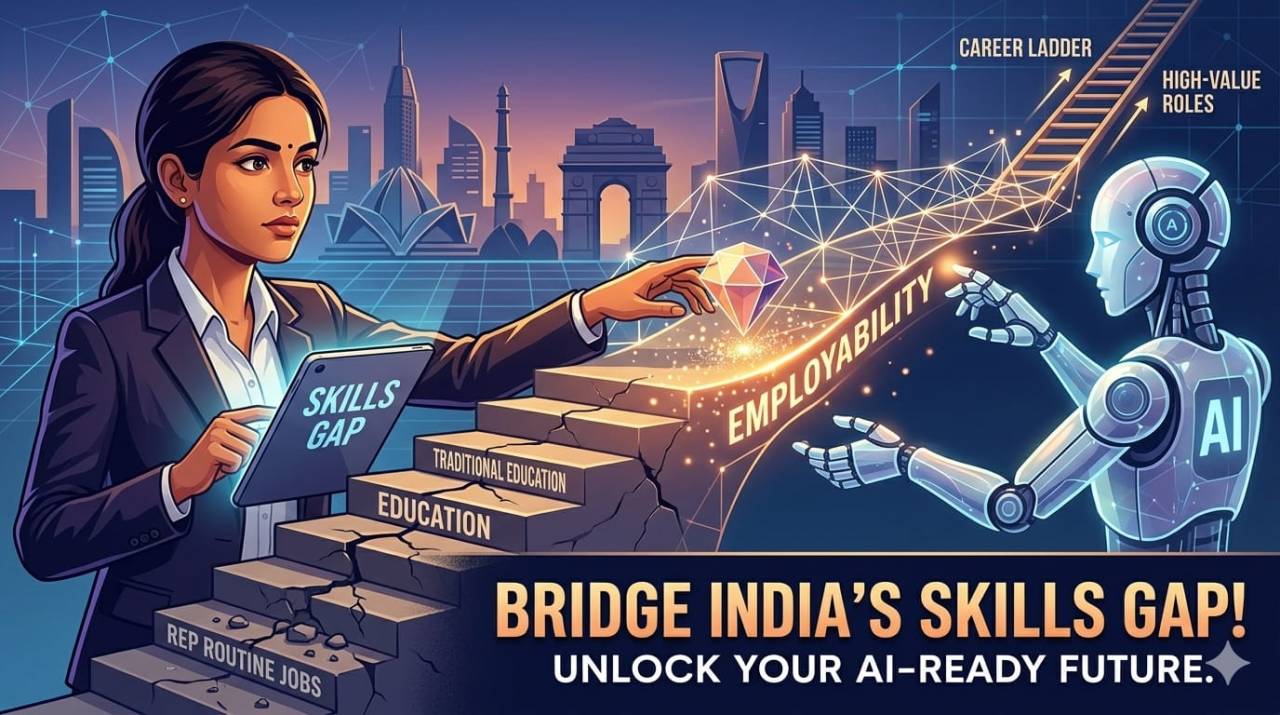
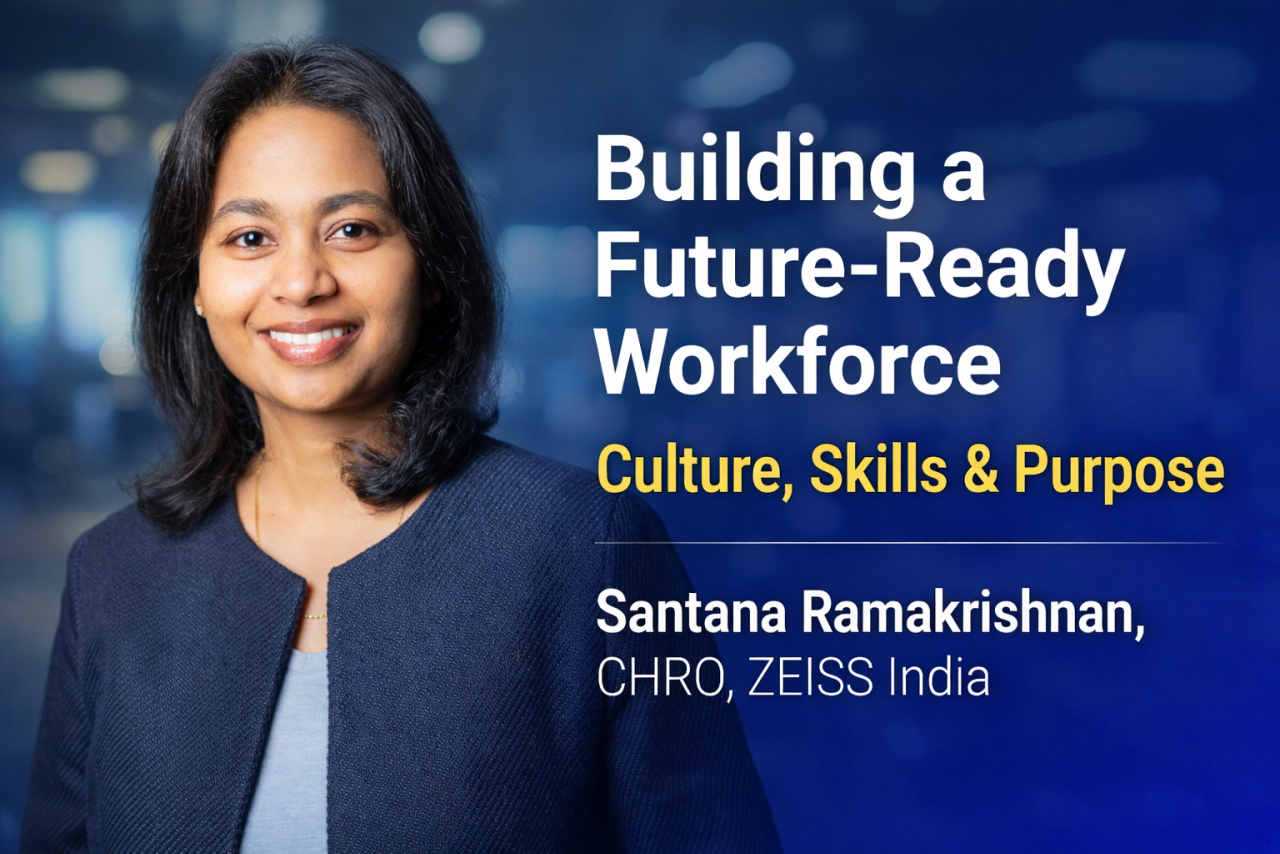
As AI rapidly transforms workplaces, India's traditional pathway to employment is shrinking. Can the country's education system and workforce adapt quickly enough to stay ahead of the disruption?
India stands at a fascinating yet precarious economic crossroads. For decades, the country's growth story has been powered by its demographic dividend—a vast pool of young people entering the workforce each year with aspirations of building successful careers. Yet, alongside this advantage, India has grappled with a persistent challenge: the gap between educational qualifications and workplace readiness.
Today, that challenge is being amplified by a technological transformation unlike any seen before. Artificial Intelligence (AI) is rapidly reshaping industries, redefining skills, and altering the very nature of work. The question is no longer whether India can generate enough jobs for its growing workforce. Instead, the pressing concern is whether its workforce is prepared for a job market increasingly influenced by intelligent machines.
The Changing Nature of Entry-Level Work
For years, India's Information Technology (IT) and Business Process Management (BPM) sectors served as major employment engines for fresh graduates. These industries offered millions of young professionals their first opportunity to enter the corporate world through roles involving:
- Data entry and information processing
- Basic coding and software testing
- Customer support and technical assistance
- Document verification and back-office operations
- Routine administrative tasks
These positions provided valuable workplace exposure while enabling employees to develop professional and technical skills over time.
However, AI is rapidly transforming many of these functions. Tasks that once required large teams can now be completed through automation, machine learning systems, and AI-powered software. While AI is unlikely to eliminate work entirely, it is significantly reducing demand for repetitive and predictable tasks that traditionally formed the foundation of entry-level employment.
This creates a growing disconnect. Universities continue to produce graduates trained for conventional roles, while employers increasingly seek candidates who can work alongside AI systems from the very beginning of their careers.
Why Corporate India Is Accelerating AI Adoption
The transition toward AI is underway across corporate India.
- Organizational Readiness: Many large enterprises have moved beyond experimental AI projects and are integrating AI into core business processes. From customer service to operations management, organizations are leveraging AI to improve efficiency, reduce costs, and enhance productivity.
- The Strategic Workforce Agenda: Human resource leaders increasingly view AI as a critical tool for workforce optimization. Organizations are investing in technologies that automate routine tasks, improve employee productivity, and enable workers to focus on higher-value activities.
- The Rise of AI-First Startups: India's startup ecosystem is also driving change. Unlike traditional businesses that must adapt existing systems, many startups are being built around AI from the outset. These companies often require smaller teams and rely heavily on automation to scale operations, reducing the demand for large entry-level workforces.
Together, these developments are fundamentally reshaping hiring patterns across sectors.
Moving Beyond the Human Arbitrage Model
India's success in the global services economy was built largely on labor arbitrage—the ability to provide skilled human resources at competitive costs for repetitive and process-driven work.
AI is challenging this model.
As automation becomes more capable and affordable, competitive advantage can no longer be based primarily on cost-effective labor. Instead, value creation will increasingly depend on uniquely human capabilities that complement technology.
The future workplace is likely to operate through a collaborative "human-plus-AI" framework. In such an environment:
- Humans provide context, goals, and strategic direction.
- AI performs data-intensive analysis and routine execution.
- Humans validate outcomes, apply judgment, and make critical decisions.
Success will therefore depend not merely on technical expertise but on the ability to effectively work with AI systems. The most employable graduates will be those who can both guide intelligent tools and critically evaluate their outputs.
Reimagining Education for an AI-Driven Economy
Addressing India's employability challenge requires a fundamental rethink of education and workforce preparation.
- Building AI Literacy Across Disciplines: AI literacy should not be confined to engineering and computer science programs. Students across disciplines—from commerce and law to healthcare and humanities—must develop a practical understanding of how AI tools function and how they can be used responsibly and effectively.
- Prioritizing Critical Thinking Over Memorization: As AI becomes increasingly capable of retrieving and generating information, educational institutions must place greater emphasis on analytical reasoning, problem-solving, creativity, and decision-making. These are areas where human capabilities continue to hold a distinct advantage.
- Encouraging Responsible AI Use: Students should be trained to use AI as a productivity-enhancing partner rather than a shortcut for learning. Understanding the strengths, limitations, and ethical implications of AI will be essential in future workplaces.
Strengthening Apprenticeships and Industry Exposure
With traditional entry-level roles becoming less abundant, practical workplace experience becomes even more important.
Structured internships, apprenticeships, and industry-linked training programs can help bridge the gap between academic learning and workplace expectations. These initiatives allow young professionals to gain hands-on experience using AI tools in real-world settings while developing communication, collaboration, and problem-solving skills.
Employers, educational institutions, and policymakers must work together to expand such opportunities and ensure that graduates acquire relevant workplace competencies before entering the job market.
The Growing Importance of Human Skills
While technical proficiency will remain important, the long-term differentiators in an AI-enabled economy are likely to be deeply human capabilities.
These include:
- Critical thinking
- Ethical judgment
- Creativity and innovation
- Emotional intelligence
- Complex communication
- Negotiation and leadership
- Contextual understanding
Such skills are difficult to automate and will become increasingly valuable as AI handles a greater share of routine work.
Turning a Challenge into an Opportunity
Artificial Intelligence represents one of the most significant technological shifts of the modern era. For India, it offers tremendous opportunities to enhance productivity, drive innovation, and accelerate economic growth.
At the same time, it presents a serious employability challenge. The traditional pathway into the workforce through routine entry-level roles is narrowing, demanding a fundamental shift in how graduates prepare for their careers.
The solution is not to resist automation but to adapt to it. By modernizing education, strengthening industry-academia collaboration, expanding apprenticeship opportunities, and cultivating skills that complement AI, India can transform a potential employment crisis into a powerful catalyst for growth.
The future of work will not be defined by humans competing against machines. It will be shaped by humans who know how to work with them. India's ability to prepare its young workforce for that reality may well determine the success of its next phase of economic development.
India stands at a fascinating yet precarious economic crossroads. For decades, the country's growth story has been powered by its demographic dividend—a vast pool of young people entering the workforce each year with aspirations of building successful careers. Yet, alongside this advantage, India has grappled with a persistent challenge: the gap between educational qualifications and workplace readiness.
Today, that challenge is being amplified by a technological transformation unlike any seen before. Artificial Intelligence (AI) is rapidly reshaping industries, redefining skills, and altering the very nature of work. The question is no longer whether India can generate enough jobs for its growing workforce. Instead, the pressing concern is whether its workforce is prepared for a job market increasingly influenced by intelligent machines.
The Changing Nature of Entry-Level Work
For years, India's Information Technology (IT) and Business Process Management (BPM) sectors served as major employment engines for fresh graduates. These industries offered millions of young professionals their first opportunity to enter the corporate world through roles involving:
- Data entry and information processing
- Basic coding and software testing
- Customer support and technical assistance
- Document verification and back-office operations
- Routine administrative tasks
These positions provided valuable workplace exposure while enabling employees to develop professional and technical skills over time.
However, AI is rapidly transforming many of these functions. Tasks that once required large teams can now be completed through automation, machine learning systems, and AI-powered software. While AI is unlikely to eliminate work entirely, it is significantly reducing demand for repetitive and predictable tasks that traditionally formed the foundation of entry-level employment.
This creates a growing disconnect. Universities continue to produce graduates trained for conventional roles, while employers increasingly seek candidates who can work alongside AI systems from the very beginning of their careers.
Why Corporate India Is Accelerating AI Adoption
The transition toward AI is underway across corporate India.
- Organizational Readiness: Many large enterprises have moved beyond experimental AI projects and are integrating AI into core business processes. From customer service to operations management, organizations are leveraging AI to improve efficiency, reduce costs, and enhance productivity.
- The Strategic Workforce Agenda: Human resource leaders increasingly view AI as a critical tool for workforce optimization. Organizations are investing in technologies that automate routine tasks, improve employee productivity, and enable workers to focus on higher-value activities.
- The Rise of AI-First Startups: India's startup ecosystem is also driving change. Unlike traditional businesses that must adapt existing systems, many startups are being built around AI from the outset. These companies often require smaller teams and rely heavily on automation to scale operations, reducing the demand for large entry-level workforces.
Together, these developments are fundamentally reshaping hiring patterns across sectors.
Moving Beyond the Human Arbitrage Model
India's success in the global services economy was built largely on labor arbitrage—the ability to provide skilled human resources at competitive costs for repetitive and process-driven work.
AI is challenging this model.
As automation becomes more capable and affordable, competitive advantage can no longer be based primarily on cost-effective labor. Instead, value creation will increasingly depend on uniquely human capabilities that complement technology.
The future workplace is likely to operate through a collaborative "human-plus-AI" framework. In such an environment:
- Humans provide context, goals, and strategic direction.
- AI performs data-intensive analysis and routine execution.
- Humans validate outcomes, apply judgment, and make critical decisions.
Success will therefore depend not merely on technical expertise but on the ability to effectively work with AI systems. The most employable graduates will be those who can both guide intelligent tools and critically evaluate their outputs.
Reimagining Education for an AI-Driven Economy
Addressing India's employability challenge requires a fundamental rethink of education and workforce preparation.
- Building AI Literacy Across Disciplines: AI literacy should not be confined to engineering and computer science programs. Students across disciplines—from commerce and law to healthcare and humanities—must develop a practical understanding of how AI tools function and how they can be used responsibly and effectively.
- Prioritizing Critical Thinking Over Memorization: As AI becomes increasingly capable of retrieving and generating information, educational institutions must place greater emphasis on analytical reasoning, problem-solving, creativity, and decision-making. These are areas where human capabilities continue to hold a distinct advantage.
- Encouraging Responsible AI Use: Students should be trained to use AI as a productivity-enhancing partner rather than a shortcut for learning. Understanding the strengths, limitations, and ethical implications of AI will be essential in future workplaces.
Strengthening Apprenticeships and Industry Exposure
With traditional entry-level roles becoming less abundant, practical workplace experience becomes even more important.
Structured internships, apprenticeships, and industry-linked training programs can help bridge the gap between academic learning and workplace expectations. These initiatives allow young professionals to gain hands-on experience using AI tools in real-world settings while developing communication, collaboration, and problem-solving skills.
Employers, educational institutions, and policymakers must work together to expand such opportunities and ensure that graduates acquire relevant workplace competencies before entering the job market.
The Growing Importance of Human Skills
While technical proficiency will remain important, the long-term differentiators in an AI-enabled economy are likely to be deeply human capabilities.
These include:
- Critical thinking
- Ethical judgment
- Creativity and innovation
- Emotional intelligence
- Complex communication
- Negotiation and leadership
- Contextual understanding
Such skills are difficult to automate and will become increasingly valuable as AI handles a greater share of routine work.
Turning a Challenge into an Opportunity
Artificial Intelligence represents one of the most significant technological shifts of the modern era. For India, it offers tremendous opportunities to enhance productivity, drive innovation, and accelerate economic growth.
At the same time, it presents a serious employability challenge. The traditional pathway into the workforce through routine entry-level roles is narrowing, demanding a fundamental shift in how graduates prepare for their careers.
The solution is not to resist automation but to adapt to it. By modernizing education, strengthening industry-academia collaboration, expanding apprenticeship opportunities, and cultivating skills that complement AI, India can transform a potential employment crisis into a powerful catalyst for growth.
The future of work will not be defined by humans competing against machines. It will be shaped by humans who know how to work with them. India's ability to prepare its young workforce for that reality may well determine the success of its next phase of economic development.

.jpeg)















Leave a Comment